Why the drip irrigation vs conventional cost comparison Matters for Your Property
When making a drip irrigation vs conventional cost comparison, here is what you need to know upfront:
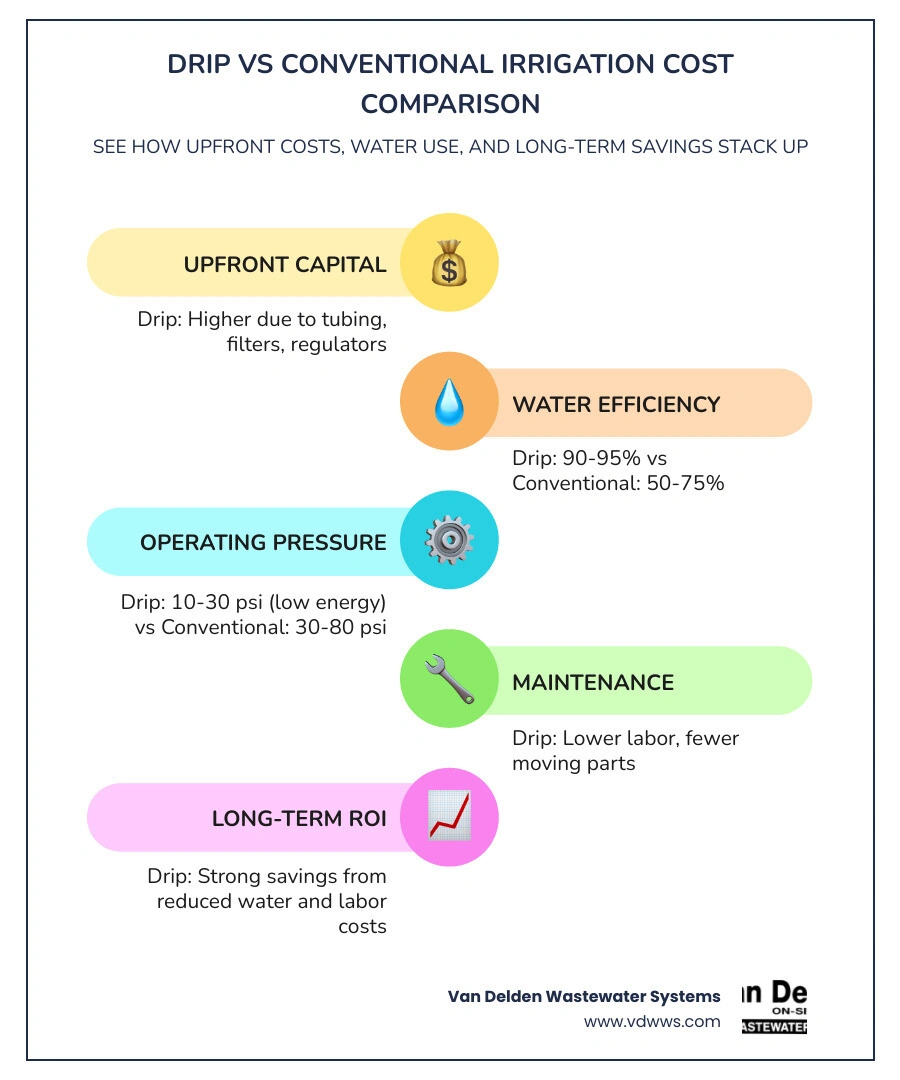
• Water Efficiency — Drip Irrigation: 90-95% — Conventional (Sprinkler/Surface): 50-75%
• Water Savings — Drip Irrigation: 30-70% less water used — Conventional (Sprinkler/Surface): Baseline
• Operating Pressure — Drip Irrigation: 10-30 psi (low energy) — Conventional (Sprinkler/Surface): 30-80 psi (higher energy)
• Annual Maintenance — Drip Irrigation: Generally lower labor — Conventional (Sprinkler/Surface): Higher labor, more moving parts
• Best For — Drip Irrigation: Gardens, row crops, septic drainfields, slopes — Conventional (Sprinkler/Surface): Lawns, large open areas, sports fields
• Upfront Cost — Drip Irrigation: Higher initial investment — Conventional (Sprinkler/Surface): Lower initial investment
• Long-Term Value — Drip Irrigation: Strong ROI through water and labor savings — Conventional (Sprinkler/Surface): Higher ongoing utility costs
Choosing the right irrigation method is one of the most consequential decisions a property owner can make — and it is rarely as simple as picking the cheaper option upfront. Traditional watering methods like sprinklers and surface flooding are familiar and easy to set up, but research consistently shows they waste a significant portion of the water they deliver through evaporation, runoff, and overspray. Drip systems, by contrast, deliver water slowly and directly to the root zone, which dramatically cuts waste — but they come with a higher starting price tag and their own maintenance demands.
What makes this comparison genuinely complex is that the right answer depends heavily on your specific situation: your soil type, your water costs, your scale of operation, and even whether you are irrigating crops or managing wastewater disposal through a septic system. A homeowner with a vegetable garden faces a very different calculation than a farmer irrigating hundreds of acres — or a household evaluating drip-based aerobic septic systems versus conventional drainfields.
This guide breaks down every layer of that cost comparison in plain language, so you can make a confident, informed decision.
Drip Irrigation vs Conventional Cost Comparison: Upfront and Ongoing Expenses
When evaluating a drip irrigation vs conventional cost comparison, it is easy to fall into the trap of only looking at the price of the initial parts. However, a true financial evaluation requires looking at both the upfront capital expenditures and the ongoing operational expenses over the system’s entire operational lifespan.
Conventional systems—such as overhead sprinklers, impact rotors, or surface flooding—tend to have a lower barrier to entry. The components are mass-produced, standardized, and relatively straightforward to install. Drip systems, on the other hand, require a more complex network of specialized components to function correctly. This initial capital investment pays off over time through reduced resource consumption, but the initial cash outlay is undeniably higher.
To understand where your money goes in each system, consider the primary cost drivers below:
• Upfront Material Expenses — Drip Irrigation Systems: High (requires specialized tubing, pressure regulators, filtration, and emitters) — Conventional Sprinkler/Surface Systems: Moderate (standard PVC piping, spray heads, or basic valves)
• Installation Labor — Drip Irrigation Systems: Moderate to High (requires precise layout and soil-level or subsurface placement) — Conventional Sprinkler/Surface Systems: Moderate (trenching for underground PVC is labor-intensive but highly standardized)
• Water Utility Costs — Drip Irrigation Systems: Minimal (highly targeted delivery minimizes overall consumption) — Conventional Sprinkler/Surface Systems: High (significant losses due to wind drift, evaporation, and overspray)
• Energy Consumption — Drip Irrigation Systems: Low (operates efficiently at low pressure) — Conventional Sprinkler/Surface Systems: High (requires high-pressure pumping to throw water over distances)
• Weed & Disease Management — Drip Irrigation Systems: Low (keeps pathways dry, reducing herbicide and fungicide needs) — Conventional Sprinkler/Surface Systems: Moderate to High (overhead watering encourages weed growth and leaf-surface mold)
Initial Capital Investment in a Drip Irrigation vs Conventional Cost Comparison
The initial capital investment for a drip irrigation system is typically higher than that of a conventional spray system. This is primarily due to the complexity and volume of the materials required. A standard overhead sprinkler system relies on a few high-output spray heads to cover a large area. In contrast, a drip system requires a comprehensive tubing layout that spans the entire length of your planting beds or landscape zones.
Beyond the sheer volume of lateral polyethylene tubing, drip systems require dedicated auxiliary equipment to protect the delicate emitters. This includes:
• Filtration Systems: Essential to prevent sediment, algae, and minerals from clogging the tiny emitter pathways.
• Pressure Regulators: Because drip systems operate at much lower pressures than municipal water lines or standard wells, regulators are required to step down the pressure and prevent the lines from bursting.
• Subsurface Models: If you opt for subsurface drip irrigation (SDI), where the tubing is buried beneath the soil surface, the material and installation complexity increases further.
When installing these systems, the labor involved in trenching, laying out hundreds of feet of tubing, and securing emitters can be significant. If you are integrating irrigation with home wastewater systems, this initial phase is highly critical. For a look at how professional layout and excavation work, you can read more about the Septic System Installation Process to see how specialized underground infrastructure is carefully planned and executed.
Water Utility Savings in a Drip Irrigation vs Conventional Cost Comparison
While the upfront material expenses of drip irrigation can be higher, the long-term impact on your water bills is where the financial scales tip dramatically in its favor. Inefficient conventional systems can waste up to 50% of the water they apply due to evaporation, wind drift, and surface runoff. If you live in South Texas—especially in drought-prone areas like San Antonio, Boerne, or Spring Branch—this wasted water directly translates to inflated utility bills.
Drip irrigation operates at an outstanding 90% to 95% efficiency rate. By delivering water directly to the plant's root zone at a slow, controlled rate, it virtually eliminates evaporation loss and surface runoff.
Over the course of a single watering season, switching from a conventional spray system to a drip system can reduce your irrigation water usage by 30% to 50%, and in some highly optimized setups, up to 70%. For properties on municipal water lines, these volumetric water savings can pay back the initial system cost differential in just a few seasons. If you rely on a private well, reducing your water usage also preserves your well pump's lifespan and protects your local groundwater resources.
Operational Efficiency: Water Usage, Pressure, and Energy Demands
The economic differences between these systems extend far beyond the water bill itself. The physical mechanics of how water is pressurized and distributed play a massive role in your monthly energy bills.
Low-Pressure vs. High-Pressure Pumping Costs
A major, often overlooked component of the drip irrigation vs conventional cost comparison is the energy required to run the system. Conventional overhead sprinklers require high operating pressures—typically between 50 and 80 psi—to force water through spray nozzles and throw it across your lawn or field. Generating this high pressure requires larger pumps that draw significant electrical power.
Drip irrigation systems are designed to operate at low pressures, usually between 10 and 20 psi (and rarely exceeding 30 psi). Because the pressure demands are so low, the pump does not have to work nearly as hard to distribute the same volume of water. This low-pressure requirement results in direct energy savings.
For properties that utilize pumps to distribute water or treated wastewater, low-pressure distribution is highly cost-effective. This principle is also utilized in specialized wastewater setups; for example, you can learn about how low-pressure distribution works in septic applications by reading about the Common Septic Systems - Low Pressure Dosing System.
Crop Yields and Agricultural ROI
For small farms, commercial growers, and even dedicated home vegetable gardeners in our South Texas service areas like Bulverde and Helotes, the financial return on investment (ROI) is heavily influenced by crop performance. Drip irrigation provides a distinct advantage here because it allows for precision water and nutrient management.
Because drip systems deliver water directly to the soil level, they keep plant foliage dry. Dry foliage significantly reduces the risk of fungal infections, leaf mildew, and other moisture-related plant diseases, saving you money on chemical treatments.
Additionally, drip systems can be paired with injectors to perform fertigation—the process of delivering liquid fertilizers directly through the irrigation lines. This precision application improves fertilizer efficiency by 20% to 30% because the nutrients are delivered straight to the root zone rather than being washed away by overhead sprays.
These optimal growing conditions can lead to yield improvements of 15% to 25% (and sometimes much higher for high-value specialty crops) compared to conventional surface or overhead watering. The combination of lower input costs (water, fertilizer, and labor) and higher output value dramatically shortens the payback period of your investment.
Maintenance, Repairs, and Lifespan Considerations
No irrigation system is entirely "set it and forget it." Every setup requires ongoing maintenance to ensure it continues to operate efficiently. However, the type of maintenance and the associated repair expenses differ significantly between drip and conventional systems.
To keep your system running smoothly without unexpected breakdowns, it is helpful to understand the Drip Irrigation Maintenance Requirements that come with managing these precision systems.
Clogging, Filtration, and Flushing Requirements
The single greatest operational challenge for drip irrigation is emitter clogging. Because the water pathways inside drip emitters are incredibly small, they are highly susceptible to blockages caused by:
• Physical debris: Sand, silt, and soil particles.
• Biological growth: Algae and bacterial slime.
• Chemical precipitation: Calcium carbonate (scale) and iron deposits, which are particularly common in the hard groundwater found throughout the Texas Hill Country.
To prevent clogging, drip systems require robust filtration systems that must be checked and cleaned regularly. Additionally, you must periodically perform line flushing to clear out any fine sediment that settles inside the lateral lines.
In areas with high mineral content, periodic chemical treatments may be necessary. This can include acidification (injecting mild acids to dissolve calcium scale) or chlorination (injecting low levels of chlorine to eliminate biological slime).
Conventional spray systems, with their larger nozzle orifices, are much more forgiving of poor water quality and require far less filtration. If you do not have the time or resources to dedicate to regular filtration maintenance, the operational costs of a neglected drip system can quickly climb due to clogged, failing lines.
System Longevity and Component Replacement
When calculating the long-term economics of your system, you must factor in the lifespan of the materials. Conventional underground PVC sprinkler systems are highly durable; well-installed PVC pipe can easily last 25 years or more, with only the above-ground sprinkler heads requiring periodic replacement due to mechanical wear or lawnmower damage.
Drip irrigation components generally have a shorter operational lifespan:
• Drip Tape: Commonly used in agricultural row crops, thin-walled drip tape is often treated as a temporary or seasonal material, requiring replacement every 1 to 3 years.
• Polyethylene Tubing: Heavy-walled poly tubing used in permanent landscape installations typically lasts between 8 and 12 years.
• Environmental Degradation: Because drip tubing often sits on top of the soil (under a layer of mulch), it is exposed to temperature swings, UV radiation, and physical damage from garden tools or pests chewing through the lines to reach water.
When these components degrade, they must be replaced, which introduces recurring material and labor costs. Additionally, for commercial operations, the labor and disposal costs associated with removing and replacing miles of degraded plastic tubing must be factored into your long-term cost models.
Wastewater Applications: Drip Irrigation vs. Conventional Drainfields
For many homeowners in the unincorporated areas of San Antonio, Fair Oaks Ranch, and Shavano Park, irrigation isn't just about watering the lawn—it is also about safely and efficiently disposing of household wastewater. When you are installing or replacing a septic system, comparing a drip-based system to a traditional gravity-fed drainfield is an incredibly important financial decision.
For a detailed breakdown of how these two approaches compare side-by-side, check out our guide on the Drip Irrigation vs Conventional Drainfield Comparison.
Soil Type Adaptability and Installation Challenges
In South Texas, our geology presents unique challenges. Many properties in Boerne, Spring Branch, and Helotes sit on top of solid limestone, rocky caliche, or heavy, poorly draining clay. These soil conditions are highly problematic for conventional septic drainfields, which rely on deep, permeable soil to naturally filter and absorb wastewater effluent.
If your property has rocky or high-clay soils, installing a conventional drainfield can be incredibly difficult and expensive, often requiring extensive excavation, importing massive amounts of select sand and soil, or even jackhammering through rock.
This is where a drip-configured system shines. Because drip lines are flexible and are typically buried just a few inches below the surface (within the active root zone of your lawn), they can be installed with minimal soil disruption.
To understand how this technology solves local site issues, explore the Drip Irrigation Benefits for Challenging Soil Types. For many difficult properties, a drip system isn't just an alternative; it is the only viable option. You can read more about When a Drip Irrigation System is Better than a Drainfield to see if your property fits this description.
Long-Term Value for Aerobic Septic Systems
When you pair drip irrigation with an aerobic treatment unit (ATU), you create a highly efficient wastewater disposal system. Unlike traditional septic tanks that only provide basic anaerobic settling, an aerobic system uses oxygen to actively break down waste, producing a highly treated, clean effluent.
This clean effluent is then safely distributed through a subsurface drip irrigation network. To understand the mechanics of this process, you can read about How Drip Irrigation Works with Your Septic System.
While an aerobic drip system has a higher upfront installation cost compared to a basic gravity septic setup, the long-term value is substantial:
• Protection Against Failure: The clean effluent and uniform distribution prevent the soil clogging that frequently ruins conventional drainfields.
• Beneficial Reuse of Water: Instead of disposing of wastewater deep underground, the drip system uses it to keep your lawn and landscape lush and green, reducing your fresh water irrigation needs.
• Extended Lifespan: A well-maintained aerobic drip system can easily outlast a conventional drainfield in poor soil.
To see if this advanced setup makes sense for your property, take a look at our comprehensive Drip Irrigation System Benefits for Septic. You can also compare the primary differences in treatment technology by reading our Aerobic vs Conventional Septic System Comparison and our guide on the traditional Conventional Septic System.
Frequently Asked Questions about Irrigation Costs
Navigating the financial and technical aspects of irrigation systems can raise a lot of questions. Below are some of the most common inquiries we receive from property owners.
What is the payback period for switching to drip irrigation?
The payback period for switching to drip irrigation depends on several factors, including your local water rates, the size of your irrigated area, and the types of plants you are growing.
For residential properties in water-scarce areas with high municipal water rates, the dramatic reduction in water usage can allow the system to pay for itself in water bill savings alone within a few watering seasons. For agricultural operations growing high-value crops, the combination of water savings, reduced fertilizer costs, and increased crop yields often leads to a positive return on investment within a few years.
How do maintenance costs compare between drip and conventional systems?
Drip irrigation systems generally require more frequent, hands-on maintenance than conventional sprinkler systems. Because drip emitters have tiny openings, they are highly prone to clogging from mineral scale, algae, and sediment. This means you must regularly clean filters, flush lines, and occasionally run chemical treatments to dissolve mineral deposits.
However, because drip systems operate at lower pressures and have fewer moving mechanical parts (like rotating sprinkler heads), they are less prone to mechanical wear and tear. Conventional systems may require less frequent routine cleaning, but they often require more frequent replacement of broken sprinkler heads, damaged valves, and cracked underground PVC pipes.
Are there financial incentives or subsidies for installing drip systems?
Yes! Because drip irrigation is recognized as a highly efficient water conservation practice, there are often financial incentives, rebates, or cost-sharing programs available to help offset the initial installation costs.
Many municipal water districts offer rebates to homeowners who convert high-water-use lawns or conventional spray zones into water-efficient drip zones. For agricultural operations, federal and state conservation programs (such as those offered by the USDA's Natural Resources Conservation Service) provide cost-sharing assistance to help farmers transition from inefficient flood or overhead irrigation to modern, low-pressure drip systems.
Conclusion
When you weigh all the factors in a drip irrigation vs conventional cost comparison, it becomes clear that there is no single "cheaper" system. Conventional spray and surface systems offer a lower upfront cost and a simpler installation process, but they drag down your finances over time through high water waste, increased energy demands, and higher utility bills. Drip irrigation demands a larger initial capital investment and consistent, proactive maintenance, but it rewards you with unparalleled water efficiency, lower monthly operating costs, and superior adaptability to difficult soils.
For homeowners and businesses in the South Texas Hill Country—from San Antonio and Boerne to Bulverde and Spring Branch—making the right choice is critical to protecting both your wallet and our regional water resources.
If you are looking to design, install, or maintain a highly efficient aerobic wastewater system that utilizes advanced drip technology, our team at Van Delden Wastewater Systems is here to help. Established in 1937, our family-owned business relies on honest, background-checked, non-commissioned technicians who are dedicated to educating our customers and delivering exceptional quality.
Ready to make the switch to a smarter, more sustainable system? Explore our Drip Irrigation Aerobic Systems today, or reach out to us to schedule a professional consultation for your property.