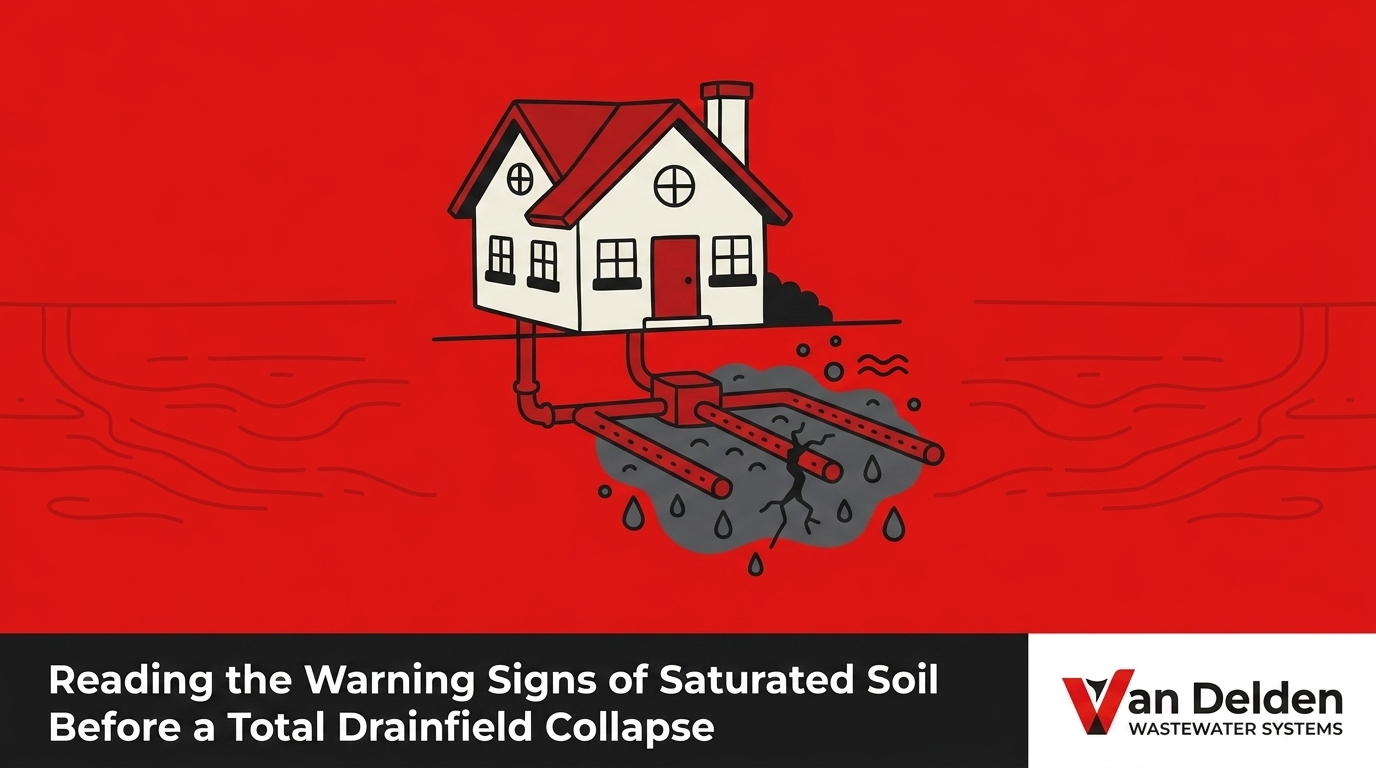
Reading the Warning Signs of Saturated Soil Before a Total Drainfield Collapse
Reading the Warning Signs of Saturated Soil Before a Total Drainfield Collapse
The Hidden Threat Beneath Your Lawn
You step off the back porch into the yard, and instead of solid ground, your foot sinks slightly into a soft, spongy patch of grass. As families transition into the back-to-school season this August and the yard sees heavier use, these issues often become more noticeable. If you notice unusually soft ground or faint odors in your yard, reading the warning signs of saturated soil before a total drainfield collapse is critical to saving your system. Our team at Van Delden Wastewater Systems frequently reminds homeowners that a septic failure rarely happens all at once. Drainfields do not fail overnight; they exhibit subtle, easily overlooked warning signs for months before a catastrophic backup occurs.
During the intense heat of August and late summer, we typically see these early indicators become much more apparent. The high temperatures stress the soil and accelerate evaporation, drawing attention to areas where moisture is trapped just below the surface. Catching these indicators early is the difference between a manageable, targeted repair and a complete, highly disruptive system replacement. When you know what to look for, you can take proactive steps to evaluate the health of your leach field before raw sewage ever breaches the surface of your lawn.
Understanding the Biomat: The Root of Soil Saturation
To understand why your yard is holding water, you first need to understand the biological engine driving your septic system. Every functional drainfield relies on a biomat—a naturally occurring layer of anaerobic bacteria that forms along the bottom and sides of the leach field trenches. This living layer is absolutely essential for filtering effluent, removing pathogens, and digesting organic matter before the liquid safely percolates into the surrounding groundwater.
The Biology of Wastewater Filtration
In a healthy system, the biomat maintains a delicate balance. It is thick enough to filter impurities but porous enough to allow treated water to pass through into the soil of Boerne TX and the surrounding areas. However, in our years of servicing local systems, we've seen how easily this biological layer grows out of control when overloaded with excess water, harsh chemicals, or accumulated solid waste. An overloaded biomat becomes a thick, slimy, and entirely impermeable barrier.
When the biomat thickens to the point of impermeability, the scientific process of percolation halts. The liquid effluent has nowhere to go. Because it cannot drain downward or outward through the blocked trenches, hydraulic pressure forces the wastewater upward toward the surface of your yard. For a deeper look at this biological process, understanding drainfield biomat formation is key to recognizing why your soil is behaving differently.
• Healthy System — Biomat Condition: Thin, porous biological layer — Soil Impact: Normal percolation, dry surface soil
• Failing System — Biomat Condition: Thick, black, impermeable sludge — Soil Impact: Severe soil saturation, upward flooding
Tactile Warning Signs: The Spongy Soil Stage
Long before you see standing water in your yard, you will feel the failure beneath your feet. The transition from healthy soil to a saturated mess begins with specific tactile changes in the ground covering your leach field. As the effluent is forced upward by the blocked biomat, the topsoil absorbs the moisture, creating a distinct spongy, springy feeling when you walk over the area.
It is crucial to understand the distinction between early spongy soil and late-stage puddling. If you wait until actual puddles of dark water form on the surface, the window for early intervention has already closed. Our technicians advise homeowners to pay close attention to how the ground feels during their normal late-summer yard routines to catch the problem in its infancy.
Key Indicators of Early Saturation
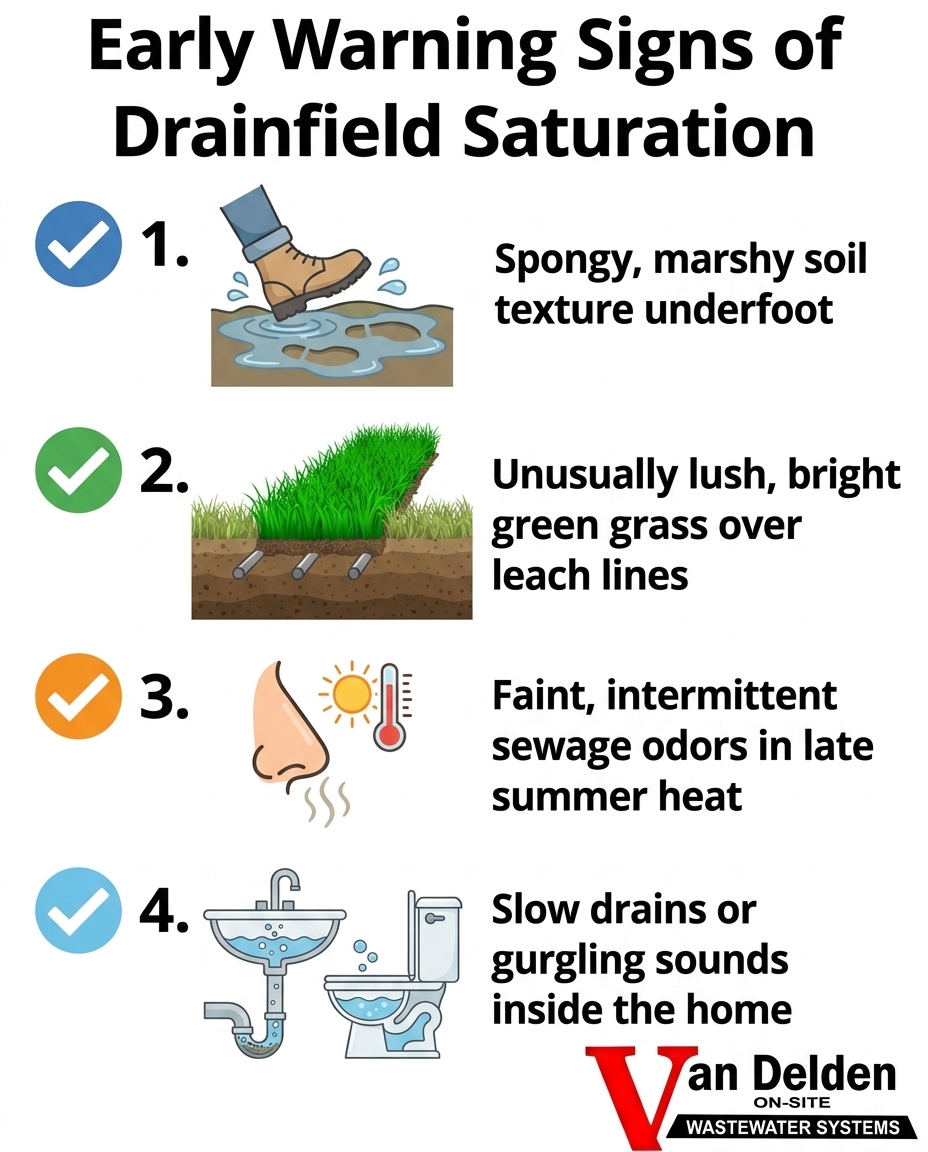
• Soft underfoot: The ground feels unusually soft, marshy, or springy when walking across the drainfield, even if there has been no recent rain.
• Mower tracks: Your lawnmower tires sink slightly into the turf or leave noticeably deeper, muddy tracks specifically over the leach field lines.
• Moisture retention: The soil over the septic area retains moisture significantly longer than the rest of your yard, remaining damp long after the morning dew has burned off.
Early Warning Signs of Drainfield Saturation
Olfactory and Visual Clues: Odors and Unusually Green Grass
Your nose and your eyes are excellent diagnostic tools when it comes to identifying early soil saturation. High temperatures drastically exacerbate the visibility and smell of a failing drainfield. As the late summer heat beats down on your yard, biological activity within the shallow, trapped effluent increases. Simultaneously, the heat increases evaporation rates, lifting trapped gases from the saturated soil and making isolated sewage odors much more noticeable.
A pattern we see often is homeowners assuming that a faint septic smell is just a normal part of owning a wastewater system. It isn't. Faint, intermittent odors hovering over your yard are valid warning signs of an underlying issue, not something to be ignored. If you step outside on a hot August afternoon and catch a distinct, unpleasant scent near the leach lines, your biomat is likely struggling to process the wastewater.
Visually, the most deceptive sign our team encounters is unusually lush, rapidly growing green grass. While the rest of your lawn might be turning brown and drying out in the intense summer heat, the grass directly over a failing drainfield often looks incredibly healthy. This happens because the trapped effluent acts as a constant source of water and nutrient-rich fertilizer. If you find yourself needing to mow the grass over your septic tank twice as often as the rest of the yard, the soil below is reaching its saturation point.
How Regional Soil Types Accelerate Drainfield Failure
The environment where you live plays a massive role in how quickly a stressed septic system turns into a total yard flood. In Boerne TX and throughout the Texas Hill Country, the geographic and geological context makes early detection absolutely critical. Having worked in this specific terrain for generations, our family knows firsthand that this region is characterized by very shallow topsoil resting on top of fractured limestone and dense, heavy clay layers.
The Impact of Flash Rains on Heavy Clay
Unlike sandy soils that allow water to drain rapidly, clay-heavy soils have significantly lower percolation rates. Clay particles are tightly packed, leaving very little room for water to pass through. When a biomat begins to thicken and fail, the surrounding clay soil provides zero buffer. It cannot absorb the excess effluent, accelerating the risk of rapid surface saturation.
Furthermore, local weather patterns complicate the situation. A sudden flash heavy rain—common in the region—can instantly overwhelm a struggling biomat. When inches of rain dump onto already saturated clay and rocky limestone, the water has nowhere to go but up. Our crews often see how the combination of restrictive regional soil dynamics and sudden downpours leaves very little margin for error once a drainfield begins to fail.
Indoor Symptoms: Differentiating Clogs from Drainfield Failure
While the yard provides the most obvious signs of soil saturation, your indoor plumbing will also alert you to a problem. Common indoor symptoms include slow drains in the sinks and showers, toilets that lack flushing power, gurgling noises coming from the pipes, and, in severe cases, wastewater backing up into the lowest drains in the house.
However, it is important to recognize that these indoor symptoms do not always guarantee a total drainfield collapse. They might also indicate a simple, localized clog in the main plumbing line or a septic tank that is simply full and needs routine pumping. For example, our team recently helped a local Boerne TX homeowner who experienced a slow-draining kitchen sink and suspected a major system failure. Our professional inspection revealed that the septic tank merely needed pumping, and we used specialized equipment to clear a localized clog in the kitchen clean-out pipe, fully restoring proper drainage without any need for invasive yard work.
Because the symptoms of a basic clog and a failing standard septic system overlap so closely, proper diagnosis is vital. If your drains are moving slowly, never resort to using harsh chemical drain cleaners. These caustic chemicals can destroy the beneficial bacteria in your tank, severely damage the delicate biomat, and actually accelerate the failure of your drainfield.
The Transition to Professional Septic Drain Field Repair
When you spot the early warning signs of spongy soil, unusually green grass, or faint odors, the next step is crucial. Diagnosing and fixing a saturated drainfield is never a DIY project. It requires the specialized equipment, licensing, and expertise of dedicated wastewater professionals. Attempting to dig into a saturated leach field yourself can expose you to hazardous biological waste and cause irreversible damage to the surrounding soil structure.
If our professional evaluation confirms that the soil is fully saturated due to biomat failure, septic drain field repair or comprehensive leach field repair becomes the necessary next step. Depending on the severity of the saturation, our technicians will determine if the field can be rejuvenated through specialized aeration techniques, or if it requires a partial or full replacement of the leach lines.
Working with a team that deeply understands local soil behaviors makes all the difference. As a family-owned company serving the area since 1937, Van Delden Wastewater Systems provides decades of local expertise in diagnosing the unique challenges of Hill Country soil and septic failures. Whether your system requires a minor line repair or a full evaluation of your septic tanks, relying on our experienced professionals ensures the problem is solved correctly the first time.
Frequently Asked Questions About Saturated Drainfields
What does a failing drain field look like?
Initially, a failing drain field looks like unusually lush, rapidly growing green grass isolated directly over the leach lines. As the failure progresses and the biomat thickens, the area transitions to spongy, marshy soil. Eventually, if left unaddressed, you will see black or gray standing water and puddles forming on the surface of the lawn.
Can a saturated drain field be saved?
If caught in the very early stages, resting the field, fixing leaking plumbing fixtures, or utilizing professional remediation techniques might extend its life. However, severe biomat failure typically requires professional leach field repair or replacement. A thorough evaluation by one of our licensed technicians in late summer can determine which options are viable for your property.
How do you know if your leach field is failing?
Look for tactile signs like marshy ground underfoot, olfactory signs like faint sewage odors lingering in the yard, and indoor signs like slow drains or gurgling pipes. Because these symptoms can mimic a simple clog, a professional evaluation is the only way to confirm a leach field failure definitively.
How long does a typical drainfield last before failing?
With proper maintenance, mindful water usage, and regular tank pumping, our team regularly sees well-designed drainfields last 20 to 30 years. Conversely, neglecting routine maintenance, overwhelming the system with excessive water, or dealing with poor soil conditions can drastically reduce this lifespan and lead to premature failure.
Can heavy rainfall cause temporary drainfield saturation?
Yes, extreme weather and heavy downpours can temporarily saturate the topsoil, slowing down the system's ability to process and distribute effluent. If the system does not recover and the ground remains spongy a few days after the rain stops, it strongly indicates an underlying biomat issue rather than just storm runoff.
Taking Action Before Total System Collapse
Recognizing the early warning signs of a saturated drainfield gives you the upper hand in protecting your property. Spongy soil, unusually lush patches of grass, and faint odors in the yard are your system's final warnings before a major backup occurs. Proactive evaluation and timely intervention are always more manageable, less disruptive, and less stressful than dealing with an emergency replacement after the yard has already flooded.
If you suspect your leach field is struggling to keep up, do not wait for the problem to surface completely. Reach out to our qualified team at Van Delden Wastewater Systems in Boerne TX to have your system evaluated thoroughly. Taking action now ensures your wastewater system remains safe and functional for years to come. Schedule a septic evaluation today to get a clear picture of your drainfield's health.
Peter was personable, professional and thorough. Highly recommend Van Delden. You might be able to find a cheaper company but not better!
Wendell E
On time. 100% professional, knowledgeable, and courteous. Very helpful and straightforward. That is the bar all businesses should strive for.
Andy R
It has been a pleasure working with your company. Not only did y’all communicate very well but your workers were always polite! Thank you!
Kate R.
“I thank Van Delden for such prompt service. Honest people are hard to come by these days. I will certainly recommend Van Delden to anyone! Jesse is an upstanding young man and very nice to talk to. I thank everyone at Van Delden for taking such good care of me.”
Charles H
This is just a note to thank you for explaining the problem with my system. You didn’t have to be so kind and I appreciate your good business ethics and time spent. In the future you will have mine in return!