Translating a Septic Inspection Report for Kendall County Homebuyers
Don't let technical septic jargon derail your late-summer closing. We break down which inspection findings are routine maintenance items and which are true dealbreakers.
The drip irrigation system benefits for septic properties are real, practical, and increasingly relevant for homeowners dealing with challenging soil, limited yard space, or environmentally sensitive land. If your conventional drain field has failed, or your property simply isn't a good fit for a traditional leach field, a drip distribution system may be exactly what you need.
Here is a quick look at the key benefits:
Traditional gravity-fed septic systems work well on flat, permeable land - but they are not built for every property. For homes near wetlands, on sloped terrain, or with shallow soil depth, a drip distribution system offers a smarter, more adaptable solution. And as wastewater treatment standards continue to advance into 2026, more homeowners and commercial property owners are discovering that drip systems are not just an alternative - they are often the better choice.
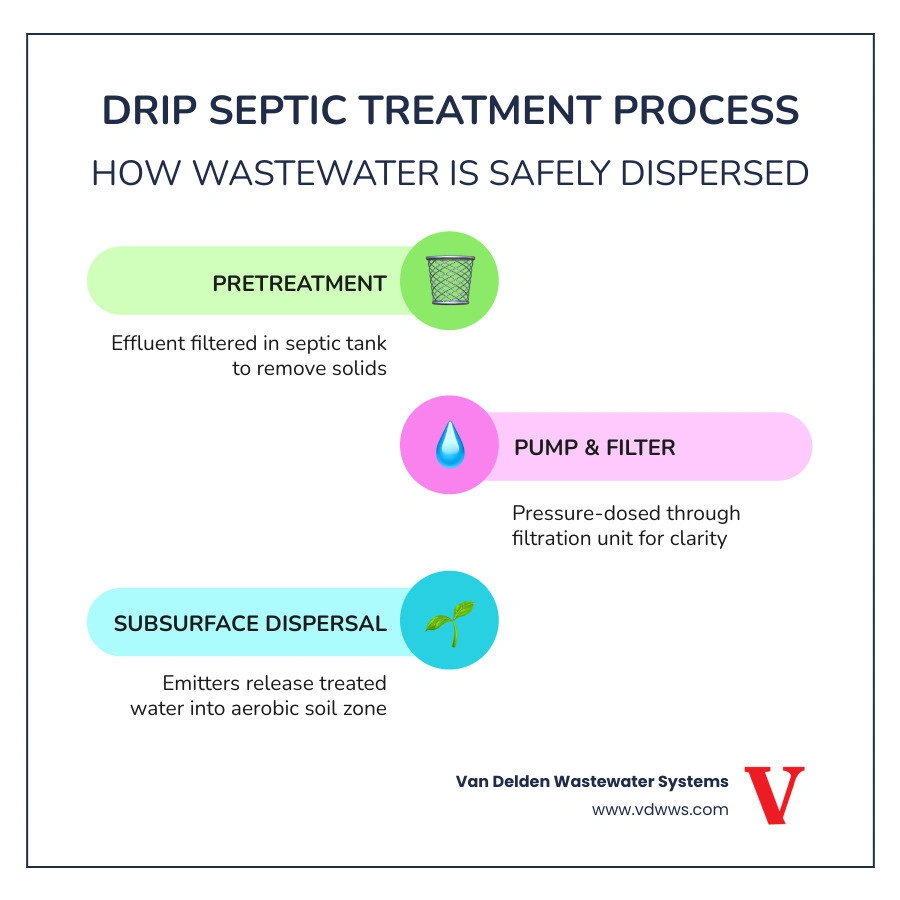
A drip distribution septic system is an advanced method of wastewater dispersal that uses a network of specialized, small-diameter tubing to release treated effluent into the soil. Unlike a traditional system that relies on gravity to "dump" large amounts of water into deep trenches, a drip system uses pressure to "dose" the soil with tiny amounts of water at a time.
This technology relies heavily on the biology of the soil. By placing the tubing just 4 to 10 inches below the surface, we take advantage of the most biologically active layer of the earth. This area is rich in aerobic bacteria—microorganisms that require oxygen to break down organic waste. Because the installation is so shallow, the soil stays oxygenated, allowing these bacteria to thrive and provide a level of treatment that deep, saturated trenches simply cannot match.
Before the water ever reaches the drip lines, it must undergo pretreatment to meet secondary effluent standards. This usually involves an aerobic treatment unit (ATU) or a high-quality septic tank setup that reduces the "strength" of the wastewater (measured by BOD and TSS). This ensures that the liquid being sent to the emitters is clear enough to prevent clogging and clean enough to be safely absorbed by the landscape.
For a deeper look at how these systems integrate with advanced treatment, you can explore more about drip irrigation aerobic systems.
To understand why these systems are so effective, it helps to know what is happening under the hood. A drip system is more mechanical than a standard gravity system, consisting of several high-tech stages:
If you have questions about how these parts work together, our Faqs/Aerobic System With Drip Irrigation section offers more technical details.
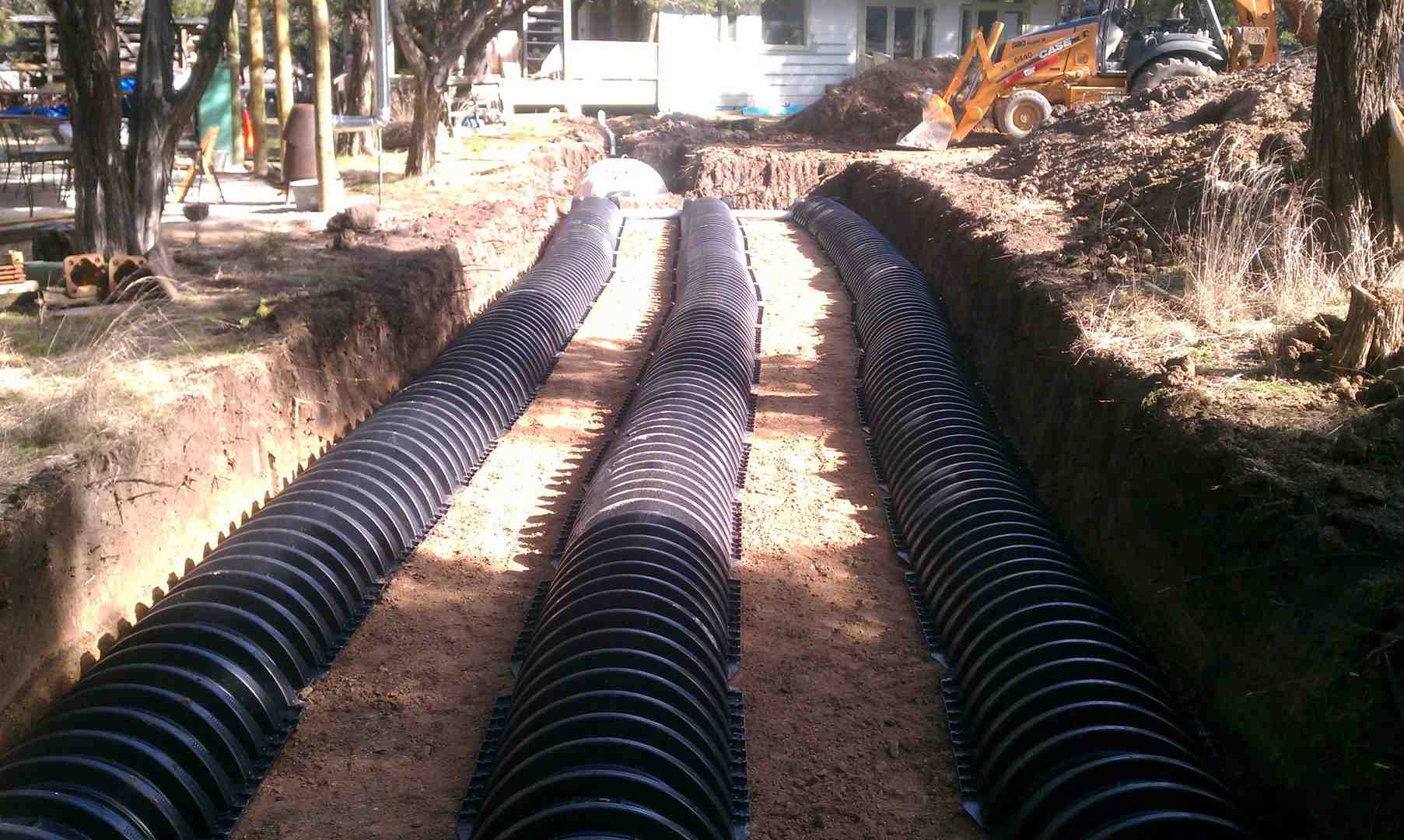
When we talk about the drip irrigation system benefits for septic properties, we are talking about a system that outperforms traditional methods in almost every environmental metric. Because the effluent is applied so slowly and shallowly, studies have shown these systems can achieve up to 95% contaminant removal. This is a massive leap forward for homeowners who care about the long-term health of their land.
One of the biggest headaches for homeowners in areas like Boerne or Spring Branch is having a massive "mound" of dirt in the middle of their beautiful backyard. Traditional septic systems often require these mounds if the soil is too thin.
Drip systems eliminate this need. Because the tubing is flexible and installed just inches deep, we can weave it around existing trees, follow the contours of a steep hill, or fit it into narrow side yards.
| Feature | Drip Distribution | Traditional Gravity |
|---|---|---|
| Installation Depth | 4–10 inches | 24–36+ inches |
| Contaminant Removal | Up to 95% | 60–80% |
| Soil Requirement | Works in clay/rocky soil | Requires deep, sandy soil |
| Landscape Impact | Minimal/Flexible | Large footprint/Mounds |
| Dosing Method | Precise Time-Dosing | Demand-based Gravity |
In 2026, sustainability isn't just a buzzword; it’s a necessity. Drip irrigation septic systems are the gold standard for eco-friendly wastewater management. By releasing water into the root zone of your grass and plants, the system encourages evapotranspiration—a process where plants take up the water and release it into the atmosphere.
This significantly reduces the risk of runoff and prevents nitrogen or pathogens from leaching into the groundwater. For properties near local creeks or sensitive watersheds, this protection is invaluable. It’s a closed-loop way to reuse your household water to maintain your landscape without wasting a drop.
While a drip system can be installed anywhere, it truly shines in "difficult" locations. If you’ve been told your lot is "unbuildable" due to septic issues, a drip system might be the key to unlocking your property’s potential.
We want your system to last for decades, not just years. To get the most out of the drip irrigation system benefits for septic setups, a few smart habits go a long way:
For more tips on keeping your aerobic unit in top shape, check our Faqs/Aerobic System With Drip Irrigation page.
Because a drip system has more moving parts than a pile of gravel and a pipe, professional maintenance is non-negotiable. In many parts of Texas, including San Antonio and Bulverde, a maintenance contract is actually required by law for these types of advanced systems.
Annual Inspections are Key: A technician will check the pump, test the alarms, and ensure the pressure in the lines is within the recommended 10–45 psi range. If the pressure is too high, it could mean a clog; if it's too low, there might be a leak.
Flushing Cycles: Over time, a thin film of bacteria (biofilm) can grow inside the tubes. Your system is designed to "flush" itself periodically, sending a high-velocity stream of water through the lines to scrub them clean and return any debris to the pretreatment tank.
Record Keeping: We provide detailed service forms and photo documentation for every visit. Keeping a history of your system's performance helps us spot trends—like a sudden increase in water usage—before they become expensive problems.
A traditional leach field uses gravity to send effluent into deep, gravel-filled trenches. It requires specific, permeable soil. A drip system uses a pump to push highly treated effluent through thin tubes buried just under the grass. It works in almost any soil type and provides much better protection for the environment.
Yes! In fact, this is one of the primary reasons people choose them. Because the system is pressure-dosed, we can pump the water to any part of your yard, regardless of the elevation. The shallow installation also means we don't have to blast through feet of solid rock to create deep trenches.
Absolutely. By delivering water to the "biologically active" zone of the soil, you get nearly 95% removal of contaminants. It also reuses wastewater to grow your lawn and prevents the deep soil saturation that can lead to groundwater pollution.
At Van Delden Wastewater Systems, we have been helping families manage their wastewater since 1937. We’ve seen the technology evolve from simple holes in the ground to the sophisticated, eco-friendly drip systems we install today in San Antonio, Boerne, Bulverde, and beyond.
The drip irrigation system benefits for septic properties are clear: more flexibility, better treatment, and a beautiful, usable yard. Whether you are building a new home on a challenging lot or need to replace a failing system, our family-owned team is here to provide professional, honest, and expert guidance.
If you’re ready to see if a drip system is right for your property, we invite you to learn more about our drip irrigation aerobic systems or contact us today for a consultation. Let us put our nearly 90 years of expertise to work for you.

Peter was personable, professional and thorough. Highly recommend Van Delden. You might be able to find a cheaper company but not better!
On time. 100% professional, knowledgeable, and courteous. Very helpful and straightforward. That is the bar all businesses should strive for.
It has been a pleasure working with your company. Not only did y’all communicate very well but your workers were always polite! Thank you!
“I thank Van Delden for such prompt service. Honest people are hard to come by these days. I will certainly recommend Van Delden to anyone! Jesse is an upstanding young man and very nice to talk to. I thank everyone at Van Delden for taking such good care of me.”
This is just a note to thank you for explaining the problem with my system. You didn’t have to be so kind and I appreciate your good business ethics and time spent. In the future you will have mine in return!