Why Drip Irrigation Maintenance Requirements Matter for Your System's Long-Term Health
Drip irrigation maintenance requirements are a set of routine tasks — including filter cleaning, line flushing, pressure monitoring, and chemical treatment — that keep your system running efficiently and prevent costly emitter clogging or premature failure.
Core drip irrigation maintenance requirements at a glance:
| Task | Frequency |
|---|
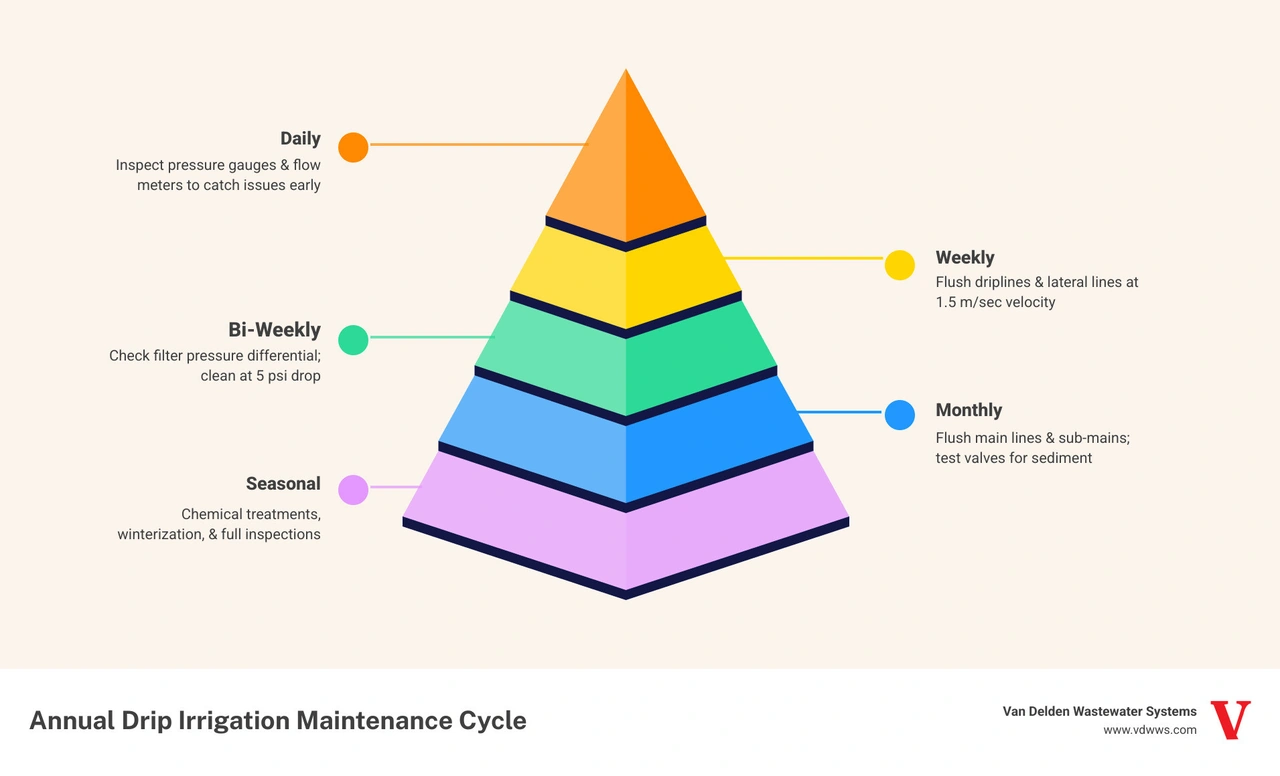
| Inspect pressure gauges and flow meters | Daily |
| Check filter pressure differential (clean at 5 psi drop) | Weekly |
| Flush driplines and lateral lines | Every 2 weeks during growing season |
| Flush main lines and sub-mains | Monthly or as needed |
| Inject chlorine or hydrogen peroxide for organic buildup | Seasonally or as water quality requires |
| Acid injection for mineral precipitation | When pH exceeds 7.5 with bicarbonates over 100 ppm |
| Full system inspection and winterization | End of season |
Here's the honest reality: drip irrigation is the most water-efficient irrigation method available, with efficiency rates exceeding 90%. But that efficiency only holds up if the system is actively maintained. A neglected drip system doesn't just waste water — it can silently stress or kill your plants before you even notice something is wrong. The first sign of trouble is often a dying plant or a small geyser of water shooting up where it shouldn't.
The good news? A properly designed and consistently maintained drip system — including subsurface drip irrigation (SDI) setups — can last well over 20 years. The maintenance investment is small compared to the cost of replacing driplines or losing a crop.
This guide walks you through everything you need to know, step by step.
Understanding the Primary Causes of Emitter Clogging
The biggest threat to any drip system is clogging. Because emitters are designed to release water very slowly through tiny orifices, even microscopic particles can cause a complete blockage. Understanding what is in your water is the first step toward preventing a system failure.
Physical and Biological Threats
- Suspended Solids: These are physical particles like sand, silt, or clay. If your filtration system fails, these particles lodge themselves directly in the emitter's flow path.
- Organic Slime and Algae: If you are using surface water or well water with high nutrient levels, algae and bacteria can thrive inside the dark, warm environment of your pipes. This creates a "bio-slime" that acts like glue, trapping other debris.
- Iron and Manganese Bacteria: This is a common issue in many areas around San Antonio and Spring Branch. If iron concentrations exceed 0.1 ppm or manganese is higher than 0.15 ppm, specialized bacteria can grow, creating a thick, stringy ochre that quickly suffocates emitters.
Chemical and Environmental Factors
- Mineral Precipitation: When water contains high levels of calcium or magnesium, it is considered "hard." As temperatures change or water evaporates near the emitter tip, these minerals solidify into calcium carbonate (lime scale). If your water pH is above 7.5 and bicarbonates are over 100 ppm, you have a high risk of lime precipitation.
- Root Intrusion: In Drip Irrigation Aerobic Systems, plants may actually grow their roots directly into the emitters in search of moisture, especially during dry spells.
- Water Quality Assessment: We recommend performing a water analysis to check pH, iron, and mineral levels. A pH level above 8.0 indicates a severe risk for clogging, while a pH between 7.0 and 8.0 is considered moderate risk.
Essential Drip Irrigation Maintenance Requirements for System Longevity
To keep your system healthy, you need to monitor the "vitals." This is done through pressure gauges and flow meters. Think of these as the heart rate monitors for your irrigation setup.
The Role of Filtration
Your filter is the first line of defense. Whether you use screen, disk, or media filters, they all serve one purpose: keeping the junk out of your driplines.
| Filter Type | Primary Use | Cleaning Threshold |
|---|
| Screen Filter | Sand and large debris | Clean when pressure drop hits 5 psi |
| Disk Filter | Organic matter and algae | Clean when pressure drop hits 5 psi |
| Media (Sand) Filter | Heavy organic loads | Backflush when differential exceeds 10-12 psi |
A well-planned filtration system should only lose about 0.2 to 0.3 bar (roughly 3-4 psi) when clean. If the pressure differential across the filter exceeds 5 psi (0.35 bar), it is time to clean or backflush. If you see a differential over 0.8 bar (12 psi), you may have a serious blockage that requires immediate attention.
We suggest checking your flow meter daily. If the flow rate is within ±5% of your benchmark (the flow rate recorded when the system was brand new), your system is likely healthy. If flow drops, you probably have clogs; if it spikes, you likely have a leak.
For more information on how these components work in wastewater setups, see our FAQs: Aerobic System with Drip Irrigation.
Establishing a Routine Schedule for Drip Irrigation Maintenance Requirements
Consistency is the secret to a 20-year system life. We recommend the following routine:
- Daily: Check pressure gauges and the flow meter. Look for any obvious "wet spots" in the yard that might indicate a broken line.
- Weekly: Inspect the pump and ensure all valves are operating correctly. Check the filter pressure differential.
- Bi-Weekly: Flush the lateral driplines. Open the end caps and let the water run until it is clear.
- Flushing Velocities: To effectively remove sediment, you need "scouring velocity." Aim for a flushing velocity of 1.5 m/sec in main lines and at least 0.5 m/sec in the driplines themselves.
Chemical Cleaning Strategies: Acid, Chlorine, and Peroxide
Sometimes, physical flushing isn't enough. When biological slime or mineral scale takes hold, it's time for chemical intervention.
Chlorination and Oxidation
Chlorine is the standard tool for killing algae and bacteria.
- Continuous Treatment: Inject 1-5 ppm of free residual chlorine to keep the lines clean.
- Intermittent Treatment: Inject 10-20 ppm for the last 30-60 minutes of an irrigation cycle.
- Superchlorination: For heavily clogged systems, a "shock" treatment of 200-500 ppm may be required for 24 hours to disintegrate organic matter.
Hydrogen Peroxide is an excellent, environmentally friendly alternative to chlorine. It breaks down into water and oxygen and is highly effective at oxidizing iron and manganese. A common dosage is 0.5 to 1.0 gallon of 35% peroxide per 1,000 gallons of water for organic cleaning.
Acid Injection for Mineral Buildup
If your emitters are crusty with white mineral deposits, you need acid. We use acid to lower the water pH to a target of 2.0 to 4.0 for a short duration (usually 20-60 minutes). This dissolves calcium carbonate and keeps the emitters clear.
Essential Safety PPE for Chemical Handling:
- Acid-resistant rubber gloves
- Full face shield
- Acid-resistant apron
- Closed-toe, rubber-soled boots
Always remember the golden rule of chemistry: Always add acid to water, never water to acid.
As the seasons change in the Texas Hill Country, so do your drip irrigation maintenance requirements.
Winterization Procedures
In areas like Boerne and Fair Oaks Ranch, winter temperatures can drop below 0°C (32°F). To prevent pipes from bursting:
- Drain all water from the main and sub-main lines.
- Detach and store sensitive components like pressure regulators and filters indoors.
- Open the end caps to allow the system to dry.
- If your lines cannot be fully drained, use compressed air to "blow out" the system.
Rodent and Pest Management
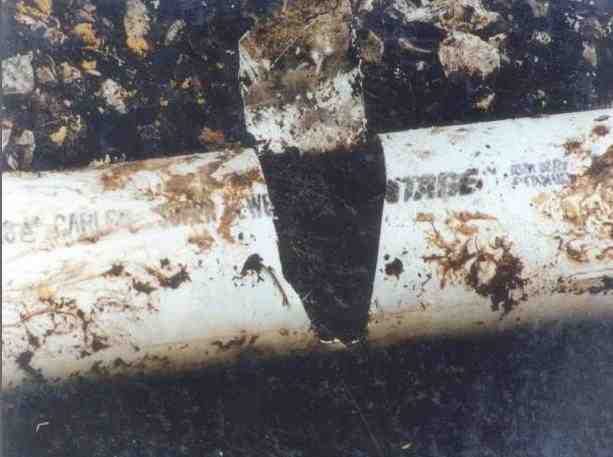
Critters love the plastic in drip systems. We have seen coyotes, mice, and even deer damage driplines.
- Natural Predators: Installing owl boxes can help manage rodent populations.
- Physical Barriers: Deep ripping the soil around the perimeter of a field can disrupt rodent burrows.
- Visual Inspections: Check for "small geysers" during startup, which often indicate a rodent has chewed through a line.
Addressing Subsurface Drip Irrigation Maintenance Requirements
Subsurface systems require a slightly different approach because you can't see the emitters.
- Root Intrusion Prevention: Keeping the soil consistently moist prevents roots from "searching" for water inside your emitters. In some cases, injecting a very low dose of herbicide or using trifluralin-impregnated emitters is necessary.
- Emitter Sampling: Periodically dig up and inspect a few emitters to check for wear or internal buildup.
- Vacuum Relief Valves: These are critical for SDI systems. They prevent the system from sucking in dirt and mud when the pump turns off and the water drains out. We recommend one air vacuum relief valve per 50 laterals.
Frequently Asked Questions about Drip Irrigation
How often should filters be cleaned?
As a general rule, clean your filters weekly. However, the most accurate way to tell is by monitoring the pressure differential. If the pressure on the "outlet" side is 5 psi lower than the "inlet" side, the filter is clogged and needs cleaning. If you are using a dirty water source like a pond, you may need to clean them daily or install an automatic backwash valve.
What are the signs of a failing drip system?
- Uneven Plant Growth: Some plants look lush while others are wilting.
- Surface Geysers: Water bubbling up to the surface in a specific spot.
- Pressure Fluctuations: A sudden drop in system pressure usually indicates a major leak or a pump issue.
- Unusual Noises: Hissing or gurgling sounds can indicate air leaks or suction issues.
How do you prevent roots from entering emitters?
The most effective way is to maintain "distribution uniformity." If the soil around the emitter stays moist, the roots are less likely to penetrate the emitter itself. You can also use superchlorination or specific herbicide injections to create a "no-grow" zone around the emitter.
Conclusion
Proper drip irrigation maintenance requirements are not just suggestions; they are the insurance policy for your landscape or crop. By following a consistent schedule of flushing, filtering, and occasional chemical cleaning, you can ensure your system remains efficient for decades.
At Van Delden Wastewater Systems, we believe in doing things the right way. Since 1937, our family-owned business has served the San Antonio and Boerne areas with a commitment to honesty and quality. Our non-commissioned technicians focus on educating you, providing detailed service forms and photo documentation so you always know the exact state of your system.
Whether you need a routine check-up or a complex repair for your aerobic drip system, we are here to help.
Schedule your professional drip irrigation aerobic system service today and let us help you protect your investment.