Drip Irrigation vs Conventional Drainfield Comparison: What Every Texas Homeowner Should Know
Drip irrigation vs conventional drainfield comparison is one of the most common questions homeowners face when choosing or replacing a septic system — and the right answer can mean the difference between a system that works for decades and one that fails within years.
Here's a quick breakdown:
| Factor | Conventional Drainfield | Drip Irrigation System |
|---|
| Best for | Flat lots, permeable soil, low water table | Slopes, shallow/rocky soil, limited space |
| Footprint | Large | Smaller, flexible layout |
| Mechanical complexity | Low — gravity-fed, few moving parts | High — pumps, controls, filters |
| Pre-treatment required | Basic septic tank | Secondary or tertiary treatment (BOD/TSS ≤30 mg/L) |
| Maintenance demand | Low | Frequent inspections, filter cleaning |
| Lifespan | 25–35 years | Varies; dependent on maintenance |
| Electricity needed | No | Yes |
| Regulatory requirements | Standard permitting | Advanced permitting; licensed installer often required |
Most properties in Texas Hill Country — where soil can be shallow, rocky, or steeply sloped — don't fit the neat conditions a conventional drainfield requires. That's where understanding your options becomes critical.
A conventional drainfield uses gravity to move clarified liquid from your septic tank through perforated pipes into a gravel-and-soil bed, where microbes finish the treatment process. It's simple, proven, and low-cost to maintain. But it needs the right soil, enough flat space, and a water table that stays well below the surface.
A drip irrigation system takes a different approach. Effluent is pumped from a dosing tank through small-diameter tubing buried just 6 to 12 inches underground, releasing treated wastewater slowly and evenly across a larger area. It's engineered for sites where conventional systems simply won't work — but it comes with more moving parts, more maintenance, and stricter treatment standards before the effluent ever reaches the tubing.
Neither system is universally better. The best choice depends entirely on your property's soil, slope, size, and local regulations.

Fundamental Differences in Wastewater Treatment and Dispersal
When we look at a Conventional Septic System, we are looking at a design that has been the industry standard for decades. The fundamental difference between these two systems lies in how they handle the "final stage" of wastewater. In a conventional setup, gravity does the heavy lifting. In a drip system, we rely on mechanical pressure and advanced filtration to get the job done.
Primary Treatment Mechanisms
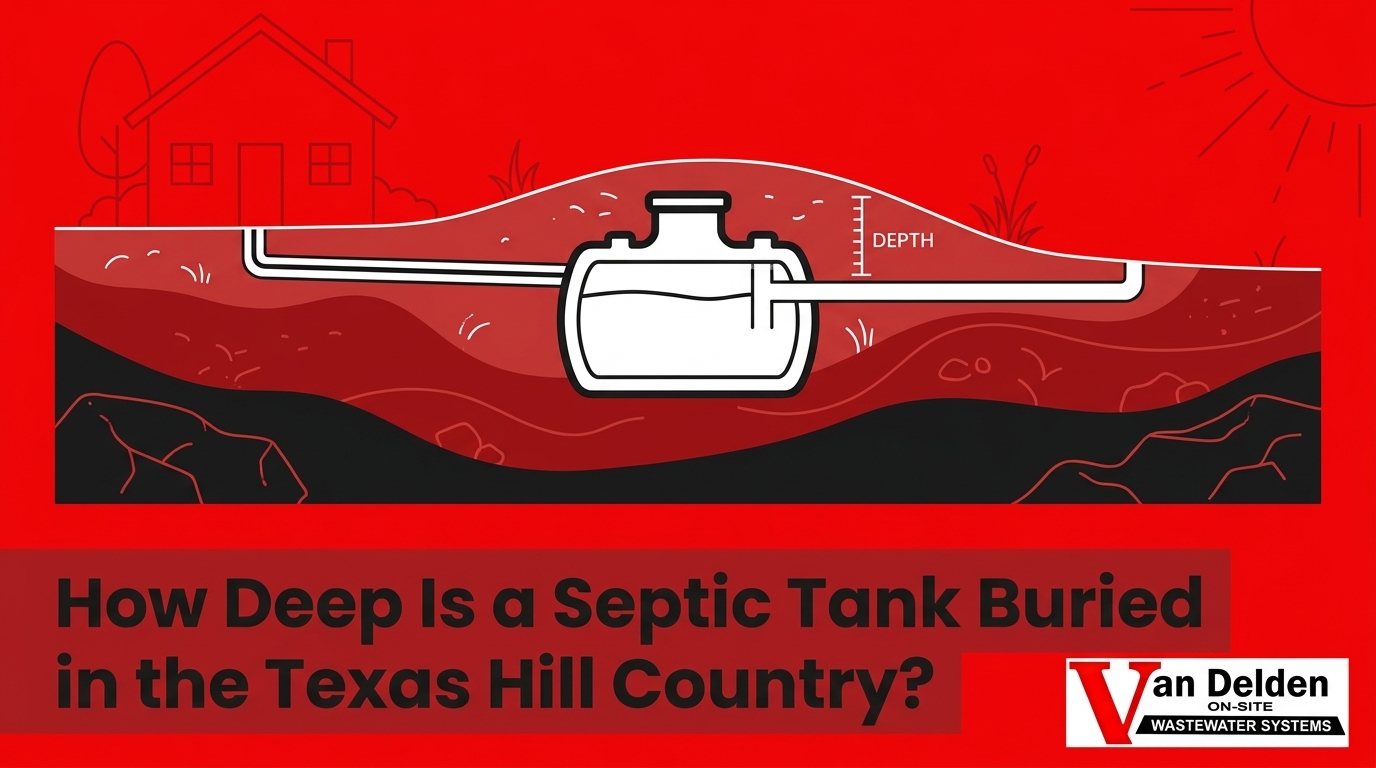
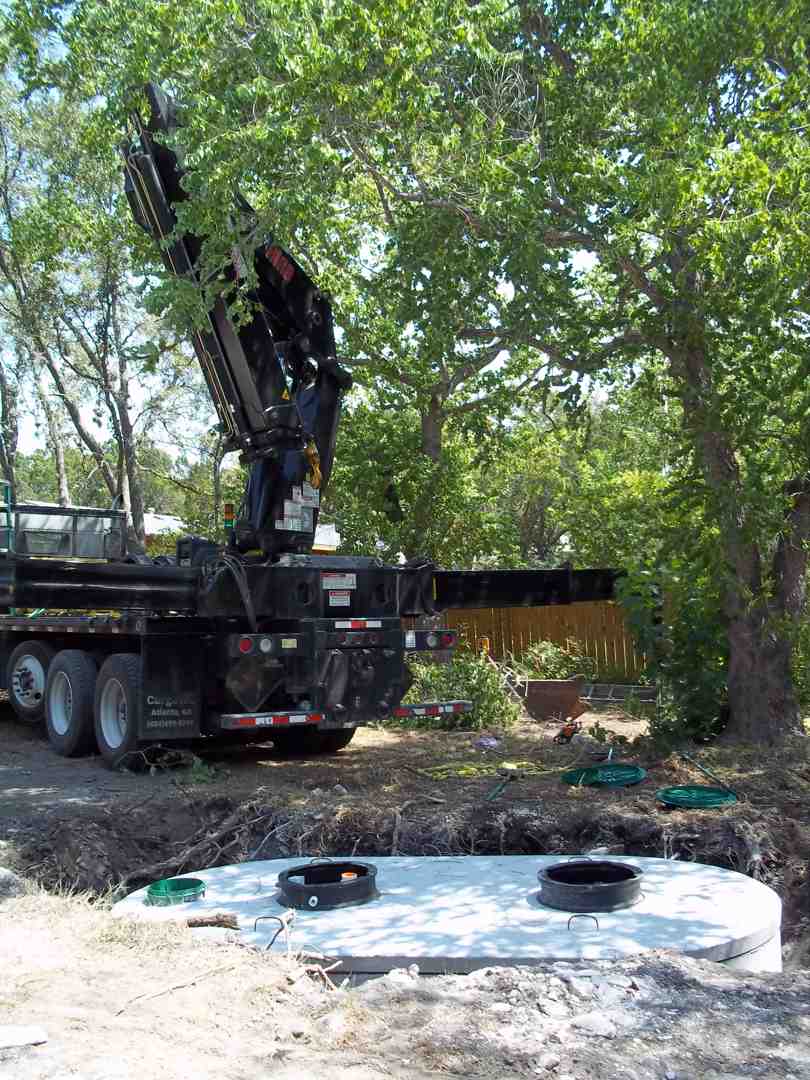
In both systems, the journey begins in the septic tank. This is a watertight container where raw sewage undergoes anaerobic digestion. Solids settle to the bottom as sludge, while oils and grease float to the top as scum. The middle layer—the clarified liquid—is what leaves the tank.
In a conventional system, this liquid flows out to the drainfield. Here, the soil itself acts as the primary filter. Microbes in the soil consume the remaining organic matter as the liquid seeps through gravel and sand. For more details on this process, you can check out our Standard Septic System FAQs. Understanding these basics is essential because, as we often say in our Septic System Jargon Defined: Standard vs. Aerobic Systems guide, the "standard" system is all about letting nature take its course through gravity.
Advanced Effluent Distribution
A drip irrigation system is significantly more complex. Instead of a simple gravity exit, the effluent moves into a dosing tank equipped with a pump and a control panel. This system doesn't just "let it flow"; it sends measured doses of highly treated effluent through specialized drip tubing.
These tubes have emitters spaced every 12 to 24 inches that release water at a very slow, controlled rate. Because the emitters are so small, the effluent must be much cleaner than what a standard tank produces. This is why Drip Irrigation Aerobic Systems usually require an Aerobic Treatment Unit (ATU) to pre-treat the water before it ever reaches the drip lines.
Drip Irrigation vs Conventional Drainfield Comparison: Which is Right for Your Property?
Choosing between these two isn't about which is "better" in a vacuum; it's about which one your land will actually accept. In places like San Antonio or Boerne, the "dirt" isn't always helpful.
| Site Condition | Conventional Drainfield | Drip Irrigation |
|---|
| Soil Depth | Needs several feet of good soil | Can work in as little as 12 inches |
| Water Table | Must be deep | Can handle higher seasonal water tables |
| Slope | Needs relatively flat ground | Excellent for steep hillsides |
| Lot Size | Requires large, open area | Flexible; can wrap around trees/buildings |
Site Flexibility in a Drip Irrigation vs Conventional Drainfield Comparison
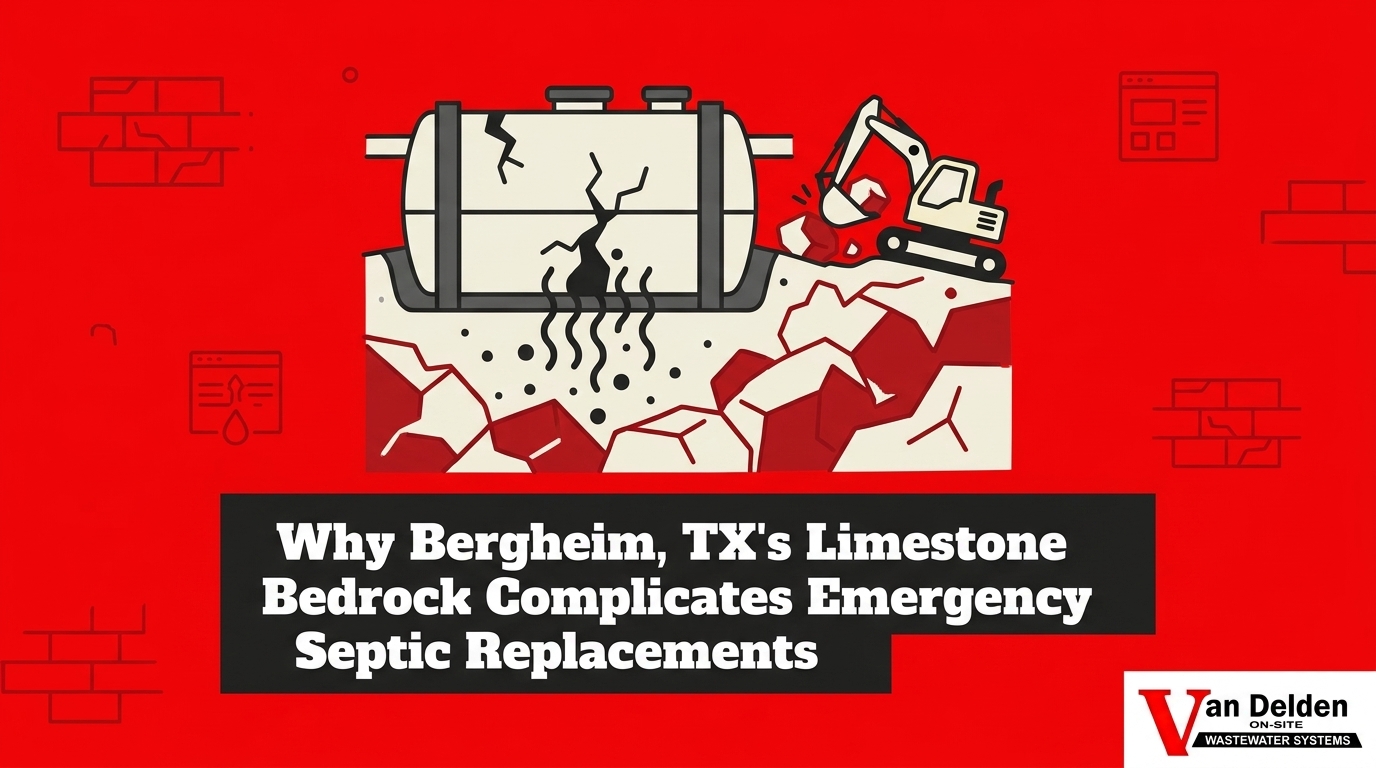
If you live on a rocky hillside in the Texas Hill Country, a conventional drainfield might be an impossible dream. Conventional systems require a certain "percolation rate"—the speed at which soil absorbs water. If the soil is too tight (like clay) or too rocky, the water just pools.
Drip irrigation is the problem-solver for "unbuildable" lots. Because the tubing is flexible and buried shallowly, we can install it in irregular patterns to avoid trees or large rocks. It is the go-to for Common Septic Systems: Standard Septic Systems that simply cannot be installed due to site restrictions. For more on how these advanced systems handle tricky sites, see our Aerobic System with Drip Irrigation FAQs.
A conventional drainfield usually requires a large, cleared area of land that must remain relatively undisturbed—no driving over it, no building sheds on it, and no planting deep-rooted trees. This can create a large "dead zone" in your landscaping.
Drip irrigation, however, has a much smaller visual footprint. Since the Septic System Field Lines are so shallow and the distribution is so even, the grass on top often looks greener and healthier than the rest of the yard. You don't need a massive gravel bed, which preserves more of your natural landscape.
Operational Requirements and Maintenance Needs
This is where the drip irrigation vs conventional drainfield comparison takes a sharp turn. A conventional system is like a bicycle—simple and reliable with very few moving parts. A drip system is more like a high-performance car; it does amazing things, but it needs regular "oil changes" and a power source.
Long-Term Reliability: Drip Irrigation vs Conventional Drainfield Comparison
Conventional systems are famous for their "set it and forget it" nature, though they still need a pump-out every 3 to 5 years. Without mechanical parts, there isn't much to "break" in the drainfield itself unless it becomes clogged by solids.
Drip systems, on the other hand, rely on electricity to run the pumps and the "brain" (the control panel). They also feature filters that must be cleaned to prevent the tiny emitters from clogging. Regular maintenance is non-negotiable here. We often discuss Drainfield Cleaning for Septic System Maintenance as a way to keep these systems running, but with drip, it's about prevention. If you're wondering What's Better: Conventional Septic or Aerobic?, the answer often comes down to how much maintenance you are willing to perform.
Regulatory and Pre-treatment Standards
In April 2026, regulations for wastewater treatment continue to emphasize effluent quality. Drip systems generally must meet much higher standards—specifically, Biochemical Oxygen Demand (BOD) and Total Suspended Solids (TSS) levels of 30 mg/L or below. This almost always necessitates secondary treatment, such as an aerobic unit, before the water is sent to the drip lines. Conventional systems usually only require the primary treatment found in a standard septic tank.
Environmental Impact and Treatment Quality
From an environmental perspective, drip irrigation is often seen as the "greener" choice. Because it distributes water into the "biologically active" layer of the soil (the top 6–12 inches), plants and soil microbes are much more efficient at removing nutrients like nitrogen and phosphorus.
Health Risks and Odor Control
Conventional systems, if failing, can lead to pooling sewage which carries pathogens and foul odors. Drip systems, by design, keep the effluent subsurface and use aerobic bacteria to break down waste more completely. This significantly reduces the risk of odors and provides a higher level of disinfection. As noted in our Aerobic System with Drip Irrigation FAQs, these systems are ideal for sensitive environmental areas where protecting groundwater is the top priority.
Troubleshooting Common Failures and Clogging
No system is invincible. Understanding why they fail is the first step in preventing a "stinky situation."
Addressing System Failures
Conventional systems usually fail due to "biomat" buildup—a slimy layer of bacteria that eventually waterproofs the soil—or hydraulic overload (too much water at once). Common Signs of Drainfield Problems in San Antonio Home include:
- Gurgling sounds in your pipes.
- Slow-draining sinks and tubs.
- Sewage odors around the yard.
- Lush, spongy green grass over the drainfield even in a drought.
If you notice these, you need to know How to Diagnose and Fix Drainfield Failures quickly. Drip systems are most prone to emitter clogging. This happens if the pre-treatment system fails or if the filters aren't cleaned, allowing solids to enter the tiny drip lines. You can read more about 4 Common Causes of Septic Drainfield Failure and Common Septic Drainfield Problems to stay ahead of these issues.
Preventative Care for Longevity
The best way to avoid a Clogged Leach Field or a failed drip system is water conservation. How Excessive Water Use Affects Drainfield performance cannot be overstated—sending too much water into the system at once flushes solids out of the tank and into the dispersal area.
For drip systems, ensuring the automated "flushing cycles" are working is key. These cycles send a high-velocity burst of water through the lines to clear out any biofilm. Extending the Life of Your Drainfield is a matter of being mindful of what you flush and how much water you use.
Frequently Asked Questions
Which system is better for a sloped yard in Boerne?
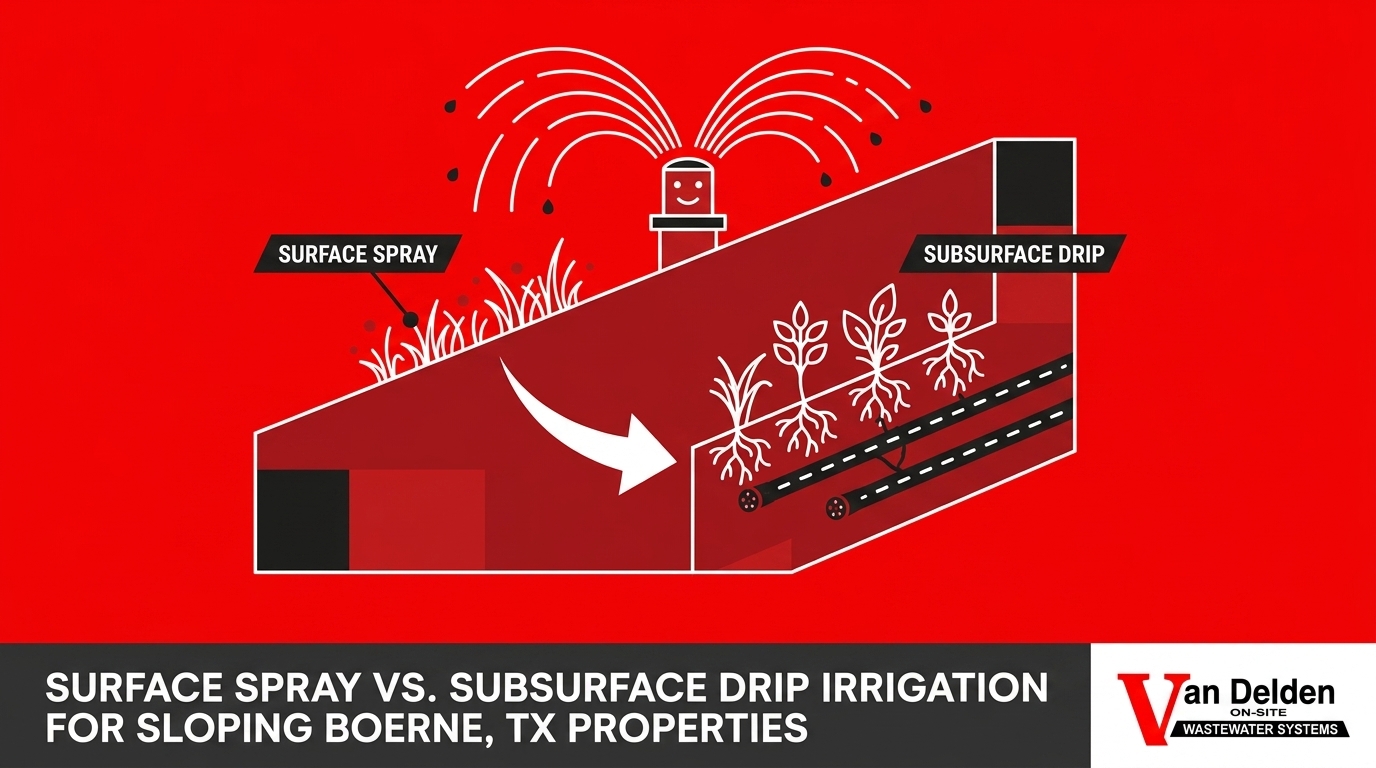
Drip irrigation is almost always the winner for sloped yards. Conventional drainfields rely on gravity, which makes it very difficult to distribute effluent evenly on a hill without the water simply rushing to the lowest point and surfacing. Drip tubing can be laid along the contours of the slope, and because it is pressurized, every emitter gets the same amount of water regardless of the elevation.
How often do these systems require professional service?
A conventional system should be inspected every few years and pumped every 3 to 5 years. A drip irrigation system requires a more hands-on approach. Most regulations require at least one or two professional inspections per year to check the pump, the ATU (if present), the control panel, and to clean the filters. Our Drainfield Cleaning Services can help maintain the health of your dispersal area, but drip systems require a consistent maintenance contract.
Can I plant a garden over my drip irrigation field?
You can plant grass and shallow-rooted groundcovers quite successfully. In fact, they love the nutrient-rich water! However, you must avoid any plants with deep, "woody" roots (like trees or large shrubs) as they will seek out the emitters and clog them. You should also avoid tilling the soil or driving heavy equipment over the area, as the tubing is only a few inches deep.
Conclusion
At Van Delden Wastewater Systems, we’ve been helping families in San Antonio, Boerne, Bulverde, and throughout the Texas Hill Country since 1937. We know that choosing between drip irrigation vs conventional drainfield comparison points can feel overwhelming, but you don't have to make the decision alone.
Whether you are in Spring Branch or Shavano Park, a proper site evaluation is the only way to know for sure which system will serve your home best. Our family-owned business prides itself on educating our customers and providing honest, expert advice. We don't use commissioned sales tactics; we use decades of experience to ensure your wastewater is handled safely and efficiently.
Ready to find the perfect fit for your property? Let us help you navigate the technical details and local regulations of Drip Irrigation Aerobic Systems and conventional setups. Contact us today for a professional consultation.