When a Septic Problem Is a True Emergency — and What to Do Right Now
Knowing when a septic problem is a true emergency could be the difference between a quick service call and thousands of dollars in property damage. Some septic issues can wait a day or two. Others cannot wait even an hour.
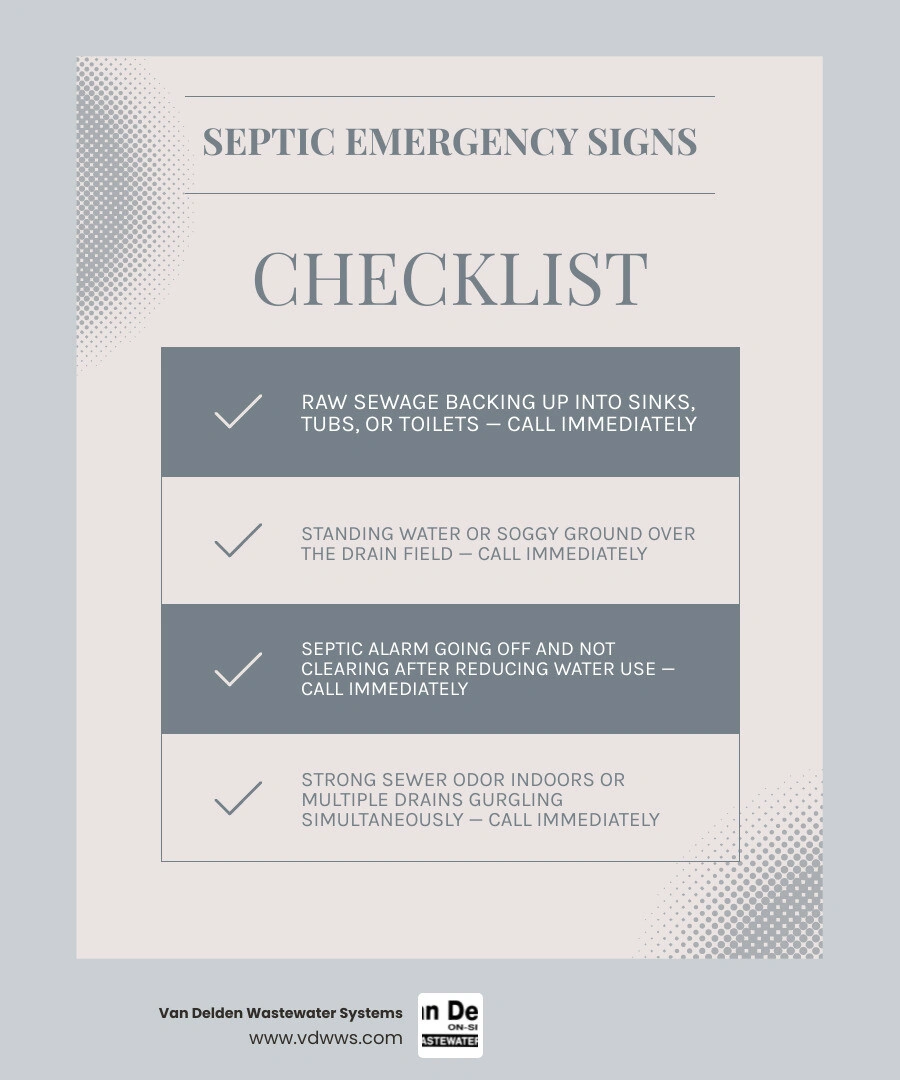
A septic problem is a true emergency when you see any of these signs:
• Raw sewage backing up into sinks, tubs, or toilets — Emergency Level: Call immediately
• Standing water or soggy ground over the drain field — Emergency Level: Call immediately
• Septic alarm going off and not clearing after reducing water use — Emergency Level: Call immediately
• Strong sewer odor indoors — Emergency Level: Call immediately
• Multiple drains gurgling or stopped at the same time — Emergency Level: Call immediately
• Single slow drain, no other symptoms — Emergency Level: Schedule within a few days
• Alarm cleared after reducing water, no backup — Emergency Level: Monitor and schedule within 48 hours
Septic systems handle everything your household sends down the drain — quietly, around the clock. Most of the time, they just work. But when they fail, they fail fast. Raw sewage is classified as Category 3 blackwater by IICRC standards, meaning it carries dangerous pathogens like E. coli, Hepatitis A, and Giardia. According to industry data, approximately 1.2 million cases of gastrointestinal illness each year in the U.S. are linked to sewage exposure from septic backups.
The goal of this guide is simple: help you spot the warning signs fast, know what is truly urgent, and take the right steps before help arrives.
Identifying When a Septic Problem Is a True Emergency
A malfunctioning septic system is more than a major inconvenience; it is a serious environmental and health hazard. When untreated wastewater cannot flow properly through your system, it has to go somewhere. If it backs up into your home or surfaces on your lawn, you are dealing with a biohazard that poses immediate risks to your family and pets.
Understanding the difference between a minor plumbing hiccup and a systemic failure is the first step in protecting your household. Knowing how to handle these situations quickly can prevent extensive property damage. For a deeper look at keeping your system safe, explore our guide on How to Protect Your Property from Septic Emergencies.
How to Tell When a Septic Problem Is a True Emergency vs. a Minor Issue
Not every slow drain requires an after-hours emergency dispatch. If a single bathroom sink is draining slowly but the rest of the house is functioning perfectly, you likely have a simple localized clog in the P-trap.
However, when multiple fixtures are affected simultaneously, or when wastewater begins to flow backward, the issue lies deep within your septic system.
• Affected Fixtures — Minor Septic/Plumbing Issue: Only one sink, toilet, or shower is draining slowly. — True Septic Emergency: Multiple drains across the house are slow, gurgling, or backing up.
• Wastewater Behavior — Minor Septic/Plumbing Issue: Water drains slowly but does not back up or flow upward. — True Septic Emergency: Blackwater or dark, smelly water is actively rising into tubs or floor drains.
• System Alarms — Minor Septic/Plumbing Issue: The alarm panel is quiet and showing normal green lights. — True Septic Emergency: The red light is flashing, and the audible buzzer is screaming.
• Outdoor Conditions — Minor Septic/Plumbing Issue: The lawn over the tank and drain field is dry and normal. — True Septic Emergency: Wet, spongy, or pooling puddles of smelly water appear on the surface.
• Odors — Minor Septic/Plumbing Issue: No noticeable smells, or a faint odor localized to a single drain. — True Septic Emergency: Strong, persistent sewer gas odors inside the home or near the tank.
What to Do When a Septic Problem Is a True Emergency
If you have reviewed the signs and realized your system is in crisis, you must act quickly. The very first step is to stop all water usage immediately. This means no flushing toilets, no running showers, no loads of laundry, and no running the dishwasher. Any drop of water you send down the drain will only add to the backup.
Once water use is halted, your next priority is to call in the professionals. Attempting to diagnose or repair a major septic failure yourself can lead to further system damage or dangerous exposure to toxic sewer gases. If you find yourself in this situation, read our advice on Having a Septic System Emergency? Call a Professional Immediately to ensure you get the right help fast.
5 Critical Signs of a Septic System Emergency
When a septic system is on the verge of complete failure, it rarely stays silent. Recognizing these five critical warning signs will help you identify when a septic problem is a true emergency so you can protect your home and yard from contamination. If you hear a sudden beeping from your yard or utility closet, start by reading about What to Do When Septic Tank Alarm Goes Off.
1. Raw Sewage Backing Up Into the Home
This is the absolute worst-case scenario for any homeowner. If you see dark, foul-smelling water rising into your bathtubs, showers, or basement floor drains, you have a catastrophic blackwater backup.
This is not a simple plumbing clog; it means your septic tank is completely full, the main sewer line is blocked, or your drain field has stopped accepting water. Because raw sewage contains harmful bacteria and viruses, direct exposure can cause severe gastrointestinal illness. When this occurs, you must evacuate the affected area, avoid touching the water, and seek professional intervention. To understand how technicians resolve these intense situations, read our breakdown on Addressing Emergency Septic Repair Scenarios.
2. Active Septic Tank Alarm or High Water Warning
Many modern septic systems, particularly aerobic systems, are equipped with an electrical control panel that features a high-water alarm. This alarm is connected to a float switch inside your tank.
If the liquid level inside the tank rises past a safe operating threshold, the float switch triggers a flashing red light and a loud buzzing sound. This is your system’s way of telling you that it cannot process wastewater fast enough. It could be caused by a failed pump, a tripped circuit breaker, or a clogged discharge line. When the alarm sounds, you must immediately minimize your water use and investigate the cause. Learn more about the mechanics behind this alert by reading Aerobic System Alarm: What It Means and What to Do.
3. Pooling Water and Soggy Soil Over the Drain Field
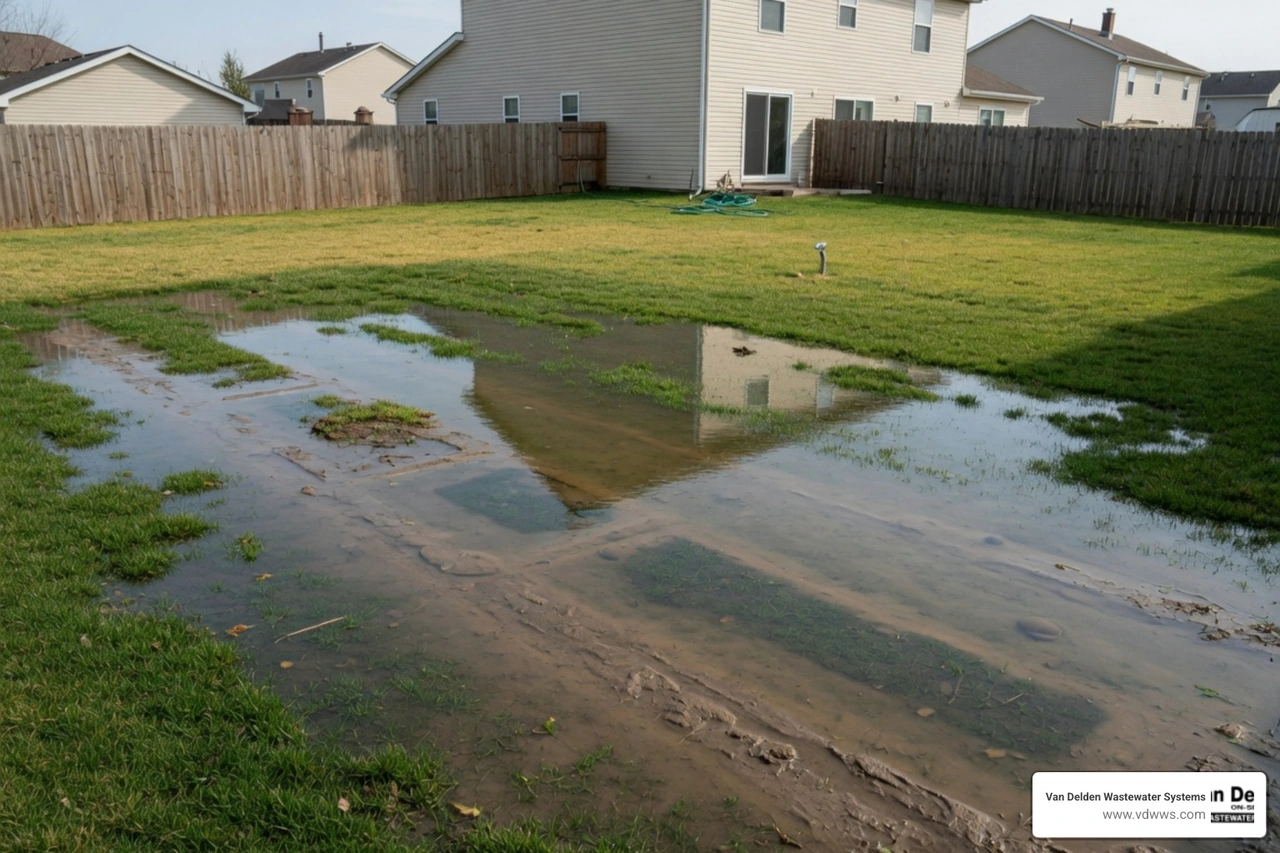
Your drain field (or leach field) is responsible for filtering and dispersing treated effluent back into the ground. If you notice standing water, soggy patches, or unusually lush, bright green grass over your drain field — even when it hasn't rained recently — the soil has likely become completely saturated.
This "surface breakout" of effluent means the wastewater has nowhere else to go and is rising to the surface of your lawn. This is a clear indicator of drain field failure, which can quickly lead to backups inside your home if left unaddressed. If your yard is starting to look like a swamp, check out our guide, Help My Septic System Is Flooding.
4. Strong Sewer Odors Indoors or Near the Tank
A properly functioning septic system should keep all odors securely contained. If you begin to notice a persistent smell of rotten eggs or sulfur inside your home, or a heavy stench lingering over your yard, you have a problem.
These odors are caused by toxic gases, including hydrogen sulfide and methane, which are naturally produced during the decomposition process inside your tank. Beyond being highly unpleasant, these gases can be dangerous in high concentrations. In fact, hydrogen sulfide can actually deaden your sense of smell over time, making it easy to underestimate the danger. If you live in the Texas Hill Country and smell something foul, read up on Emergency Septic Repairs in Boerne TX to find local expertise.
5. System Failures After Heavy Rain or Flooding
The weather in areas like San Antonio, Bulverde, and Spring Branch can be unpredictable, occasionally delivering heavy downpours that drench the dry Texas soil. When torrential rain falls, the local groundwater table rises, completely saturating the soil surrounding your drain field.
When the ground is fully saturated, it cannot absorb any more liquid, causing your septic system to stall. Wastewater cannot leave the tank, which quickly triggers high-water alarms and causes backups. If a major storm has left your system struggling, read our instructions on Heavy Rain: What To Do When Your Aerobic System Alarm Activates.
Once you have identified a true septic emergency and called for professional assistance, the actions you take over the next few minutes can significantly limit the damage to your home and property. If you find yourself dealing with an unexpected crisis during a major holiday or family gathering, consult our quick-response guide on Holiday Septic System Emergency: Here's What to Do.
Here is what you should do immediately while waiting for the service truck to arrive:
1. Stop All Water Use: This cannot be overstated. Do not run taps, flush toilets, or operate washing machines.
2. Restrict Access to the Area: Keep children and family pets far away from any backed-up drains inside or wet areas in the yard.
3. Ventilate the Home: If you smell sewer gases indoors, open windows and doors to let fresh air circulate.
4. Turn Off the HVAC System: If you have an active indoor backup, turn off your heating or air conditioning. Running your HVAC system can pull airborne pathogens and odors from the sewage and distribute them throughout your entire home.
5. Document the Situation: Take clear, timestamped photos of any backups, pooling water, or control panel alerts. This documentation will be highly valuable for your service technician and any potential insurance claims.
Locating and Preparing Your Septic System Access
To help our technicians get to work as quickly as possible upon arrival, it is incredibly helpful to clear the path to your septic tank's access lids.
If you know where your tank is located, clear away any overgrown brush, heavy potted plants, lawn furniture, or decorative rocks that might be blocking the lids. However, never attempt to open the septic tank lids yourself. Septic tanks contain lethal concentrations of sewer gases, and falling into an open tank is extremely dangerous. For homeowners in the Helotes area looking to understand the access and cleaning process, check out our Emergency Septic Tank Cleaning Guide Helotes TX.
Safety Precautions for Sewage Exposure
If you must go near an area affected by a sewage backup to turn off water valves or document damage, always prioritize your health:
• Wear Protective Gear: Put on thick rubber boots, heavy-duty rubber gloves, and a protective face mask before entering any room with standing wastewater.
• Never Use a Shop Vac: Do not attempt to vacuum up raw sewage with a household wet/dry vacuum. Doing so will aerosolize the bacteria, spraying microscopic pathogens directly into the air you breathe.
• Discard Porous Materials: Any carpets, rugs, drywall, or cardboard that come into direct contact with raw sewage generally cannot be thoroughly sanitized and should be professionally removed and discarded.
For residents in Bulverde facing these cleanup challenges, refer to our localized Emergency Septic Tank Cleaning Guide Bulverde TX for safe, step-by-step instructions.
Frequently Asked Questions About Septic Emergencies
Can I still use my toilets during a septic emergency?
No. If you are experiencing an active septic emergency — such as a backup, a high-water alarm, or a flooded drain field — you must stop flushing your toilets immediately. Because your system is unable to process or move wastewater out of the tank, every flush will simply add volume to the backup, pushing raw sewage further up into your household drains.
Will my homeowner's insurance cover emergency septic repairs?
Standard homeowner's insurance policies typically exclude coverage for septic system failures caused by wear and tear, age, or lack of routine maintenance. However, if you have a specific "sewer and drain backup" rider or endorsement on your policy, it may cover the costs associated with water damage cleanup and restoration inside your home. It is always best to review your policy details with your insurance agent before an emergency occurs.
Why does my septic alarm go off when it rains?
Heavy or prolonged rainfall can saturate the soil surrounding your drain field. When the soil is completely full of rainwater, it cannot absorb the treated effluent leaving your septic tank. This causes the wastewater to back up into the pump chamber, raising the float switch and triggering the alarm. If this happens, immediately cut back on your water usage to give the soil time to drain naturally once the rain stops.
Conclusion
When it comes to your home's wastewater system, being proactive is always better than reacting to a sudden crisis. While knowing when a septic problem is a true emergency is critical, the best emergency is the one that never happens. Routine maintenance — including professional pumping every three to five years and annual inspections — can catch minor issues like worn-out float switches or clogged filters before they turn into major household disasters.
Since 1937, Van Delden Wastewater Systems has provided comprehensive, reliable septic solutions across the San Antonio area and Texas Hill Country, including Boerne, Bulverde, Fair Oaks Ranch, Helotes, and Spring Branch. As a family-owned business, we pride ourselves on dispatching honest, background-checked, non-commissioned technicians who take the time to educate our customers, providing detailed service forms and clear photo documentation of every job.
If you are dealing with an active system failure or want to schedule a preventive check-up, we are here to help. Explore our Emergency Aerobic System Repair Guide San Antonio for localized support, or Schedule professional septic services today to keep your home safe, clean, and flowing smoothly.