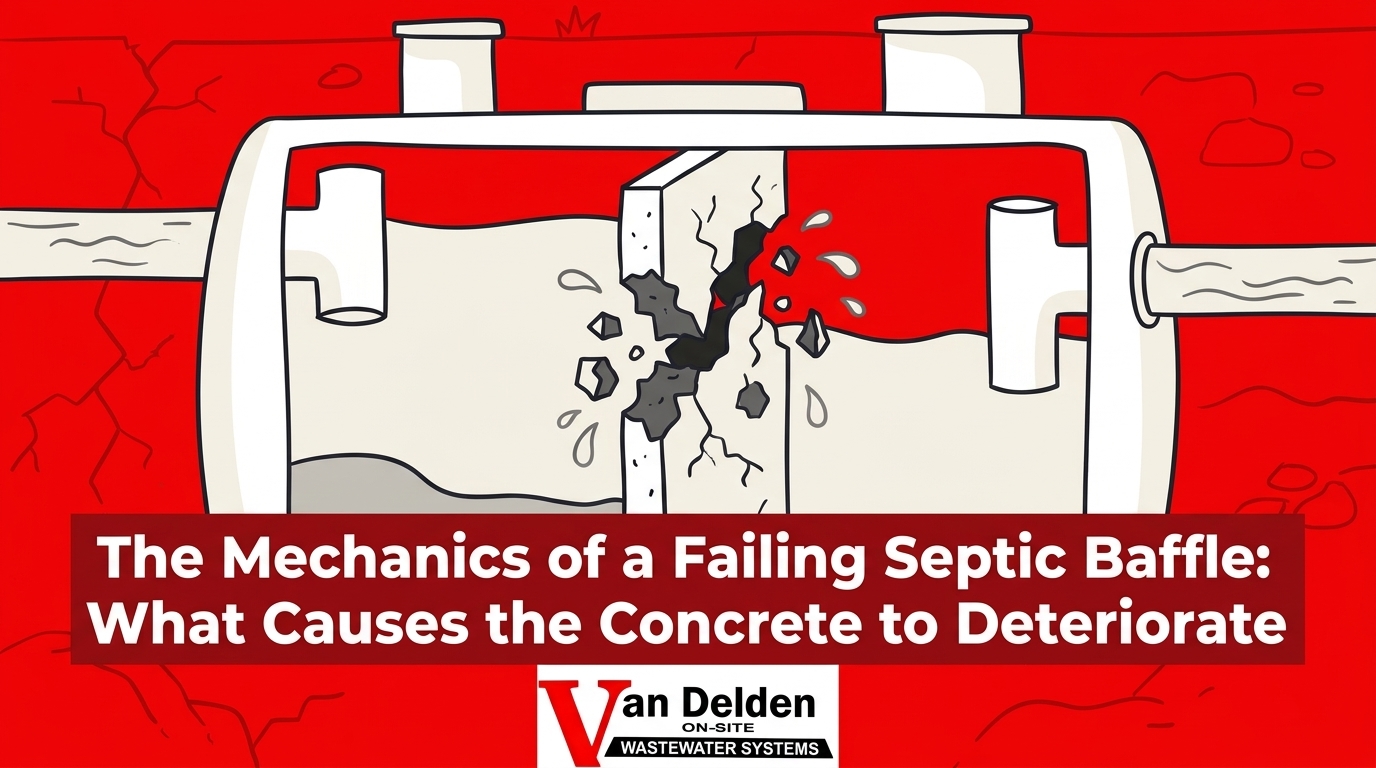
The Mechanics of a Failing Septic Baffle: What Causes the Concrete to Deteriorate
The Mechanics of a Failing Septic Baffle: What Causes the Concrete to Deteriorate
The Invisible Threat Inside Your Tank
Your toilets are flushing normally, the yard looks perfectly dry, and you might think your wastewater system is functioning flawlessly. But when investigating a struggling system, understanding the mechanics of a failing septic baffle: what causes the concrete to deteriorate is often the missing piece of the puzzle. Septic systems are essentially living biological engines that naturally produce heavy gases as they break down household waste. While most homeowners worry exclusively about rising sludge levels in the bottom of the tank, the most insidious structural threat actually happens entirely above the waterline.
Hydrogen sulfide gas accumulation poses a severe, ongoing structural risk to aging concrete components, specifically the delicate outlet baffle. This invisible chemical breakdown is a silent process that slowly compromises the system. Understanding how this gas attacks concrete is crucial for preventing a catastrophic sludge escape into your drainfield. This is especially critical during late summer (August) when biological activity and gas production in septic tanks is highly active. To protect your property, you need to know exactly what is happening inside your concrete septic tanks before a failure occurs.
The Anatomy and Vulnerability of the Outlet Baffle
To understand why concrete deteriorates, you first have to understand how a septic tank separates waste. Inside the tank, waste settles into three distinct layers: heavy solid sludge at the bottom, a middle layer of relatively clear liquid effluent, and a floating layer of scum, fats, and oils at the top. The outlet baffle acts as a structural gatekeeper. Its primary job is to allow only the clear effluent from the middle layer to exit the tank, while strictly keeping the floating scum and settled sludge trapped inside.
Because of this specific function, the baffle is positioned at the exact level where the liquid meets the empty airspace at the top of the tank. This placement is its greatest vulnerability. Because it sits partially exposed to the trapped, heavy gases hovering above the waterline, it stands directly in the path of aggressive, corrosive chemical reactions. Unlike the thick exterior tank walls which are mostly submerged and protected by liquid, the exposed concrete of the baffle bears the absolute brunt of atmospheric degradation. Many older properties in Boerne TX and surrounding Hill Country relying on aging concrete septic infrastructure are particularly susceptible to this long-term exposure.
Why Submerged Concrete Survives Longer
You might wonder why the entire concrete tank doesn't rot away at the same speed. The answer lies in the protective nature of the wastewater itself.
• Water acts as a buffer: The liquid effluent provides a physical barrier against acidic gas accumulation, preventing the gas from making direct contact with the lower concrete walls.
• Continuous dilution: The regular flow of household water entering and exiting the tank continuously dilutes any potential localized acidity below the waterline, keeping the pH relatively stable.
• Targeted degradation: Deterioration almost exclusively targets the dry or damp concrete surfaces exposed to the tank's upper airspace, which is why the top half of the baffle is usually the first component to fail.
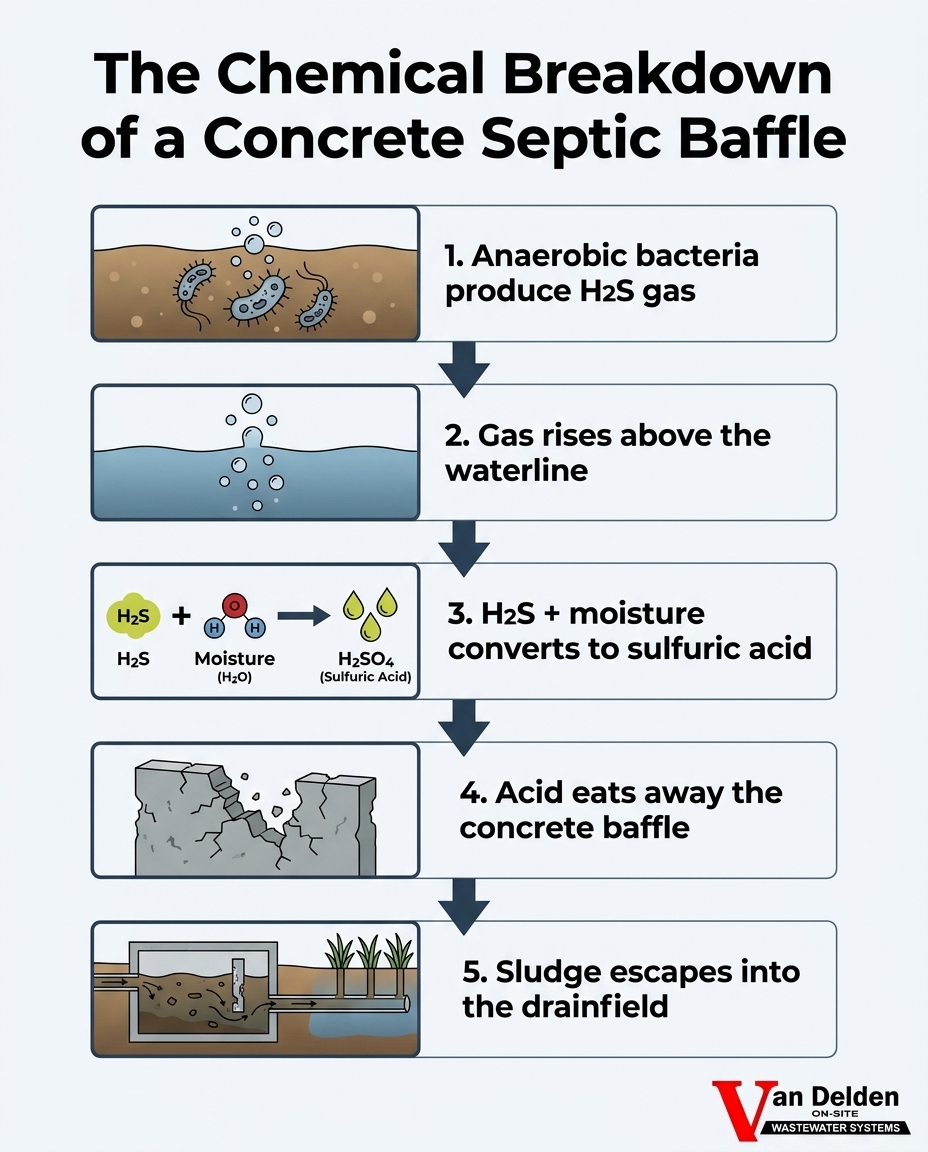
The destruction of a concrete baffle is not caused by physical wear and tear or rushing water. It is the result of a highly specific biological and chemical chain reaction known as Microbially Induced Concrete Corrosion (MICC). Anaerobic digestion—the process where bacteria break down waste without oxygen—naturally produces large volumes of hydrogen sulfide (H2S) gas. This gas is the root cause of the infamous "rotten egg" smell associated with sewage.
When this H2S gas rises into the empty headspace of the tank, it interacts with condensation, moisture, and specific strains of sulfur-oxidizing bacteria that cling to the concrete ceiling and the upper surfaces of the baffle. This biological interaction acts as a catalyst, converting the relatively harmless hydrogen sulfide gas into highly concentrated sulfuric acid. Sulfuric acid is notoriously aggressive. It actively eats away at the highly alkaline concrete, causing a severe chemical neutralization that destroys the material's structural integrity.
The Chemical Breakdown of a Concrete Septic Baffle
The Top-Down Rotting Process
The physical breakdown of the baffle happens in a predictable, top-down sequence. The sulfuric acid first attacks the cement paste—the crucial binding agent that holds the sand and gravel aggregate together. If a homeowner were able to safely look inside a deteriorating tank, they would notice exposed, loose gravel or a chalky, white texture on the concrete surface where the smooth finish used to be. As the acid continues to dissolve the binding paste, the concrete softens and crumbles. Over time, all structural integrity is lost, and the heavy concrete baffle simply shears off and drops to the bottom of the tank.
How Peak Temperatures Accelerate Gas Production
The rate at which a concrete baffle deteriorates is not constant year-round. Bacterial metabolism inside a septic tank is highly sensitive to ambient temperature changes. As the ground temperature warms up, the bacteria responsible for breaking down waste become significantly more active. During periods of sustained high heat, these anaerobic bacteria shift into a state of hyperactivity.
We see this acceleration firsthand as the intense Texas Hill Country late-summer heat creates the perfect hyperactive environment for bacterial gas production inside the tank. This hyperactivity leads to a massive, sustained spike in hydrogen sulfide gas production. The increased volume of heavy gas trapped in the tank's headspace dramatically accelerates the entire MICC process. Because biological activity and gas production in septic tanks is highly active in late summer (August), concrete components often suffer their most severe chemical degradation during these peak temperature months.
A crumbling baffle might sound like an isolated problem localized to the tank, but it is actually the trigger for a massive, system-wide failure. Once the concrete baffle deteriorates and falls away into the liquid, there is absolutely no physical barrier left protecting the outlet pipe. Without this gatekeeper, the separation of waste layers becomes irrelevant.
Floating scum, fats, oils, greases, and suspended solid sludge are immediately pulled directly out of the tank and into the outlet pipe every time water is used in the house. These heavy solids travel straight into the drainfield, where they rapidly clog the porous soil and gravel trenches. As the soil pores choke on the thick grease and solids, a dense, impenetrable layer called a biomat forms. This biomat permanently seals the soil, preventing any wastewater from absorbing into the ground. What started as a simple, localized structural failure inside the tank quickly turns into a catastrophic, full-scale drainfield replacement scenario.
Real estate professionals regularly require thorough and knowledgeable septic system inspections for their clients specifically to prevent this exact domino effect. Assuring clients their septic systems work perfectly before purchasing a property hinges on catching these hidden structural defects. If a missing baffle goes unnoticed during a property transfer, the new homeowner often inherits a drainfield that is already in the irreversible stages of failure.
Visualizing the Invisible: Why Routine Pumping Isn't Enough
Many homeowners operate under the dangerous assumption that if they pump their tank regularly, their system is fully protected. However, pumping and structural inspections are two entirely different procedures. Routine pumping removes the accumulated sludge and scum from the bottom and top of the tank, resetting the capacity. But simply vacuuming out the waste does not automatically assess the structural health of the concrete above the waterline.
Because baffle deterioration happens inside the dark, sealed headspace of the tank, it is completely invisible from the surface of your yard. There are no wet spots, no slow drains, and no warning signs until a total backup occurs or the drainfield floods. Aging concrete infrastructure requires a trained eye to spot the early, subtle signs of sulfuric acid degradation before the baffle fails entirely.
As a family-owned business operating since 1937, our team has generational, historical knowledge of how legacy concrete tanks age over decades. We have seen firsthand how these legacy systems degrade, and we know exactly what to look for regarding long-term concrete deterioration. Treating baffle health as a critical infrastructure check rather than an afterthought is the only way to save the drainfield. This is why comprehensive septic system services must include a rigorous visual assessment of the tank's internal concrete structure, not just a simple pump-out.
The Importance of Professional Assessment
Because the consequences of a missing baffle are so severe, proactive assessment is non-negotiable. However, inspecting a septic tank is not a DIY weekend project. Opening a septic tank lid exposes individuals directly to toxic hydrogen sulfide gas. H2S is not just corrosive to concrete; it is highly toxic and potentially lethal to humans in concentrated doses. Furthermore, heavy concrete lids pose a severe physical hazard.
Licensed professionals have the proper safety equipment, training, and specialized tools to safely evaluate the extent of concrete corrosion without putting anyone at risk. During a recent real estate transaction, a buyer client requested a thorough evaluation of an older system prior to closing. A licensed inspector safely evaluated the tank, explained the specific findings regarding the concrete's condition, and answered additional questions, leaving the buyer pleased with the professionalism and clarity of the assessment.
If a professional determines that a concrete baffle is heavily deteriorated but hasn't yet destroyed the drainfield, they can recommend modern retrofit solutions. Upgrading to newer technologies, such as installing modern PVC components, can provide vastly better long-term protection against sludge escape. Understanding the differences between these upgrades, such as comparing effluent filters vs baffles, helps homeowners make informed decisions about protecting their aging infrastructure from further chemical rot.
Protecting Your Drainfield Through Proactive Care
Concrete baffle deterioration is a silent, aggressive chemical process that threatens the lifespan of your entire septic system. While you cannot stop anaerobic bacteria from producing hydrogen sulfide gas, understanding these chemical risks allows you to take proactive, protective measures before the damage spreads beyond the tank.
Especially for properties relying on aging concrete septic infrastructure in Boerne TX and the surrounding Hill Country, vigilance is key. A thorough professional evaluation is your absolute best defense against unexpected, catastrophic drainfield failure. Don't wait for your yard to flood or your drains to back up. Take the proactive step to schedule a septic inspection today and ensure your concrete baffles are still standing strong against the invisible threats inside your tank.
Frequently Asked Questions
What happens if a septic baffle is missing? A missing outlet baffle allows floating scum, grease, and heavy sludge to flow directly out of the tank and into the drainfield. This solid waste rapidly clogs the soil pores in the absorption area, creating an impenetrable biomat. Once the soil is sealed, the drainfield fails completely, leading to sewage backups in the home or surfacing in the yard.
What causes a concrete septic tank to deteriorate? Concrete septic tanks deteriorate due to a chemical process called Microbially Induced Concrete Corrosion (MICC). Bacteria in the tank produce hydrogen sulfide gas, which rises to the top of the tank and mixes with moisture. This mixture converts into highly corrosive sulfuric acid, which aggressively eats away at the alkaline cement paste holding the concrete together.
How do I know if my septic baffle is bad? Because the baffle is located inside the sealed tank, there are no visible signs from the surface of your yard until it is too late and the drainfield begins to fail. The only reliable way to know if a baffle is deteriorating or missing is to have a licensed professional open the tank and perform a visual structural inspection. They will look for exposed gravel, chalky textures, or missing concrete chunks.
Can a septic tank baffle be repaired? Once a concrete baffle has crumbled and fallen off, the original concrete cannot be repaired or patched back together. However, the system can be retrofitted by a licensed professional. They can install a modern sanitary tee and an effluent filter to replace the function of the missing concrete baffle, restoring protection to the drainfield.
Why does hydrogen sulfide gas form in a septic tank? Hydrogen sulfide gas is a natural byproduct of anaerobic digestion. Inside the oxygen-deprived environment of a septic tank, specific bacteria break down human waste and organic matter. As they digest these materials, they release various gases, with hydrogen sulfide being the most prominent and corrosive.
How fast does sulfuric acid destroy concrete baffles? The rate of deterioration depends heavily on the concentration of the gas, the ambient temperature, and the age of the concrete. During peak summer temperatures when bacterial activity is hyperactive, gas production spikes, significantly accelerating the corrosion process. While it can take years for a thick concrete baffle to fail completely, the chemical rotting process is continuous and irreversible.
Peter was personable, professional and thorough. Highly recommend Van Delden. You might be able to find a cheaper company but not better!
Wendell E
On time. 100% professional, knowledgeable, and courteous. Very helpful and straightforward. That is the bar all businesses should strive for.
Andy R
It has been a pleasure working with your company. Not only did y’all communicate very well but your workers were always polite! Thank you!
Kate R.
“I thank Van Delden for such prompt service. Honest people are hard to come by these days. I will certainly recommend Van Delden to anyone! Jesse is an upstanding young man and very nice to talk to. I thank everyone at Van Delden for taking such good care of me.”
Charles H
This is just a note to thank you for explaining the problem with my system. You didn’t have to be so kind and I appreciate your good business ethics and time spent. In the future you will have mine in return!