When Your Septic Alarm Sounds: Understanding the Warning
What to do when septic tank alarm goes off involves three immediate steps to protect your home:
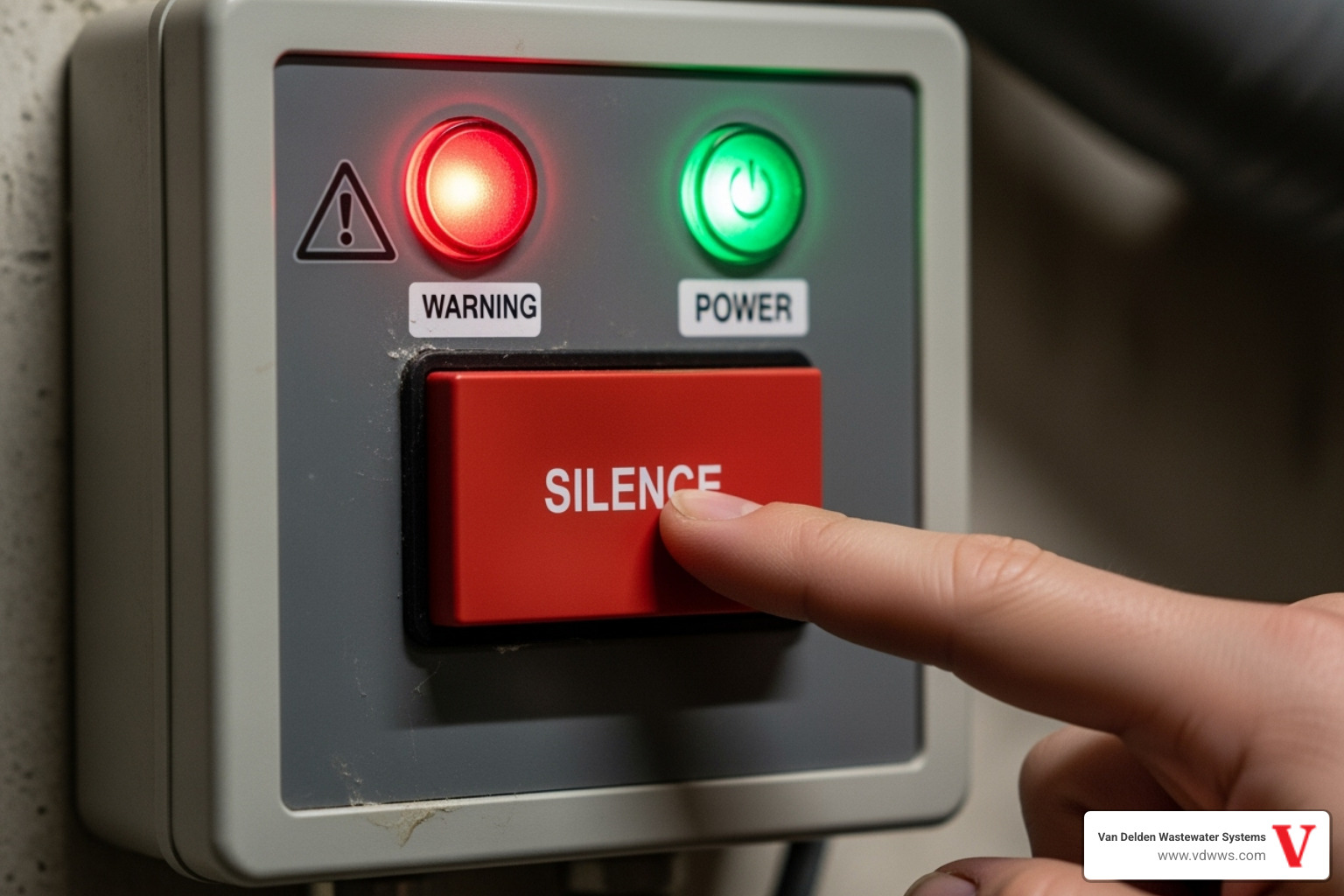
- Silence the alarm: Press the silence button on the control box. The noise will stop, but the warning light will remain on.
- Check your breaker: Ensure the septic system's circuit breaker hasn't tripped.
- Reduce water usage: Immediately stop doing laundry, running the dishwasher, and take shorter showers.
If the warning light stays on after 10-15 hours of reduced water use, contact a septic professional.
That high-pitched sound from your septic alarm isn't a sign of immediate disaster. It's an early warning that your system needs attention before a sewage backup occurs. The alarm monitors the wastewater level in your pump tank; when the level gets too high, a float switch triggers the alarm. This typically gives you 24-48 hours to act before wastewater backs up into your home.
Understanding the alarm helps you avoid panic, prevent costly damage, and keep your system running smoothly.

Explore more about what to do when septic tank alarm goes off:
That sudden beeping from your septic alarm is a call to action, not a reason to panic. The alarm is giving you advance notice, not announcing an immediate disaster. What to do when septic tank alarm goes off comes down to three manageable actions to protect your home.
Step 1: Silence the Alarm and Check the Panel
First, quiet the noise. Find the silence button on your alarm panel—it's usually red. Pressing it stops the beeping, but the warning light will stay on to remind you the problem isn't solved. A green light means the system has power and is working, while a red light typically indicates a high water level in your pump chamber. Some panels show error codes; if you have your system's manual, it can help you understand what the lights mean. This observation is key to effective septic system alarm troubleshooting.
Step 2: Check for Power Issues
Before assuming a major septic failure, check for a simple power issue. A tripped breaker is a common culprit. Go to your electrical panel and find the breaker for your septic system. If it's tripped, switch it fully off, then back on. Warning: If the breaker trips again immediately, do not keep resetting it. This indicates an electrical problem that needs a professional. Also, check any outdoor electrical outlets that power your system, as they can trip independently. If power is restored but the red light remains on, the problem is more than just a power interruption.
This is the most critical immediate action. Your septic alarm means the system is overwhelmed. Drastically cut back on water use to give it a chance to catch up. This means:
- Stop running the washing machine and dishwasher.
- Keep showers short or postpone them.
- Only flush toilets when absolutely necessary.
The alarm usually provides a 24-48 hour warning before a backup occurs. By minimizing water use, you extend this safety window. Often, if the alarm was triggered by heavy use, this step alone can solve the problem. If the red light turns off after 10-15 hours of minimal water use, the system has caught up. If not, the issue is more serious.
Why Is My Alarm Going Off? Uncovering the Common Causes
Once you've taken the immediate steps, it's time to understand why your alarm activated. Most causes fall into three categories: high water levels, component failures, or external factors.
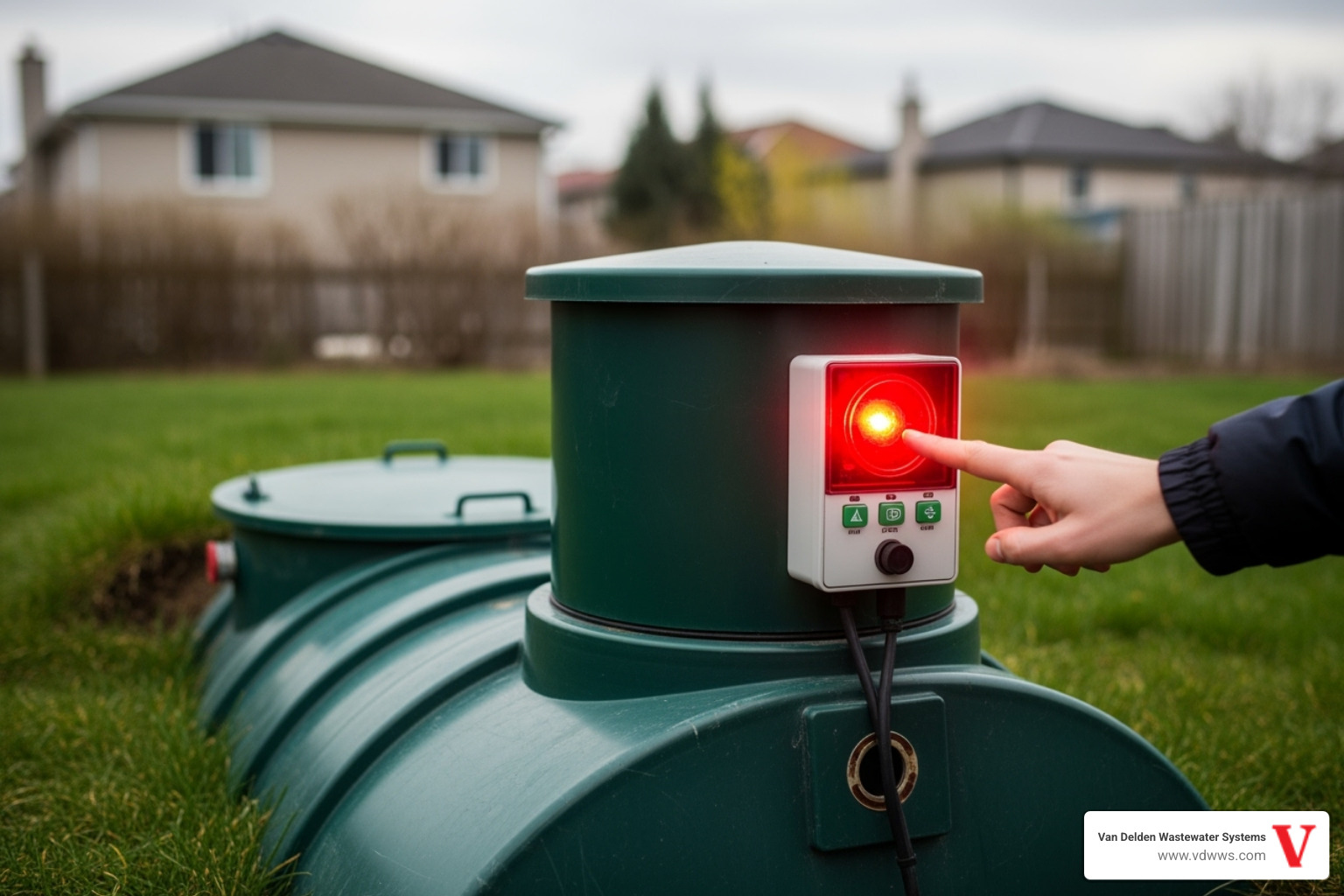
What to do when your septic tank alarm goes off due to high water
High water levels are the most common reason for an alarm. This happens when wastewater enters the system faster than it can be processed.
- Excessive water use: Did you have guests or do multiple loads of laundry? Sudden spikes can overwhelm a system designed for typical daily use.
- Saturated drain field: After heavy rain, the soil in your drain field can become waterlogged and unable to absorb more water, causing a backup. The importance of a healthy drainfield is critical.
- Clogged pipes or filters: Debris, a clogged effluent filter, or a blocked outlet can prevent wastewater from flowing freely, causing levels to rise.
- Full septic tank: A tank overdue for pumping has less room for liquid, causing the level to rise faster than normal. Understanding what does my alarm activation mean helps diagnose the issue.
What to do when your septic tank alarm goes off because of a component failure
If you've conserved water and the alarm persists, a mechanical issue is likely.
- Effluent float malfunction: Floats that monitor water levels can get stuck due to debris or simply wear out, triggering a false alarm or preventing the pump from turning on.
- Septic pump failure: The pump moves wastewater to the drain field. If it fails, water accumulates. You might hear the pump humming (indicating a jam) or nothing at all (indicating an electrical issue or burned-out motor).
- Timer issues: Timers control how often the pump runs to protect the drain field. A malfunctioning timer can prevent the pump from running enough, leading to high water levels.
How External Factors Can Trigger Your Alarm
Sometimes, the cause is external, particularly weather-related.
- Heavy rain and groundwater: During heavy downpours, groundwater can seep into the septic tank, raising the internal water level. This is a common reason why does the rain make my aerobic system alarm activate.
- Saturated soil: Even if water doesn't enter the tank, waterlogged soil around the drain field prevents it from absorbing effluent, causing a backup.
- Power surges: Lightning or other electrical issues can damage the control panel, pump, or floats, causing a malfunction.
Preventing Future Alarms: Proactive Septic System Care
The best way to handle a septic alarm is to prevent it. By investing in regular maintenance and developing smart daily habits, you protect your property, avoid costly emergency repairs, and gain peace of mind.

The Importance of Regular Professional Maintenance
Your septic system needs regular service to run properly. Professional maintenance is the foundation of a healthy, long-lasting system.
Annual inspections are your first line of defense. Our technicians can spot small problems, like a worn float switch, before they trigger a 2 AM alarm. We check pumps, floats, panels, and electrical connections to ensure everything is working correctly.
Septic tank pumping is also essential, typically every three to five years depending on household size and water use. Pumping removes accumulated solids that can clog your system and damage your drain field. The EPA also emphasizes regular inspections and pumping in The EPA's guide to septic system care.
Here's what consistent maintenance looks like compared to a neglected system:
| Feature | Maintained System | Neglected System |
|---|
| Lifespan | Extended; components last longer | Significantly reduced; premature failure |
| Repair Risk | Low; issues caught and addressed early | High; frequent, costly, and emergency repairs |
| Alarm Frequency | Very low; system operates smoothly | High; alarms common, often leading to backups |
| Efficiency | Optimal; processes wastewater effectively | Poor; slow drainage, potential for odors |
| Environmental Impact | Minimal; prevents contamination | High; risk of groundwater and soil contamination |
| Cost | Predictable, routine maintenance costs | Unpredictable, high emergency repair/replacement costs |
Regular professional attention means your system will last longer and cause fewer problems.
Smart Habits to Protect Your Septic System
Daily habits have a huge impact on your septic system's health.
- Conserve water: Every gallon saved reduces the load on your system. Fix leaks and only run full loads in the dishwasher and washing machine.
- Spread out laundry loads throughout the week to prevent sudden surges of water.
- Be mindful of what goes down the drain. Use septic-safe toilet paper and cleaners. Harsh chemicals can kill the beneficial bacteria your tank needs.
- The toilet is not a trash can. Flush only human waste and septic-safe toilet paper. Never flush "flushable" wipes, feminine hygiene products, paper towels, or cat litter.
- Keep grease and cooking oils out of the drain. They solidify and create stubborn clogs. Dispose of cooled grease in the trash.
- Protect your drain field. Never drive or park on it. Don't plant trees with aggressive roots nearby. Direct rainwater away from the area.
Frequently Asked Questions about Septic Alarms
When your septic alarm goes off, questions are natural. Here are answers to the most common concerns we hear from homeowners.
How long do I have before a sewage backup occurs after an alarm sounds?
You have time. Most septic alarms trigger when you still have 24-48 hours of normal water usage before a backup might occur. This warning period is designed for a thoughtful response. However, this buffer assumes you immediately reduce your water usage. If you continue with high-water activities, the safety window shrinks quickly. By cutting back on water, you extend the buffer and give yourself more time to troubleshoot or schedule a service call.
What are the risks of ignoring a septic tank alarm?
Ignoring a septic alarm is a gamble with high stakes.
- Financial Impact: A minor fix can escalate into a burned-out pump or failed drain field, turning a service call into a major expense.
- Sewage Backup: Wastewater backing up into your home causes extensive damage, requires costly cleanup, and creates a devastating mess.
- Health Risks: Untreated sewage contains dangerous bacteria and viruses. The CDC warns of health risks from untreated sewage, which can cause serious illness.
- Environmental Contamination: A failing system can pollute groundwater and local waterways, affecting your neighbors and the local ecosystem.
When is it absolutely necessary to call a professional?
You've done the initial steps, but some situations require an expert. Call a professional if:
- The red warning light stays on for more than 10-15 hours despite minimal water use.
- The alarm persists even with careful water conservation, pointing to a mechanical failure.
- You smell sewage inside your home or in the yard.
- Drains are gurgling or slow throughout the house.
- You see standing water or soggy patches near your septic tank or drain field.
If you're unsure what to do next, it's always best to call. We'd rather help you with a small issue than have you wait for a full-blown emergency. Our technicians can diagnose the problem efficiently and prevent further damage. For more guidance, see our post on what do I do if my alarm is on.
Your Septic Alarm is an Ally, Not an Enemy
That jarring beep is an ally, not an enemy. It's your home's early warning system, giving you precious time to act before a small issue becomes a crisis.
Remember the key takeaways for what to do when septic tank alarm goes off: Don't ignore the warning. Immediately silence the alarm, check the breaker, and reduce water usage. These steps buy you time and prevent damage.
Understanding potential causes—from heavy water use to a failing pump—helps you know when to call for help. However, prevention is the best strategy. Regular professional maintenance and smart daily habits (like water conservation and proper flushing) are the secrets to a quiet, reliable system.
Since 1937, Van Delden Wastewater Systems has provided honest, expert septic care to families in Boerne, San Antonio, and the Texas Hill Country. Our non-commissioned technicians focus on educating you and fixing the problem right, not upselling. We're here to help you understand your system and keep it running smoothly.
When your alarm light stays on or you're just not sure what to do, we're a phone call away. For expert diagnosis and service for your septic system alarm, learn more about our aerobic system alarm services. Trust your alarm's warning, and let us help you keep your system healthy for the long haul.