When You Need Emergency Septic Tank Cleaning in Bulverde, TX Right Now
Emergency septic tank cleaning in Bulverde, TX is something no homeowner wants to deal with — but when sewage backs up into your home or pooling water appears in your yard, you need fast, reliable help. Bulverde's unique Hill Country terrain, with its dense clay soils and limestone bedrock, puts extra stress on septic systems, making failures more likely and more urgent when they happen. Delaying action even by a few hours can turn a manageable problem into a costly, health-threatening disaster.
If you have a septic emergency right now, here's what to do immediately:
- Stop all water use in the home — no flushing, no running sinks, no laundry
- Keep people and pets away from any pooling water or wet areas near the drain field
- Turn off your HVAC system to prevent airborne bacteria from spreading indoors
- Do not use chemical drain cleaners — they can damage your system further
- Call a licensed emergency septic service for same-day or 24/7 response
Sewage water contains harmful bacteria and viruses that pose serious health risks. The longer you wait, the more contamination spreads into flooring, walls, and soil.
How do I know if I need emergency septic tank cleaning in Bulverde, TX?
Recognizing the difference between a minor plumbing hiccup and a full-blown septic catastrophe is essential for every Bulverde resident. Because most properties in our area rely on private onsite wastewater systems rather than a centralized city sewer, the responsibility of monitoring system health falls squarely on the homeowner.
Common Warning Signs of a Septic Emergency
If you notice any of the following, you likely need emergency septic tank cleaning in Bulverde, TX:
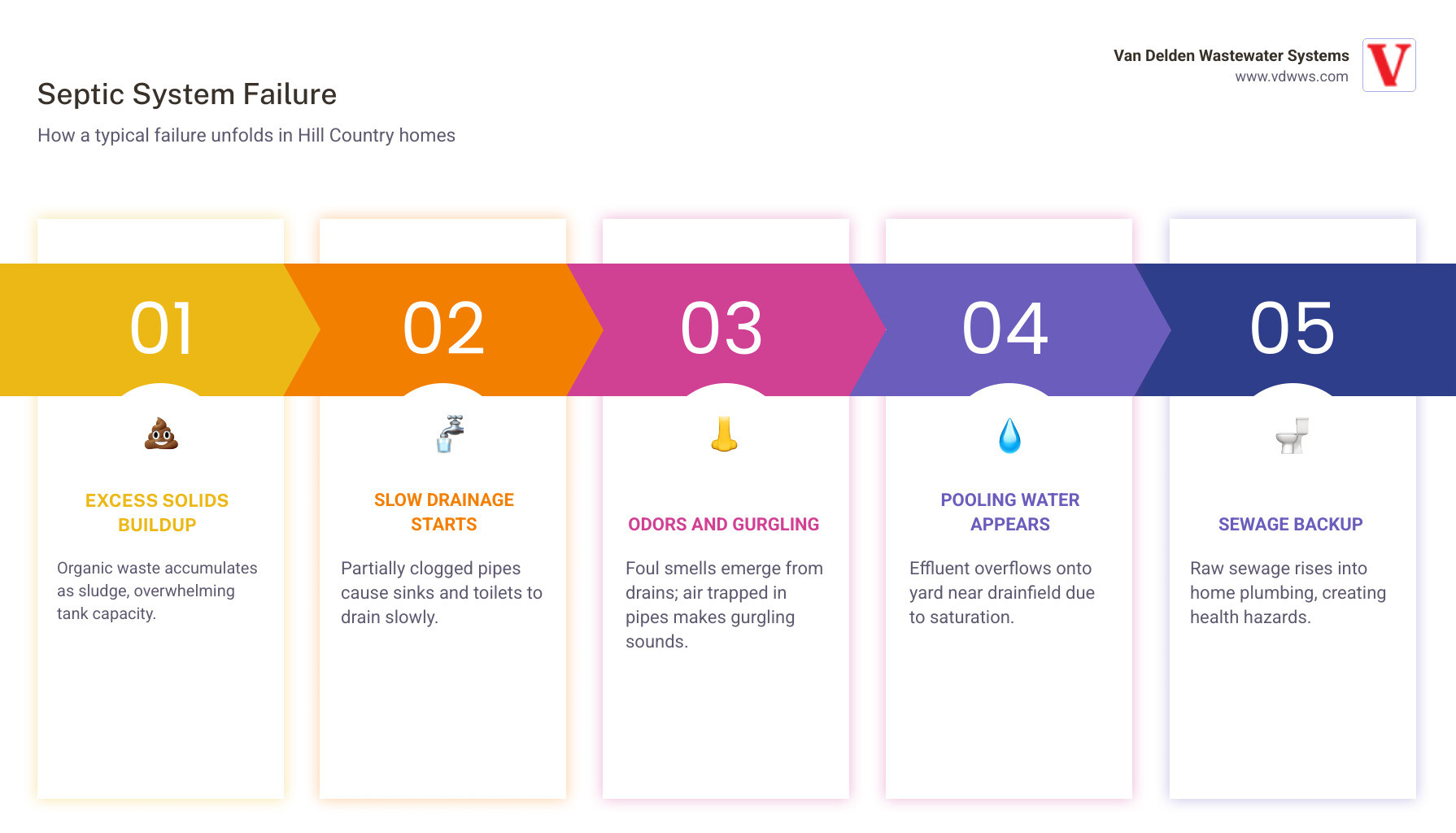
- Sewage Backups: This is the most obvious and dire sign. If wastewater is coming up through your bathtubs, toilets, or basement drains, your system has reached a breaking point.
- The "Gurgle": Do your pipes sound like they are gasping for air? Gurgling sounds in the plumbing often indicate that the tank is full or there is a major obstruction preventing air and water from flowing freely.
- Foul Odors: A healthy septic system should be odorless from the surface. If you catch a whiff of rotten eggs (hydrogen sulfide gas) inside your home or near the tank area, it’s a sign that gases are escaping because the system is overwhelmed.
- Pooling Water or Spongy Grass: Even in the heat of a Texas summer, if you see standing water or exceptionally lush, bright green grass over your drain field, it means effluent is surfacing rather than filtering through the soil.
- Slow Drains Throughout the House: If just one sink is slow, it’s a clog. If every drain in the house is sluggish, the "clog" is likely a full septic tank.
The Bulverde Factor: Soil and Terrain
In Bulverde, our "soil" is often just a thin layer of clay sitting atop solid limestone bedrock. This creates a difficult environment for wastewater. Clay is dense and doesn't absorb water quickly, while limestone can allow untreated waste to travel into natural springs or groundwater if the system isn't functioning perfectly. During heavy Hill Country rains, the ground becomes saturated quickly, leading to hydraulic overload. This is why proper drainfield maintenance in Bulverde is so critical; without it, the soil simply stops accepting water, leading to an immediate emergency.
If you aren't even sure where to start because you don't know where your system is located, you aren't alone. Many new homeowners in Comal County struggle with this. Learning how to locate a buried septic tank in Bulverde is the first step in addressing an emergency before the shovel even hits the ground.
When the alarm is buzzing or the toilet won't flush, panic is a natural reaction. However, taking a few calculated steps can save you thousands of dollars in property restoration.
1. Stop the Flow
The most important thing you can do is stop adding water to the system. Every gallon you send down the drain is another gallon that will end up on your floor or in your yard. This means no showers, no dishwashers, and certainly no laundry until a professional arrives.
2. Check the Alarm (For Aerobic Systems)
If you have an aerobic system, it likely has an alarm box. A red light or an audible buzzer usually indicates either a "High Water" event or a "Comp" (compressor) failure. While an alarm doesn't always mean a backup is imminent, it is your system's way of saying it can no longer process waste effectively.
3. Protect Your Health
Septic waste is "Category 3" water—also known as blackwater. It is teeming with pathogens. If sewage has entered your home, keep children and pets in a separate area. Do not attempt to clean up large spills with a standard shop-vac or household mop, as you will likely just spread the contamination.
4. Call the Professionals
Don't wait for "business hours." A septic emergency is a 24/7 event. We recommend contacting a service provider that offers comprehensive reporting and photo documentation so you have a clear record for your insurance company or for future maintenance planning. You can find more details on what to look for in our Bulverde septic pumping guide.
Emergency Signs: Aerobic vs. Conventional Systems
| Feature | Conventional System Signs | Aerobic System Signs |
|---|
| Warning Method | No alarm; usually discovered via backup or wet spots. | Alarm box with red light and audible buzzer. |
| Visual Indicators | Pooling water over the drain field trenches. | Sprinklers spraying smelly or cloudy water. |
| Common Failure | Clogged soil or broken pipes. | Aerator/compressor failure or pump malfunction. |
| Urgency | High; indicates soil saturation. | Very High; indicates mechanical or electrical failure. |
What to expect during professional emergency septic tank cleaning in Bulverde, TX
When our technicians arrive for an emergency septic tank cleaning in Bulverde, TX, we don't just "pump and run." A professional emergency response includes:
- Complete Waste Extraction: We remove all liquid and solids (sludge and scum) from the tank.
- Thorough Sludge Removal: We use specialized tools to break up the heavy sludge layer at the bottom to ensure the tank's full capacity is restored.
- Baffle and Filter Inspection: We check the inlet and outlet baffles. If your tank has an effluent filter, we clean it to prevent future blockages.
- Visual Diagnostics: We look for cracks in the tank or signs of backflow from the drain field, which helps us tell you why the emergency happened.
- Documentation: You should receive a detailed service report, often including photos, so you know exactly what was done.
Long-Term Maintenance to Prevent Future Septic Emergencies
The best way to handle a septic emergency is to prevent it from ever happening. In the Texas Hill Country, "out of sight, out of mind" is a dangerous philosophy for wastewater.
The 3-5 Year Pumping Rule
Most septic tanks should be pumped every 3 to 5 years. However, this depends on your household size. A family of six living in a home designed for four will need more frequent service. A good rule of thumb is the 30% Rule: when the combined layers of scum and sludge take up 30% of the tank's working capacity, it’s time to pump. If you wait longer, solids begin to escape into the drain field, which is the most expensive part of the system to replace.
Comal County and TCEQ Compliance
Bulverde homeowners must adhere to regulations set by the Texas Commission on Environmental Quality (TCEQ) and local Comal County permits. For aerobic systems, this often includes mandatory maintenance contracts and inspections three times a year. Staying compliant isn't just about avoiding fines; it’s about ensuring your system doesn't fail and contaminate the local environment.
If your system is older or you suspect the drain field is struggling, it may be time to consult a specialist in drain field repair serving Bulverde. They can perform advanced diagnostics like hydro-jetting or soil fracturing to extend the life of your system.
The difference between routine pumping and emergency septic tank cleaning in Bulverde, TX
Many people use the terms "pumping" and "cleaning" interchangeably, but in an emergency context, there is a distinct difference:
- Routine Pumping: This is proactive care. It’s scheduled, calm, and designed to remove solids before they cause trouble. It's like getting an oil change for your car.
- Emergency Cleaning: This is reactive. It often involves clearing blockages, jetting lines, and dealing with a system that is already in failure mode. It's like replacing the entire engine because you skipped the oil changes.
Proactive maintenance protects your drain field. Once a drain field is clogged with "biomat" (a slimy buildup of bacteria and solids), a simple pump-out won't fix it. You can learn more about how to keep your lines clear in our drainfield cleaning guide.
Frequently Asked Questions about Bulverde Septic Emergencies
Why did my aerobic septic alarm go off?
An aerobic alarm is usually triggered by one of three things:
- High Water Level: The pump isn't sending water out to the sprinklers fast enough, or you've used too much water in a short period.
- Compressor/Aerator Failure: The "lungs" of your system have stopped providing oxygen to the bacteria, which will eventually cause the system to smell and fail.
- Electrical Issues: A tripped breaker or a blown fuse can shut down the entire system.
Is a sewage backup considered a health emergency?
Absolutely. Raw sewage contains E. coli, Salmonella, and various viruses. In the Texas Hill Country, where many residents also rely on well water, a septic failure can potentially contaminate your own drinking water supply. Immediate emergency septic tank cleaning in Bulverde, TX is required to mitigate these risks.
How does Bulverde’s rocky soil affect my drain field?
The limestone bedrock in Bulverde acts as a barrier. If the soil above it becomes saturated or clogged with solids, the wastewater has nowhere to go but up. This "hydraulic overload" is common in our area, especially during rainy seasons, making it vital to conserve water and maintain a healthy bacterial balance in your tank.
Conclusion
At Van Delden Wastewater Systems, we understand that a septic emergency feels like the end of the world. Since 1937, our family-owned business has been helping neighbors in Bulverde, Boerne, and across the Hill Country navigate these messy situations with honesty and professionalism. Our background-checked, non-commissioned technicians are here not just to pump your tank, but to educate you on how your specific system works.
Whether you are dealing with a midnight backup or just want to ensure your system is ready for the next big Hill Country rain, we provide the detailed documentation and expert service you deserve. Don't let a septic issue linger—protect your home, your health, and the beautiful Bulverde environment by staying ahead of the curve.
If you need help or want to schedule a routine check-up, visit our Bulverde, TX location page to get started. We've been your trusted septic partner for over 80 years, and we're ready to show you why experience matters.