Navigating a Septic Failure in the Texas Hill Country
At Van Delden Wastewater Systems, we know a failing waste management system is always a stressful event, but understanding why Bergheim's limestone bedrock complicates emergency septic replacements is crucial when you face a sudden backup. It is a harsh reality our team often has to explain to homeowners in this region: a tank failure rarely happens at a convenient time, and the local terrain actively fights against a quick resolution. During the hottest months of the year, August late-summer dry ground conditions bake the minimal topsoil into a dense hardpan. This creates a tough, concrete-like crust that makes even the initial ground-breaking phase incredibly difficult for standard machinery.
Beneath that baked crust lies the real challenge: solid, unyielding stone that immediately alters the scope, timeline, and intensity of your project. When you are dealing with failing septic systems, securing a professional septic tank replacement requires specialized intervention. You cannot simply dig a hole and drop a new tank into the ground. We make it a priority to help homeowners understand exactly why this specific terrain extends emergency timelines, why standard digging methods fail, and what to expect when our heavy machinery arrives on their property.
The Geological Reality of Bergheim's Shallow Topsoil
To understand why a replacement takes so long, you have to look at the ground beneath your feet. The Texas Hill Country is famous for its rugged beauty, but that beauty comes from a geological formation that our installers know is notoriously hostile to underground construction. Unlike areas with deep, loamy soil that easily gives way to a shovel or a standard bucket, Bergheim properties lack natural soil depth. In many cases, our technicians find only a few inches of dirt before hitting an immovable barrier.
Understanding the Edwards Plateau Terrain
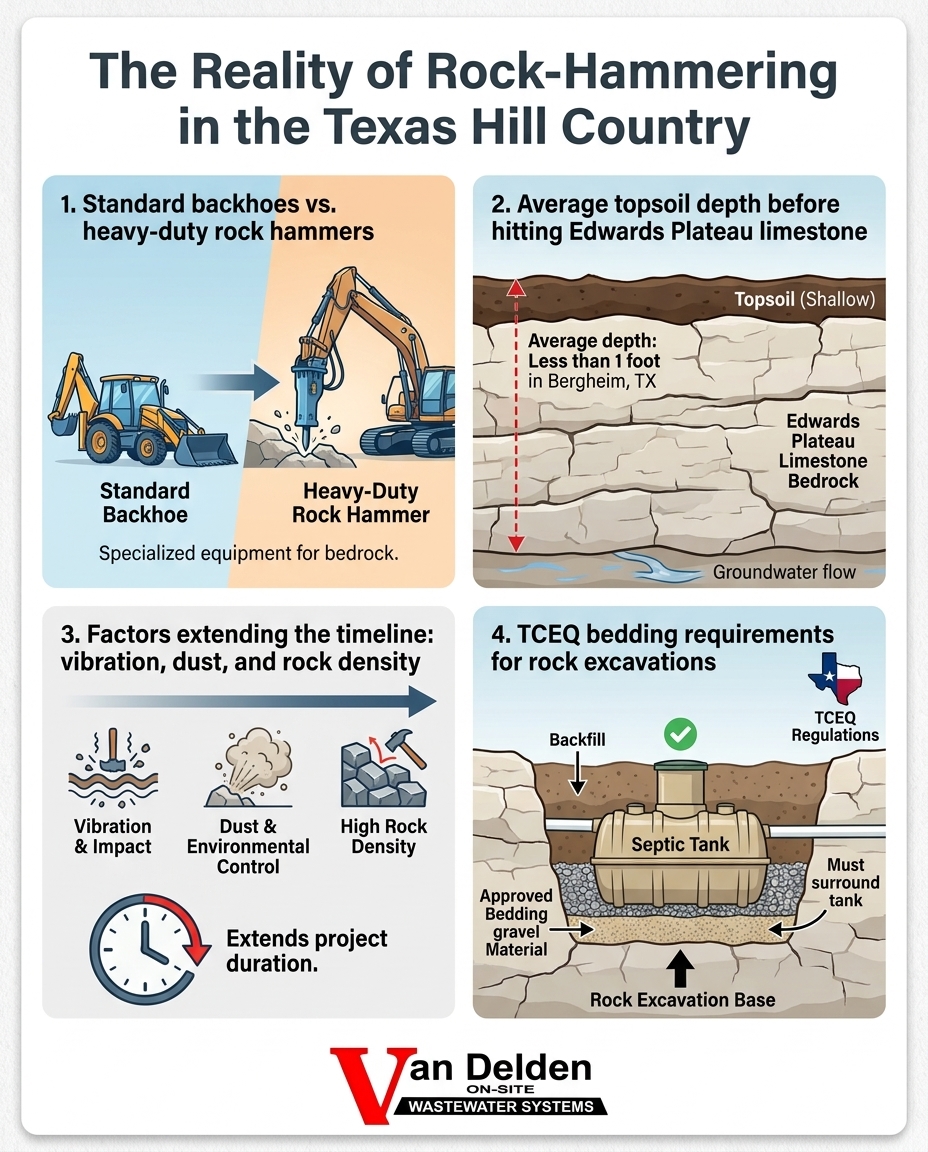
The region sits on the Edwards Plateau, a massive geological formation composed primarily of dense limestone deposits. This Bergheim limestone bedrock often begins just inches below the surface, severely limiting the natural filtration depth required for standard wastewater systems. Because the rock is so close to the surface, it prevents the natural absorption of effluent, which is why we install specialized aerobic systems so commonly in the area.
Furthermore, the Texas Commission on Environmental Quality (TCEQ) enforces strict regulations regarding tank bedding and burial depths to protect the local groundwater and the underlying aquifer. The rock cannot simply be avoided, built over, or ignored. To meet these strict environmental and health guidelines, mandatory excavation into the solid stone is required. The tank must sit at a specific depth, surrounded by approved bedding materials, to ensure it functions safely and legally for decades to come.
Why Standard Excavation Fails Against Solid Limestone
When an emergency replacement is needed, we find homeowners often expect a standard backhoe to roll in, scoop out the dirt, and have the new tank placed by the afternoon. In the Hill Country, that expectation quickly collides with geological reality. A standard backhoe or excavator bucket will simply bounce off or scrape the surface of solid limestone. The teeth of a standard bucket are designed to pull through soil, clay, and loose gravel—not to penetrate solid sedimentary rock.
Attempting to force standard construction equipment into this dense terrain causes severe machinery damage, unnecessary ground disruption, and zero forward progress. The hydraulic pressure of a standard bucket is entirely insufficient. To achieve the necessary depth, our crews rely on the deployment of heavy-duty rock hammer excavator attachments. These specialized hydraulic tools physically shatter the bedrock inch by inch, breaking the solid mass into manageable pieces that can then be scooped out and hauled away.
• Standard Digging — Equipment Used: Backhoe with toothed bucket — Effectiveness in Bergheim: Fails on solid limestone; scrapes surface — Primary Application: Deep loamy soil, sand, and loose clay
• Heavy Demolition — Equipment Used: Heavy-duty rock hammer excavator attachments — Effectiveness in Bergheim: Successfully shatters dense bedrock — Primary Application: Edwards Plateau limestone, solid rock shelves
• Spoil Removal — Equipment Used: Skid steer or loader — Effectiveness in Bergheim: Required to remove shattered rock pieces — Primary Application: Clearing the hole after hammering
The Mechanics of Rock-Hammering and Property Impact
Rock-hammering is an intense, high-impact process that fundamentally changes the environment of your property for the duration of the project. Setting clear expectations is a core part of our process. For example, when one first-time septic system owner recently reached out to our team for an inspection and guidance, our inspector walked them through the thorough, straightforward details of their system, answering all questions so the customer felt fully informed about what their property required. That same level of clear, upfront communication is vital when explaining the intense physical impact of rock-hammering during an emergency replacement.
Managing Noise, Dust, and Vibration
When the hammer strikes the stone, the resulting vibration can be felt throughout the surrounding area. During August late-summer dry ground conditions, the shattering of dry limestone creates substantial dust plumes. The lack of moisture in the soil means there is nothing to naturally suppress the airborne particulates. Our professional teams take deliberate measures to manage this debris, ensuring that surrounding structures, HVAC units, and landscaping are protected as much as possible.
What to expect during the hammering phase:
1. Continuous heavy noise: The hydraulic hammer operates with a rapid, percussive pounding that will be loud inside and outside the home.
2. Noticeable ground vibration: You will feel the vibrations through the floorboards as the bedrock is fractured.
3. Significant dust generation: Breaking dry stone creates fine limestone dust, requiring careful site management and cleanup.
4. Slower visible progress: Unlike moving dirt, breaking rock is a methodical process where progress is measured in inches, not feet.
The Reality of Rock-Hammering in the Texas Hill Country
How Bedrock Dictates Emergency Replacement Timelines
When your system fails completely, your first question is naturally about how fast it can be fixed. Standard soil excavations might be completed rapidly, sometimes within a single day. However, rock-hammering operates on an entirely different schedule. The density of the Bergheim limestone bedrock directly dictates the speed of the project, and our crews know there is no way to safely rush the demolition of solid stone.
For our installation teams, mobilizing specialized attachments adds logistical steps to the emergency response. The equipment must be transported, safely unloaded, and carefully maneuvered into position. Once the hammering begins, the crew must frequently stop to scoop out the fractured rock and assess the depth, repeating this cycle until the exact required dimensions are achieved. Understanding this timeline prevents frustration and allows homeowners to plan alternative water usage arrangements, such as staying with family or adjusting daily routines, while the heavy excavation is underway.
The typical phases of a bedrock excavation include:
• Site Assessment & Mobilization: Evaluating the rock depth and transporting the correct hydraulic attachments to the property.
• Initial Topsoil Removal: Scraping away the baked, hardpan crust to expose the solid rock shelf beneath.
• Percussive Hammering: The longest phase, where the bedrock is systematically fractured to create the tank cavity.
• Spoil Extraction: Removing the heavy, jagged rock fragments from the hole to prepare for bedding.
Meeting TCEQ Regulations in Rocky Terrain
Establishing a new system is not just about digging a hole; it is about strict adherence to state and local environmental laws. The Texas Commission on Environmental Quality (TCEQ) mandates specific bedding materials to protect the tank from structural failure. A fiberglass or concrete tank cannot be placed directly on jagged, freshly hammered rock. The sharp edges of fractured stone create pressure points that will eventually crack or puncture the tank under the weight of the backfill and water.
To prevent this, we ensure the excavation is dug deeper and wider than the tank itself. This extra space is then filled with a thick layer of approved sand or pea gravel, creating a protective cushion. Achieving this correct burial depth within Bergheim limestone bedrock is non-negotiable for system functionality and environmental protection. If the tank is too shallow, the system will not drain properly; if it lacks bedding, it will fail.
Navigating these stringent regulations requires deep local expertise. Operating since 1937, our team at Van Delden Wastewater Systems brings decades of specialized experience navigating these exact Hill Country regulatory and geological hurdles. This historical footprint ensures that every bedrock excavation we perform is done precisely to code, guaranteeing the system passes local inspection the first time.
Preparing Your Bergheim Property for Heavy Excavation
When you are facing an emergency replacement that requires rock-hammering, proactive preparation can make the process significantly smoother for you and our excavation crew. Because heavy-duty rock hammer excavator attachments require significant maneuvering room and generate substantial debris, preparing the site is a critical first step.
• Clear wide access paths: The machinery used for rock-hammering is larger and heavier than standard equipment. Ensure gates are wide enough and pathways are clear of obstacles.
• Protect delicate landscaping: Remove potted plants, outdoor furniture, or vehicles from the immediate vicinity to protect them from the fine limestone dust that will settle over the area.
• Notify your neighbors: The percussive noise of a hydraulic hammer travels far. Informing your neighbors about the impending noise and vibration helps maintain good relationships, especially in tight-knit Hill Country communities.
• Secure pets and children: Heavy machinery and open bedrock excavations are significant safety hazards. Keep all pets and children securely indoors while our crew is actively working on the site.
• Plan for water disruptions: Since the project will take longer than a standard dirt excavation, plan your household water usage accordingly until the new system is fully online and inspected.
Partner with Local Experts for Your Septic Replacement
Replacing a waste management system in solid bedrock is not a standard job. It requires heavy-duty machinery, a thorough understanding of TCEQ bedding regulations, and a team that knows exactly how to handle the rugged terrain of the Edwards Plateau. Trying to force standard equipment into this environment only leads to damaged property and extended delays.
Setting realistic expectations ensures the job is done right the first time, in full compliance with local laws. By partnering with our experienced professionals, you gain peace of mind knowing that the noise, dust, and extended timelines are all part of a carefully managed process designed to give you a long-lasting, reliable system. If you are facing a sudden failure and know your property sits on Bergheim limestone bedrock, request an estimate today. We will provide a clear explanation of why your specific bedrock mandates rock-hammering, how it impacts your schedule, and exactly what you can realistically expect during the excavation phase.
Frequently Asked Questions
Can you put a septic system in solid rock?
Yes, but in our experience, it requires specialized heavy-duty excavation equipment to shatter the stone. A hydraulic rock hammer is used to break the bedrock into pieces, creating a cavity large enough for the tank. Once excavated, the hole must be lined with protective bedding material like sand or gravel to prevent the jagged rock from damaging the new tank.
How much topsoil is needed for a septic system in Texas?
Conventional systems typically require deeper soils to naturally filter effluent, but in rocky areas, alternative aerobic systems are often mandated. When installing the tank itself, the depth of the topsoil matters less than achieving the total required burial depth. If the topsoil is shallow, the underlying rock must be excavated to meet strict TCEQ burial and bedding regulations.
How long does it take to replace a septic tank in the Hill Country?
We find that replacements in the Hill Country take significantly longer than in areas with deep, loamy soil due to the presence of solid limestone. While a standard dirt excavation might be finished rapidly, rock-hammering progresses at a rate of inches per hour. Homeowners should expect the heavy excavation phase to add substantial time to the overall emergency replacement schedule.
Why does it take longer to install a septic system in Bergheim?
Bergheim sits directly on the Edwards Plateau, meaning properties often feature solid limestone just beneath the surface. Standard digging equipment cannot penetrate this stone, requiring the mobilization and use of specialized hydraulic hammers. The methodical process of shattering and removing the bedrock extends the timeline considerably compared to standard installations.
What equipment is used to dig through limestone for septic tanks?
Standard backhoe buckets are ineffective against solid limestone and will only scrape the surface. Our professionals use heavy-duty rock hammer excavator attachments to deliver rapid, high-impact percussive strikes that fracture the stone. Once shattered, skid steers or loaders are used to scoop out the heavy debris and clear the hole.
Does rock-hammering damage surrounding property?
While rock-hammering is a highly intense process that creates significant noise, dust, and ground vibration, professional crews take strict measures to protect the property. The vibration is a normal part of breaking the bedrock and rarely causes structural issues, though it will be strongly felt. We advise homeowners to move delicate outdoor items to protect them from the fine limestone dust generated during the excavation.
Peter was personable, professional and thorough. Highly recommend Van Delden. You might be able to find a cheaper company but not better!
Wendell E
On time. 100% professional, knowledgeable, and courteous. Very helpful and straightforward. That is the bar all businesses should strive for.
Andy R
It has been a pleasure working with your company. Not only did y’all communicate very well but your workers were always polite! Thank you!
Kate R.
“I thank Van Delden for such prompt service. Honest people are hard to come by these days. I will certainly recommend Van Delden to anyone! Jesse is an upstanding young man and very nice to talk to. I thank everyone at Van Delden for taking such good care of me.”
Charles H
This is just a note to thank you for explaining the problem with my system. You didn’t have to be so kind and I appreciate your good business ethics and time spent. In the future you will have mine in return!