Why the Risks of DIY Septic Maintenance Are Serious — and Often Underestimated
The risks of DIY septic maintenance are more serious than most homeowners expect. What looks like a simple fix can quickly turn into a health emergency, a costly repair bill, or even a legal violation.
Here is a quick summary of the main risks:
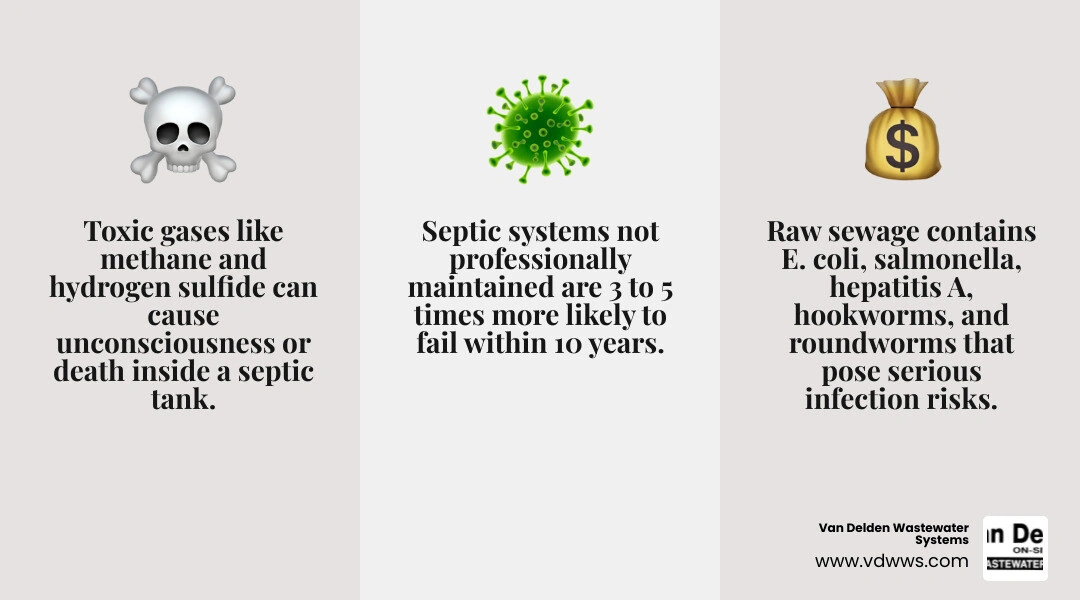
• Health hazards — Raw sewage contains E. coli, salmonella, hepatitis A, hookworms, and roundworms. Toxic gases like methane and hydrogen sulfide build up inside tanks and can cause unconsciousness or death.
• System damage — Improper pumping or repairs can crack tank walls, break baffles, damage inlet and outlet pipes, and clog the drain field.
• Bacterial imbalance — Disrupting the natural bacteria inside your tank causes faster sludge buildup and more frequent failures.
• Legal consequences — Many areas require licensed contractors to perform septic work. DIY pumping without proper waste disposal can result in significant fines.
• Environmental harm — Improperly handled sewage can contaminate groundwater and nearby water sources, affecting your family and your neighbors.
• Long-term costs — Septic systems that are not professionally maintained are 3 to 5 times more likely to fail within 10 years compared to those serviced by licensed professionals.
About 25% of Americans rely on a septic system rather than a municipal sewer line. That makes proper maintenance one of the most important — and most overlooked — responsibilities of homeownership. A well-maintained system can last 30 years or more. A neglected one can fail in as few as 5 to 15 years.
If you have ever wondered whether you can handle septic work yourself to save money, this guide walks you through exactly why that decision carries far more risk than most people realize.
The Physical and Health Risks of DIY Septic Maintenance

When you look at a patch of green grass over your septic tank, it is easy to forget that just a few feet below lies a highly active, biological wastewater treatment facility. Opening a septic tank is not like opening a crawl space or a garden shed. It exposes you to immediate, life-threatening physical hazards and aggressive pathogens.
For homeowners in the Texas Hill Country, from San Antonio and Boerne to Spring Branch and Bulverde, handling these systems without professional training can lead to severe personal injury.
Toxic Gas Exposure: Silent Risks of DIY Septic Maintenance
The decomposition of organic waste inside a sealed septic tank generates a heavy concentration of toxic sewer gases. The primary culprits are methane, carbon dioxide, and hydrogen sulfide.
Hydrogen sulfide is highly deceptive; in low concentrations, it smells like rotten eggs, but in higher concentrations, it quickly deadens your sense of smell. You might think the air has cleared when, in reality, the gas has reached dangerous levels.
Because these gases are heavier than air, they settle inside the tank and the access riser. If you lean over an open tank to inspect it or attempt a repair, breathing in these concentrated fumes can cause immediate dizziness, rapid asphyxiation, or sudden loss of consciousness.
Falling into a septic tank is almost always fatal due to the toxic atmosphere and the depth of the liquid. This is why our professional technicians use specialized air-monitoring equipment, safety harnesses, and never enter a tank without a trained spotter on the surface. To understand why even minor physical interventions carry such high stakes, read our guide on Septic Repair and Why It's Not DIY.
Pathogen and Parasite Exposure Risks
Raw household sewage is a biohazard teeming with active pathogens. When you attempt DIY maintenance — whether it is clearing a clog, replacing a filter, or trying to patch a pipe — you risk direct exposure to viruses, bacteria, and parasites.
• Bacteria and Viruses: Exposure can lead to severe gastrointestinal illnesses, skin infections, hepatitis A, norovirus, and salmonella.
• Parasites: Septic systems often harbor parasites like hookworms and roundworms. These organisms can survive in the sludge and soil, causing long-term, difficult-to-diagnose internal illnesses if they come into contact with your skin or are accidentally ingested.
Standard household personal protective equipment (PPE) like gardening gloves and simple dust masks are entirely inadequate against these microscopic threats. Professional septic specialists wear heavy-duty, fluid-resistant gear and follow strict sanitation protocols to prevent carrying these pathogens back to their families or contaminating your yard.
How DIY Attempts Can Damage Your Septic System
Your septic system is a carefully balanced mechanical and biological ecosystem. It relies on gravity, precise pipe alignments, and structural integrity to process hundreds of gallons of water every day. Heavy-handed DIY attempts can easily break fragile underground components, turning a simple maintenance task into a complete system failure.
Structural Damage to the Tank and Baffles
Septic tanks are typically made of concrete, fiberglass, or plastic. While they are designed to withstand soil pressure when buried, they are surprisingly vulnerable to localized impacts and improper load distribution.
• Cracking the Tank: Using heavy tools, metal pry bars, or digging equipment near the tank can easily puncture plastic walls or crack aging concrete. Even a hairline crack can allow groundwater to rush in (overloading your drain field) or permit untreated sewage to leak out.
• Damaging the Baffles: Every septic tank has inlet and outlet baffles. These components direct the flow of incoming wastewater and prevent floating scum from escaping into your drain field. Baffles are easily broken if struck by a rental pump hose or a DIY plumbing snake. If you knock a baffle loose, solids will migrate directly to your drain field, causing a rapid and highly expensive system failure.
• High-Pressure Equipment Blunders: Some homeowners rent high-pressure hydro-jetters to clear lines themselves. Without precise pressure calibration, these machines can easily shatter older clay pipes, dislodge PVC joints, or tear through delicate internal tank structures.
For a deeper dive into how professional care protects these components compared to DIY attempts, explore our detailed Professional vs DIY Septic Maintenance Comparison.
Disrupting the Bacterial Balance and Soil Structure
A healthy septic tank relies on anaerobic bacteria to break down organic solids into liquid effluent. This biological process is incredibly sensitive to chemical changes.
When homeowners try to clear stubborn clogs or "clean" their tanks using harsh commercial drain cleaners, chemical solvents, or heavy doses of bleach, they inadvertently wipe out these beneficial bacterial colonies. Without bacteria, solids cannot break down, leading to rapid sludge accumulation, system backups, and foul odors.
Furthermore, improper water management or driving vehicles over the septic area can ruin the soil structure. The drain field relies on porous, uncompacted soil to naturally filter and absorb wastewater.
If you attempt to dig up your own system, drive heavy rental equipment over the yard, or fail to manage your soil correctly, you can destroy this natural filtration system. For those with aerobic systems, which require even more precise electrical and mechanical balancing, we recommend reading Can I Service My Own Aerobic System and watching our Should I Service My Own Aerobic System Video to understand the technical complexities involved.
Legal, Environmental, and Financial Consequences
Taking a DIY approach to septic care doesn't just threaten your physical health and your yard; it can also land you in hot water with local environmental authorities and severely impact your home's equity.
• Safety Protocols — Professional Septic Maintenance: Full commercial PPE, gas detectors, and safety harnesses — DIY Septic Maintenance: Minimal protection; high risk of toxic gas inhalation
• Equipment Used — Professional Septic Maintenance: Industrial vacuum trucks, high-resolution cameras — DIY Septic Maintenance: Basic rental pumps, shovels, and household snakes
• Bacterial Preservation — Professional Septic Maintenance: Leaves essential active bacterial layers intact — DIY Septic Maintenance: Often strips bacteria or kills colonies with chemicals
• Regulatory Compliance — Professional Septic Maintenance: Full licensing, permitting, and legal manifest tracking — DIY Septic Maintenance: Risk of illegal dumping, code violations, and heavy fines
• Property Documentation — Professional Septic Maintenance: Official service forms, photo records for home sales — DIY Septic Maintenance: No official record; can lower home resale value
• System Lifespan — Professional Septic Maintenance: Maximized up to 30+ years with early detection — DIY Septic Maintenance: High failure rates (often within 5 to 15 years)
Environmental Violations and Fines
In Texas, septic systems are heavily regulated to protect our precious groundwater resources, such as the Edwards Aquifer. The Texas Commission on Environmental Quality (TCEQ) and local county health departments have strict rules regarding who can service, repair, and transport septic waste.
If you attempt to pump your own tank, you face a major hurdle: waste disposal. It is highly illegal to discharge septic waste onto your property, into storm drains, or into local waterways.
Licensed professionals must transport this waste in certified vacuum trucks and dispose of it at approved municipal treatment facilities, keeping detailed manifests of every gallon.
Improper septic tank pumping or DIY maintenance can lead to environmental contamination, with untreated sewage reaching groundwater in up to 20% of reported failure cases. If you are caught performing unlicensed repairs or illegally disposing of waste, you can face municipal and state fines ranging from hundreds to thousands of dollars per day of violation.
Long-Term Financial Risks of DIY Septic Maintenance
While the immediate goal of DIY is usually to save a quick buck, the long-term financial reality is often the exact opposite.
• Premature System Failure: Septic systems that are not professionally maintained are 3 to 5 times more likely to fail within 10 years compared to those serviced regularly by licensed professionals.
• Emergency Repairs: If you accidentally crack a tank wall or damage a pipe connection, you will have to call for emergency professional repairs, which are significantly more expensive than scheduled preventive maintenance.
• Property Value and Real Estate Issues: When you sell your home in Shavano Park, Fair Oaks Ranch, or San Antonio, buyers will request a professional septic inspection. If the inspector finds unpermitted DIY repairs, structurally damaged baffles, or a failing drain field, it can stall the sale or force you to drop your asking price by the cost of a complete system replacement.
• Voided Warranties and Insurance Denials: Many home insurance policies and septic component warranties specifically require professional maintenance records. If your system fails and you cannot provide proof of professional service, your insurance claim may be denied, leaving you to cover the entire replacement cost out of pocket.
Understanding the difference between a general contractor and a certified wastewater specialist can save you from these financial traps. Learn more by reading about the Advantages of a Septic Specialist vs General Contractor.
Debunking Common DIY Septic Maintenance Myths
The internet is filled with "quick fixes" and home-remedy advice for septic systems. Unfortunately, following this well-meaning but highly inaccurate advice is a fast track to system damage.
The Truth About Chemical and Bacterial Additives
One of the most persistent myths is that you can avoid pumping your septic tank by regularly flushing store-bought chemical additives, yeast, or bacterial enzymes down your toilet. Some products claim they can "liquefy" solids and eliminate the need for professional servicing entirely.
In reality, these additives are often a complete waste of money, and some can actively harm your system. A healthy human household naturally introduces all the bacteria a septic tank needs to function.
Many chemical additives act as harsh solvents that break down the sludge layer into tiny, suspended particles. Instead of being digested safely in the tank, these suspended solids flow out into your drain field, where they clog the soil pores and cause permanent field failure.
To learn more about why these commercial products are not the miracle cure they claim to be, read our articles on Why Septic Additives Are a Waste of Money and Don't Waste Your Money on Septic System Gimmicks.
Why You Cannot Simply Pump or Repair Your Own Tank
Another common misconception is that a homeowner can rent a trash pump, run a hose to a utility trailer, and pump out their own tank over a weekend.
First, standard rental pumps lack the power to lift and emulsify the heavy, compacted sludge layer at the bottom of the tank. They merely draw out the water, leaving the thickest solids behind to harden and continue reducing your tank's operating capacity.
Second, without a massive, sealed commercial vacuum truck, the odor released during pumping will be completely overwhelming, potentially sparking complaints from neighbors and visits from local code enforcement.
Finally, patching concrete cracks or broken pipes from the inside of a tank using standard hardware-store epoxy or cement is rarely a long-term fix. Septic tanks are subject to shifting soil loads and constant moisture.
Professional repairs require specialized hydraulic cements, proper structural prep, and precise sealing techniques that can withstand the corrosive environment inside the tank. For more eye-opening truths about common septic misconceptions, read our guide on 4 Dangerous Septic System Myths.
Frequently Asked Questions About Septic Maintenance
How often should a septic tank be professionally inspected and pumped?
As a general rule, we recommend having your septic tank professionally inspected every 1 to 3 years and pumped every 3 to 5 years.
The exact frequency depends on several key factors:
• Household Size: More people living in the home means more wastewater and solids entering the system.
• Water Usage: High water volumes can push solids out of the tank before they have time to settle.
• Garbage Disposal Use: Using a garbage disposal significantly increases the volume of solids in the tank, requiring more frequent pumping.
• System Type: Aerobic systems with mechanical aerators and electrical components require more frequent, structured inspections to ensure all parts are functioning correctly.
What are the warning signs that my septic system is failing?
Catching a septic issue early can save you from a major mess. Keep an eye out for these classic warning signs:
• Slow Drains or Gurgling Pipes: If multiple sinks, showers, or toilets in your home are draining slowly or making gurgling noises, the issue is likely in your main line or septic tank rather than a single pipe.
• Sewage Odors: Smelling rotten eggs or sewer gas inside your home, near the septic tank, or around your drain field is a clear sign that gases are escaping or the system is backing up.
• Standing Water or Muddy Soil: Pooling water or unusually soggy patches of grass over your tank or drain field — especially when it hasn't rained — indicates that your drain field is saturated and can no longer absorb effluent.
• Unusually Lush, Bright Green Grass: While a green lawn is nice, a strip of grass over your drain field that is significantly greener and taller than the rest of your yard means it is feeding on excess, unfiltered wastewater rising to the surface.
• Sewage Backups: The most severe sign is raw sewage backing up into your lowest household drains. This is a plumbing emergency that requires immediate professional attention.
How can I find a trustworthy septic service provider?
Your septic system is one of the most expensive components of your property. Entrusting it to the wrong person can lead to poor service, hidden fees, or unnecessary repairs.
When looking for a provider in the San Antonio and Boerne areas, keep these tips in mind:
• Verify Licensing and Insurance: Ensure the company is fully licensed by the TCEQ and carries comprehensive liability insurance to protect your property in case of accidental damage.
• Look for Background-Checked, Non-Commissioned Technicians: Some companies pay their technicians on commission, which can incentivize them to recommend expensive, unnecessary repairs. At Van Delden Wastewater Systems, our technicians are background-checked, non-commissioned, and focused entirely on educating you about your system's actual needs.
• Ask for Detailed Documentation: A reputable provider will always supply a detailed service form and photo documentation of your tank before and after pumping. This gives you clear proof of the work performed and a reliable record for future home sales.
To ensure you don't fall victim to deceptive sales tactics, read our articles on how to Protect Yourself from Unscrupulous Septic Contractors and Spotting an Unscrupulous Septic Maintenance Provider.
Conclusion
While the appeal of saving money on home maintenance is understandable, the risks of DIY septic maintenance far outweigh any temporary savings. From life-threatening toxic gases and exposure to severe pathogens to the risk of cracking your tank, ruining your drain field, or facing steep environmental fines, septic work is a highly specialized trade that is best left to licensed professionals.
Since 1937, Van Delden Wastewater Systems has provided honest, reliable, and expert septic services to homeowners across Boerne, Bulverde, Fair Oaks Ranch, Garden Ridge, Helotes, Timberwood Park, Hollywood Park, San Antonio, Shavano Park, and Spring Branch.
Our family-owned business is built on a foundation of quality work, clear communication, and customer education. We don't use high-pressure sales tactics; instead, we provide you with detailed service forms, clear photo documentation, and the peace of mind that comes with knowing your system is in expert hands.
Protect your home, your family, and your wallet from the dangers of DIY septic mistakes. Schedule Professional Septic Services with the team at Van Delden Wastewater Systems today.