Deciphering a Silent Red Light on Your Aerobic Control Panel
Deciphering a Silent Red Light on Your Aerobic Control Panel
Is a Silent Red Light on Your Septic Panel an Immediate Emergency?
Are you staring at your control box, wondering what a warning light means when there is no buzzing sound? Deciphering a silent red light on your aerobic control panel is a common challenge for homeowners, but the absence of a buzzer is actually a crucial clue. At Van Delden Wastewater Systems, our team regularly fields calls from homeowners panicking about potential wastewater backups flooding the yard or backing up into the house. However, when you observe a specific state—Red light ON, audible alarm OFF—our technicians will tell you that you are usually dealing with an isolated component issue rather than an imminent, whole-system backup.
Your aerobic control panel acts as the brain of your wastewater treatment setup, constantly monitoring various internal conditions to ensure safe operation. When everything is functioning normally, the panel remains quiet and unlit (or displays a simple green power light). When something goes wrong, the panel uses different combinations of lights and sounds to tell you exactly what is failing. The immediate goal when facing a silent red light is to determine if this is a simple tripped electrical switch you can reset yourself, or a failed air compressor that requires professional intervention.
To ensure your property remains safe and compliant, understanding how aerobic septic systems operate can help you decide when it is time to schedule a service call with our experienced crew.
Understanding the Difference Between Visual and Audible Septic Alarms
Aerobic treatment units rely on highly precise environmental conditions to break down household wastewater. Unlike traditional gravity-fed systems, aerobic setups actively pump oxygen into the treatment tank to keep beneficial bacteria alive. Because this process is so active, the control panel monitors two primary risk factors: high water levels and low air pressure. Understanding how the panel communicates these distinct risks is the first step in troubleshooting.
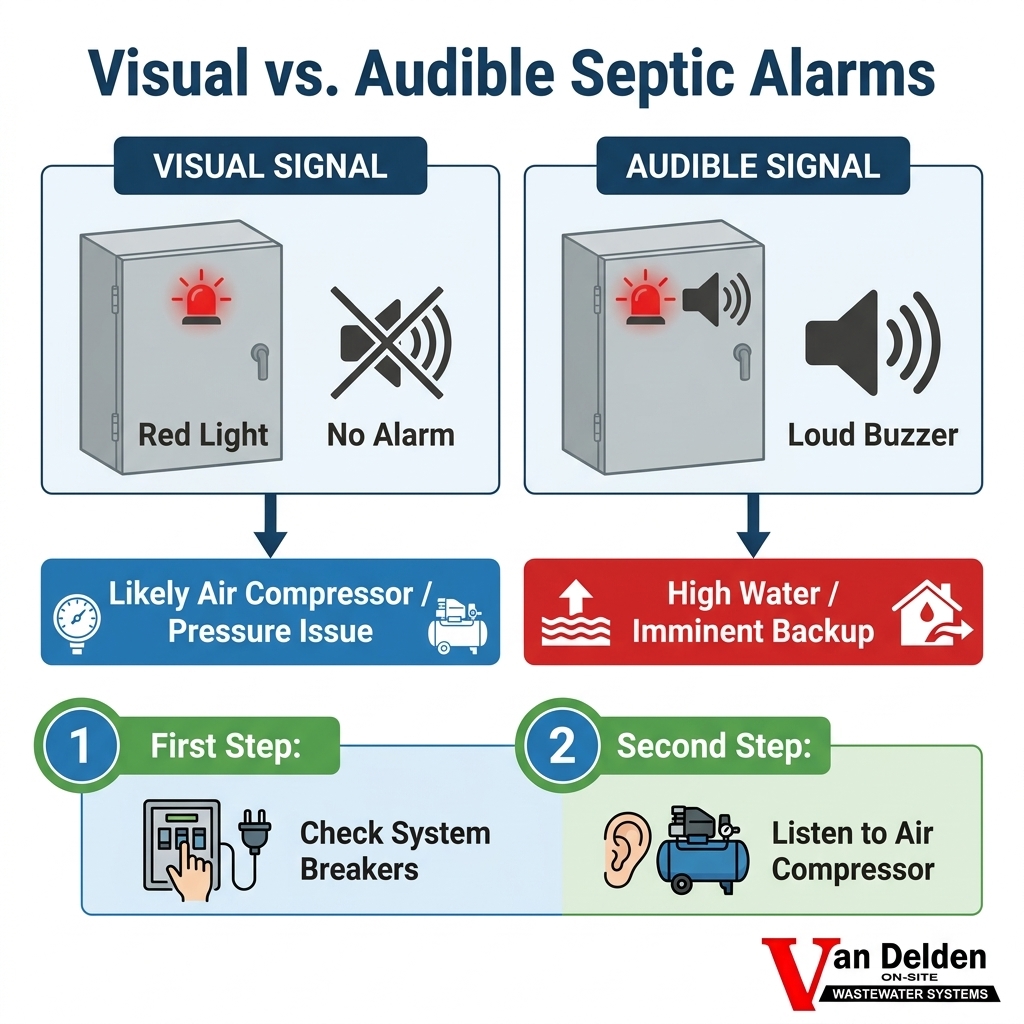
The High-Water Alarm: When the water level inside the pump tank rises dangerously high—usually due to a failed effluent pump or a clogged spray head—a float switch tips upward. This action triggers BOTH a glaring red light and a loud, piercing audible buzzer. The system is designed to be highly disruptive in this state because a high-water event means a backup into your home is imminent if water usage continues.
The Air Pressure Warning: A drop in oxygen flow from the air compressor is a completely different mechanical failure. When the air compressor stops pushing sufficient oxygen into the aeration chamber, a sensitive pressure switch detects the drop. In most modern panels, this triggers only a visual red light without the loud buzzer. The system is alerting you that the treatment process is compromised, but since the tank isn't actively overflowing, it doesn't sound the emergency siren.
In the rocky terrain of Boerne TX, our installation crews know that maintaining proper aeration is critical for safe effluent distribution. Without constant oxygen, the aerobic bacteria die off rapidly, turning the system anaerobic. This leads to foul odors and poorly treated wastewater being discharged into the environment. If you own an aerobic system with spray irrigation, ensuring the compressor is running is vital to keeping the spray heads clean and the surface runoff safe.
While it is technically possible that you have a high-water emergency and a broken buzzer, a silent light usually points directly to the aerator circuit. Here is a quick breakdown of what our team typically sees for different alarm states:
• Red Light + Loud Buzzer — Component Monitored: Water Level (Float Switch) — Typical Cause: Failed water pump, heavy flooding, or stuck float. — Urgency Level: High - Stop water usage immediately.
• Red Light + No Sound — Component Monitored: Air Pressure (Pressure Switch) — Typical Cause: Tripped breaker, failed compressor, or disconnected air line. — Urgency Level: Moderate - Needs attention within 24-48 hours.
• No Lights + No Sound — Component Monitored: Total System Power — Typical Cause: Main breaker tripped or complete grid power loss. — Urgency Level: Moderate - System cannot process new water.
Visual vs. Audible Septic Alarms
How Summer Weather and Power Surges Trigger False Alarms
Weather plays a surprisingly large role in the behavior of your wastewater control panel. Many homeowners assume that heavy rain is the only weather event that affects their tanks, but extreme heat and electrical storms are just as impactful. Peak summer heat and sudden July thunderstorms frequently create localized power surges and grid fluctuations across the region.
During a severe heatwave, the electrical grid often experiences brownouts or voltage drops as air conditioners run at maximum capacity. When voltage drops, electric motors—like the one inside your aerobic air compressor—must draw more amperage to maintain their speed. This sudden spike in electrical current can easily trip the sensitive dedicated circuit breaker inside your control panel. A surge from a nearby lightning strike during a summer storm can cause the exact same breaker trip.
We frequently get calls from homeowners who require prompt and knowledgeable service for a septic system during the peak heat of summer. Often, after a severe thunderstorm, the homeowner assumes the compressor motor has completely burned out because the red light is glaring. In our decades of experience, we find that the prompt resolution simply involves addressing a tripped breaker caused by a grid fluctuation, leaving the actual hardware completely undamaged.
Contrast this summer scenario with heavy spring downpours. Spring floods typically infiltrate the tanks with excess groundwater, triggering the high-water float switch and resulting in a loud audible alarm. A silent red light during the dry, hot months of summer in Boerne TX is highly indicative of a power surge knocking out the compressor circuit while leaving the rest of the control panel fully functional. Reassuringly, a weather-related tripped breaker is a simple, non-costly fix that you can often address yourself.
Safe DIY Diagnostic Steps: Checking the Breakers and Float Switch
Before calling our team for professional help, there is a safe "go/no-go" diagnostic checklist we recommend you perform. The goal is to empower you to safely check basic components and rule out minor electrical glitches. If your panel shows a Red light ON, audible alarm OFF, follow these steps carefully.
1. Check the main breaker panel in your house: Start by locating your home's primary electrical panel. Look for the breaker labeled "Septic," "Aerobic," or "Wastewater." If it is tripped (sitting in the middle position), toggle it firmly to the "Off" position, then push it back to "On."
2. Check the dedicated breakers inside the control panel: If it is safe and accessible, open the exterior cover of your aerobic control panel. You will typically see a toggle switch or a small breaker specifically labeled "Compressor" or "Aerator." Ensure this has not tripped. Never touch exposed wiring or internal circuit boards.
3. Listen closely to the air compressor housing: Walk over to the compressor unit, which is usually housed under a ventilated plastic or fiberglass cover near your tanks. Put your ear near the housing. If the compressor is running, you will hear a steady, low hum and feel a slight vibration. If it is completely silent, it is not receiving power or the motor has failed.
4. Check the external air line: If the compressor is humming but the red light is still on, inspect the rubber or PVC air line connecting the compressor to the tank. Look for obvious disconnections, severe kinks, or cracks where air might be escaping before it reaches the water.
A vital note on safety from our technicians: Never attempt to open the heavy concrete or plastic tank lids yourself. Never interact with raw sewage, and never attempt to bypass electrical fuses. The environment inside a treatment tank contains hazardous gases and harmful pathogens.
When to Attempt a System Reset
If you discover a tripped breaker during your inspection, you can attempt a system reset. To do this properly, toggle the affected breaker completely to the "Off" position and wait for about 30 seconds. This allows the electrical relays inside the panel to fully reset. Next, flip the breaker back to the "On" position. Close the panel door and observe the system for 15 minutes. If the red light stays off and you hear the compressor humming, a temporary power surge was likely the culprit. If the breaker trips again immediately, or if the red light returns after a few minutes, you have a hard failure that requires professional attention.
When to Stop Troubleshooting and Call a Wastewater Professional
Knowing when to stop your DIY checks is just as important as knowing how to start them. There is a clear line between safe homeowner troubleshooting and required licensed professional repairs. If you have confirmed that all breakers are in the "On" position but the air compressor remains completely silent, the internal motor or the rubber diaphragms inside the unit have likely failed. These components wear out naturally over time and require specialized replacement parts.
Alternatively, if you hear the compressor running loudly but the silent red light remains illuminated on the panel, the internal pressure switch may be compromised, or there may be a catastrophic leak in the underground airline.
Signs it is time to call a professional:
• The breaker refuses to reset: If the breaker snaps back to the tripped position immediately, there is a dangerous short circuit.
• The compressor is excessively hot: A motor that is burning hot to the touch but not pushing air has internally seized.
• Loud rattling noises: A compressor that sounds like marbles in a blender usually has torn diaphragms or broken internal magnets.
• The light persists after a reset: If power is flowing but the warning light remains, the diagnostic limits of a visual inspection have been reached.
At Van Delden Wastewater Systems, we regularly work with first-time septic system owners who have questions about service and maintenance. During a recent peak-summer service call in July, one of our technicians provided inspection services, answered all questions thoroughly, and explained the process of diagnosing a failed compressor. This approach leaves the homeowner feeling informed and confident about their equipment.
Opening the compressor housing to rebuild diaphragms or replacing sensitive electrical pressure switches requires a licensed technician. Ignoring a silent red light is never a good strategy. Without oxygen, the aerobic bacteria will die, the system will clog with untreated biomat, and you will eventually face severe surface runoff or a costly drain field replacement. We prefer you do the safe DIY breaker checks first to save money, but as a family-owned business operating since 1937, we are ready with decades of expertise when real aerobic system repair is needed in Boerne TX.
Frequently Asked Questions About Aerobic System Control Panels
When dealing with a confusing control panel, getting quick, accurate answers is essential. Here are the most common questions our customers ask during septic tank alarm troubleshooting.
Why is my septic red light on but no alarm sounding?
A silent red light usually indicates a drop in air pressure from the compressor rather than a high-water emergency. The control panel uses a pressure switch to monitor oxygen flow, and a failure here triggers a visual warning to let you know the treatment process is compromised. Alternatively, it can also mean that you do have a high-water issue, but the audible buzzer itself is broken, muted, or disconnected.
How do I reset my septic alarm after a power surge?
To reset the system after a storm or surge, first locate the dedicated breaker for the aerobic system, either in your home's main panel or inside the septic control box. Toggle the breaker completely to the "Off" position, wait roughly 30 seconds for the circuits to clear, and then toggle it firmly back to "On." If the light goes out and the compressor starts humming, the reset was successful.
Is a septic red light considered an emergency?
A silent red light means the treatment process is compromised, requiring attention within 24 to 48 hours to prevent the beneficial bacteria from dying off. However, it is not an immediate flooding emergency unless it is accompanied by an audible alarm. If you have a Red light ON, audible alarm OFF, you can safely take the time to check your breakers before calling for emergency dispatch.
How do I know if my aerobic septic compressor is bad?
You can identify a bad compressor by listening to it and carefully feeling the outer housing. A failing compressor will often be completely silent, excessively hot to the touch, or vibrating loudly without actually pushing air through the lines. If you have verified that the unit has electrical power but it still exhibits these symptoms, the internal diaphragms or motor have likely failed.
Can I mute a septic alarm going off?
Most modern control panels feature a "mute," "silence," or "run/mute" toggle switch on the exterior of the box designed to silence the audible buzzer. However, muting a septic alarm going off does not fix the underlying high-water issue; it only silences the noise to give you peace and quiet while you wait for a technician to arrive. The red visual light will remain illuminated until the root problem is resolved.
Get Expert Diagnostics for Your Aerobic System Today
Seeing a warning light on your control panel is never a welcome sight, but understanding what it means puts you in control. While a silent red light isn't a reason to panic about an immediate yard flood, it is a clear signal that your system's aeration process needs attention. By taking a few minutes to safely check your breakers and listen to your air compressor, you can often rule out minor electrical hiccups caused by summer storms.
If your DIY checks didn't clear the warning light, it is time to bring in our deeply experienced local team to diagnose the specific component failure. Since 1937, the Van Delden family has focused on honest diagnostics—we will only fix what is actually broken, rather than pushing for unnecessary replacements. Do not let a failing compressor compromise your entire wastewater treatment process. Reach out today to schedule a service call and let our licensed professionals restore your system to peak performance.
Peter was personable, professional and thorough. Highly recommend Van Delden. You might be able to find a cheaper company but not better!
Wendell E
On time. 100% professional, knowledgeable, and courteous. Very helpful and straightforward. That is the bar all businesses should strive for.
Andy R
It has been a pleasure working with your company. Not only did y’all communicate very well but your workers were always polite! Thank you!
Kate R.
“I thank Van Delden for such prompt service. Honest people are hard to come by these days. I will certainly recommend Van Delden to anyone! Jesse is an upstanding young man and very nice to talk to. I thank everyone at Van Delden for taking such good care of me.”
Charles H
This is just a note to thank you for explaining the problem with my system. You didn’t have to be so kind and I appreciate your good business ethics and time spent. In the future you will have mine in return!