Tracing the Anatomy of an Aerobic Treatment Plant Through Installation Blueprints
Tracing the Anatomy of an Aerobic Treatment Plant Through Installation Blueprints
The Hidden Infrastructure: Understanding Your Aerobic System Blueprint
When household plumbing drains slowly or unexplained yard odors emerge, our team at Van Delden Wastewater Systems often finds that tracing the anatomy of an aerobic treatment plant through installation blueprints is the most effective way to uncover the hidden problem. For most homeowners, wastewater infrastructure is entirely out of sight and out of mind. You run a load of laundry, wash dishes, or flush a toilet, and the water simply disappears beneath the lawn. However, when you ignore the complex biological and mechanical processes happening underground, we frequently see minor issues quickly escalate into costly backups and property damage.
An aerobic treatment plant is fundamentally different from a standard conventional septic tank. Instead of a single holding environment, an aerobic setup functions essentially as a miniature municipal wastewater facility right in your backyard. By reviewing your installation blueprints, you reveal a highly engineered system divided into distinct biological and mechanical zones. In our experience, understanding this hidden anatomy is the crucial first step in preventing component failure, maintaining proper sanitation, and ensuring the long-term health of your property's wastewater infrastructure.
To learn more about how your septic systems operate or to request an estimate for professional evaluation, reviewing your property's specific layout is the ideal starting point.
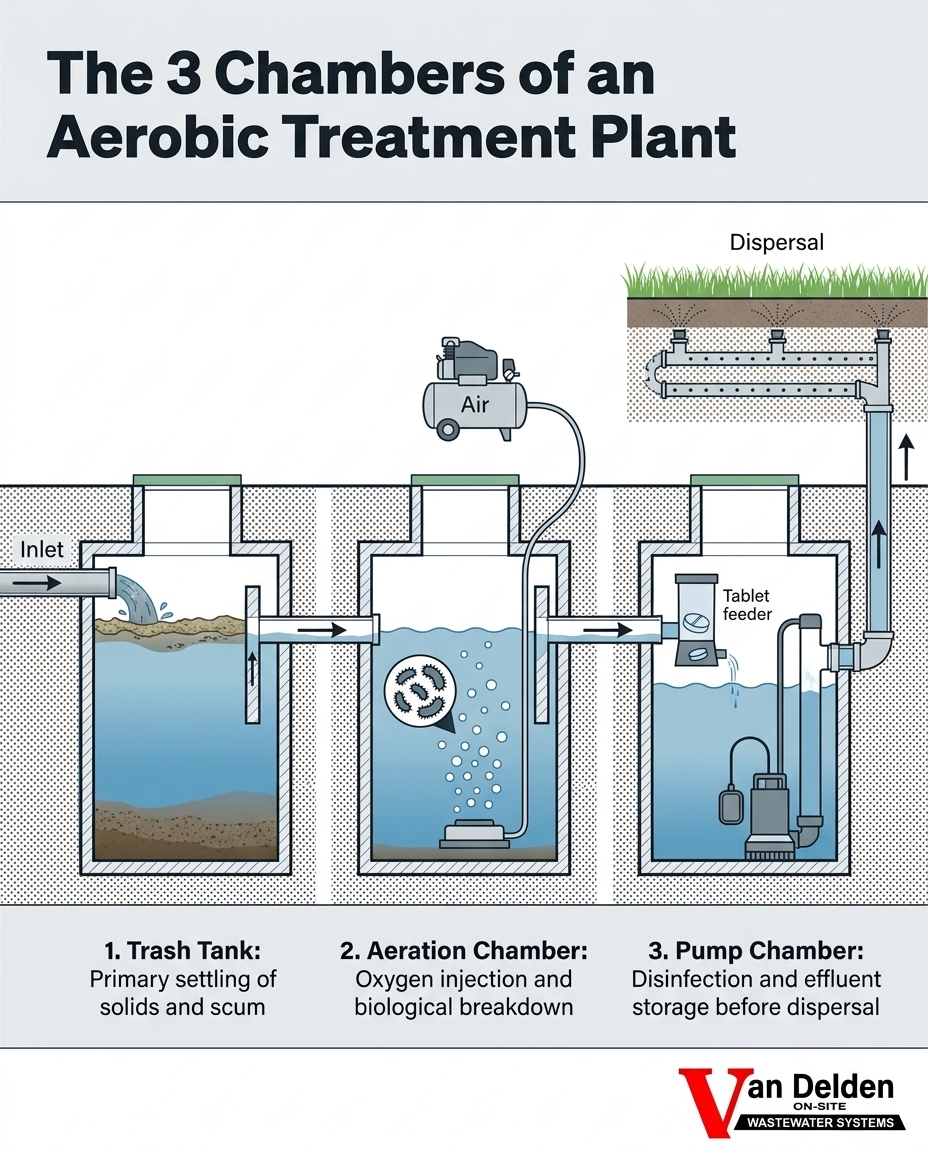
The 3 Chambers of an Aerobic Treatment Plant
Stage 1: The Trash Tank and Primary Settling
The first major component you will see on any aerobic system blueprint is the trash tank. This chamber acts as the initial receiving zone for every drop of wastewater that exits your home. When wastewater travels down the main sewer line and passes through the inlet pipe, it enters this primary settling tank. The primary function of this chamber is physical separation, relying on gravity to divide the incoming waste into distinct layers before it can move further into the treatment plant.
Inside the trash tank, heavy solids sink to the bottom to form the sludge layer. Meanwhile, lighter materials like fats, oils, and greases float to the top, creating the scum layer. The relatively clear liquid trapped between these two extremes is what eventually flows into the next chamber. This environment is intentionally oxygen-depleted, meaning anaerobic bacterial action begins the slow, preliminary process of breaking down the raw waste.
What Happens When the Trash Tank Overloads
Because the trash tank is the frontline defense for your 3-chamber aerobic treatment plant, what you flush directly impacts its performance. Flushing non-biodegradable items—like flushable wipes, paper towels, dental floss, or feminine hygiene products—disrupts this chamber. These items do not break down, causing the sludge and scum layers to accumulate rapidly and block the vital baffles that control the flow of water.
During routine septic tank service, our Van Delden technicians frequently see how a single blockage can disrupt the entire flow. In one recent Boerne service call, our team pumped a tank and cleared a stubborn clog in a kitchen cleanout pipe, immediately resolving the slow drainage issue inside the home. To prevent these localized clogs and protect your trash tank, we strongly advise monitoring exactly what goes down the drain.
• Human waste and toilet paper — Never Flush or Drain: "Flushable" wipes and paper towels
• Mild, septic-safe biological cleaners — Never Flush or Drain: Harsh chemical bleach or drain cleaners
• Normal shower and bath water — Never Flush or Drain: Cooking grease, fats, and cooking oils
• Laundry water (spaced out loads) — Never Flush or Drain: Feminine hygiene products and plastics
Stage 2: The Aeration Chamber and Biological Treatment
If you follow the flow of water on your installation blueprint, the next stop is the aeration chamber. This is the active heart of the treatment plant and the core component that differentiates an aerobic system from a traditional conventional tank. While the trash tank relies on slow, oxygen-deprived anaerobic bacteria, the aeration chamber utilizes a highly active, oxygen-rich environment to rapidly consume organic matter.
The mechanical driving force behind this chamber is the aerator, or air compressor. Usually located above ground near the control panel, this compressor pumps a continuous supply of atmospheric oxygen down into the wastewater. This constant bubbling creates a mixing action that churns the effluent, ensuring that oxygen is evenly distributed throughout the liquid. This highly oxygenated environment allows aerobic bacteria to thrive, multiply, and aggressively break down the remaining dissolved solids in the wastewater.
The Role of Aerobic Bacteria
Aerobic bacteria are significantly more efficient at processing waste than their anaerobic counterparts. Because they have a constant supply of oxygen, they can consume organic material at an accelerated rate, leaving behind an effluent that is remarkably clear and largely free of raw sewage odors. Maintaining a healthy, robust colony of these aerobic bacteria is absolutely critical to the clarity and safety of the water that ultimately leaves your system.
However, our repair teams frequently remind homeowners that this biological efficiency is entirely dependent on mechanical reliability. If the air compressor fails, the oxygen supply stops. Within hours, the aerobic bacteria begin to die off, and the chamber reverts to an anaerobic state, severely compromising the treatment process. Mechanical failure of the air compressor stops this biological process entirely, necessitating prompt professional intervention for aerobic system repair before raw, untreated waste pushes into the final chamber.
• Listen for silence: A healthy compressor emits a low, steady hum. Total silence means the motor has failed or lost power.
• Watch for foul odors: A strong sewage smell near the tanks usually indicates that the aerobic bacteria have died off due to lack of oxygen.
• Check the control panel: Most modern systems feature an alarm light or buzzer that triggers when the air pressure drops unexpectedly.
Stage 3: The Pump Chamber and Disinfection Process
The third and final tank shown on your aerobic system blueprint is the pump chamber. By the time wastewater reaches this stage, the heavy solids have been left behind in the trash tank, and the dissolved organic matter has been consumed in the aeration chamber. The liquid entering the pump chamber is clear effluent, but it is not yet safe for environmental dispersal. It must first undergo a rigorous disinfection process.
As the clear effluent transitions into the pump chamber, it passes through a disinfection mechanism. Depending on your specific blueprint, this is commonly achieved using chlorination tubes containing specialized calcium hypochlorite tablets, or a liquid bleach injection system. This chemical treatment neutralizes any remaining pathogens, viruses, or harmful bacteria, ensuring the water meets strict environmental and health standards before it is released into the soil.
The Mechanics of Float Switches and Alarms
The pump chamber is highly mechanical, relying on a series of float switches to manage the water level. As treated effluent fills the tank, the rising water lifts a designated float switch, which signals the submersible pump to activate and push the water out to the dispersal field. If the water level rises too high—due to a failed pump or overwhelming water usage in the home—a secondary high-water float triggers a visible and audible alarm on your control panel.
Our Boerne TX service crews know firsthand that local weather patterns play a massive role in how hard this chamber has to work. For example, peak July heat combined with sudden summer thunderstorms increases the hydraulic load on your property. This rapid influx of heavy rainwater, combined with peak household water usage during the summer, severely tests the pump chamber's holding capacity. If the pump cannot keep up with the volume, or if the dispersal field is saturated from a storm, the high-water alarm will sound to warn you of an impending overflow.
The Dispersal Field: Mapping the Final Destination
Your aerobic system blueprint does not stop at the three underground tanks; it extends outward into your yard to map the dispersal field. The final destination of the treated, disinfected effluent is entirely dictated by your local soil conditions and topography. The engineering required to safely distribute this water is just as complex as the tanks that treat it.
In our decades of working with the rocky Texas Hill Country soil, we've seen that traditional drain field percolation is often physically impossible. The dense rock and shallow soil profiles simply cannot absorb thousands of gallons of water through standard gravity trenches. Because of this, engineers design alternative dispersal methods that apply the treated water directly to the topsoil or just below the grass roots.
Surface vs. Subsurface Application
When you look at the dispersal section of your blueprint, you will typically see one of two engineered layouts: surface spray irrigation or subsurface drip irrigation. Each method has distinct landscaping rules and maintenance requirements.
Surface Dispersal: This method uses a network of specialized sprinkler heads to spray the treated, chlorinated effluent evenly across a designated grassy area. The soil and sunlight provide the final polishing of the water. Homeowners with this setup must adhere to strict landscaping rules—you cannot plant trees, build structures, or place playgrounds within the spray zone. If your blueprint indicates this layout, understanding the mechanics of an aerobic system with spray irrigation is vital to prevent unauthorized runoff.
Subsurface Dispersal: Alternatively, your blueprint may show a complex grid of underground tubing. This drip irrigation method slowly releases the treated effluent directly into the root zone of the grass, completely out of sight. While it eliminates the risk of surface pooling, the tiny drip emitters are highly susceptible to clogging if the aeration chamber and pump chamber are not properly maintained.
Translating Blueprints into Preventive Maintenance
Understanding the technical anatomy of your 3-chamber aerobic treatment plant is only valuable if you translate that knowledge into actionable preventive maintenance. When you know exactly how the blueprint functions, you understand why our team recommends different maintenance actions for different zones. Pumping the trash tank prevents sludge from overflowing, replacing the air compressor filters keeps the biological treatment alive, and maintaining chlorine levels in the pump chamber ensures safe environmental dispersal.
Knowing the exact location of these components also protects your investment. When homeowners undertake landscaping projects, install irrigation lines, or build patios without consulting their system's blueprint, they risk crushing critical PVC pipes, severing electrical lines to the pump, or compacting the soil over the dispersal field. Having a clear map of the underground infrastructure prevents accidental, catastrophic damage.
The Value of a Professional Blueprint Walkthrough
For a first-time septic system owner, the underground layout can seem overwhelming. A thorough, professional walkthrough changes that entirely. Recently, one of our Van Delden inspectors, Courtney, walked a new homeowner through their specific system, thoroughly explaining the layout and answering all their questions until they felt completely informed about their maintenance responsibilities. That level of education turns a confusing mechanical system into a manageable household utility.
This is why relying on an established company with deep historical knowledge of local installations is so critical. Leveraging our legacy of hands-on installation experience dating back to 1937, our team knows that routine maintenance must align perfectly with the original blueprint's engineered intent. Whether you need to locate a buried tank lid or schedule routine service for an aerobic system with drip irrigation, working with professionals who understand the underlying anatomy ensures your system operates at peak efficiency.
Frequently Asked Questions About Aerobic System Layouts
What are the 3 compartments of an aerobic septic system?
An aerobic treatment plant is divided into three distinct functional zones to process wastewater. 1. The Trash Tank, which handles the primary settling of heavy solids and floating scum. 2. The Aeration Chamber, where oxygen is injected to fuel aerobic bacteria that break down organic waste. 3. The Pump Chamber, where the clear effluent is disinfected and stored before being pumped out to the dispersal field.
How does an aerobic treatment plant work?
An aerobic treatment plant works by mechanically introducing oxygen into the wastewater to accelerate biological decomposition. Raw sewage enters the first tank for settling, then moves to the aeration chamber where oxygen-fed bacteria aggressively consume the dissolved waste. Finally, the treated water enters a pump tank where it is disinfected with chlorine or bleach before being dispersed safely into the yard.
Where is the pump tank on an aerobic system?
The pump tank is the final chamber in the sequence of an aerobic system layout. It is located immediately after the aeration chamber and just before the dispersal field piping. You can usually identify its location above ground by looking for the final access lid in the series, which houses the submersible pump, float switches, and high-water alarms.
What happens in the aeration chamber of a septic system?
The aeration chamber is where the most aggressive biological treatment occurs. An external air compressor pumps oxygen down into the wastewater, churning the liquid and creating an ideal environment for aerobic bacteria to thrive. These bacteria rapidly consume the dissolved organic matter, transforming raw, cloudy sewage into a relatively clear, odorless effluent.
Can you build or plant over an aerobic system's spray field?
No, you should never build structures, pave driveways, or plant deep-rooted trees over an aerobic system's spray field. The dispersal area is specifically engineered to allow sunlight and shallow grass roots to absorb and evaporate the treated water. Covering this area prevents proper evaporation, damages underground piping, and violates local environmental regulations regarding wastewater runoff.
How often should the different chambers of an aerobic system be inspected?
Because aerobic systems rely on mechanical parts and active biological colonies, we strongly recommend formal inspections every four months (three times a year). During these routine checks, a technician will verify the air compressor's output, test the pump chamber's float switches, check the disinfection levels, and measure the sludge accumulation in the trash tank to determine if pumping is necessary.
Ensure Your Aerobic System Functions Exactly as Designed
A well-maintained 3-chamber aerobic treatment plant safely and efficiently manages your household wastewater, protecting both your property and the local environment. If you are unsure about your system's specific layout, or if you need help translating your installation blueprints into a reliable maintenance schedule, professional guidance makes all the difference. Reach out to our local experts at Van Delden Wastewater Systems to request an estimate and ensure your system continues to function exactly as engineered.
Peter was personable, professional and thorough. Highly recommend Van Delden. You might be able to find a cheaper company but not better!
Wendell E
On time. 100% professional, knowledgeable, and courteous. Very helpful and straightforward. That is the bar all businesses should strive for.
Andy R
It has been a pleasure working with your company. Not only did y’all communicate very well but your workers were always polite! Thank you!
Kate R.
“I thank Van Delden for such prompt service. Honest people are hard to come by these days. I will certainly recommend Van Delden to anyone! Jesse is an upstanding young man and very nice to talk to. I thank everyone at Van Delden for taking such good care of me.”
Charles H
This is just a note to thank you for explaining the problem with my system. You didn’t have to be so kind and I appreciate your good business ethics and time spent. In the future you will have mine in return!