Translating a Septic Inspection Report for Kendall County Homebuyers
Don't let technical septic jargon derail your late-summer closing. We break down which inspection findings are routine maintenance items and which are true dealbreakers.
The professional vs diy septic maintenance comparison comes down to one simple rule: some tasks are safe for homeowners to handle, and others require a licensed technician with specialized equipment. Here's a quick breakdown:
| Task | DIY | Professional |
|---|---|---|
| Water conservation habits | Yes | Not needed |
| Septic-safe product use | Yes | Not needed |
| Visual drain field checks | Yes | Not needed |
| Record keeping | Yes | Yes (detailed documentation) |
| Effluent filter cleaning | Yes (basic) | Recommended |
| Tank pumping | No | Required |
| Sludge level measurement | No | Required |
| Baffle and component inspection | No | Required |
| System repairs | No | Required |
| Aerobic system servicing | No | Required by law in Texas |
| Permit-required work | No | Required |
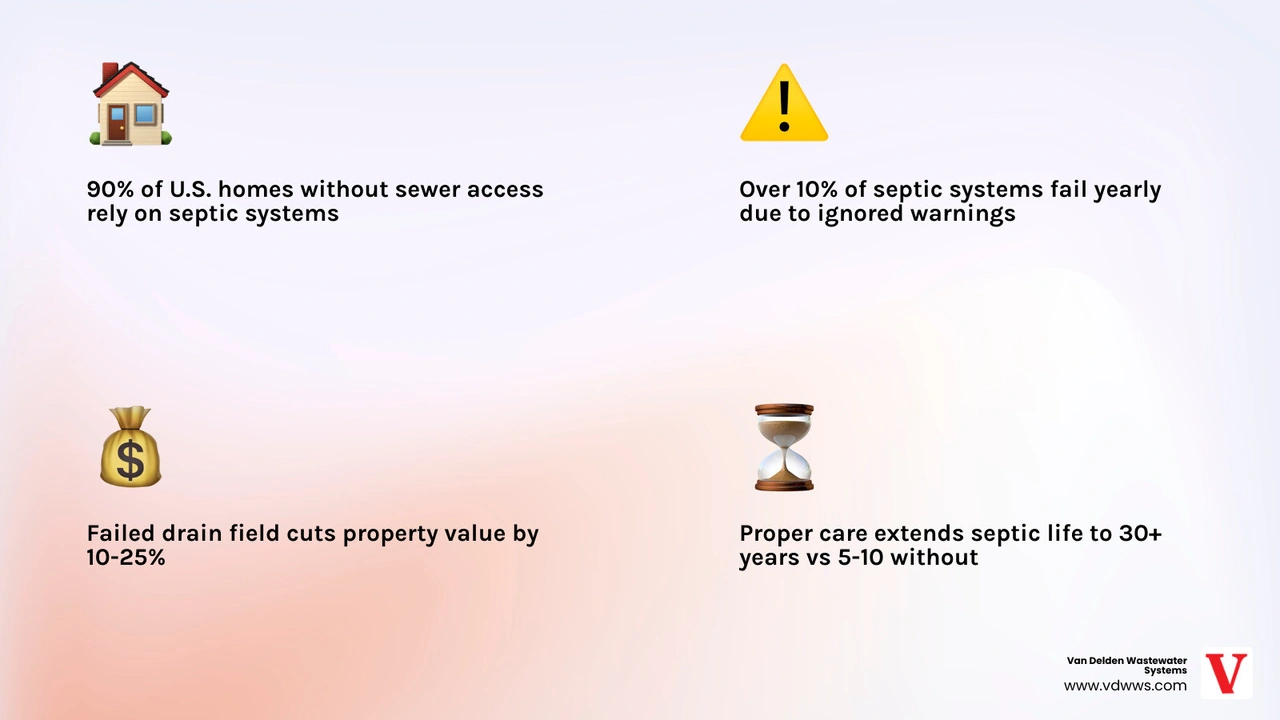
Your septic system is one of the most important — and most overlooked — parts of your home. Nearly 90% of U.S. households without public sewer access rely on septic systems, and more than 10% experience backups or failures every year. Most of those failures had warning signs that were ignored.
The good news: with the right habits at home and the right professional on call, your system can last 30 years or more. Without proper care, it can fail in as little as 5 to 10 years — and a failed drain field alone can reduce your property value by 10 to 25%.
This guide breaks down exactly what you can safely do yourself, what should always be left to a licensed pro, and why that line matters more than most homeowners realize.
When we look at the professional vs diy septic maintenance comparison in May 2026, the stakes are higher than ever. With increasing environmental regulations and the rising cost of property in areas like San Antonio and Boerne, protecting your underground infrastructure is a financial necessity. While the "do-it-yourself" spirit is strong in Texas, septic systems are biological and mechanical ecosystems that don't respond well to guesswork. For a deeper dive into the mechanics, check out our Ultimate Septic System Maintenance Guide.
In 2026, professional septic service is about more than just a vacuum truck. It’s about the peace of mind that comes with a technician’s experience. At Van Delden Wastewater Systems, our non-commissioned technicians are trained to spot the "invisible" problems—like a hairline crack in a baffle or a slight tilt in a distribution box—that a homeowner might miss.
Quality work involves detailed documentation. When we service a system, we provide photo documentation and detailed service forms. This isn't just for your records; it's a vital asset for your property value. If you ever decide to sell your home in Shavano Park or Fair Oaks Ranch, having a verifiable history of professional care can prevent a sale from falling through during the inspection period. Understanding How To Care For Your Septic System And Why is the first step in becoming a responsible system owner.
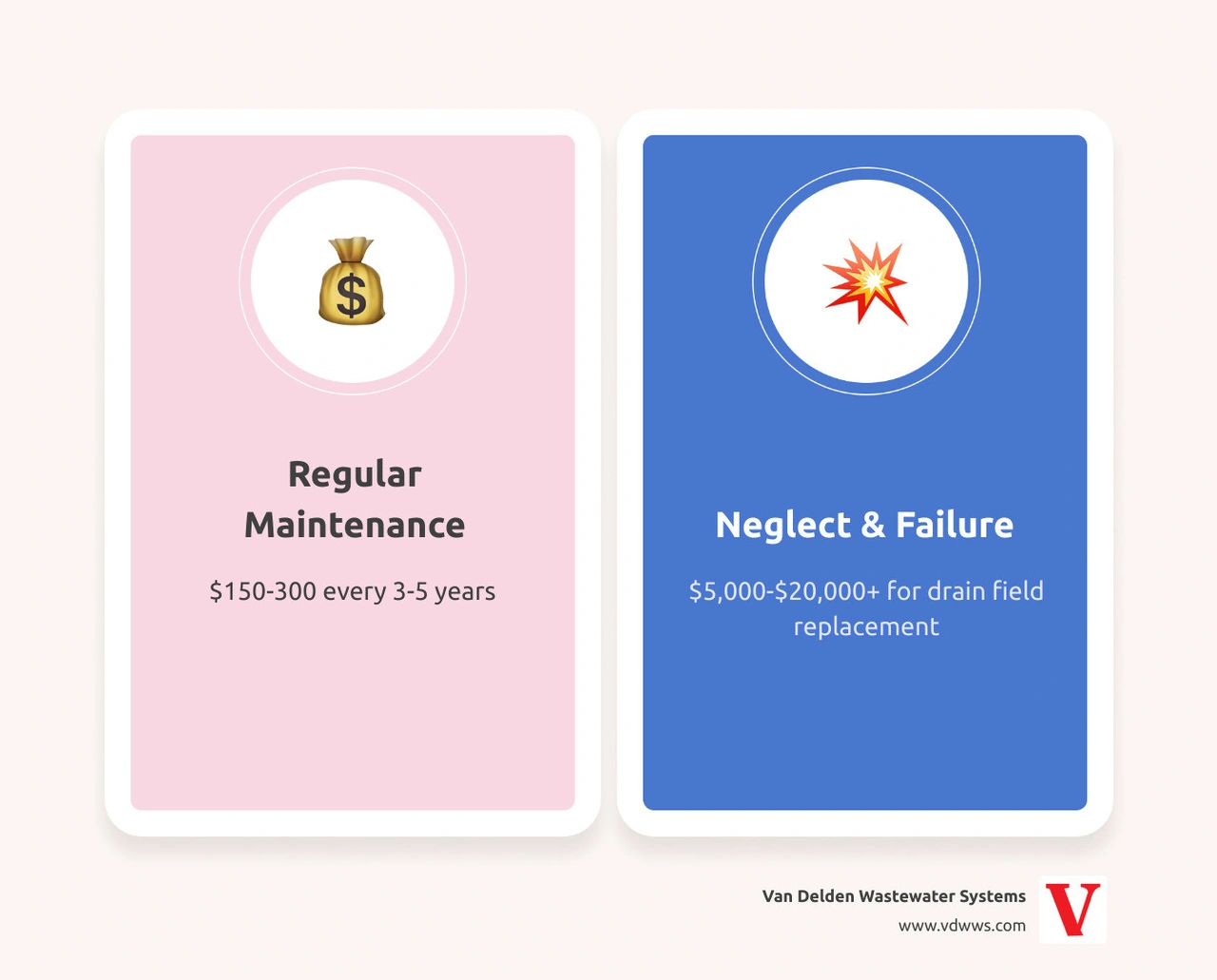
It’s tempting to think of DIY maintenance as a way to save money, but the math rarely adds up in the long run. Routine professional maintenance can reduce septic system failures by up to 80%. Consider this: a professional inspection every three years is a minor investment compared to the massive cost of a full drain field replacement.
Neglecting professional pumping allows solids to migrate into your drain field, clogging the soil and essentially "killing" the system's ability to treat waste. Once a drain field fails, you aren't just looking at a repair; you're looking at a major construction project that can devalue your home by up to 25%. We focus on Ways To Extend Your Septic System Life because we know that prevention is always more affordable than a cure.
While you shouldn't be climbing into your septic tank, there is a lot you can do from the comfort of your home to keep things running smoothly. The most effective DIY maintenance doesn't involve tools; it involves habits.
For more practical tips, read our guide on the Dos And Donts Of Septic System Maintenance.
The best thing a homeowner can do is be an observant "manager" of their system. You are the first line of defense.
By staying proactive, you can Avoid Common Septic System Mistakes that lead to expensive emergency calls.
Your drain field is the most sensitive part of the system. The soil there needs to be "breathable" and uncompacted to filter wastewater effectively.
There are some lines you simply should not cross. Septic systems contain hazardous gases and pathogens that can be lethal. Furthermore, technical maintenance requires specialized tools that the average homeowner doesn't have in their garage.
Attempting these tasks yourself is dangerous. We explain more in Septic Repair And Why Its Not Diy.
If you have an aerobic system (common in areas with thin soil like the Texas Hill Country), the professional vs diy septic maintenance comparison is even more lopsided. In Texas, the TCEQ (Texas Commission on Environmental Quality) has strict rules.
Most aerobic systems require a check every four months. These systems are essentially miniature wastewater treatment plants with air compressors, timers, and spray heads. While a homeowner might be able to add chlorine tablets, they often miss the 14+ other mechanical components that need checking. If an aerobic system fails, it can spray untreated, hazardous wastewater directly onto your lawn. For local homeowners, Aerobic System Maintenance is a non-negotiable professional task.
When a component like a submersible pump or a float switch fails, it’s not a simple plumbing fix.
If you're wondering, "Can I Service My Own Aerobic System," the answer is usually: you might be legally allowed in some counties, but you almost certainly shouldn't. You can see why in our Should I Service My Own Aerobic System Video.
The risks of DIY septic work fall into three categories: health, legal, and financial.
Toxic Gases: Septic tanks produce methane and hydrogen sulfide. These gases are not just smelly; they are toxic and highly flammable. A single breath of concentrated hydrogen sulfide can knock a person unconscious, and methane can cause explosions if a spark is present. This is why professionals use specialized safety gear and never enter a tank without a team.
Pathogen Exposure: Raw sewage contains bacteria, viruses, and parasites. Improper handling can lead to serious illnesses like Hepatitis A or E. coli. For a visual guide on what can go wrong, watch our Common Septic System Problems Video.
We live in a beautiful part of Texas, but our groundwater is a shared resource.
The "savings" of DIY often disappear the moment a mistake is made. If a homeowner tries to repair a pipe and accidentally punctures the tank or misaligns a distribution box, the resulting damage can cost thousands more than the original professional service would have.
For most residential homes in the San Antonio area, we recommend pumping every 3 to 5 years. However, this depends on:
The EPA and most industry experts agree: septic additives are generally unnecessary. Your tank already contains the natural bacteria needed to break down waste. Some chemical additives can actually harm your system by breaking down solids too much, allowing them to float out into the drain field and cause clogs. Save your money and stick to regular pumping.
Yes. In Texas, specifically for aerobic systems, the TCEQ requires routine inspections. Many counties around San Antonio also require a valid maintenance contract with a licensed provider to be on file. Even for conventional systems, any work involving the structure of the tank or the drain field requires a licensed professional and, usually, a county permit.
At Van Delden Wastewater Systems, we’ve been serving the Texas Hill Country since 1937. We understand that your home is your biggest investment, and we treat it that way. Our non-commissioned technicians aren't there to sell you things you don't need; they are there to provide honest, quality work and educate you on how to keep your system healthy.
From Boerne to Timberwood Park and everywhere in between, we provide the detailed documentation and expert service you need to ensure your system lasts for decades. Don't leave your property value to chance with a DIY experiment.
Whether you need a routine inspection, a tank pumping, or a complex repair, we are here to help. Trust the experts who have been "voted #1 in the #2 business" for over 80 years.

Peter was personable, professional and thorough. Highly recommend Van Delden. You might be able to find a cheaper company but not better!
On time. 100% professional, knowledgeable, and courteous. Very helpful and straightforward. That is the bar all businesses should strive for.
It has been a pleasure working with your company. Not only did y’all communicate very well but your workers were always polite! Thank you!
“I thank Van Delden for such prompt service. Honest people are hard to come by these days. I will certainly recommend Van Delden to anyone! Jesse is an upstanding young man and very nice to talk to. I thank everyone at Van Delden for taking such good care of me.”
This is just a note to thank you for explaining the problem with my system. You didn’t have to be so kind and I appreciate your good business ethics and time spent. In the future you will have mine in return!