Navigating Hill Country Limestone: How Rock Depth Dictates Septic Tank Burial in Bergheim
Navigating Hill Country Limestone: How Rock Depth Dictates Septic Tank Burial in Bergheim
The Hard Reality of Bergheim Bedrock
Your excavation equipment arrives, the crew breaks ground, and within minutes, the bucket scrapes against solid stone. Hitting notorious Hill Country limestone bedrock during an excavation is a frustrating reality for property owners, severely limiting standard burial depths. Navigating Hill Country limestone: how rock depth dictates septic tank burial in Bergheim is the single most important factor in your property's wastewater planning.
Most homeowners assume a standard installation involves digging a deep hole, placing the tank, and covering it with a thick layer of topsoil. However, Bergheim's unique geology fundamentally alters how deep a tank can actually go. When you encounter solid rock just inches below the surface, you face an immediate decision point: determining the correct system design when shallow bedrock prevents standard deep tank burial.
Attempting to force a conventional design into solid stone is a recipe for stalled excavations, blown timelines, and legal compliance issues. Proper planning and a clear understanding of your property's geological constraints are required to keep your project moving forward. To learn more about the foundational requirements of these installations, you can explore how different septic systems operate under various soil conditions. When you face shallow bedrock depth restrictions, adapting your approach is not just a recommendation—it is a mandatory requirement for a functional home.
How Deep Is a Septic Tank Buried? National Averages vs. Local Realities
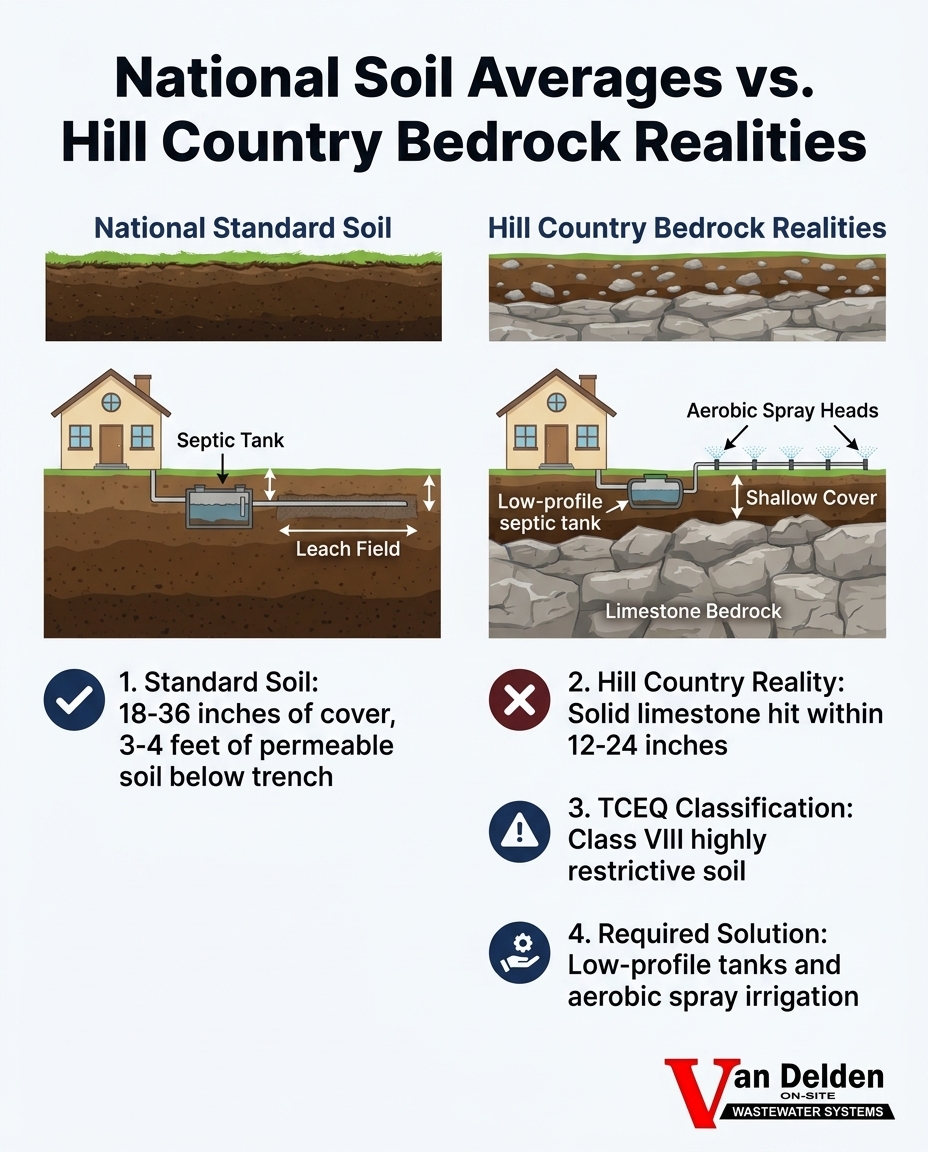
If you look up generic advice on wastewater installations, the standard answer to "how deep is a septic tank buried" usually ranges from 18 to 36 inches of soil cover. These national averages assume the presence of deep, highly permeable topsoil that allows contractors to dig massive trenches with standard equipment. In the Bergheim and surrounding Texas Hill Country area, that deep topsoil simply does not exist.
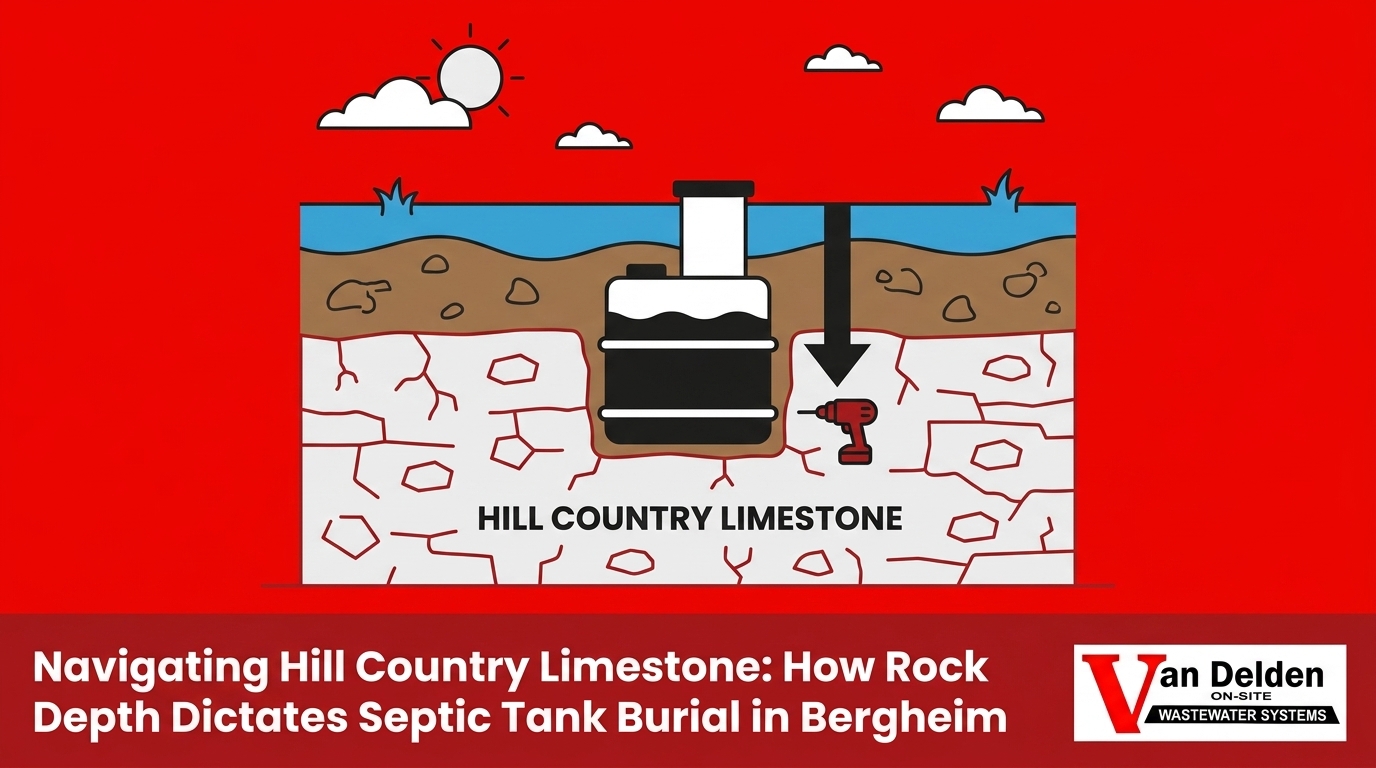
The shallow topsoil over hard limestone bedrock is a defining characteristic of the Texas Hill Country, dictating all subterranean work. Instead of digging three feet down through soft earth, installers routinely hit solid limestone within the first 12 to 24 inches. Trying to blast or hammer through that rock to achieve a generic national depth standard is financially impractical and often legally non-compliant.
Here is a breakdown of how generic expectations clash with local realities:
• Topsoil Depth — National Standard Assumption: Deep, soft earth (3+ feet) — Hill Country Bedrock Reality: Extremely shallow (often less than 12 inches)
• Excavation Method — National Standard Assumption: Standard backhoe digging — Hill Country Bedrock Reality: Heavy rock trenching and hammering
• Drainfield Base — National Standard Assumption: Permeable soil for natural filtration — Hill Country Bedrock Reality: Solid, non-porous limestone
• System Type — National Standard Assumption: Conventional subsurface absorption — Hill Country Bedrock Reality: Advanced alternative systems required
Because the terrain dictates the engineering, generic answers will not help you plan your property's infrastructure. If you are preparing to build or replace an aging system, it is always best to request an installation estimate from professionals who understand exactly what lies beneath the surface.
National Soil Averages vs. Hill Country Bedrock Realities
Why Glen Rose Limestone Changes the Regulatory Rules
The geological makeup of this region is dominated by the Glen Rose Limestone formation. This specific type of rock is incredibly dense, creating a hard barrier that fundamentally changes the regulatory rules for wastewater management. Standard deep burial relies on the earth below the tank and drainfield to filter and treat the effluent naturally. Solid rock cannot do this.
The Texas Commission on Environmental Quality (TCEQ) classifies solid limestone as a Class VIII highly restrictive soil. Because rock lacks the percolation required to treat wastewater, it is legally prohibited to install a conventional subsurface absorption system directly into it. The state requires a minimum buffer of suitable, permeable soil below any drainfield to protect groundwater from contamination.
When you encounter shallow bedrock depth restrictions, you face several strict regulatory hurdles:
• Zero percolation: Water pools on top of solid rock instead of filtering through it, causing immediate system failure and surfacing sewage.
• Contamination risks: Fissures and cracks in limestone can channel untreated wastewater directly into local aquifers without filtering it first.
• Buffer zone violations: TCEQ mandates specific depths of suitable soil below the disposal area; hitting rock early makes achieving this buffer impossible.
• Mandatory redesigns: If a conventional system is planned but rock is struck during the dig, all work must stop until an alternative design is approved by local authorities.
Understanding these regulations early prevents costly mistakes. You cannot simply dig deeper into the rock and hope for the best; the law requires a system engineered specifically for highly restrictive soils.
The Mandatory Shift: Overcoming Bedrock with Advanced Engineering
When bedrock prevents conventional subsurface absorption, you must pivot to a different technical approach. Hitting solid stone legally and functionally requires a switch to alternative systems that do not rely on deep soil percolation. The most common and effective solution for the Bergheim and surrounding Texas Hill Country area is an aerobic treatment unit combined with surface application.
Instead of burying a massive drainfield deep underground, an aerobic system treats the wastewater inside the tank to a much higher standard, using oxygen and bacteria to break down waste. Once treated and disinfected, the clear effluent is dispersed above ground. This entirely bypasses the need for deep, permeable soil.
During peak summer heat in July, surface-level spray irrigation systems must be properly calibrated to ensure efficient evaporation and absorption without runoff. The high temperatures actually assist in the evaporation process, making these systems highly efficient when timed correctly. If you are transitioning to this setup, understanding the operational differences of an aerobic system with spray irrigation will help you maintain a healthy, compliant property.
The Role of Low-Profile Tanks
Because deep excavation is off the table, engineers often utilize low-profile tanks designed specifically for shallow burials. These tanks are wider and flatter than traditional cylindrical models, allowing them to hold the necessary volume of water without requiring a deep hole.
Structural integrity is critical: Tanks sitting closer to the surface endure different weight distributions and temperature fluctuations than those buried under three feet of earth. Low-profile tanks are reinforced to handle the weight of riding lawnmowers and shallow soil covers, ensuring they remain structurally sound despite the shallow bedrock depth restrictions.
The Physical Toll of Rock Excavation
Digging a hole in soft dirt takes a few hours. Trenching through Glen Rose limestone is an entirely different undertaking. The physical toll of rock excavation requires specialized equipment, extended timelines, and a deep understanding of local geology. We lean on our 85+ years of historical local authority, having operated since 1937, to apply bedrock excavation techniques that have evolved specifically in this region over decades.
Generic soil digging uses standard backhoes and excavators. Rock trenching requires heavy-duty machinery designed to break, cut, and remove solid stone without compromising the structural integrity of the surrounding area. Knowing what to expect during your septic system installation helps you prepare for the noise, the heavy equipment, and the careful precision required.
The process of installing a system in solid limestone generally follows these steps:
1. Initial rock breaking: Heavy excavators equipped with hydraulic hammers break the surface layer of the limestone.
2. Precision trenching: Specialized rock saws cut clean lines for piping, ensuring the trenches are only as wide as absolutely necessary.
3. Debris removal: Massive amounts of broken rock must be hauled out of the excavation site, as it cannot be used as backfill around the new tanks.
4. Bedding placement: A layer of sand or soft gravel is imported and placed at the bottom of the shallow hole to protect the tank from sharp rock edges.
5. Tank setting and backfilling: The low-profile tank is lowered into place, and imported, select fill dirt is brought in to cover the system, as the native rock is unsuitable for covering.
This process demands precision engineering to minimize unnecessary rock removal, keeping costs manageable while ensuring the tank sits perfectly level on a safe bedding.
Navigating Your Pre-Installation Site Evaluation
Because shallow bedrock depth restrictions dictate every aspect of the project, the most important phase happens before a single shovel hits the dirt. A thorough site evaluation identifies the exact depth of the bedrock, allowing engineers to design the right system from day one. Skipping this step or assuming the soil is deep enough inevitably leads to costly mid-project redesigns.
During a professional site assessment, evaluators analyze the topography, conduct soil profile holes, and determine the exact classification of the earth beneath your grass. Early identification of Glen Rose limestone ensures that the correct permits are pulled and the right machinery is scheduled.
Having a knowledgeable professional explain these findings step-by-step is incredibly valuable. For example, during a recent real estate transaction in the area, a buyer client needed a thorough understanding of a property's wastewater potential before closing. A professional site consultation revealed the exact subsurface conditions, and the inspector walked the buyer through the process and findings step-by-step, answering all questions so they could move forward with confidence. Knowing exactly what is under the ground protects your investment and sets clear expectations for the installation ahead.
Long-Term Performance of Rock-Adapted Systems
Homeowners often worry that systems forced into shallow bedrock will not last as long as traditional deep-buried tanks. The truth is, systems designed specifically for rocky terrain are incredibly reliable and effective when properly maintained. The key to long-term performance is accepting the terrain and engineering the solution to match it, rather than fighting the geology.
Ongoing maintenance is slightly different for aerobic setups installed in shallow rock. Because the system relies on mechanical parts (aerators, water pumps, and spray heads) rather than passive soil filtration, regular service checks are required. You must ensure the chlorinator remains stocked, the air compressor is functioning, and the spray heads are clear of debris.
Proper initial engineering prevents long-term structural failures. By utilizing low-profile tanks, importing the correct soft bedding material, and adhering strictly to TCEQ buffer regulations, installers ensure the tank will not crack against the jagged limestone. The local terrain challenges are completely manageable; it just requires the right expertise to build a system that respects the shallow bedrock depth restrictions while processing wastewater safely year after year.
Frequently Asked Questions About Septic Installations in Rocky Terrain
How deep is a septic tank buried?
In areas with deep soil, tanks are typically buried with 18 to 36 inches of earth over them. However, in the Bergheim and surrounding Texas Hill Country area, solid rock often dictates a much shallower burial. Installers frequently hit bedrock within 12 to 24 inches, requiring low-profile tanks and imported soil to properly cover the system while remaining compliant with local codes.
Can a septic tank be installed in solid rock?
Yes, a tank can be installed in rocky terrain, but it requires specialized heavy equipment like rock saws and hydraulic hammers to excavate the hole. Furthermore, you cannot use a conventional drainfield in solid rock because the stone does not absorb water. Instead, the property will require an alternative design, such as an aerobic treatment unit with surface spray irrigation.
What happens if you hit rock digging a septic tank?
If rock is struck unexpectedly during an excavation, all digging must pause to reassess the design. If the rock prevents the system from meeting state-mandated soil buffer depths, the original conventional design must be scrapped. The property owner will then need to submit a new, engineered plan for an alternative system to the local permitting authority before work can resume.
How much dirt should be on top of a septic tank?
Manufacturers and state regulations generally require a minimum of 6 to 12 inches of soil cover over a tank to protect it from surface damage and temperature fluctuations. In rocky areas where excavation is shallow, installers often have to import select fill dirt to mound over the tank, ensuring it has adequate protection without digging dangerously deep into the bedrock.
Why does TCEQ classify limestone as highly restrictive soil?
The Texas Commission on Environmental Quality classifies solid limestone as Class VIII highly restrictive soil because it lacks the necessary pores and permeability to filter wastewater. Instead of absorbing and treating effluent naturally, rock allows water to pool on the surface or run rapidly through large fissures, which can contaminate local groundwater supplies.
Are low-profile septic tanks safe for shallow bedrock areas?
Yes, low-profile tanks are specifically engineered to be safe and structurally sound in shallow burial scenarios. Their wider, flatter design distributes weight differently than standard cylindrical tanks, allowing them to hold the required volume of wastewater without needing a deep excavation. When bedded properly with sand or gravel, they provide decades of reliable service in rocky terrain.
Securing a Reliable System in Unforgiving Terrain
While Bergheim limestone presents significant excavation challenges, it is entirely navigable with proper engineering and heavy-duty equipment. Understanding exactly how local geology dictates your wastewater planning moves you away from generic advice and prepares you for the harsh reality of Hill Country rock excavation. The shallow bedrock depth restrictions do not mean you cannot have a highly efficient, long-lasting system; they simply dictate the specific design choices required to overcome the terrain.
Knowing your exact rock depth is the key to a compliant, lasting installation that protects your property and local groundwater. Do not guess what lies beneath your topsoil. Schedule a professional site evaluation to determine your property's specific geological needs, ensuring you get a clear, geographically-specific explanation of what system design will work best for your home.
Peter was personable, professional and thorough. Highly recommend Van Delden. You might be able to find a cheaper company but not better!
Wendell E
On time. 100% professional, knowledgeable, and courteous. Very helpful and straightforward. That is the bar all businesses should strive for.
Andy R
It has been a pleasure working with your company. Not only did y’all communicate very well but your workers were always polite! Thank you!
Kate R.
“I thank Van Delden for such prompt service. Honest people are hard to come by these days. I will certainly recommend Van Delden to anyone! Jesse is an upstanding young man and very nice to talk to. I thank everyone at Van Delden for taking such good care of me.”
Charles H
This is just a note to thank you for explaining the problem with my system. You didn’t have to be so kind and I appreciate your good business ethics and time spent. In the future you will have mine in return!