Why Understanding How Hydro Jetting Clears Septic Blockages Could Save Your System
How hydro jetting clears septic blockages comes down to one powerful idea: high-pressure water — typically between 1,500 and 4,000 PSI — is forced through a specialized nozzle inside your pipes, scouring away grease, sludge, mineral scale, and even tree roots from the full interior diameter of the pipe wall.
Here's the quick answer:
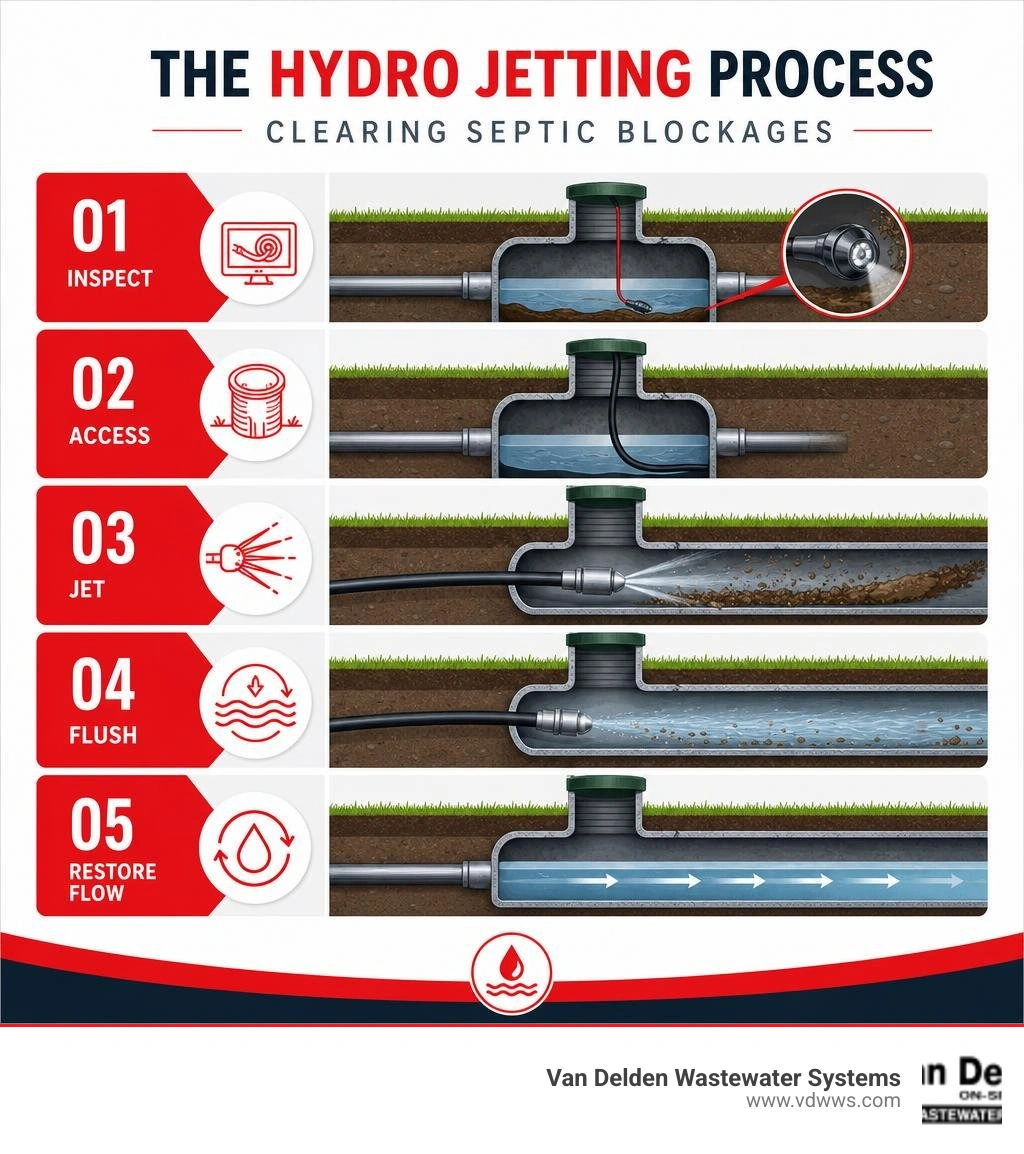
1. A camera inspection locates the blockage inside the septic line
2. A specialized nozzle is inserted into the pipe through a cleanout access point
3. High-pressure water jets forward to break apart the obstruction
4. Backward-facing jets propel the hose while scrubbing the pipe walls clean
5. Debris is flushed out of the system completely
6. A final inspection confirms full flow is restored
Most homeowners don't think about their septic system until something goes wrong. A slow-draining sink, a gurgling toilet, or a soggy patch in the yard — these are the warning signs that something is building up inside your lines. And here's the part that surprises most people: pumping your septic tank every few years, while essential, doesn't clean the pipes leading to and from it. Roughly 60% of septic system failures actually happen in the drain field — not the tank — and blocked lines are a leading cause. A neglected system can fail in as little as 15 to 20 years, while a well-maintained one can last 40 years or more.
Hydro jetting is the method that bridges that gap — cleaning what pumping alone can't reach.
What is Hydro Jetting and How Hydro Jetting Clears Septic Blockages
To truly appreciate why high-pressure water is the gold standard for clearing septic lines, we have to look at what traditional methods leave behind. When grease, soap scum, and hair travel down your drains, they don't just disappear. Over time, they stick to the inside of your pipes, creating a sticky, narrow tunnel.
Unlike mechanical snaking, which merely punches a temporary hole through a clog, hydro jetting restores the pipe to its original interior diameter. By utilizing commercial-grade equipment that delivers water pressure ranging from 1,500 up to 4,000 PSI, we can strip away decades of accumulated grime.
This process doesn't just clear a path; it pressure-washes the pipe walls. It is a highly versatile, chemical-free maintenance tool that is safe for most systems when executed by a trained professional. When you look at the long-term health of your plumbing, understanding the Rootering and Jetting Benefits for Septic Lines reveals why this method is so highly recommended for preventative care.
The Mechanics of How Hydro Jetting Clears Septic Blockages
So, how does a blast of water navigate a complex septic line? The secret lies in the physics of the nozzle design and the force of the water.
A hydro jetting system consists of a high-pressure water pump, a heavy-duty flexible hose, and a custom-engineered nozzle. When the technician inserts the hose into the pipe cleanout, the pump delivers highly pressurized water. The nozzle is designed with multiple tiny orifices:
• Forward-facing jets: These high-velocity streams slice through stubborn blockages, hardened grease, and root intrusions like a hot knife through butter.
• Rearward-facing jets: These jets point backward at an angle. The force of the water shooting backward creates massive thrust, propelling the hose forward deep into the septic lines without needing to be manually pushed.
As the hose moves through the pipe, the 360-degree spray pattern scrubs away grease buildup, scale, and sludge from the pipe walls. The water then carries the loosened debris safely down the line into the septic tank, where it can settle properly.
4 Methods of Hydro Jetting That Guarantee Results
To maximize system efficiency and ensure complete flow restoration, we utilize four distinct hydro jetting methods tailored to different parts of your septic system. Each method targets a specific zone of vulnerability, providing both immediate blockage removal and long-term preventative maintenance.
Method 1: Clearing Inlet Lines from House to Tank
Your inlet line is the main highway carrying wastewater from your home’s drains to the septic tank. Because it transports everything from kitchen grease and food particles to heavy soap scum and bathroom waste, it is highly susceptible to sluggishness.
When this line begins to fail, you will notice slow drains, bubbling kitchen sinks, and gurgling toilets. If left unaddressed, this buildup can cause raw sewage to back up into your lowest household drains.
By running a hydro jetter from the tank cleanout back toward the house, we can scour away the accumulated grease and restore full capacity to the line. Neglecting this crucial link can lead to severe plumbing emergencies, often resulting in Septic System Repairs Backing Up in Waring TX or other nearby areas where old lines are prone to grease and solid buildup.
Method 2: Restoring Outlet Lines from Tank to D-Box
The outlet line connects your septic tank to the distribution box (D-box), which divides the liquid effluent among the various lines of your drain field. This line is particularly vulnerable to "solid carryover." If a septic tank is overdue for pumping, or if household water usage is exceptionally high, solid waste can escape the tank and enter the outlet line.
Over time, sludge and black biomat accumulate in this pipe, restricting the flow of effluent. If the outlet line is blocked, the entire system grinds to a halt, causing the septic tank to overflow.
We use targeted hydro jetting to clear these outlet lines, flushing the accumulated solids out and ensuring that only liquid effluent moves toward the soil treatment area. Regular maintenance here is vital, as highlighted in our guide on The Importance of Regular Drainfield Cleaning.
Method 3: Cleaning Leach Field Lines to Prevent Failure
The leach field (or drain field) is the most expensive and sensitive component of your septic system. It consists of perforated lateral pipes buried in gravel trenches. Liquid effluent filters through these perforations into the surrounding soil for natural purification.
Over time, a thick, slimy layer of anaerobic bacteria called "biomat" naturally forms in the trenches. While biomat is normal, an overgrowth of it—often caused by excess organic matter escaping the tank—will clog the soil pores and the pipe perforations, leading to localized flooding and system failure.
When jetting leach field lines, we must use reduced pressure (often 50% or less than standard line cleaning) and highly specialized flushing nozzles. This prevents the high-pressure water from damaging the perforated PVC pipes or blowing out the surrounding soil structure. Carefully executed jetting washes away excess biomat and silt, restoring the soil's natural absorption rate. To understand more about keeping these delicate lateral lines clear, read our detailed breakdown on Cleaning Leach Field Lines.
Method 4: Root-Cutting and Descaling for Stubborn Obstructions
Tree roots are incredibly opportunistic. They can sense the warmth and moisture inside your septic pipes and will find even the microscopic cracks in older clay, concrete, or cast-iron lines to force their way inside. Once inside, they feast on the nutrients, growing into thick, hairy masses that catch toilet paper and solid waste.
Additionally, older metal pipes suffer from rust and mineral scale, which creates a rough interior surface that catches debris.
To solve this, we use heavy-duty root-cutting nozzles. These specialized heads feature rotating blades or high-velocity spinning water jets that physically slice through root intrusions and shave mineral scale off the pipe walls. This restores the pipe to its smooth, original state without the need for destructive excavation. Incorporating this into your routine care is one of the most effective strategies for Drainfield Cleaning for Septic System Maintenance.
Comparing Hydro Jetting to Traditional Methods and Knowing When to Use It
When faced with a stubborn clog, homeowners often reach for a chemical drain cleaner or call a local plumber to run a mechanical snake. While these methods have their place, they are often temporary band-aids rather than long-term solutions.
• Mechanical Snaking (Rodding): A plumbing snake uses a rotating steel cable with an attachment on the end to physically punch a hole through a clog. While highly effective for simple blockages like a clump of hair or a toy flushed down the toilet, it does very little for grease or sludge. The snake simply pokes a hole through the grease, leaving the rest of the sticky residue on the pipe walls to catch the next flushable item.
• Chemical Drain Cleaners: Pouring harsh chemicals down your drains is highly discouraged for septic owners. These chemicals generate heat and use strong acids or bases to dissolve clogs. Not only can they corrode and weaken older plastic or metal pipes, but they also flow directly into your septic tank. Once there, they kill the beneficial bacteria that break down solid waste, effectively ruining the biological balance of your tank and risking groundwater contamination.
• Primary Action — Hydro Jetting: Scours 100% of pipe walls with water — Mechanical Snaking: Punches a hole through the clog — Chemical Cleaners: Dissolves organic matter chemically
• Effectiveness on Grease — Hydro Jetting: Extremely High (flushes it out) — Mechanical Snaking: Low (grease closes back up) — Chemical Cleaners: Moderate (only near the drain)
• Root Removal — Hydro Jetting: High (cuts and clears completely) — Mechanical Snaking: Moderate (tears but leaves roots) — Chemical Cleaners: Low / None
• Septic Bacteria Safe — Hydro Jetting: Yes (uses pure water) — Mechanical Snaking: Yes — Chemical Cleaners: No (kills critical bacteria)
• Risk of Pipe Damage — Hydro Jetting: Low (if pressure is calibrated) — Mechanical Snaking: Moderate (can crack brittle pipes) — Chemical Cleaners: High (corrodes old pipes)
• Longevity of Results — Hydro Jetting: Long-term (prevents future clogs) — Mechanical Snaking: Short-term (clogs recur quickly) — Chemical Cleaners: Short-term
Recognizing When Your System Needs Professional Intervention
How do you know it is time to put down the plunger and schedule a professional hydro jetting service? Your septic system will usually give you several warning signs before a catastrophic backup occurs. Watch out for these red flags:
• Multiple Slow Drains: If only one sink is slow, it’s a local clog. If your showers, tubs, and sinks are all draining slowly, the main septic line is restricted.
• Bubbling or Gurgling Toilets: If your toilet bubbles or makes a glug-glug sound when you run the washing machine or take a shower, air is trapped in the lines by a blockage.
• Unpleasant Odors: Foul sewage smells coming from your indoor drains, your yard, or near the septic tank cleanout indicate trapped waste.
• Soggy Patches or Bright Green Grass: Wet, muddy spots in your yard or patches of grass that are noticeably greener and faster-growing than the rest of your lawn indicate that effluent is pooling near the surface due to a blocked drain field.
Maintaining your system properly means acting on these signs early. For localized advice and tailored maintenance tips in our Texas service areas, check out our regional resources:
• Drainfield Cleaning Tips Boerne TX
• Drainfield Cleaning Bulverde TX Tips
• Drainfield Cleaning in Smithson Valley TX
• Drainfield Cleaning Helotes TX Guide
What to Expect During a Professional Service and How Hydro Jetting Clears Septic Blockages Safely
When you hire a professional team to hydro jet your septic lines, the process is highly systematic to protect your plumbing and ensure a thorough clean.
1. Video Camera Inspection: Before any water is sprayed, we insert a flexible, high-resolution fiber-optic camera into the line. This allows us to see exactly what is causing the clog, locate its position, and—most importantly—assess the structural integrity of your pipes.
2. Pressure Calibration: Based on the pipe material (PVC, cast iron, or clay) and its age, the technician carefully calibrates the water pressure. Brittle or old pipes require lower, gentler pressures, while heavy root intrusions in sturdy pipes may require higher PSI.
3. Jetting Execution: The jetter is inserted through an exterior cleanout or the septic tank inlet. We make multiple passes through the line, starting from downstream and working upstream, ensuring all loosened debris flows naturally down into the tank.
4. Post-Jetting Camera Review: Once the lines are cleared, we run the camera through a second time to verify that the pipe walls are perfectly clean and that flow has been 100% restored.
Taking these professional steps is the ultimate way to safeguard your investment. Learn more about how this thorough approach to How Drainfield Cleaning Enhances Septic System performance can prevent premature system replacement.
Frequently Asked Questions About Septic Hydro Jetting
Can hydro jetting damage older septic pipes?
Yes, if performed by untrained individuals or with incorrect pressure settings. Older pipes made of clay, concrete, or Orangeburg (tar paper pipe common in mid-20th-century homes) can be fragile. This is why a pre-jetting camera inspection is non-negotiable. A professional technician will assess the pipe material and adjust the pressure settings to ensure the clog is cleared safely without compromising the structural integrity of the line.
Does hydro jetting replace regular septic tank pumping?
No. Hydro jetting and tank pumping are complementary maintenance procedures, but they serve different purposes. Pumping removes the heavy solids, sludge, and scum that accumulate inside the septic tank over a 3-to-5-year period. Hydro jetting cleans the pipes leading to and from that tank. Think of pumping as emptying your trash can, and hydro jetting as washing out the chute that leads to it. For the best results, we often recommend scheduling hydro jetting in conjunction with your routine pumping.
Is hydro jetting environmentally friendly?
Absolutely. Unlike chemical drain openers that introduce toxic acids and synthetic compounds into the soil and local groundwater, hydro jetting uses nothing but pure, pressurized water. It is 100% chemical-free, making it completely safe for the beneficial soil bacteria, plants, and groundwater surrounding your drain field.
Conclusion
When it comes to maintaining your home's wastewater system, proactive care always beats reactive emergency repairs. Understanding how hydro jetting clears septic blockages gives you the knowledge to make smart decisions for your home's infrastructure, helping you extend your system's lifespan to 40 years or more.
At Van Delden Wastewater Systems, we have been providing comprehensive, high-quality septic solutions to families in Boerne, Bulverde, Fair Oaks Ranch, Helotes, San Antonio, and surrounding areas since 1937. As a family-owned business, we believe in doing things the right way. Our honest, background-checked, non-commissioned technicians are dedicated to educating our customers, providing clear photo documentation, and delivering detailed service forms so you know exactly what work was performed.
If your drains are running slow or you want to schedule preventative maintenance to protect your drain field, contact us today to learn more about our professional Rootering and Jetting Services.