Translating a Septic Inspection Report for Kendall County Homebuyers
Don't let technical septic jargon derail your late-summer closing. We break down which inspection findings are routine maintenance items and which are true dealbreakers.
Understanding the rootering and jetting benefits for septic lines can save you from a messy, expensive emergency down the road. Here's a quick breakdown of what each method does and why it matters:
Rootering (Mechanical Snaking):
Hydro Jetting:
Bottom line: Rootering clears the path. Jetting cleans the pipe. Both have a place in a healthy septic maintenance plan — and knowing which one your system needs can mean the difference between a quick service call and a costly repair.
Your septic lines quietly do some of the hardest work on your property. Over time, grease, sludge, tree roots, and mineral deposits build up inside those pipes — often without any visible warning signs until a backup forces the issue. By then, the damage is already done.
That's why choosing the right cleaning method from the start is so important. A mechanical rooter can punch through a stubborn clog, but if grease is coating the pipe walls, that clog will be back within months. On the other hand, high-pressure jetting is powerful enough to restore a pipe nearly to its original diameter — but applied incorrectly to a fragile or aging line, it can cause more harm than good.
This guide walks you through both methods clearly and honestly, so you can make a confident, informed decision about your septic system.
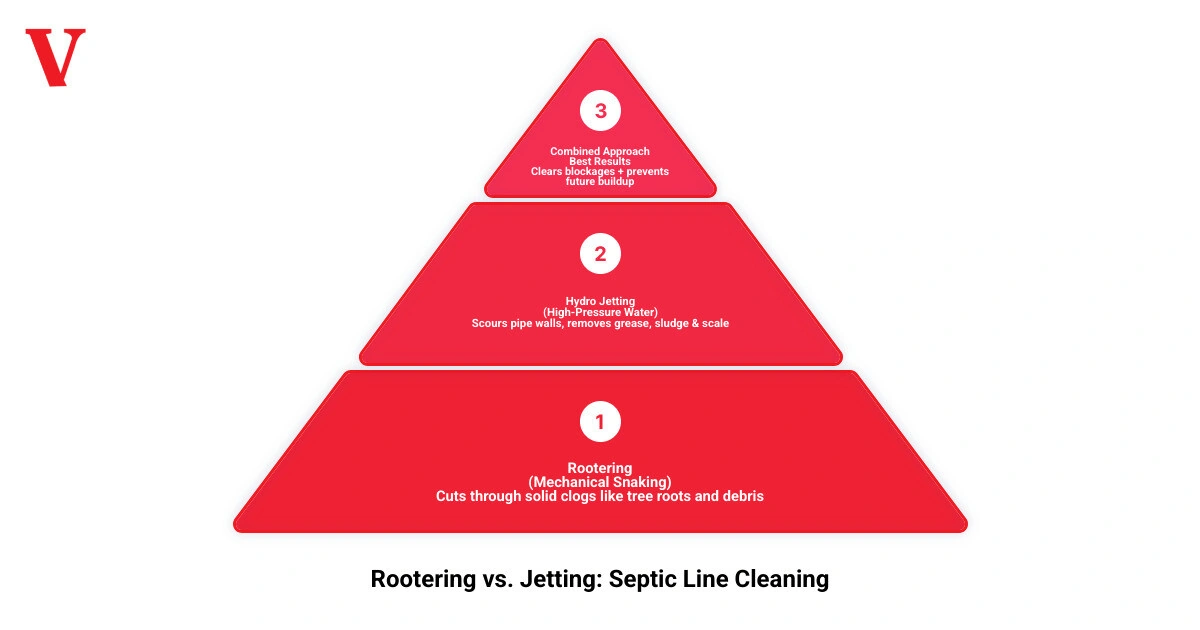
When we talk about maintaining the health of your septic system in areas like San Antonio or Boerne, we generally look at two primary "heavy hitters" for line cleaning. While they both aim to restore flow, the way they achieve it is fundamentally different.
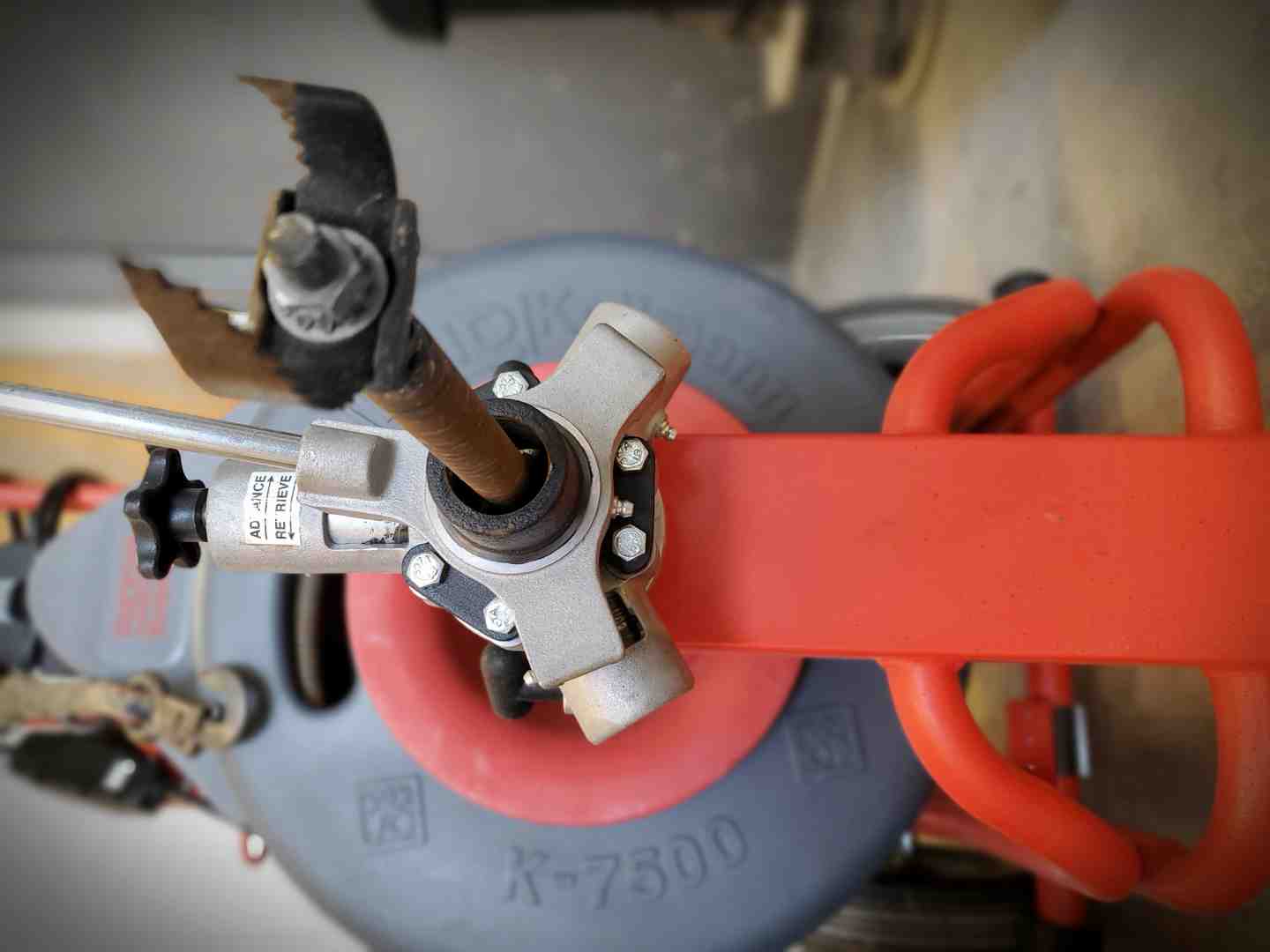
Rootering, often called mechanical snaking or augering, is the "OG" of the plumbing world. This technology has been a standard since the 1930s. It involves a flexible steel cable that we feed into your septic lines. At the end of this cable is a specialized head—sometimes a bulbous spring, other times a sharp, rotating blade. As the cable spins, it physically chews through obstructions. It’s like a high-powered weed whacker for the inside of your pipes. You can learn more about our rootering services to see how we handle these tough blockages.
Hydro Jetting, by contrast, is like a luxury spa treatment for your plumbing—if that spa treatment involved a high-pressure blast of water. Instead of a metal blade, we use a specialized hose and nozzle that shoots water at pressures ranging from 1,000 to 4,000 PSI. This isn't just a garden hose; it’s a precision tool. The nozzle features rear-facing jets that propel the hose forward while scrubbing the pipe walls, and a forward-facing jet that pulverizes clogs into tiny particles. For a deeper dive into the technology, check out our jetting service page.
In our neck of the woods—from the rocky terrain of Spring Branch to the lush landscapes of Helotes—tree roots are a constant adversary. Roots are naturally drawn to septic lines because they are a consistent source of moisture and nutrients. Once a tiny hair-like root finds a pinhole or a loose joint, it enters and begins to thrive.
If you are dealing with Roots In My Septic System, you need to understand the limitations of mechanical cutting. Rootering is excellent for an immediate fix; the blades slice through the root mass, restoring flow quickly. However, it often leaves the "stubs" of the roots behind in the pipe joints.
This is where the Tree Root Damage To Septic Systems can become a recurring nightmare. If you only use a rooter, those roots will grow back—often thicker than before—within months. By combining methods or utilizing the scouring action of hydro jetting, we can remove the root fragments more thoroughly. For residents in specific areas, our Septic Root Removal Guide Helotes Tx provides localized advice on managing these thirsty intruders.
Grease is often called the "silent killer" of septic systems. Unlike a root mass, which is a solid object, grease is a viscous sludge that coats the entire circumference of the pipe.
| Feature | Mechanical Rootering (Snaking) | Hydro Jetting |
|---|---|---|
| Action | Punctures a hole through the clog | Scours the entire pipe wall clean |
| Grease Effectiveness | Low; the blade just passes through | High; emulsifies and flushes grease |
| Pipe Diameter | Restores only the path of the blade | Restores nearly 100% of diameter |
| Longevity | Short-term; grease quickly closes back | Long-term; removes the "sticky" residue |
When grease, fats, and oils (FOG) enter your septic lines, they cool and solidify. A mechanical snake will simply punch a small hole through the center of that grease. It’s a temporary fix at best. Hydro jetting, however, emulsifies the grease, washing it away and leaving the pipe walls smooth. This is Another Reason To Clean Your Tank Roots and lines—it prevents that "cholesterol" buildup from causing a total system heart attack.
The long-term health of your septic system depends on proactive care. When we look at the rootering and jetting benefits for septic lines, the most significant advantage is the transition from reactive "emergency" repairs to preventive "defense" maintenance.
One of the best 3 Ways To Prevent Septic System Root Intrusion is to ensure your pipes are scoured clean on a regular basis. Smooth pipe walls give roots fewer "footholds" to grab onto. Furthermore, jetting is an environmentally safe choice. In drought-prone areas like Fair Oaks Ranch or Shavano Park, we appreciate that jetting uses pure water—no harsh chemicals that could disrupt the delicate bacterial balance inside your septic tank.
For those in Boerne, our Septic Roots Boerne Tx Guide highlights how these methods extend the lifespan of your entire system. By keeping the lines clear, you prevent back-pressure from damaging the tank baffles or overwhelming the drain field. If you're looking for the Best Septic Root Removal Boerne Tips, the number one tip is always: don't wait for a backup to act.
Deciding between these two methods isn't always about which one is "better" in a vacuum—it's about which one is right for the specific problem at hand.
We typically recommend rootering for:
Our Residential Septic Root Removal Guide Boerne Tx and our 24 Hour Septic Root Removal In Boerne Tx service are designed to handle these urgent, high-pressure situations.
However, hydro jetting is the preferred choice for:
While hydro jetting is powerful, it isn't always the safe choice. Before we blast water into a line, we have to know what that line is made of.
This is why we always emphasize camera verification. We never go in blind. A pre-service inspection ensures your pipes can handle the pressure.
Safety is our top priority at Van Delden Wastewater Systems. When performing these services in communities like Garden Ridge or Timberwood Park, we follow strict protocols to protect your property.
We adjust the PSI based on the pipe's material and age. A modern PVC line can handle higher pressure than a 50-year-old clay pipe. Additionally, we always check for "back-pitch" or bellies in the line where water might pool, as this affects how we navigate the jetting hose.
Recommended Maintenance Schedule:
Yes, but only when performed by a professional after a camera inspection. We can dial the pressure down to a safe level for older clay or cast iron pipes. However, it is generally not recommended for Orangeburg pipes.
For most residential systems in the San Antonio area, every 2 to 3 years is sufficient. If you have aggressive trees like Willows or Oaks near your lines, or if you do a lot of heavy cooking (which increases grease), we might recommend an annual schedule.
Rootering "clears" the roots but doesn't "remove" the problem. It cuts the roots back to the pipe wall, but they will grow back. Jetting provides a more thorough cleaning, but the only way to "completely" stop roots is to repair the cracks in the pipe where they enter.
Choosing between rootering and jetting doesn't have to be a guessing game. At Van Delden Wastewater Systems, we've been serving the local community since 1937. As a family-owned business, we pride ourselves on our honesty. Our technicians are non-commissioned, which means they won't try to sell you a high-pressure jetting service if a simple rooter will do the job.
We believe in educating our customers. That’s why we provide detailed service forms and photo documentation for every job we perform in Boerne, Bulverde, San Antonio, and beyond. We want you to see exactly what’s happening inside your pipes so you can make the best decision for your home.
Don't let a slow drain turn into a backyard swamp. Schedule your professional rootering service today and let us help you keep your septic system running smoothly for decades to come.

Peter was personable, professional and thorough. Highly recommend Van Delden. You might be able to find a cheaper company but not better!
On time. 100% professional, knowledgeable, and courteous. Very helpful and straightforward. That is the bar all businesses should strive for.
It has been a pleasure working with your company. Not only did y’all communicate very well but your workers were always polite! Thank you!
“I thank Van Delden for such prompt service. Honest people are hard to come by these days. I will certainly recommend Van Delden to anyone! Jesse is an upstanding young man and very nice to talk to. I thank everyone at Van Delden for taking such good care of me.”
This is just a note to thank you for explaining the problem with my system. You didn’t have to be so kind and I appreciate your good business ethics and time spent. In the future you will have mine in return!