Preparing Your Aerobic System's Air Compressor for the Shift from August Heat to Fall Breezes
Preparing Your Aerobic System's Air Compressor for the Shift from August Heat to Fall Breezes
The Hidden Impact of Late-Summer Weather on Your Aerobic Air Compressor
Preparing Your Aerobic System's Air Compressor for the Shift from August Heat to Fall Breezes is a critical step that many property owners overlook until a loud alarm interrupts their evening. In our decades of servicing Boerne properties, our team at Van Delden Wastewater Systems has seen firsthand how August in the Texas Hill Country brings relentless, baking heat that pushes every piece of outdoor mechanical equipment to its absolute limit. While you are busy staying cool indoors, your wastewater treatment equipment is outside bearing the brunt of the harsh sun. As we move through the August transition to early Fall, the accumulated wear and tear on your system's internal components reaches a breaking point. For homeowners relying on aerobic and septic systems, taking proactive steps right now makes the difference between a smooth seasonal shift and a messy, unexpected breakdown.
The quick fix: If you want to ensure your equipment is ready for the upcoming temperature shift, schedule an aerobic system inspection with a trusted local professional.
The 24/7 Workload of Your Air Pump
To understand why the end of summer is such a dangerous time for your wastewater equipment, you have to look at how the system operates. Your aerobic air compressor is designed to run continuously, twenty-four hours a day, seven days a week. Its job is to constantly push oxygen into the treatment tank, keeping the aerobic bacteria alive and actively breaking down waste. Because the motor never stops running, it naturally generates a significant amount of internal heat.
During the peak of summer, this internal motor heat compounds with the extreme ambient temperatures outside. The compressor sits inside a protective housing, which shields it from rain but also acts like an oven when the afternoon sun beats down on it. Inside this housing, the internal rubber diaphragms that physically pump the air are subjected to intense, prolonged baking. Over weeks and months of triple-digit weather, these flexible rubber components begin to lose their elasticity.
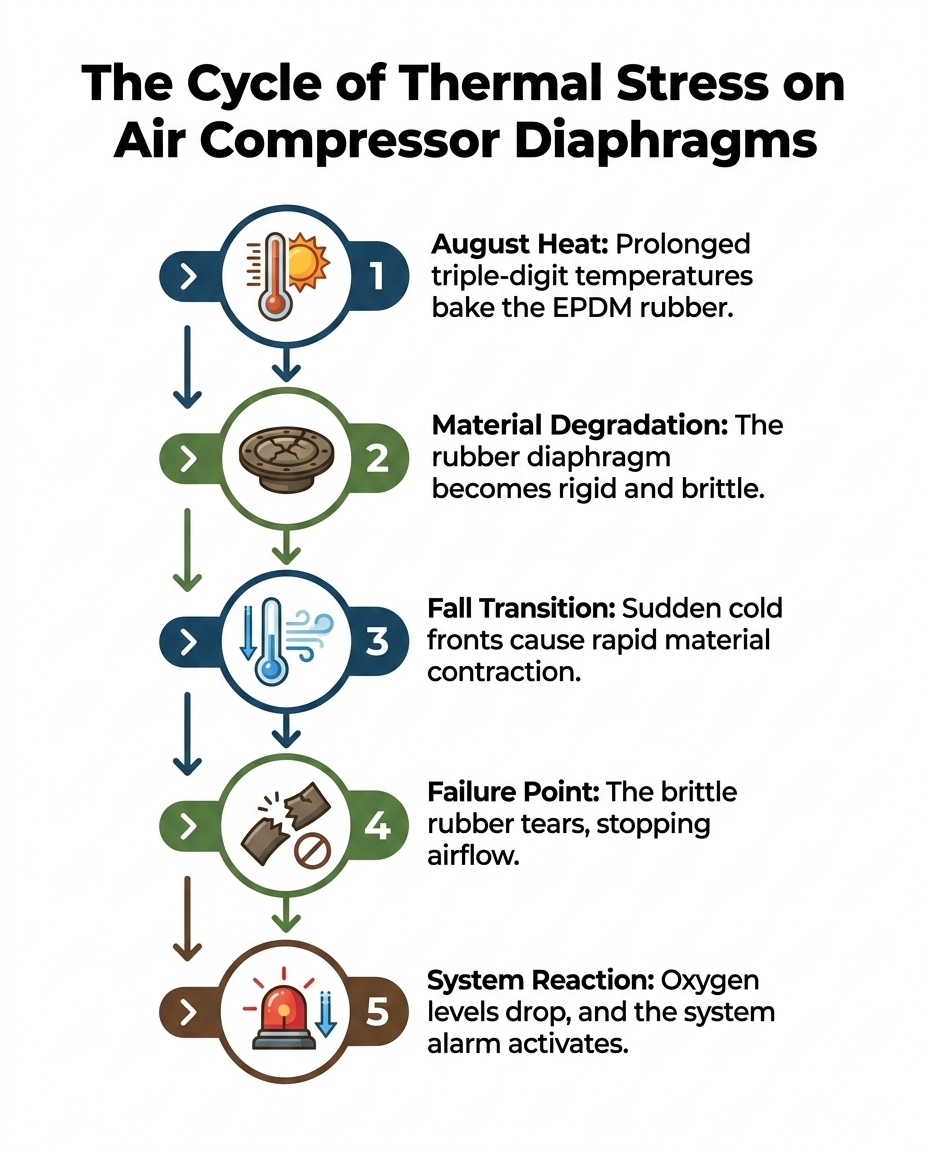
This sets the stage for a frustrating concrete problem: the prolonged heat bakes the internal rubber diaphragms, making them rigid and highly vulnerable. The actual failure rarely happens on the hottest day of the year. Instead, a pattern we see often is that the breakdown occurs when the weather finally begins to change. Knowing what external warning signs to look for allows you to act before a complete system failure disrupts your household.
Why Fall Temperature Fluctuations Trigger Compressor Failures
The mechanics of thermal stress explain why so many rural properties across Boerne and the Texas Hill Country experience equipment failures just as the weather starts to cool down. The diaphragms inside your air compressor are typically made from EPDM rubber (Ethylene Propylene Diene Monomer). This material is chosen for its durability and flexibility, allowing it to oscillate back and forth thousands of times a minute to generate airflow. However, like all rubber products, it is susceptible to thermal aging.
After months of continuous high-heat operation, the EPDM rubber undergoes a chemical change. The plasticizers that keep the rubber supple begin to break down, leaving the diaphragm rigid, brittle, and structurally compromised. But a brittle diaphragm can often keep functioning as long as the environmental conditions remain consistent. The real danger arrives with the first signs of autumn weather.
The Danger of Thermal Shock
When a sudden fall cold front rolls through the region, the ambient temperature can drop thirty degrees or more in a matter of hours. This rapid shift causes the materials inside your compressor housing to contract quickly—a phenomenon known as thermal shock. For a brand-new rubber diaphragm, this contraction is harmless. But for a diaphragm that has been baked rigid by the summer sun, this sudden shrinking is catastrophic.
The brittle rubber cannot handle the rapid contraction while continuing to oscillate at high speeds. As a result, the weakened diaphragm simply tears along its edges. This is why our field technicians see a massive spike in compressor failures during the specific transition period from late summer to early fall, rather than in the middle of July.
• Peak August Heat — Environmental Stress: Prolonged triple-digit ambient temperatures compounding with motor heat — Impact on EPDM Rubber Diaphragms: Thermal aging; rubber loses elasticity and becomes rigid and brittle
• Early Fall Transition — Environmental Stress: Sudden cold fronts causing rapid temperature drops in a matter of hours — Impact on EPDM Rubber Diaphragms: Thermal shock; rapid contraction causes the brittle rubber to tear
Boerne's specific climate transition—moving from intense, prolonged heat waves directly into unpredictable fall temperature swings—creates a unique thermal shock environment for outdoor equipment. Understanding this delayed reaction is the key to protecting your system.
The Cycle of Thermal Stress on Air Compressor Diaphragms
Safe External Checks: Spotting a Struggling Septic Air Pump
Because the transition from August to early Fall is the highest-risk period for your equipment, proactive monitoring is highly recommended. However, safety must always come first. Homeowners should only perform external visual and auditory checks. You can gather a tremendous amount of information about the health of your compressor just by standing next to it and observing how it behaves.
Here are the safe, actionable steps our team recommends you take to monitor your system without putting yourself at risk:
• Listen for unusual humming: A healthy compressor emits a steady, even hum. If you hear a loud, strained vibrating noise, the motor may be working overtime to compensate for a torn diaphragm.
• Watch for rattling or shaking: If the compressor housing is vibrating violently or rattling against its concrete pad, internal components have likely failed and thrown the pump off balance.
• Note a completely silent unit: If you walk up to the housing and hear absolutely nothing, the compressor has lost power entirely or the motor has burned out.
• Check for diminished bubbling: If your system design allows you to safely view the pump tank from ground level without opening any heavy lids, look at the water surface. A lack of vigorous bubbling means airflow has stopped.
• Pay attention to foul odors: When the aerobic bacteria lack oxygen, they die off, and anaerobic bacteria take over. This shift produces a strong, distinct sewage odor near the tanks or spray heads.
When to Stop and Call a Professional
If your external checks reveal any of the warning signs listed above, it is time to bring in an expert. You must never open the compressor housing or attempt to replace the internal diaphragms yourself. Opening the housing exposes you to live electrical components and significant shock hazards, especially if the ground is damp from a recent fall rain.
Furthermore, attempting a DIY repair on a wastewater system often voids manufacturer warranties. Improper reassembly of the compressor can lead to air leaks, moisture intrusion, and the total destruction of the expensive electrical motor. Always leave internal diagnostics and repairs to a licensed wastewater professional who has the specialized tools and training to do the job safely.
What Happens When the Diaphragm Tears: Alarms and System Disruptions
Ignoring the warning signs during the late-summer transition inevitably leads to a cascading series of problems. When a heat-weakened diaphragm finally tears during a fall cold front, the consequences for your property are immediate and highly disruptive. The primary function of the compressor is to sustain the biological ecosystem inside your treatment tank. When that stops, the entire treatment process grinds to a halt.
The Problem: A torn diaphragm immediately stops the flow of compressed air into the aeration chamber. Without this continuous supply of dissolved oxygen, the aerobic bacteria that consume and purify the household waste begin to suffocate.
The Cause: The sudden drop in air pressure triggers the system's sensitive internal air pressure sensor. This sensor is designed as a fail-safe to alert you that the biological treatment process is failing.
The Solution: The sensor activates the audible buzzer and the bright red visual light on your control panel, signaling an urgent need for professional intervention.
If this happens to you, knowing what to do if your aerobic system alarm activates is vital. You should immediately reduce your household water usage—avoid running the washing machine, dishwasher, or taking long showers. Every drop of water you send down the drain enters a tank that is no longer processing waste effectively, increasing the risk of a messy backup into your home.
Impact on Downstream Components
The damage caused by a failed air compressor doesn't stop in the aeration chamber. If the system continues to operate without oxygen, the untreated, raw wastewater will eventually be pushed into the final pump tank. From there, it is sent out to your dispersal field.
For rural properties across Boerne and the Texas Hill Country utilizing an aerobic system with spray irrigation, pumping untreated effluent is disastrous. The thick, unprocessed waste will quickly clog the fine mesh screens and nozzles of your spray heads. What started as a simple torn rubber diaphragm can quickly escalate into the need for extensive cleaning and replacement of your entire irrigation dispersal network.
Prioritizing Aerobic Septic System Maintenance Before the Weather Turns
The most effective way to prevent these sudden fall breakdowns is by scheduling proactive aerobic septic system maintenance before the weather actually turns. Waiting until the first major cold front hits means you are already gambling with heat-stressed rubber components. A professional seasonal maintenance visit addresses these hidden vulnerabilities before they trigger an emergency alarm.
During a comprehensive seasonal check, a licensed technician will measure the actual air pressure output of your compressor, ensuring it meets the manufacturer's specifications. They will inspect and clean the air intake filter, which often becomes clogged with dust and pollen during the dry Boerne summer, forcing the motor to run hotter than necessary. They will also test the pressure sensors and alarm circuits to guarantee they will function correctly if a real emergency occurs.
Routine care extends the overall lifespan of the air compressor and significantly delays the need for costly full-unit replacements. By replacing a degraded diaphragm proactively, you save the expensive electrical motor from burning out due to overwork. The peace of mind that comes from knowing your equipment is prepared for the upcoming seasonal shift is invaluable.
Real-World Reliability
The value of this proactive approach is proven every day across Boerne and the Texas Hill Country rural properties. For example, one homeowner new to wastewater system ownership recently reached out to schedule their first-time service and inspection. A technician named Courtney arrived and provided a thorough, step-by-step evaluation of their equipment, taking the time to answer all their questions about seasonal care. The clean and straightforward process gave the homeowner total confidence in the health of their property.
Trusting Local Expertise for Your Seasonal Compressor Inspections
Understanding exactly how local weather patterns affect specific mechanical components requires years of dedicated field experience. A technician who understands the unique climate transition of the Texas Hill Country knows exactly what to look for when inspecting an air compressor in late August or early September. They can accurately diagnose the subtle differences between normal mechanical wear and severe thermal degradation.
This is where deep, generational knowledge makes a tangible difference. At Van Delden Wastewater Systems, our family-owned business has been in continuous operation since 1937. That represents decades of first-hand observation by our crews of this exact seasonal failure pattern in Texas Hill Country aerobic systems. This historical perspective ensures that every inspection is grounded in real-world data about how equipment actually behaves in this specific environment.
Remember, internal compressor checks are strictly for licensed professionals. Relying on an experienced local team ensures that the delicate internal mechanisms are handled correctly, that all safety protocols are followed, and that your warranties remain fully intact. A thorough, professional inspection right now is the absolute best way to prevent stressful emergency calls later in the season.
Frequently Asked Questions About Seasonal Compressor Care
How long does an aerobic air compressor typically last?
Most manufacturer guidelines suggest the internal rubber diaphragms will last between two to five years before needing replacement. The electrical motor itself can last significantly longer if the diaphragms are maintained proactively. However, the extreme, prolonged heat of a Texas summer can easily shorten this expected lifespan by baking the rubber components.
Why is my aerobic septic alarm going off after a temperature drop?
The sudden cold likely caused a heat-weakened rubber diaphragm inside your air compressor to rapidly contract and tear. When the diaphragm tears, the system loses air pressure, which starves the treatment tank of oxygen. The system's internal pressure sensor detects this drop and immediately activates the alarm to warn you of the failure.
How do I know if my septic air pump is bad?
You can identify a failing pump through safe external auditory and visual checks. Listen for unusual loud rattling, strained humming, or total silence coming from the housing. Visually, look for an illuminated red alarm light on your control panel or a lack of bubbling in the pump tank if it is safely visible from the surface.
What happens if my aerobic septic pump stops working?
When the pump stops, the aerobic bacteria in your treatment tank lose their oxygen supply and begin to die off rapidly. This halts the waste treatment process, resulting in strong, foul sewage odors around your property. If left unaddressed, the untreated effluent can flow out and severely clog your downstream spray irrigation heads.
Can I replace the air compressor diaphragm myself?
You should never attempt a DIY replacement of the air compressor diaphragm. Opening the compressor housing exposes you to dangerous live electrical components and significant shock hazards. Additionally, improper reassembly can ruin the motor and void your manufacturer warranty, making it a job strictly for licensed wastewater professionals.
Secure Your Aerobic System Before the Fall Breezes Arrive
Preparing Your Aerobic System's Air Compressor for the Shift from August Heat to Fall Breezes is about taking control of your property's health before the weather forces your hand. By acting during the late-summer transition rather than waiting for the first unpredictable cold front, you protect your heat-stressed equipment from catastrophic thermal shock. The confidence that comes with proactive, professional maintenance allows you to enjoy the changing seasons without worrying about sudden alarms or messy backups.
One homeowner living in Boerne recently reached out for efficient and reliable service for their equipment just as the season was shifting. The prompt, excellent attention they received ensured their system was fully prepared for the changing weather, leading them to highly recommend proactive care to their neighbors. Don't wait for a brittle diaphragm to tear in the middle of the night. Take action during the August transition to early Fall and schedule an aerobic system inspection today to ensure your property remains safe, clean, and fully operational.
Peter was personable, professional and thorough. Highly recommend Van Delden. You might be able to find a cheaper company but not better!
Wendell E
On time. 100% professional, knowledgeable, and courteous. Very helpful and straightforward. That is the bar all businesses should strive for.
Andy R
It has been a pleasure working with your company. Not only did y’all communicate very well but your workers were always polite! Thank you!
Kate R.
“I thank Van Delden for such prompt service. Honest people are hard to come by these days. I will certainly recommend Van Delden to anyone! Jesse is an upstanding young man and very nice to talk to. I thank everyone at Van Delden for taking such good care of me.”
Charles H
This is just a note to thank you for explaining the problem with my system. You didn’t have to be so kind and I appreciate your good business ethics and time spent. In the future you will have mine in return!