In need of regular aerobic septic system maintenance. Who are the trusted specialists in San Antonio?
Owning an aerobic treatment unit (ATU) means committing to a predictable set of ongoing maintenance responsibilities that go beyond what conventional septic owners manage. Most homeowners discover these requirements after the system is already in the ground.
Here is a quick summary of the key maintenance categories to expect:
• Professional Service Contracts: Regular inspections by a licensed provider to ensure compliance.
• Electrical Power: Continuous operation of the air compressor and periodic pump cycles.
• Disinfection Consumables: Ongoing replenishment of specialized chlorine tablets.
• Routine Pumping: Periodic removal of accumulated solids from the tanks.
• Component Care: Monitoring and replacing mechanical parts like aerators and pumps as they wear out.
In Texas, maintaining a licensed service contract is not optional. The Texas Health and Safety Code requires it for surface-discharging systems. Skipping service is not just bad for your system — it can result in regulatory fines and forced shutdown.
This guide walks you through every layer of what drives these maintenance requirements, how to keep your system running efficiently, and how to make sure your investment protects your property value for the long haul.
Understanding Your OSSF: Aerobic System Maintenance Requirements Explained
When you own a home in areas like San Antonio, Boerne, or Bulverde, you quickly learn that waste management is not always as simple as flushing and forgetting. If your property relies on an On-Site Sewage Facility (OSSF), you are operating a private wastewater treatment plant right in your backyard.
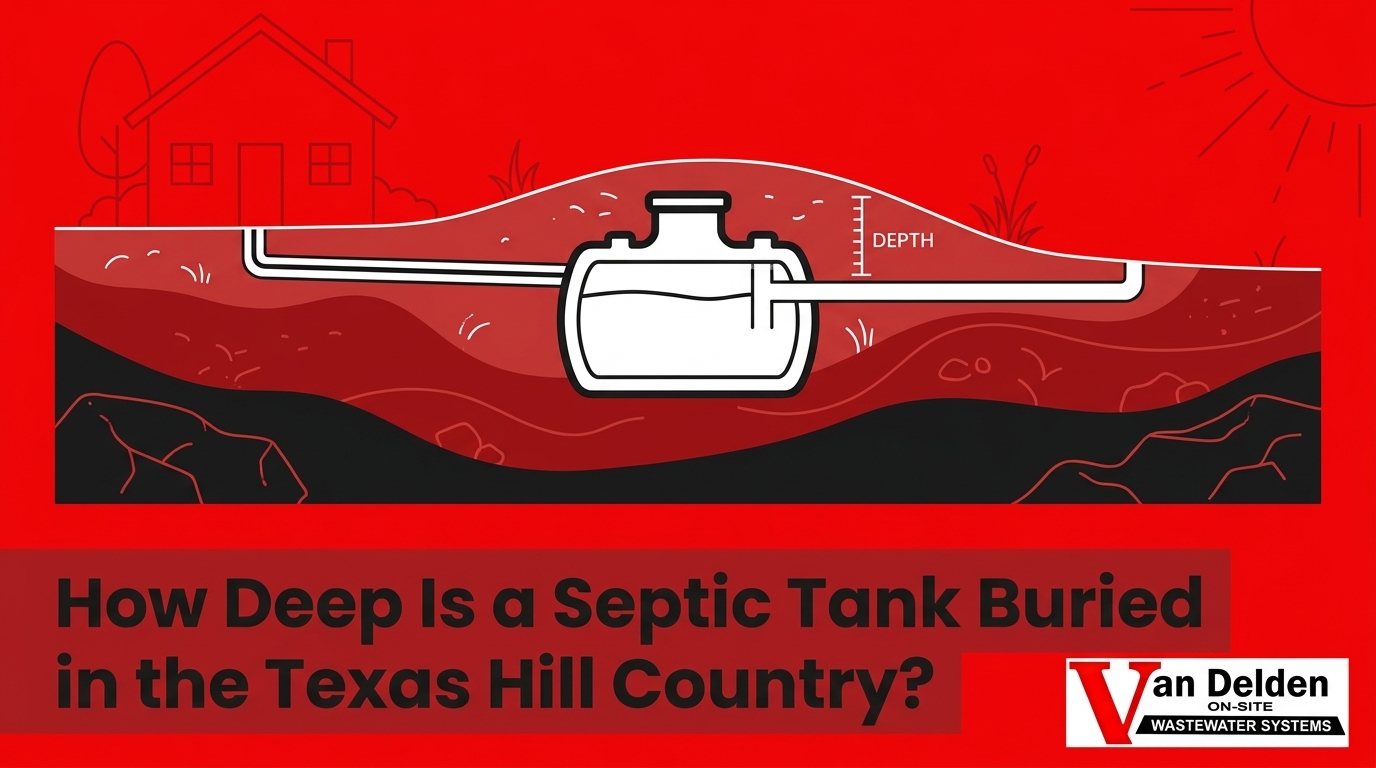
For many properties in the Texas Hill Country, a conventional anaerobic (gravity-fed) system simply is not an option. Our local geology presents unique challenges: we are often dealing with dense, clay-heavy soils that do not drain well, or shallow soil sitting directly on solid limestone bedrock. Because conventional systems rely on deep, highly permeable soil to naturally filter wastewater, local regulations and soil conditions frequently mandate the installation of an advanced aerobic treatment unit.
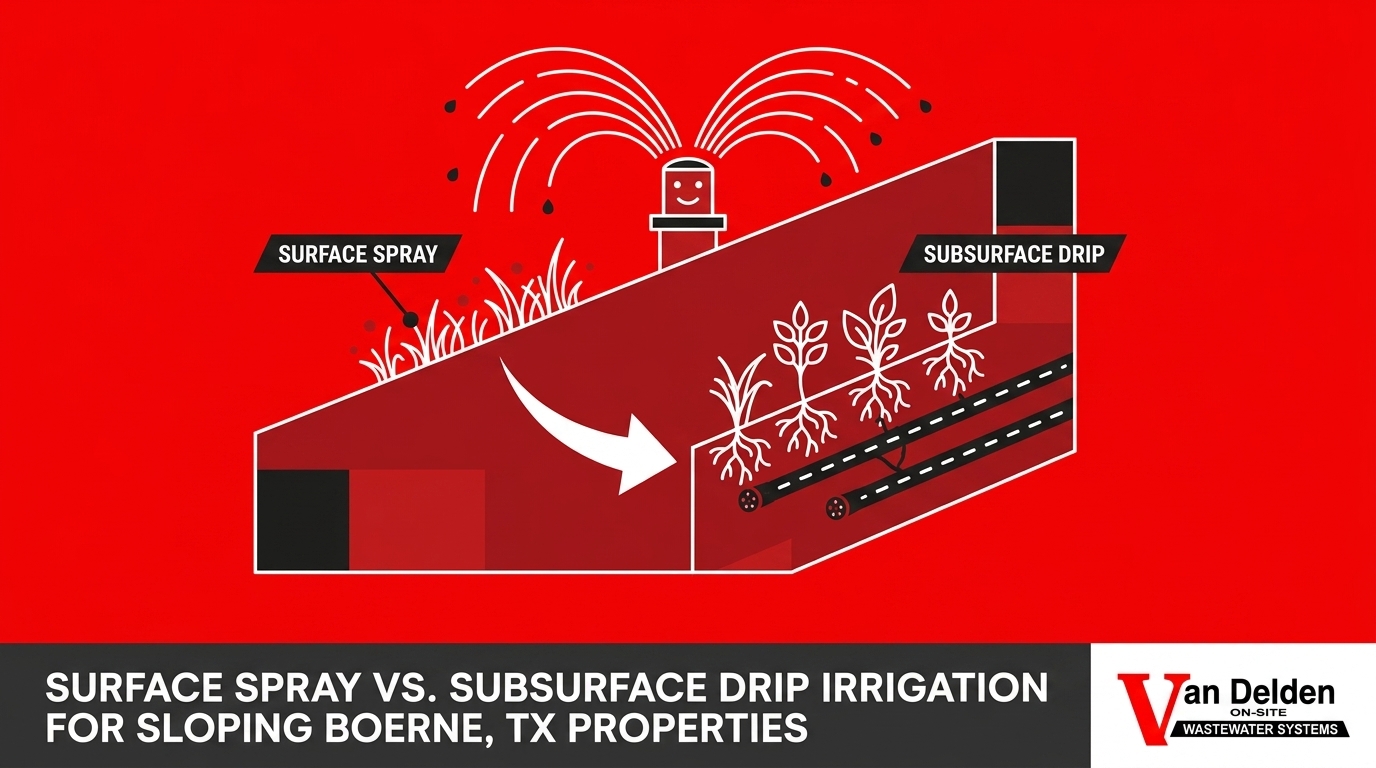
An aerobic system works by using electricity to force oxygen into the treatment chamber. This creates an oxygen-rich environment where highly efficient aerobic bacteria thrive. These friendly microbes break down waste up to thirty times faster than the anaerobic bacteria found in traditional tanks. The treated wastewater is then disinfected—typically with chlorine—and dispersed safely onto the lawn through dedicated spray heads or drip lines.
Because this process involves active mechanical components, keeping the system running smoothly requires regular attention. To understand how to manage these requirements and keep your system operating at peak performance, you can read our Aerobic System Maintenance Complete Guide.
What Factors Drive Aerobic System Maintenance Requirements for Homeowners?
Several distinct factors influence the overall expenses associated with operating an aerobic system. Unlike passive gravity systems, aerobic units rely on a continuous cycle of mechanical movement, electrical power, and chemical disinfection.
The primary drivers of these ongoing expenses include:
• Service Contracts: Because these systems are highly mechanical, local regulatory authorities require ongoing professional oversight. A service agreement ensures a licensed technician regularly checks the health of your system.
• Electricity Consumption: The air compressor (or aerator) must run constantly to keep the bacterial colony alive. Additionally, a submersible effluent pump runs periodically to distribute treated water to your spray field.
• Disinfection Supplies: To meet sanitary standards, effluent must be disinfected before surface application. This requires a steady supply of specialized chlorine tablets.
• Component Wear and Replacement: Mechanical parts like air compressors, water pumps, control panels, and spray heads have finite lifespans and will eventually require professional repair or replacement.
Furthermore, regional environmental factors play a major role in how often your system needs attention. For instance, in Spring Branch, Bulverde, and Boerne, homeowners frequently deal with extremely hard water. This high mineral content can cause scale and calcium buildup inside the effluent pump, spray heads, and chlorine chlorinator tubes, leading to premature wear if not monitored. To learn more about navigating these regional challenges, check out our Aerobic System Maintenance San Antonio Guide.
How Do Ongoing Expenses Compare to Conventional Systems?
To put these requirements into perspective, it helps to compare the long-term operational footprint of an aerobic system against a traditional anaerobic system.
Conventional systems are passive. They use gravity to move wastewater from the home to a septic tank, where solids settle out. The remaining liquid then flows naturally into a subsurface drainfield, where the soil performs the final filtration. Because there are no aerators, electrical control panels, or disinfection chambers, a conventional system consumes zero electricity and requires no ongoing chemical consumables.
The table below outlines the primary differences in ongoing maintenance requirements between the two system types:
• Electrical Power — Conventional Anaerobic System: None — Aerobic Treatment Unit (ATU): Continuous (runs 24/7)
• Professional Inspections — Conventional Anaerobic System: Recommended every 1–3 years — Aerobic Treatment Unit (ATU): Mandated 3 times per year in Texas
• Disinfection Consumables — Conventional Anaerobic System: None — Aerobic Treatment Unit (ATU): Ongoing (chlorine tablets)
• Pumping Frequency — Conventional Anaerobic System: Every 3 to 5 years — Aerobic Treatment Unit (ATU): Every 3 to 5 years (trash tank)
• Mechanical Components — Conventional Anaerobic System: None (or single effluent pump if mound system) — Aerobic Treatment Unit (ATU): Air compressor, submersible pump, control panel, float switches, spray heads
While conventional systems are far less demanding on a day-to-day basis, they are highly sensitive to soil compaction, excessive water use, and root intrusion. If a conventional drainfield fails, replacing it can be incredibly disruptive and expensive.
An aerobic system, on the other hand, trades passive simplicity for active reliability. It provides superior treatment, protecting sensitive local groundwater tables in rocky terrain, but it requires you to accept a higher baseline of operational care.
Ongoing Operational Expenses and Component Lifespans
Maintaining an aerobic septic system is a continuous commitment. Because the system utilizes living organisms to purify wastewater, any disruption to their environment—whether from a power outage, a failed aerator, or a lack of chlorine—can quickly halt the purification process.
Regular monitoring is the key to preventing minor mechanical hiccups from turning into major household emergencies. By staying proactive, you ensure that your system continues to treat wastewater effectively while keeping your lawn green and odor-free. For a deeper dive into the specific tasks involved in keeping your system healthy, explore our guide on Aerobic System Maintenance.
Mandatory Service Contracts and Inspections
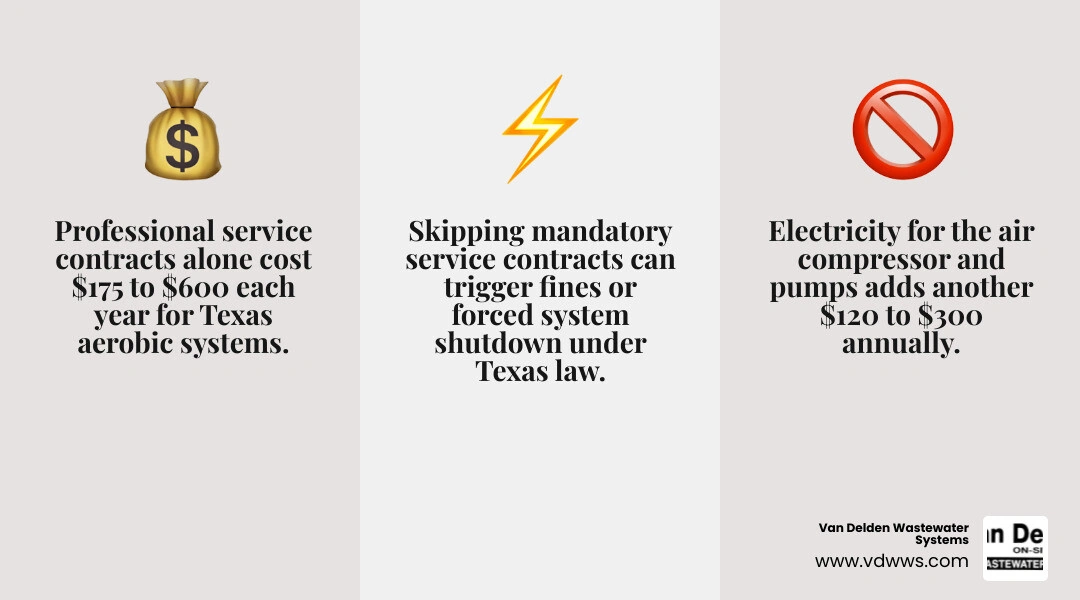
In the state of Texas, the Texas Commission on Environmental Quality (TCEQ) regulates on-site sewage facilities. Under state law, owners of aerobic systems discharging effluent onto the surface of their property must maintain an active maintenance contract with a licensed provider.
These regulations mandate that a certified technician inspect the system three times per year (roughly every four months). During these routine visits, the technician will:
1. Test the chlorine residual or fecal coliform levels.
2. Inspect the air compressor, air filter, and effluent pump.
3. Check the operation of all high-water and compressor alarms.
4. Measure the sludge accumulation in the trash tank and clarifier.
5. Verify that the spray heads are operating with the correct spray pattern and coverage.
After each visit, the technician submits an official inspection report to the local permitting authority (such as Bexar, Comal, or Kendall County) to prove your system is in compliance. For residents in the Hill Country, you can read our specialized Aerobic System Maintenance Boerne TX Guide to understand your local county compliance rules.
Electricity and Consumables
Because an aerobic system relies on mechanical parts, it is a constant consumer of electricity. The air compressor runs 24 hours a day, 365 days a year, to pump oxygen into the aeration chamber. While modern compressors are designed to be highly energy-efficient, they still represent a permanent addition to your monthly utility bill. Additionally, the submersible effluent pump draws power whenever it cycles on to spray treated water.
The other primary ongoing expense is chlorine. You must regularly replenish the chlorinator with calcium hypochlorite tablets. It is absolutely critical to use tablets specifically formulated and labeled for wastewater disinfection.
Never use standard swimming pool chlorine tablets (trichlor). Pool tablets are designed to dissolve much more slowly in sunlight and are highly acidic. When used in a wastewater system, they can dissolve rapidly, creating dangerous, highly corrosive chlorine gas that can destroy your system's components and kill the beneficial bacteria in your tank. For tips on managing these ongoing needs safely, refer to our Best Aerobic System Maintenance Tips Elmendorf TX.
Key Components Requiring Periodic Attention
Every mechanical part in your aerobic system has a limited operational lifespan. Knowing what these parts do and when they typically need attention can help you plan ahead:
• Aerator Pump (Air Compressor): This is the heart of your system. It runs continuously and typically lasts between two to ten years, depending on the brand, installation location, and local climate. Over time, the internal rubber diaphragms wear out and must be replaced to prevent the compressor motor from burning out.
• Submersible Effluent Pump: This pump sits in the final pump chamber and pushes treated water out to the spray heads. Because it operates in a wet environment and handles treated wastewater, it typically lasts seven to fifteen years.
• Control Panel and Float Switches: The control panel manages the timing of the spray cycles and monitors system safety. Float switches inside the tanks signal when the water level is too high or too low. These electrical components generally last ten to fifteen years.
• Spray Heads: Sunk into your lawn, spray heads distribute the treated, disinfected water. They are highly susceptible to damage from lawnmowers, dog chewing, and mineral scaling from hard water. They often require periodic adjustment or replacement.
If you suspect your system is experiencing issues with any of these parts, you can review common warning signs in our guide on Aerobic Maintenance Issues San Antonio Tips.
The Consequences of Neglect: What Happens If You Skip Maintenance?
Neglecting your aerobic system is a recipe for operational and financial disaster. When an aerobic system is ignored, the consequences build quickly:
1. Bacterial Die-Off: If the air compressor fails and goes unnoticed, the oxygen levels in the aeration tank drop to zero within hours. The aerobic bacteria will die, and the system will revert to an anaerobic state. Because aerobic tanks are smaller than conventional septic tanks, they cannot properly treat waste anaerobically.
2. Biomat Clogging: Without active bacteria to break down organic matter, suspended solids will escape the treatment chambers and flow directly into your pump tank. From there, they are pumped out to your spray heads or drip lines, clogging the nozzles and coating your yard in raw, untreated wastewater.
3. System Alarms and Odors: A failing system will trigger the high-water or compressor alarm on your control panel, producing a loud, piercing siren and a flashing red light. Additionally, the pleasant, earthy smell of a healthy system will quickly be replaced by a foul, sulfurous odor.
4. Property Damage and Environmental Hazards: Surfacing sewage creates a major health hazard for your family, pets, and neighbors, and can lead to extensive lawn and soil remediation.
If your system has reached a point of severe neglect, you may need to read our Aerobic System Maintenance Replacement Guide San Antonio to explore your repair and replacement options.
Maximizing ROI: How to Reduce Your Long-Term Operating Expenses
While aerobic systems have higher baseline operating requirements than conventional systems, you are not powerless. By adopting smart household habits and partnering with experienced professionals, you can significantly extend the lifespan of your mechanical components and avoid unexpected emergency service calls.
To keep your system running smoothly without breaking the bank, check out our Affordable Aerobic System Maintenance Guide San Antonio.
Best Practices for Homeowners to Protect Their Investment
The way you use water inside your home directly impacts the health and longevity of your aerobic system. By making a few simple adjustments to your daily routine, you can protect your system's delicate biological and mechanical balance:
• Avoid Toxic Chemicals: Never pour grease, paint, motor oil, chemical drain openers, or heavy amounts of bleach down your drains. These substances kill the beneficial bacteria in your aeration chamber, halting the treatment process.
• Watch What You Flush: The only things that should go down your toilets are human waste and toilet paper. Wet wipes (even those labeled "flushable"), feminine hygiene products, dental floss, and paper towels do not break down and will quickly clog your trash tank and pumps.
• Manage Water Softener Backwash: If you live in a hard-water area like Helotes or Timberwood Park, your water softener's salty backwash should ideally be routed away from your septic system. Excessive salt can disrupt the bacterial colony and corrode metal components inside your tanks.
• Protect the Spray Field: Keep the area around your spray heads clear of dense landscaping, trees, or parked vehicles. Ensure that children and pets do not play directly around the spray heads during or immediately after a distribution cycle.
For a comprehensive checklist of daily and monthly habits that keep your system in top shape, read our Ultimate Aerobic System Maintenance Guide Elmendorf TX.
Why Professional Service Contracts Save Money on Aerobic System Maintenance
Some homeowners view mandatory service contracts as an unnecessary burden. However, a professional maintenance agreement is actually your best defense against catastrophic repair bills.
Our non-commissioned, highly trained technicians do not just check boxes on a compliance form; they look for early warning signs of component wear. For example, catching a worn-out compressor diaphragm during a routine inspection allows us to replace a simple, inexpensive part before the entire compressor motor overheats and fails.
Furthermore, having a documented history of professional maintenance is a massive asset if you ever decide to sell your home. Buyers in communities like Fair Oaks Ranch, Shavano Park, and Garden Ridge want proof that the property's wastewater system is fully permitted, compliant, and functioning perfectly.
To learn more about how regular professional care keeps your system running efficiently, explore our Aerobic Maintenance Repair China Grove TX Guide.
Frequently Asked Questions About Aerobic Septic Maintenance
Navigating the rules and requirements of aerobic septic ownership can feel overwhelming. Below, we answer some of the most common questions we hear from homeowners in our service areas.
How often does an aerobic septic system need to be professionally serviced?
In most Texas counties, including Bexar, Comal, and Kendall, aerobic systems with surface spray application are legally required to be inspected three times per year (every four months) by a licensed maintenance provider. This requirement must be covered under an active maintenance provider agreement to keep your operating permit valid.
What kind of chlorine should be used in an aerobic system?
You must use calcium hypochlorite tablets that are specifically certified for wastewater disinfection. Never use swimming pool chlorine tablets (trichlor). Pool tablets dissolve differently, can create explosive gas mixtures in septic environments, and are highly corrosive to your system's electrical and mechanical components.
How often do aerobic septic tanks need to be pumped?
Like conventional systems, the trash tank and clarifier of an aerobic system typically need to be pumped out every three to five years. The exact frequency depends on your household size, water usage habits, and how much solid waste enters the system. During your routine service visits, our technicians will measure the sludge depth to let you know exactly when a pump-out is needed.
Conclusion
An aerobic septic system is a highly effective, environmentally friendly wastewater solution that allows you to enjoy your property in areas with challenging soil and bedrock conditions. While understanding aerobic system maintenance requirements is an important part of homeownership, these expenses are a manageable investment in your property's long-term health, safety, and resale value.
At Van Delden Wastewater Systems, we have been serving families across Boerne, San Antonio, Bulverde, and the surrounding areas since 1937. As a family-owned business, we believe in honest service. Our background-checked, non-commissioned technicians are dedicated to educating you about your system, providing detailed service forms, and supplying photo documentation of every inspection.
Do not wait for an alarm to go off to think about your septic system. Schedule your professional aerobic system service today and let us handle the compliance, maintenance, and peace of mind for you.