
Translating a Septic Inspection Report for Kendall County Homebuyers
Don't let technical septic jargon derail your late-summer closing. We break down which inspection findings are routine maintenance items and which are true dealbreakers.
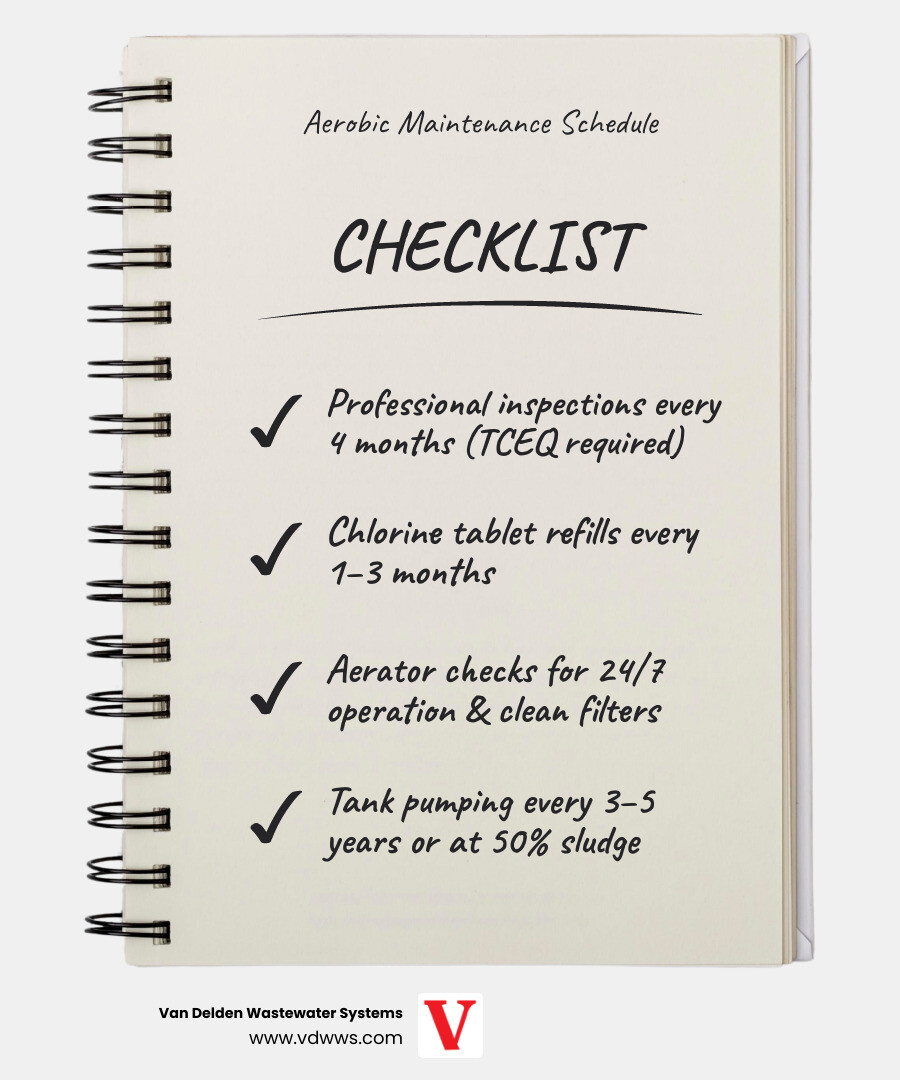
Aerobic system maintenance requirements include a set of legally mandated and manufacturer-recommended tasks that keep your treatment unit running safely, efficiently, and in compliance with state regulations.
Here is a quick summary of the core requirements:
If you own a home with an aerobic treatment unit, you already know it is not quite the same as a standard septic system. There are more moving parts, more rules, and more things that can quietly go wrong between service visits. In fact, approximately 21 million households across the U.S. rely on systems like yours to treat domestic wastewater — and yet most homeowners receive little to no guidance on what ongoing care actually looks like after installation.
The good news is that keeping your system in excellent shape does not have to be overwhelming. Once you understand what needs to happen, when, and who is responsible for each task, the whole thing becomes much more manageable. This guide breaks down every key aerobic system maintenance requirement in plain language, so you always know exactly where things stand.
To understand why your system has such specific needs, it helps to know what is happening under the grass. In a conventional septic system, waste is broken down by anaerobic bacteria (bacteria that don't need oxygen). This process is slow and the effluent isn't very clean, which is why those systems need large drainfields to filter the water through the soil.
An aerobic treatment unit (ATU), however, is like a miniature municipal sewage plant in your backyard. It uses aerobic bacteria—oxygen-loving microbes that are much more aggressive and efficient at digesting waste. To keep these "good" bacteria alive and hungry, the system must constantly pump air into the tank. This results in secondary treatment, producing effluent that is 85% to 98% cleaner than what comes out of a standard tank.
Because this process relies on mechanical parts (like aerators and pumps) and chemical disinfection (chlorine), the aerobic system maintenance requirements are more stringent. If the air stops, the bacteria die. If the chlorine runs out, the water isn't safe to spray on your lawn. Understanding how aerobic septic systems work is the first step in realizing that these systems are aerobic systems decoded—they are advanced machines that need regular "oil changes" to avoid the #1 cause of septic system failure: neglect.
In our neck of the woods—whether you are in Boerne, San Antonio, or Spring Branch—the Texas Commission on Environmental Quality (TCEQ) sets the ground rules. By law, aerobic systems must be inspected every four months (three times a year).
This isn't just a suggestion; it’s a regulatory requirement. Your maintenance provider is required to submit a report to the local permitting authority (like the county or city) confirming that your system is operating correctly. If you let your maintenance contract lapse, the county will eventually send you a notice, which can lead to fines or even legal action.
A professional technician doesn't just "look" at the tank. There are the 18 items your aerobic septic system technician should be checking during a visit. This includes testing the chlorine residual, checking sludge levels, cleaning filters, and ensuring the spray heads are distributing water evenly. This high-level aerobic system service ensures that small issues don't turn into expensive catastrophes.
If you are looking for aerobic septic system maintenance providers near me, ensure they are TCEQ-licensed and familiar with your specific brand of system.
| Task | Professional (Every 4 Months) | Homeowner (Monthly) |
|---|---|---|
| Chlorine Testing | Test for 0.1 mg/L residual | Check tablet levels/refill |
| Sludge Measurement | Check depth in all tanks | Monitor for odors |
| Aerator Service | Clean intake filters/test PSI | Listen for unusual noises |
| Spray Heads | Check for clogs/proper rotation | Mow around heads/check for breaks |
| Control Panel | Test alarms and float switches | Verify "Power" light is on |
| Reporting | Submit legal docs to county | Keep personal service records |
Your aerobic system is a team of components working together. If one player sits out, the whole team loses.
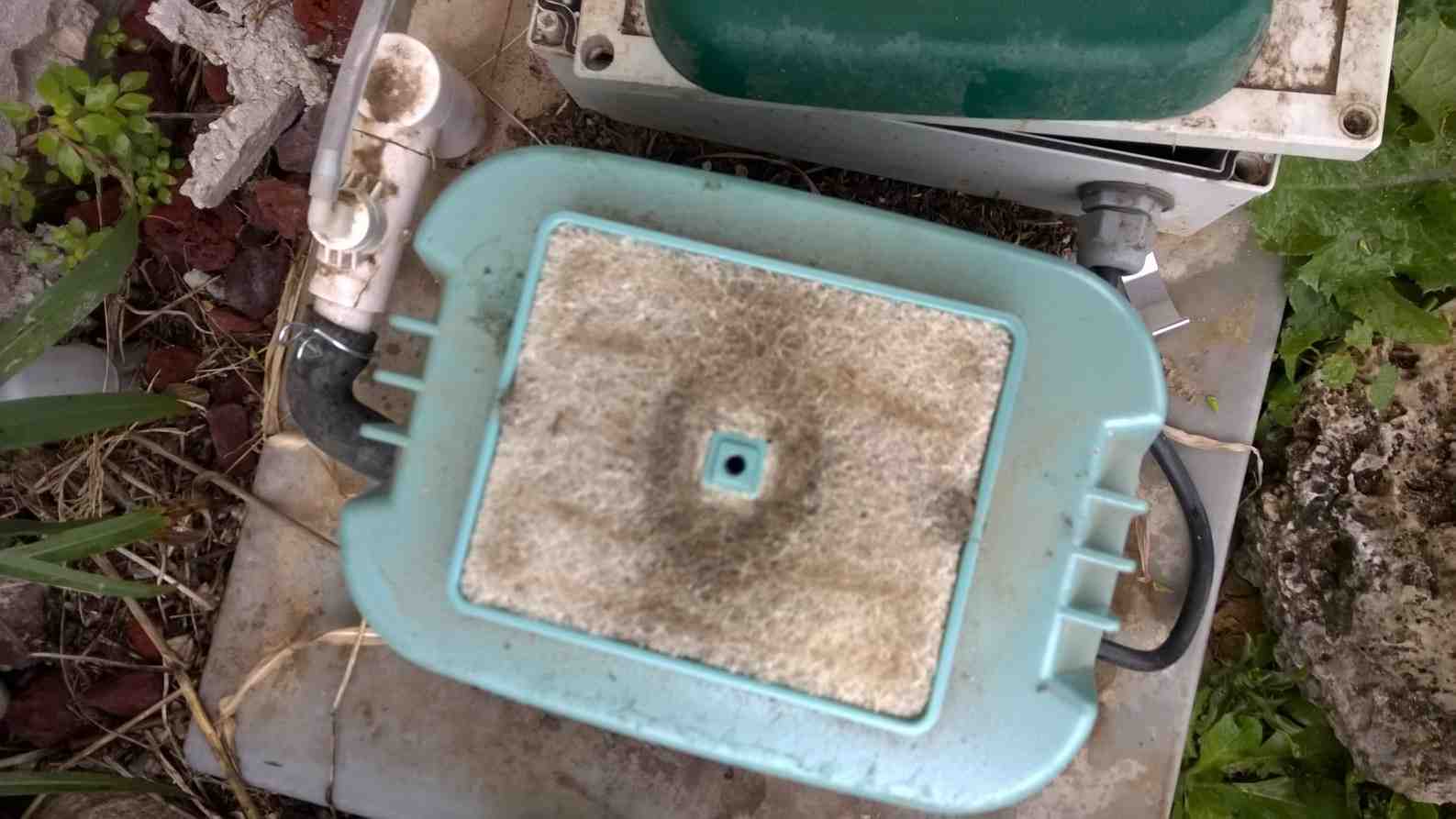
Most aerobic components have a predictable lifespan. Aerators generally last between 2 to 10 years, while submersible pumps might last 5 to 10. Following manufacturer specifications and staying ahead of issues and solutions with aerobic systems can save you from an emergency "no-flush" weekend. Use our aerobic septic system repair guide to understand what happens when these parts reach their limit.
The aerator is the heart of the system. It must run 24/7 to keep the bacteria alive. If the aerator fails, the system becomes anaerobic within hours, the bacteria die off, and you’ll likely notice a foul "rotten egg" smell.
Catching common aerobic system problems during a scheduled visit is much easier than dealing with a midnight alarm.
After the water is treated by bacteria, it passes through a chlorinator. This is a critical safety step because the treated water is often sprayed onto your lawn via sprinklers.
Understanding why you should have your aerobic system cleaned and keeping up with routine maintenance for aerobic septic systems is the best way to protect your property value.
While professionals handle the heavy lifting, your daily habits determine how hard the system has to work.
Following the dos and donts of aerobic system maintenance will keep your yard beautiful and your system quiet. However, if the red light does start flashing, don't panic. Start with aerobic system alarm troubleshooting and know what to do when septic tank alarm goes off. Usually, it means you have about 24 to 48 hours of "buffer" space in the tank before things get messy, giving you time to call for service.
What are the warning signs of a failing system?Look for signs your aerobic system needs maintenance, such as:
What do I do if my alarm goes off in the middle of the night?First, silence the alarm (there is usually a switch on the bottom or side of the panel). Second, stop all non-essential water use—no laundry, no dishwasher, and quick showers only. Then, call your provider. If you are in the Hill Country, refer to our aerobic system alarm activation guide Boerne TX for specific local steps.
Can I perform my own maintenance?In Texas, homeowners can technically maintain their own systems after the initial two-year manufacturer contract expires, but only if the local permitting authority allows it and the homeowner completes an approved training course. However, most homeowners find that the liability, the risk of contact with wastewater, and the requirement to submit formal reports make professional contracts a much safer and easier choice.
Maintaining your aerobic treatment unit doesn't have to be a headache. By staying on top of your aerobic system maintenance requirements, you aren't just following the law—you’re protecting your home’s most expensive appliance and ensuring your family’s environment remains clean and safe.
At Van Delden Wastewater Systems, we believe in doing things the right way. As a family-owned business serving the San Antonio and Boerne areas since 1937, we provide more than just a signature on a report. Our non-commissioned technicians take the time to educate you on your system, providing photo documentation and detailed service forms so you always know the health of your ATU.
Ready to simplify your aerobic system maintenance? Whether you are in Timberwood Park, Fair Oaks Ranch, or Hollywood Park, we are here to help you keep your system running smoothly for decades to come. Give us a call today and let us take the "sweat" out of your septic care!

Peter was personable, professional and thorough. Highly recommend Van Delden. You might be able to find a cheaper company but not better!
On time. 100% professional, knowledgeable, and courteous. Very helpful and straightforward. That is the bar all businesses should strive for.
It has been a pleasure working with your company. Not only did y’all communicate very well but your workers were always polite! Thank you!
“I thank Van Delden for such prompt service. Honest people are hard to come by these days. I will certainly recommend Van Delden to anyone! Jesse is an upstanding young man and very nice to talk to. I thank everyone at Van Delden for taking such good care of me.”
This is just a note to thank you for explaining the problem with my system. You didn’t have to be so kind and I appreciate your good business ethics and time spent. In the future you will have mine in return!