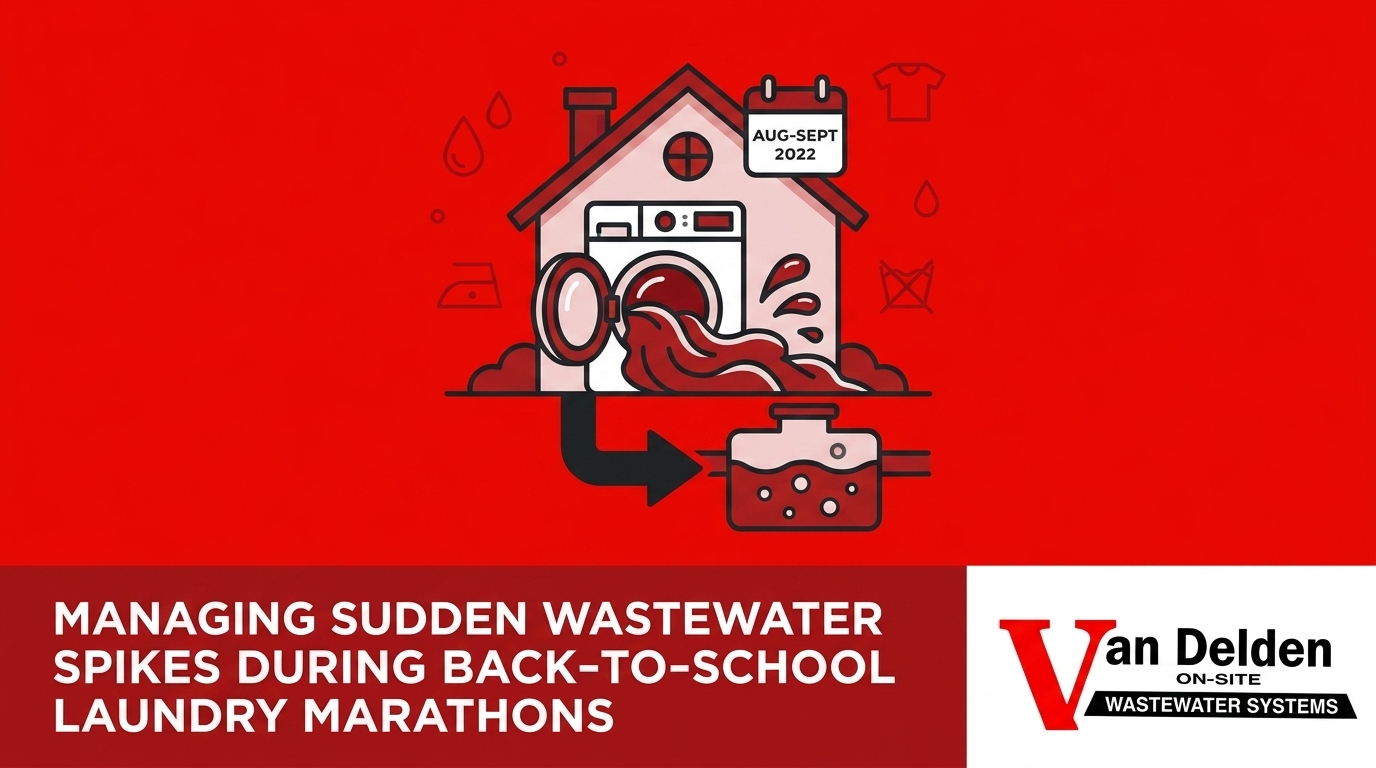
Managing Sudden Wastewater Spikes During Back-to-School Laundry Marathons
The late August rush to wash piles of clothes can overwhelm your septic tank's settling process. Discover how spacing out your laundry prevents irreversible drainfield damage.
Understanding what does septic system maintenance include is the first step to protecting your home, your property, and your family's health. At its core, septic maintenance covers these key tasks:
• Regular inspections - at least every 3 years by a licensed professional
• Tank pumping - typically every 3 to 5 years depending on household size and tank capacity
• Drainfield protection - keeping vehicles, structures, and deep-rooted plants off the area
• Proper waste disposal - only flushing human waste and toilet paper
• Water use habits - fixing leaks, staggering laundry, and using efficient fixtures
• Record keeping - logging pump-outs, inspections, repairs, and system location
Most homeowners don't give their septic system a second thought — until something goes wrong. A skipped pumping job or a habit of flushing the wrong things can quietly turn a straightforward maintenance task into a serious and costly repair. One industry observation puts it plainly: a pumping job ignored for a decade can turn a modest service call into a drain field replacement costing tens of thousands of dollars.
The good news is that septic maintenance is neither complicated nor overwhelming. With the right schedule and a few simple habits, a properly maintained system can last 20 to 30 years. This guide from Van Delden Wastewater Systems walks you through every component of a complete septic maintenance routine — so you know exactly what to do, when to do it, and why it matters.
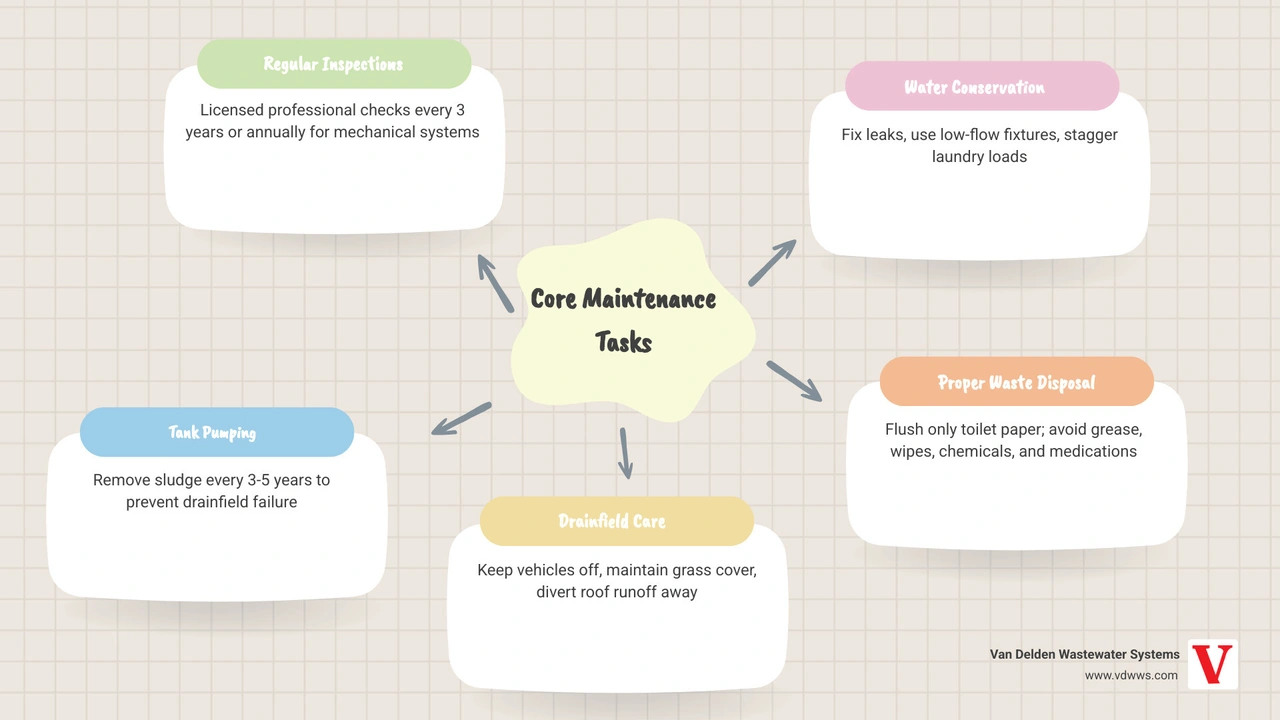
A complete maintenance plan is a mix of professional service and smart day-to-day habits. In practical terms, it includes inspecting the system, pumping the tank when solids build up, protecting the drainfield, controlling water use, being careful about what goes down drains, and keeping clear records.
For most homes in the San Antonio area and nearby communities we serve, the checklist usually looks like this:
• Professional inspection on a regular schedule
• Septic tank pumping as needed
• Checking inlet and outlet baffles or tees
• Cleaning or inspecting the effluent filter if the system has one
• Watching for plumbing leaks and excess water use
• Protecting the drainfield from compaction and flooding
• Keeping service records, permits, and a site map
That may not sound glamorous, but septic systems are not asking for glamour. They are asking for consistency.
A standard septic system has a few main parts working together:
• The sewer line from the house
• The septic tank
• Inlet and outlet baffles or tees
• The distribution box in many systems
• The drainfield, also called a leachfield
• The surrounding soil, which finishes treatment
Wastewater flows from the home into the tank. Inside the tank, solids settle to the bottom as sludge, oils and grease float to the top as scum, and the liquid layer in the middle is called effluent. Baffles help control flow and keep floating scum and settled sludge from rushing out of the tank. A T-shaped outlet or outlet tee is especially important because it helps prevent solids from entering the drainfield.
From there, effluent moves to the distribution box and then into the drainfield, where it slowly disperses into the soil. The soil helps filter contaminants and supports natural treatment. That is why the drainfield is so important and so expensive to damage.
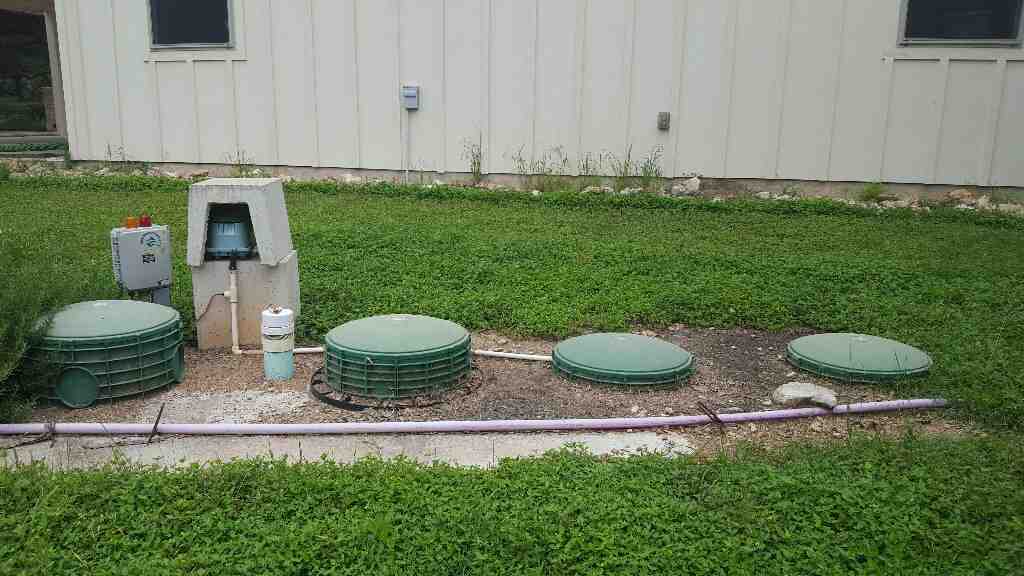
Routine maintenance protects:
• Your home from sewage backups
• Your yard from surfacing wastewater
• Groundwater from contamination
• The beneficial bacteria that help break down waste
• The life of the tank and drainfield
A well-maintained septic system can often last 20 to 30 years. Neglect can shorten that life dramatically. In our experience, the drainfield is usually the part homeowners most want to protect, because once solids reach it, the problem gets much bigger than a simple service visit.
Inspection and pumping are the backbone of septic care. If you want a deeper look at timing, our Septic Tank Pumping Guide: How Often is a helpful next read.
The general baseline is to have a household septic system inspected at least every three years by a septic professional. If the system is an alternative or aerobic design with pumps, alarms, aerators, or other mechanical parts, it often needs more frequent attention, commonly every year.
An inspection should not be a quick glance and a shrug. It should evaluate how the system is performing, whether solids are building up too fast, whether baffles and filters are in good condition, and whether there are signs of trouble in the drainfield.
Most residential septic tanks need pumping every 3 to 5 years. But that is a general rule, not a magic number.
A family of four with a 1,000-gallon tank may need pumping closer to every 2 to 3 years. Some larger tanks with lighter use can go longer. The true trigger is solids accumulation. Many experts recommend pumping when solids fill about one-third to one-half of the tank, or when measured sludge and scum levels approach the outlet area.
For more detail, see How Often Should My Septic Tank Be Cleaned.
No two households use a septic system exactly the same way. Pumping frequency depends on:
• Number of people in the home
• Tank size
• Daily water use
• Laundry habits
• Leaks such as running toilets
• Whether a garbage disposal is used
• Whether the home is full-time or seasonal
• Presence of an effluent filter
• Whether water softener discharge or other extra water enters the system
Water use matters more than many people realize. Average indoor water use can be as much as 70 gallons per person per day. A single leaky or running toilet can waste up to 200 gallons per day. That is like inviting a small swimming pool to dinner and asking your septic system to deal with it quietly.
A proper service visit typically includes checking:
• Tank condition and access lids
• Sludge and scum levels
• Inlet and outlet baffles or tees
• Effluent filter condition and cleaning if present
• Signs of cracks, leaks, or unusual liquid levels
• Flow patterns through the tank
• Evidence of backups or drainfield stress
• Service history and maintenance recommendations
At Van Delden Wastewater Systems, we believe homeowners should understand what is being checked and why. If you want a better idea of the process, read What to Expect During a Van Delden Septic System Service Call.
The drainfield does the final treatment work, so protecting it is a major part of answering what does septic system maintenance include.
Good drainfield care includes:
• Never parking or driving on it
• Never building patios, sheds, decks, or other structures over it
• Keeping only grass or other shallow-rooted cover over it
• Avoiding trees and large shrubs nearby
• Directing roof drains and surface runoff away from it
• Keeping sump pump discharge away from it
• Preventing standing water and saturated soil
Why does this matter? Because compacted soil reduces oxygen and limits the soil's ability to treat wastewater. Heavy vehicles can crush pipes or even damage tank lids. Extra rainwater or runoff can oversaturate the area and prevent proper absorption.
Water conservation is not just good for utility bills. It directly protects the septic system from hydraulic overload.
A septic system can only process so much water at once. If too much water enters too quickly, solids may not settle well in the tank, and the drainfield may receive more liquid than it can absorb. That raises the risk of backups and premature drainfield failure.
Helpful habits include:
• Fix leaking toilets and faucets quickly
• Spread laundry throughout the week instead of doing it all in one day
• Run dishwashers only when full
• Take shorter showers
• Avoid draining hot tubs or large volumes of water into the system unless your system is designed for it
Some fixture upgrades can make a real difference:
• High-efficiency toilets that use 1.6 gallons per flush or less
• Low-flow showerheads
• Faucet aerators
• High-efficiency washers
Toilets account for about 25 to 30 percent of household water use. Older toilets may use 3.5 to 5 gallons per flush, while newer efficient models use 1.6 gallons or less. ENERGY STAR clothes washers use about 35 percent less energy and 50 percent less water than standard models.
• Toilet — Older use: 3.5 to 5 gallons per flush — Efficient option: 1.6 gallons or less
• Clothes washer — Older use: Standard water use — Efficient option: About 50 percent less water with ENERGY STAR
• Showerhead — Older use: Higher flow — Efficient option: Low-flow model reduces demand
One of the biggest parts of septic care is simple: do not ask the system to digest things it was never meant to handle.
The toilet should receive only:
• Human waste
• Toilet paper
That means you should not flush:
• Wipes, even "flushable" ones
• Paper towels
• Diapers
• Feminine hygiene products
• Cotton swabs
• Dental floss
• Cat litter
• Condoms
• Cigarette butts
• Medications
Kitchen sinks need similar caution. Avoid sending down:
• Grease
• Cooking oil
• Fat
• Coffee grounds
• Food scraps
• Large amounts of detergent or soap
Garbage disposals deserve a special note. They add food solids to the tank, which can increase scum and sludge buildup and lead to more frequent pumping.
Grease and oils cool and thicken. In a septic system, they contribute to the scum layer and can clog pipes and filters. Harsh chemicals can disrupt the bacterial balance the tank relies on. Some substances also create risks to soil and groundwater if the system becomes stressed or fails.
That includes:
• Paints and solvents
• Pesticides
• Strong drain openers
• Large amounts of bleach
• Antibacterial products used excessively
• Fuels or automotive fluids
Using normal household cleaning products in moderation is usually fine. The key is moderation. Septic systems like routine, not chemical warfare.
In general, additives are not recommended as a substitute for pumping and routine professional service. A healthy septic tank already contains the bacteria it needs from normal household waste. "Seeding" the tank after pumping is usually unnecessary.
Some additives are simply unhelpful. Others may stir up solids, interfere with settling, or create false confidence that maintenance can be skipped. We recommend staying focused on the basics: inspections, pumping, responsible flushing, and water management.
You can learn more in Why Your Septic Tank Needs Regular Cleaning.
Septic problems usually give warnings before they become emergencies. The trick is noticing them early and acting quickly.
Watch for:
• Slow drains throughout the house
• Toilets that flush sluggishly
• Gurgling sounds in plumbing
• Water backing up in lower drains
• Sewage odors inside or outside
• Wet or soggy spots in the yard
• Surfacing sewage near the tank or drainfield
• Unusually bright green or fast-growing grass over the drainfield
Any of these signs can mean the tank is overdue for service, the filter is clogged, or the drainfield is overloaded. None of them improve with wishful thinking.
Good records make maintenance easier and smarter. We recommend keeping:
• Pump-out dates
• Inspection reports
• Repair history
• Permit documents
• Tank size and system type
• A map showing tank and drainfield location
• Photos from service visits
• Notes about alarms, filters, pumps, or special components
This is one area where our approach helps. We value clear service forms and photo documentation so homeowners know what was done and what to watch next.
Landscaping choices can help or hurt the system.
Best practices include:
• Plant grass over the drainfield
• Avoid deep-rooted trees and shrubs nearby
• Do not place extra soil fill over the system
• Keep patios, driveways, sheds, pools, and decks off the system
• Protect lids from mower damage
• Know the system location before digging
Roots seek moisture, and septic components are full of moisture. That is not a coincidence your trees are going to politely ignore. Root intrusion can crack pipes, block flow, and create expensive repairs.
Neglect can lead to:
• Solids escaping into the drainfield
• Permanent soil clogging
• Sewage backing up into the home
• Wastewater surfacing in the yard
• Groundwater contamination
• Shorter system lifespan
• Major repair or full replacement
That is why routine care matters so much. For a closer look at the value of preventive maintenance, see Why Regular Septic Tank Cleaning Saves Money.
We do not recommend it. Septic tanks are confined spaces that can contain toxic gases capable of causing serious injury or death within minutes. Proper pumping and inspection also require specialized equipment and legal disposal methods. Homeowner maintenance should focus on safe habits above ground, while licensed professionals handle the tank itself.
Yes. Garbage disposals increase the amount of solids entering the tank, which usually means faster sludge buildup and more frequent pumping. If you have a septic system, it is best to limit disposal use as much as possible.
Yes. Aerobic systems have additional components such as aerators, pumps, floats, controls, and alarms. Because they rely on mechanical parts and active treatment, they typically need more frequent professional service than a conventional tank and drainfield system.
If your property has an aerobic system, start with our Aerobic System Maintenance Complete Guide.
So, what does septic system maintenance include? In short, it includes regular inspections, timely pumping, drainfield protection, water-saving habits, careful waste disposal, and organized records. Those simple steps work together to protect your home and help your system last as long as it should.
If you are in San Antonio, Boerne, Bulverde, Fair Oaks Ranch, Garden Ridge, Helotes, Timberwood Park, Hollywood Park, Shavano Park, or Spring Branch, we can help you build a practical maintenance plan and understand exactly what your system needs. As a family-owned company established in 1937, we believe in honest service, clear explanations, and documented work that helps homeowners make informed decisions.
For more information about local service and planning your next maintenance visit, see our Septic System Maintenance San Antonio TX.

Peter was personable, professional and thorough. Highly recommend Van Delden. You might be able to find a cheaper company but not better!
On time. 100% professional, knowledgeable, and courteous. Very helpful and straightforward. That is the bar all businesses should strive for.
It has been a pleasure working with your company. Not only did y’all communicate very well but your workers were always polite! Thank you!
“I thank Van Delden for such prompt service. Honest people are hard to come by these days. I will certainly recommend Van Delden to anyone! Jesse is an upstanding young man and very nice to talk to. I thank everyone at Van Delden for taking such good care of me.”
This is just a note to thank you for explaining the problem with my system. You didn’t have to be so kind and I appreciate your good business ethics and time spent. In the future you will have mine in return!