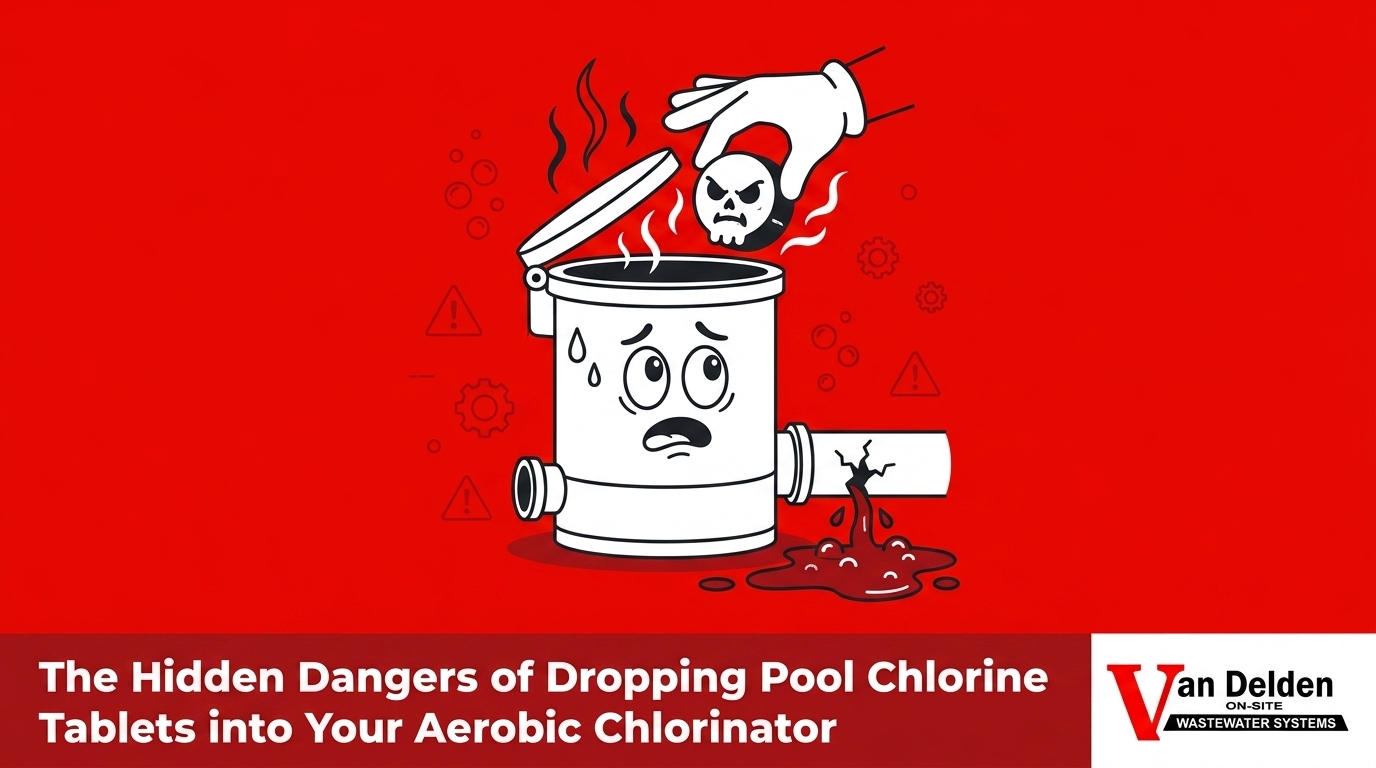
The Hidden Dangers of Dropping Pool Chlorine Tablets into Your Aerobic Chlorinator
The Hidden Dangers of Dropping Pool Chlorine Tablets into Your Aerobic Chlorinator
The Costly Garage Myth: Why Pool Chemicals and Wastewater Don't Mix
Assuming that all chlorine compounds are identical is a dangerous misconception that can severely damage your property. The hidden dangers of dropping pool chlorine tablets into your aerobic chlorinator go far beyond a simple chemical imbalance; they introduce severe physical hazards and biological destruction to your wastewater treatment unit. If you need immediate assistance with your wastewater setup, learn more about our aerobic septic systems or request an estimate for your septic system.
At Van Delden Wastewater Systems, a pattern we see often during the July peak summer pool season is a familiar scenario playing out in garages and storage sheds across the Boerne area. A homeowner notices their aerobic system chlorinator tube is empty. Sitting just a few feet away is a bulk bucket of pool chlorine tablets. The tablets look identical to the ones required for the wastewater system, they smell the same, and they are readily available. The temptation to drop a few pool tablets into the chlorinator tube to save a trip to the store is incredibly high. However, acting on this temptation is one of the most destructive mistakes our technicians see a property owner make.
The Illusion of "Chlorine is Chlorine"
The core of this myth lies in a fundamental misunderstanding of chemical formulations. The active ingredients in pool maintenance products are engineered for a completely different environment than the active ingredients in a wastewater treatment facility. Pool chemicals are designed to treat large, open bodies of relatively clean water that are exposed to direct ultraviolet sunlight. Wastewater chemicals are designed to treat dark, highly organic, rapidly flowing effluent in a confined underground space.
When you introduce a product designed for a swimming pool into an aerobic treatment unit, you are not just using an inefficient product—you are initiating a volatile chemical reaction. The stakes are incredibly high. Using the wrong tablets risks catastrophic system failure, the destruction of vital biological colonies, and severe safety hazards that can lead to physical injury or property damage.
Trichlor vs. Calcium Hypochlorite: The Underlying Chemical Conflict
When our team inspects failing systems, we often explain that to understand why pool chemicals fail so spectacularly in wastewater applications, you have to look at the underlying molecular structure of the two primary sanitizers available on the market. Bypassing basic definitions, the conflict comes down to stabilization, dissolution rates, and chemical off-gassing.
Sodium Dichloro-s-Triazinetrione (Trichlor)
Commonly known as Trichlor, this is the standard active ingredient found in swimming pool tablets. Trichlor is heavily stabilized, typically with cyanuric acid. This stabilization is intentional and necessary for pools because ultraviolet light from the sun rapidly degrades unprotected chlorine in open water. The cyanuric acid acts as a chemical shield, allowing the tablet to dissolve very slowly over days or weeks, providing a steady release of sanitizer into a high-volume, clean-water environment.
Calcium Hypochlorite: The Wastewater Standard
Calcium hypochlorite is the only EPA-approved chemical formulation for treating residential wastewater effluent. Unlike Trichlor, calcium hypochlorite contains no cyanuric acid stabilizers. It is engineered to dissolve rapidly upon contact with flowing water. This rapid dissolution is critical because effluent moves quickly through the final stages of an aerobic system. The chemical must instantly neutralize pathogens in the water before that water is discharged into the environment. When shopping for maintenance supplies, knowing exactly which chlorine tablets for septic system applications to purchase is the first line of defense against system failure.
• Dissolution Rate — Trichlor (Pool Tablets): Extremely slow (designed to last for weeks) — Calcium Hypochlorite (Septic Tablets): Fast-acting (designed to treat rapid water flow)
• Reaction with Organics — Trichlor (Pool Tablets): Creates hazardous, volatile nitrogen trichloride gas — Calcium Hypochlorite (Septic Tablets): Safely neutralizes bacteria without explosive off-gassing
• Regulatory Status — Trichlor (Pool Tablets): Strictly prohibited in wastewater systems — Calcium Hypochlorite (Septic Tablets): EPA-approved for wastewater effluent treatment
The slow-dissolving nature of Trichlor makes it wholly incompatible with the fast-moving biological environment of a septic tank. Because it does not break down quickly enough to treat the outgoing water, the effluent remains contaminated. Worse, the chemical sits in the chlorinator tube, slowly reacting with the surrounding organic gases, which leads to the most dangerous consequence of this garage myth.
Trichlor vs. Calcium Hypochlorite: Chemical Differences and Risks
The Combustion Risk: Explosive Gases in Confined Chlorinator Tubes
Pool chlorine (trichlor) should never be used in an aerobic system due to volatile chemical reactions, severe equipment corrosion, and extreme explosion risks.
In our years of repairing damaged aerobic units across the Hill Country, we've seen firsthand that the physical danger of mixing stabilized pool chemicals with organic wastewater cannot be overstated. This is not merely a theoretical risk; it is a documented chemical hazard we consistently warn our customers about, as it turns a simple household maintenance task into a life-threatening situation.
The Chemical Reaction: Creating Nitrogen Trichloride
When Trichlor is introduced to the highly organic, ammonia-rich environment of an aerobic wastewater system, a dangerous chemical synthesis occurs. The chlorine reacts with the ammonia and organic nitrogen present in the human waste to form a compound called nitrogen trichloride (NCl3). Nitrogen trichloride is a highly volatile, oily, and explosive liquid/gas mixture. In industrial settings, handling this compound requires extreme safety measures, yet homeowners inadvertently manufacture it in their backyards when they use the wrong tablets.
Here is how our technicians see the hazard escalate inside your system:
1. Introduction of the Catalyst: The homeowner drops a Trichlor pool tablet into the aerobic chlorinator tube.
2. Interaction with Ammonia: As wastewater vapors and effluent make contact with the slow-dissolving tablet, the chemical bonds break down, reacting with the organic nitrogen in the waste.
3. Generation of Volatile Gas: Nitrogen trichloride gas begins to off-gas from the tablet. Because the tablet is designed to dissolve slowly, this off-gassing continues continuously over several days.
4. Pressurization in a Confined Space: Chlorinator tubes are narrow, confined PVC pipes with limited ventilation. The nitrogen trichloride gas becomes trapped, building pressure inside the tube.
5. Combustion or Explosion: The trapped gas is highly reactive. A sudden change in pressure, a spark of static electricity, or even the physical impact of dropping another tablet into the tube can cause the nitrogen trichloride to rapidly expand or detonate.
Corrosion and Equipment Destruction
Even if the trapped gases do not reach the point of an explosive reaction, the continuous off-gassing of nitrogen trichloride and raw chlorine gas is highly corrosive. These acidic vapors will rapidly eat away at the PVC chlorinator tube, the electrical wiring for the system's pumps, and any metallic components within the aerobic unit. During the July peak summer pool season, this corrosion happens at an accelerated rate. We frequently replace expensive system components that were destroyed long before a homeowner realizes a mistake has been made. What started as an attempt to use a convenient alternative ends up causing extensive damage requiring replacement parts and hazardous material cleanup.
Biological Sabotage: Destroying Your System's Natural Defenses
Beyond the immediate physical danger of explosive gases, using pool chlorine completely undermines the biological mechanics that make an aerobic treatment unit function. A residential aerobic system is essentially a living, breathing organism. It relies on a delicate ecosystem of microscopic bacteria to process and purify household waste.
The Role of Beneficial Aerobic Bacteria
In a properly functioning aerobic system, oxygen is pumped into the aeration chamber to cultivate a massive colony of beneficial aerobic bacteria. These bacteria are aggressive eaters; their sole purpose is to consume and break down the solid organic waste flowing from the home. This biological processing is what transforms raw sewage into a clear, odorless liquid before it ever reaches the chlorination stage. Without this bacterial colony, the system is nothing more than a holding tank for raw sewage.
How Trichlor Kills the Ecosystem
The Problem: When a homeowner uses Trichlor pool tablets, the slow-dissolving nature of the chemical means it sits in the chlorinator tube indefinitely. The heavy stabilizers in the pool chlorine prevent it from washing away cleanly with the effluent.
The Cause: Because the Trichlor does not dissolve effectively into the fast-moving water, the chemical concentration in the immediate vicinity of the chlorinator tube becomes excessively high. During periods of low water usage, or if the system experiences a minor backwash, this highly concentrated, stabilized chlorine leaches backward into the aeration chamber or pump tank. Pool chlorine is designed to eradicate all biological life in a swimming pool. When it enters the aeration chamber, it does exactly that—it overpowers the system and massacres the beneficial aerobic bacteria colony.
The Solution: Using fast-dissolving calcium hypochlorite ensures that the chemical only interacts with the final stage of the effluent, leaving the biological colony in the aeration chamber completely unharmed. If you operate an aerobic system with spray irrigation, maintaining this biological boundary is absolutely vital.
The Cascading Failure of a Dead System
Once the bacteria colony is dead, our service teams frequently observe a cascading failure beginning across Boerne TX and Hill Country residential properties. Solid waste is no longer broken down in the aeration chamber. Raw, untreated sewage begins to flow directly into the pump tank and through the chlorinator. Because the pool tablets cannot dissolve fast enough to treat this heavy organic load, untreated effluent is eventually sprayed or discharged into the surrounding soil. This leads to foul, overwhelming odors in the yard, severe environmental contamination, and eventual system backups into the home's plumbing.
The Texas Heat Multiplier: Why Summer Exacerbates Chemical Volatility
The dangers of improper chemical usage are present year-round, but regional climate conditions act as a massive multiplier for these risks. The ambient temperature directly dictates the speed and ferocity of chemical reactions inside outdoor chlorinator tubes.
Thermodynamics in the Chlorinator Tube
Chemical reactions are governed by thermodynamics. As the temperature of an environment increases, the molecules within that environment move faster, colliding with greater force and frequency. In the context of an aerobic system, our local technicians know that the extreme July heat in Boerne and the Hill Country, where average temperatures frequently exceed 95 degrees, drastically accelerates the off-gassing and explosive potential of incorrect chlorine.
A chlorinator tube is typically made of thick PVC and sits partially above ground, exposed to the ambient heat. Inside this dark, confined space, temperatures can easily soar well above the outside air temperature, effectively creating a pressure cooker. If Trichlor pool tablets are sitting inside this heated tube, the rate at which they release nitrogen trichloride gas multiplies exponentially.
Peak Danger in the Hottest Months
What might be a slow, corrosive off-gassing process in December becomes a rapid, highly volatile expansion of gas in July. The risk of equipment damage, structural cracking, and sudden explosive reactions is at its absolute highest during the peak summer months. Homeowners must be hyper-vigilant during this season.
When one local homeowner scheduled their first-time septic system service with us recently, they had a bucket of pool tablets sitting nearby, intending to use them. Our technician provided a thorough inspection, answered all their questions about proper chemical usage and the dangers of summer heat, and performed a clean, straightforward service that ensured the system was operating safely. This kind of proactive education is what we rely on to prevent seasonal disasters.
Safe Storage and Handling in Extreme Heat
Even when using the correct calcium hypochlorite tablets, extreme heat requires careful handling. Proper wastewater tablets should always be stored in a cool, dry, well-ventilated area, entirely separate from any pool chemicals, fertilizers, or petroleum products. Never leave a bucket of calcium hypochlorite sitting in direct Texas sunlight, and always ensure the lid is tightly secured to prevent moisture contamination.
Ensuring Compliance and System Longevity with Professional Maintenance
Navigating the chemical and biological complexities of an aerobic treatment unit is not a matter of guesswork; it is a matter of strict regulatory compliance and scientific precision. Moving away from dangerous DIY chemical substitutions and relying on professional oversight is the only way to guarantee the longevity of your system.
Regulatory Standards and Warranty Protection
The Texas Commission on Environmental Quality (TCEQ) sets stringent standards for the operation and maintenance of aerobic wastewater systems. These regulations explicitly require the use of EPA-approved wastewater-grade treatments—specifically calcium hypochlorite. Using Trichlor pool tablets is not just dangerous; it is a direct violation of environmental regulations. Discharging improperly treated effluent due to incorrect chemical usage can result in severe fines and mandatory system overhauls.
Furthermore, aerobic system manufacturers explicitly state that the use of stabilized pool chlorine will immediately void all equipment warranties. The corrosive damage caused by off-gassing nitrogen trichloride is easily identifiable by technicians, leaving the homeowner fully responsible for the cost of replacing pumps, wiring, and structural components.
The Value of Professional Oversight
Since 1937, the team at Van Delden Wastewater Systems has built a legacy of serving the community by providing absolute authority and trust over generic DIY advice. Wastewater systems are complex biological engines, and correcting chemical imbalances requires the deep understanding our technicians bring to every service call. During a recent septic tank inspection, our technician provided an on-time, knowledgeable, and professional walkthrough for a homeowner, showing them the tank components and explaining exactly how the treatment process relies on specific chemical balances. Earning future business comes from this level of transparent, expert education.
If you suspect the wrong chemicals have been used in your system, do not attempt to extract them yourself, as the trapped gases are hazardous. Instead, rely on our professional septic system consultations to safely neutralize the threat. A professional maintenance visit from our team typically includes:
• Chemical Assessment: Verifying the correct type and concentration of calcium hypochlorite in the chlorinator.
• Biological Health Check: Evaluating the aeration chamber to ensure the aerobic bacteria colony is thriving and actively breaking down waste.
• Component Inspection: Checking the chlorinator tube, air compressor, and water pumps for any signs of chemical corrosion or heat damage.
• Safe Transitioning: Professionally extracting hazardous chemicals and resetting the system's biological balance if pool tablets were accidentally introduced.
Protecting your property, your family, and the local environment means leaving the pool chemicals in the garage and treating your wastewater system with the precise, specialized care it requires.
Frequently Asked Questions
Can I use pool chlorine in my septic system?
No, you should never use pool chlorine in a septic system. Pool chlorine (trichlor) is heavily stabilized to dissolve slowly and resist UV light, which makes it ineffective for treating fast-moving wastewater. More importantly, mixing pool chlorine with organic human waste creates a highly volatile and explosive gas called nitrogen trichloride.
What kind of chlorine do you use in an aerobic septic system?
You must use calcium hypochlorite tablets specifically labeled for wastewater or septic system use. Calcium hypochlorite is the only EPA-approved chemical for this application because it dissolves rapidly, effectively neutralizing bacteria in the effluent without creating hazardous, explosive gases.
What happens if you put pool chlorine in a septic tank?
Putting pool chlorine in a septic tank triggers a dangerous chemical reaction that produces explosive nitrogen trichloride gas, which can build up pressure and detonate inside the confined chlorinator tube. Additionally, the heavy stabilizers in pool chlorine can wash back into the system, killing the beneficial bacteria required to break down solid waste.
Is calcium hypochlorite safe for septic systems?
Yes, calcium hypochlorite is completely safe and is the legally required chemical for aerobic septic systems. It is engineered to dissolve quickly upon contact with flowing effluent, neutralizing harmful pathogens before the water is discharged, without harming the biological colony inside the main aeration chamber.
How do I know if I bought the right chlorine tablets for my septic system?
Check the active ingredients label on the bucket; it must clearly state "Calcium Hypochlorite" and should explicitly mention that it is approved for wastewater or sewage treatment. If the active ingredient says "Trichlor" (Sodium Dichloro-s-Triazinetrione) or mentions cyanuric acid stabilizers, it is meant for swimming pools and must not be used in your septic system.
What should I do if I accidentally put pool tablets in my aerobic chlorinator?
If you realize you have dropped pool tablets into your chlorinator, do not attempt to flush the system with water or mix in other chemicals, as this can trigger a volatile reaction. Keep your distance from the chlorinator tube to avoid inhaling corrosive gases, and immediately contact a licensed septic professional to safely extract the hazardous material and inspect the system for damage.
Peter was personable, professional and thorough. Highly recommend Van Delden. You might be able to find a cheaper company but not better!
Wendell E
On time. 100% professional, knowledgeable, and courteous. Very helpful and straightforward. That is the bar all businesses should strive for.
Andy R
It has been a pleasure working with your company. Not only did y’all communicate very well but your workers were always polite! Thank you!
Kate R.
“I thank Van Delden for such prompt service. Honest people are hard to come by these days. I will certainly recommend Van Delden to anyone! Jesse is an upstanding young man and very nice to talk to. I thank everyone at Van Delden for taking such good care of me.”
Charles H
This is just a note to thank you for explaining the problem with my system. You didn’t have to be so kind and I appreciate your good business ethics and time spent. In the future you will have mine in return!