Why Your Septic System Needs Attention the Moment Winter Ends
Spring septic system inspection after winter is one of the most important maintenance steps you can take as a homeowner on a septic system. Winter is hard on these systems in ways that aren't always visible — frozen ground can crack pipes and shift tank lids, months of cold temperatures slow down the bacteria that break down waste, and then snowmelt arrives all at once, saturating the soil around your drain field before it has a chance to recover.
By the time spring arrives, your system may already be under serious stress — and the signs can go from subtle to expensive very quickly.
Here's a quick overview of what a spring septic inspection after winter should cover:
- Drain field surface — look for soggy patches, standing water, or unusually lush grass
- Tank lids and risers — check for cracks, shifts, or frost heave damage
- Inlet and outlet baffles — confirm they're intact and properly positioned
- Effluent filter — clean or replace if clogged
- Sludge and scum levels — determine if pumping is due (typically every 3-5 years)
- Surface drainage — make sure downspouts and runoff aren't flowing toward the drain field
- Warning signs indoors — slow drains, gurgling pipes, or sewage odors inside the home
Spring is also the easiest time to book a professional inspection before septic companies fill up through the busy summer season (typically June through September). Acting now means catching problems while they're still small — and still affordable to fix.
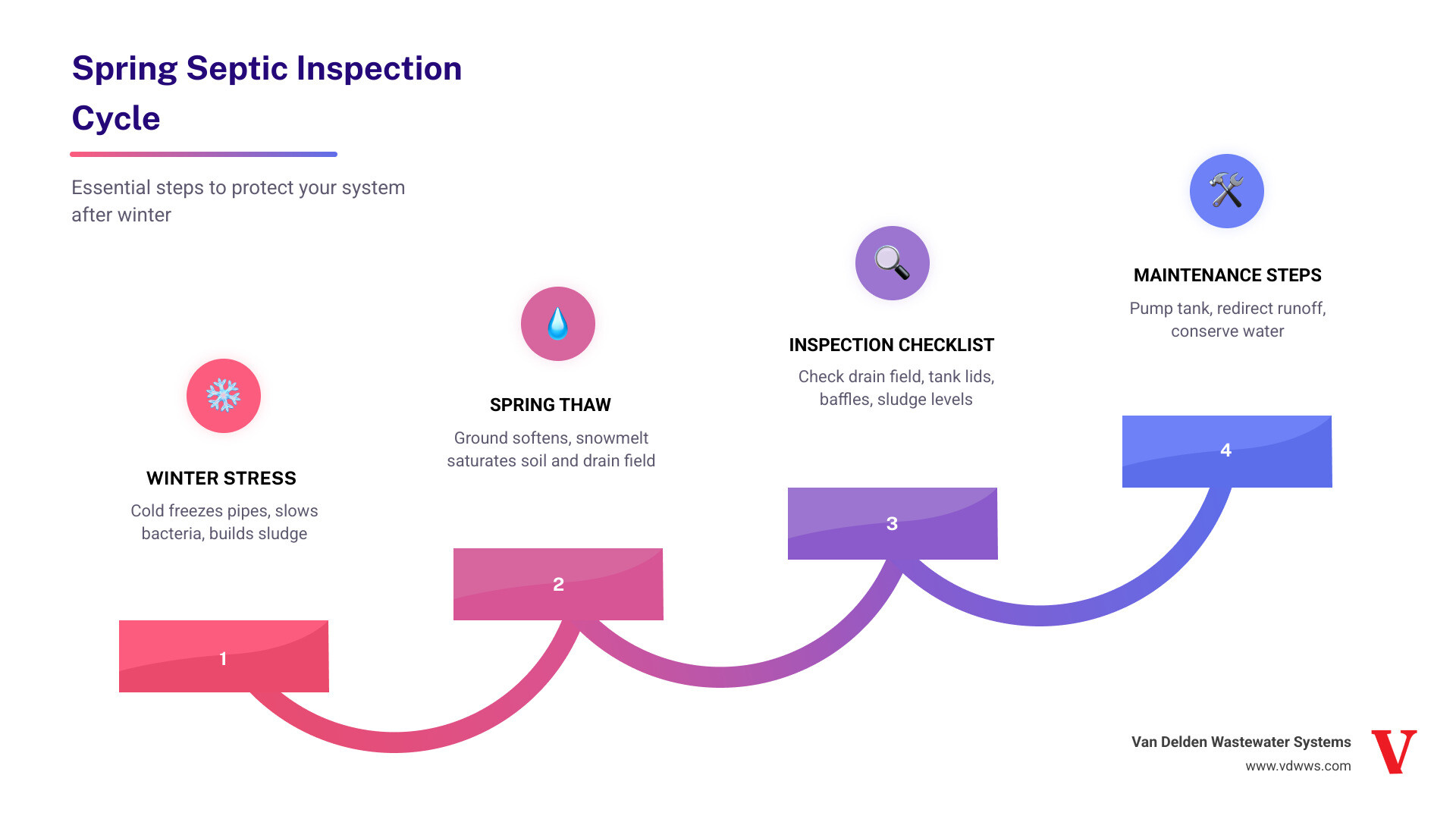
Why Spring Septic System Inspection After Winter is Essential
As we move into April 2026, the transition from the cold Texas winter to the rainy spring season brings specific challenges for homeowners in San Antonio, Boerne, and surrounding areas. While our winters may not always involve feet of snow, the temperature fluctuations and heavy spring rains create a "perfect storm" for septic systems.
Ground thaw is a critical period. As the soil softens, it becomes more susceptible to shifting. This is the first window of opportunity we have to access the tank without the resistance of hardened earth. A thorough Septic System Checks Before Spring Begins can help you identify if the expansion and contraction of the soil has put undue pressure on your system's structural components.
Furthermore, many homeowners ask, Did The Winter Storm Damage My Septic System? The answer is often found in the pipes and the tank's integrity. Winter stressors are insidious; they often don't cause a total failure immediately but rather set the stage for a backup when water usage increases in the spring and summer.
Identifying Frost Heave and Structural Shifts
Even in milder climates like Shavano Park or Hollywood Park, frost heave can occur during unusual cold snaps. Frost heave happens when water in the soil freezes and expands, physically lifting or moving the earth. This movement can be devastating for rigid septic components.
We often see cracked risers and shifted lids during a spring septic system inspection after winter. If a riser cracks, it allows surface water to leak directly into the tank, leading to hydraulic overload. Even worse, pipe misalignment can occur where the house sewer line meets the tank. If the tank settles or the ground shifts, the pipe can snap or slope backward, causing immediate backups. Understanding that Cold Weather Can Be Oh So Frightful On Your Septic System is the first step in realizing why a visual check of your tank's access points is vital every April.
Managing Hydraulic Overload from Snowmelt
While "snowmelt" might seem like a northern problem, the principle of soil saturation applies heavily to our spring rains in Texas. When the ground is already saturated from winter moisture or heavy spring downpours, the drain field loses its ability to absorb and filter effluent.
This is known as hydraulic overload. The drain field is essentially a giant sponge; once it is full of rainwater, there is nowhere for your household wastewater to go. To Prepare Septic System For Spring In Fair Oaks Ranch, you must ensure that surface runoff is directed away from the drain field. If your gutters discharge directly onto the absorption area, you are effectively "drowning" your system, which can lead to premature failure.
Warning Signs of Post-Winter Septic Failure

Detecting a problem early can save you from a five-figure drain field replacement. After the winter thaw, take a walk across your yard. If you notice "spongy" soil or patches of grass that are significantly greener and faster-growing than the rest of the yard, your drain field may be struggling.
Inside the home, pay attention to how your plumbing behaves. Slow drains in multiple locations, gurgling sounds coming from the toilets, or a faint "rotten egg" smell near the tank are all red flags. These symptoms often worsen after a heavy rain or when running high-volume appliances like the dishwasher or washing machine. Reviewing Winter Care For Septic System Performance can help you understand if your winter habits contributed to these spring symptoms.
Key Components of a Spring Septic System Inspection After Winter
A truly Professional Septic Inspection goes far beyond just looking into the tank. When we perform an inspection, we evaluate the "health" of the entire ecosystem.
- Baffle Integrity: We check the inlet and outlet baffles. The inlet baffle directs waste downward to prevent splashing and clogging, while the outlet baffle keeps solids from escaping into the drain field. If these are damaged by winter shifts, your drain field is at risk of clogging.
- Effluent Filters: Many modern systems have a filter at the outlet. If this wasn't cleaned during the winter, spring is the time to do it. A clogged filter can cause a backup even if the tank isn't full.
- Sludge Levels: We measure the layers of scum and sludge. If the sludge layer is too thick, it reduces the "working capacity" of the tank, meaning the water doesn't stay in the tank long enough for the solids to settle out.
Evaluating the Drain Field and Soil Absorption
The drain field is the most expensive part of your system to replace. During a spring septic system inspection after winter, we look for surfacing effluent—this is wastewater that has pushed up to the surface because the soil can no longer absorb it.
If you are Septic Inspections Buying Or Selling Property this spring, this evaluation is non-negotiable. A drain field that looks fine in the dry heat of August might show its true, failing colors during the wet weeks of April. We look for depressions in the soil that might indicate a collapsed pipe or localized saturation.
Proactive Maintenance for the 2026 Spring Season
Maintenance is a partnership between the homeowner and the professional. While we handle the dirty work, there are several things you can do to keep your system running smoothly.
| Task Type | Responsibility | Description |
|---|
| Visual Inspection | Homeowner | Check for odors, wet spots, or cracked lids. |
| Water Conservation | Homeowner | Spread out laundry loads; fix running toilets. |
| Runoff Management | Homeowner | Ensure downspouts point away from the drain field. |
| Sludge Measurement | Professional | Determine if pumping is required. |
| Component Check | Professional | Inspect baffles, filters, and pumps. |
| Documentation | Professional | Provide photos and a detailed service report. |
Learning How To Conduct A Septic System Inspection at a basic level allows you to spot trouble before the "gurgle" becomes a "flood."
Scheduling Your Spring Septic System Inspection After Winter
Most septic tanks need to be pumped every 3 to 5 years. However, if you have a large family or an older system, you might need more frequent service. Spring is the ideal time for this because it prepares the tank for the high-usage summer months when guests visit and water usage typically spikes.
When we pump a tank in the spring, we also get a clear view of the tank's interior walls. This allows us to check for corrosion or cracks that might have been caused by the freeze-thaw cycle. Spring Cleaning Dont Forget About Your Septic Tank; it’s just as important as cleaning your gutters or your HVAC filters.
Protecting the System During Spring Cleaning
Spring cleaning often involves a lot of water and a lot of chemicals. For a septic system, this can be a disaster. Your tank relies on live bacteria to digest solids. If you pour gallons of bleach or heavy-duty "degreasers" down the drain during your spring deep-clean, you could kill the beneficial bacteria.
To protect your system:
- Use Septic-Safe Products: Look for labels that specify the product is safe for septic systems.
- Space Out Your Laundry: Instead of doing six loads of laundry on Saturday, do one load a day. This prevents "slug loading," which can push solids out of the tank and into the drain field.
- Fix Leaks Promptly: A single running toilet can add 200 gallons of water a day to your system. In a saturated spring yard, that extra 200 gallons can be the tipping point that causes a backup.
Frequently Asked Questions about Spring Septic Maintenance
How does heavy spring rain affect my drain field?
Heavy rain causes "hydraulic overload." When the soil is saturated with rainwater, it can no longer absorb the effluent coming from your septic tank. This can cause the water to back up into your house or pool on top of the lawn. Managing your property's grading and ensuring runoff from your roof and driveway is directed away from the septic area is the best way to prevent this.
When is it urgent to call a professional after a thaw?
You should call us immediately if you experience:
- Sewage backing up into sinks, tubs, or toilets.
- Strong sewage odors that persist for more than a day.
- Standing water or "black muck" over the tank or drain field area.
- Alarms sounding on your aerobic system or pump chamber.
- Visible cracks or holes in your tank lids or risers.
How can I restart bacterial activity in my tank?
Bacterial activity naturally slows down in the cold winter months. As the ground warms in the spring, the bacteria will naturally become more active. You generally do not need "septic additives" or "starters" to get the system going again. The best thing you can do is simply avoid using harsh chemicals that kill bacteria and ensure the tank is pumped if the sludge levels are too high, as excess sludge can inhibit bacterial efficiency.
Conclusion
Taking the time for a spring septic system inspection after winter is a small investment that protects your home's most essential utility. At Van Delden Wastewater Systems, we’ve been helping Texas homeowners since 1937. As a family-owned business, we believe in honesty and education. Our non-commissioned technicians aren't there to sell you things you don't need; they are there to ensure your system is healthy and to provide you with the documentation and photos you need for peace of mind.
Whether you are in San Antonio, Bulverde, or Fair Oaks Ranch, don't wait for a backup to tell you something is wrong. Catch the winter damage before it flushes your finances away.
Schedule your service in Spring Branch, TX today and let our experts give your septic system the spring reset it deserves.