Conventional vs Aerobic Septic System Comparison: Which Is Right for Your Home?
A conventional vs aerobic septic system comparison comes down to a few key differences: how each system treats wastewater, what your property conditions allow, and how much maintenance you're willing to take on. More than one in five American homes rely on a septic system rather than a public sewer — so making the right choice matters for your home, your budget, and your land.
Here's a quick breakdown before we dive deeper:
| Feature | Conventional (Anaerobic) | Aerobic (ATU) |
|---|
| Treatment method | Anaerobic bacteria, no oxygen | Aerobic bacteria, oxygen injected |
| Pathogen removal | 40-60% | 90-95% |
| Drain field size needed | Larger (standard) | 50-75% smaller |
| Electricity required | No | Yes |
| Maintenance frequency | Pump every 3-5 years | Inspect every 6-12 months |
| Best for | Large lots, good soil | Small lots, poor soil, high water table |
| Complexity | Simple, few moving parts | More complex, mechanical components |
| Typical system lifespan | 25-30+ years | 15-20 years (tank); components vary |
The short answer: If your soil passes a percolation test and you have enough land, a conventional system is simpler and lower-maintenance. If your lot is small, your soil drains poorly, your water table is high, or local regulations require it — an aerobic system is likely your best or only option.
Both systems can protect your property and the environment when properly installed and maintained. The right fit depends on your specific site conditions, local rules, and long-term plans for the property.
Mechanics of Anaerobic and Aerobic Treatment
To understand the conventional vs aerobic septic system comparison, we have to look under the hood—or rather, under the grass. Both systems exist to turn "blackwater" (waste from toilets) and "graywater" (waste from sinks and showers) into water that can safely return to the Earth. However, they use very different biological "staff" to get the job done.
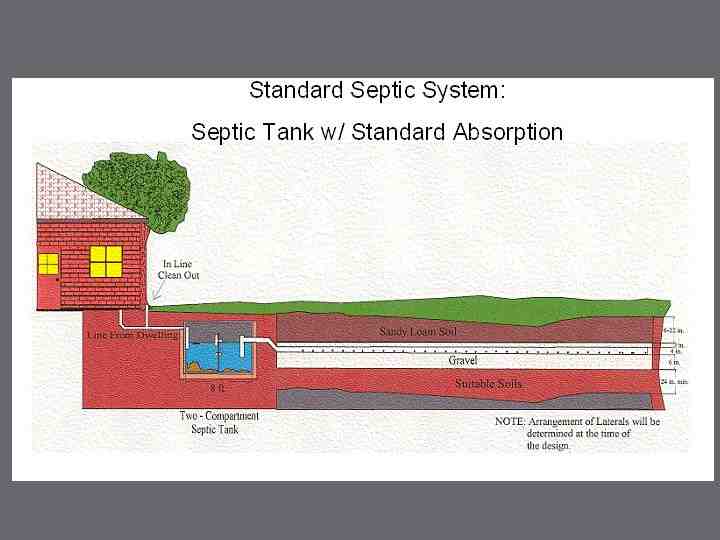
In a Common Septic Systems Standard Septic Systems, we rely on anaerobic bacteria. These are hardy little workers that thrive in environments without oxygen. When wastewater enters the septic tank, these bacteria go to work breaking down organic matter. It’s a slow, steady process that results in three layers: sludge at the bottom, scum at the top, and a middle layer of liquid called effluent.
An aerobic system, or Aerobic Treatment Unit (ATU), is essentially a miniature municipal sewage plant in your backyard. How Aerobic Septic Systems Work involves an aeration chamber where an air pump or compressor forces oxygen into the water. This oxygen allows aerobic bacteria to flourish. These bacteria are much more aggressive than their anaerobic cousins, breaking down waste 20 to 30 times faster.
While a Common Septic Systems Aerobic System is more complex, including an aeration chamber, a disinfection unit, and often a pump tank, it produces a much cleaner end product.
Understanding the Standard Gravity System
The conventional system is the "old reliable" of the industry. It has been used successfully for over a century because it relies mostly on physics and nature. In a Faqs/Standard Septic System, gravity does the heavy lifting.
- Settling: Wastewater flows into the tank, where solids sink to form sludge and oils float to form scum.
- Anaerobic Digestion: Bacteria in the tank slowly digest the organic solids.
- Effluent Clarification: The liquid in the middle (effluent) flows out of the tank into a drain field.
- Soil Filtration: This is the most important part. The soil beneath your drain field acts as a natural filter, removing the remaining bacteria and viruses before the water reaches the groundwater.
The Role of Oxygen in Aerobic Treatment Units (ATUs)
If a conventional system is a slow-cooker, an aerobic system is a microwave. By using forced air, we create an oxygen-rich environment that supercharges the treatment process. This is the core of Aerobic Systems Decoded.
Because aerobic bacteria are so efficient, they remove up to 95% of pathogens and contaminants before the water even leaves the system. This high level of pathogen reduction is why these systems are often allowed in areas where the soil isn't deep enough or permeable enough to handle the less-treated effluent from a standard system.
A Conventional vs Aerobic Septic System Comparison: Key Operational Differences
When we perform a conventional vs aerobic septic system comparison for homeowners in San Antonio or Boerne, we focus on three main operational pillars: efficiency, space, and complexity.
- Treatment Efficiency: Aerobic systems are objectively better at cleaning the water. They remove 85-98% of organic matter (BOD), whereas conventional systems might only remove 30-50% inside the tank, leaving the rest for the soil to handle.
- Space Requirements: One of the biggest 4 Advantages Of Aerobic Septic Systems is their small footprint. Because the water is so clean, the drain field (or secondary treatment area) can be 50% to 75% smaller than a conventional field.
- Jargon and Components: It’s easy to get lost in the terminology. In our guide to Septic System Jargon Defined Standard Vs Aerobic Systems, we explain that while a standard system is just a tank and some pipes, an aerobic system has "moving parts" like aerators, alarms, and spray heads.
In the debate of Whats Better Conventional Septic Or Aerobic, "better" is subjective. A conventional system is better for your wallet and peace of mind if you have the space. An aerobic system is better for the environment and tight lot lines.
Environmental Impact and Effluent Quality
We take groundwater protection seriously here in Texas, especially for those living over sensitive areas like the Edwards Aquifer. Aerobic systems provide a higher level of secondary treatment, which means the water being released into your yard is significantly cleaner.
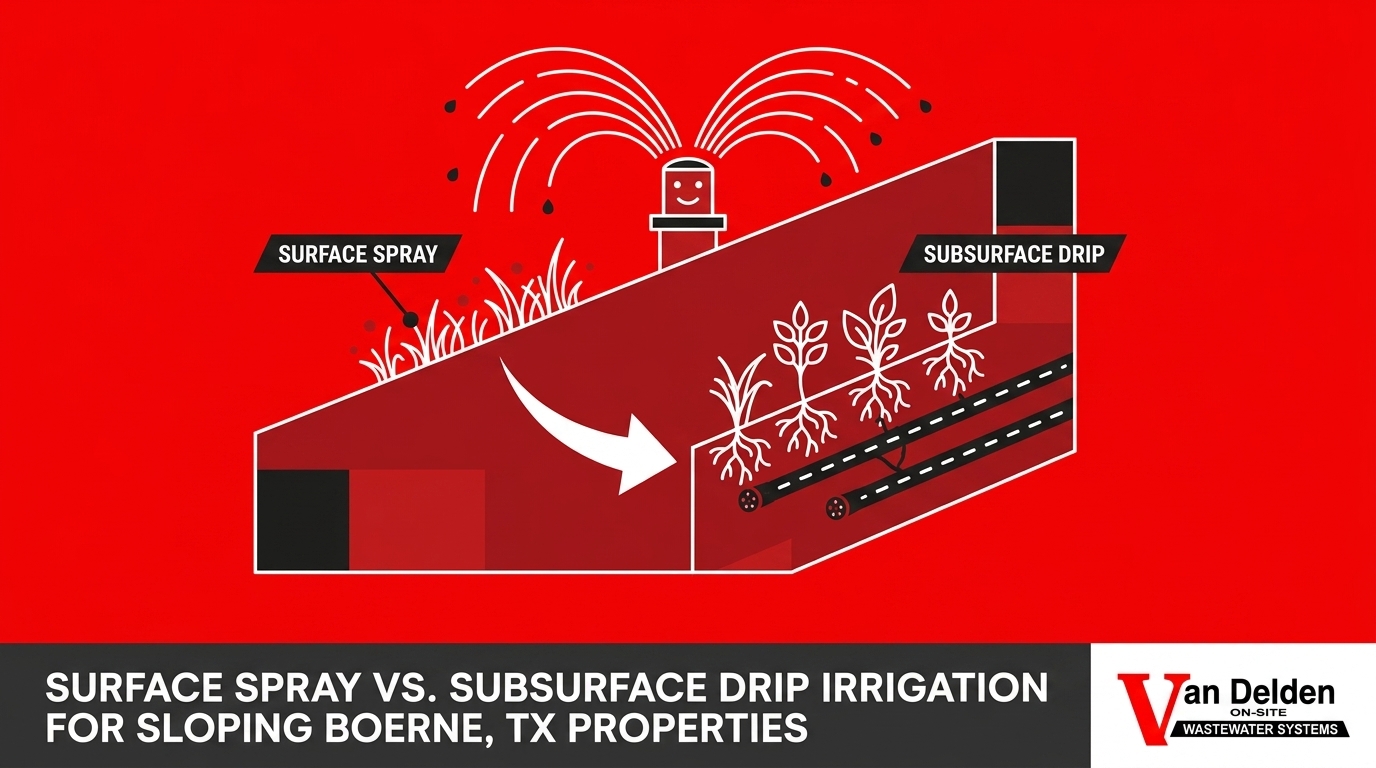
However, Are All Aerobic Septic Systems The Same? Not quite. Some use spray irrigation (like a lawn sprinkler), while others use drip irrigation or even subsurface emitters. The goal is always the same: to prevent harmful nutrients from reaching our precious Texas groundwater.
Financial Investment and Long-Term Value
While we won't quote specific prices, it is a fact that aerobic systems are more of a financial commitment. You aren't just paying for a tank; you're paying for a mechanical treatment plant.
The long-term value of a conventional system lies in its simplicity. It doesn't need electricity to run. On the other hand, an aerobic system adds to your monthly electricity bill—typically between $200 and $500 annually in 2026—to keep that air pump running 24/7. However, an aerobic system can increase the value of a small lot that otherwise wouldn't be buildable.
Maintenance and Reliability Factors for Homeowners
Maintenance is where these two systems truly diverge. We often tell our customers in Timberwood Park and Shavano Park that a septic system is like a car—you can’t just drive it forever without changing the oil.
For a conventional system, maintenance is straightforward:
- Pumping: You should have the tank pumped every 3 to 5 years to remove the accumulated sludge.
- Inspections: A quick visual check every few years ensures the baffles are intact and the drain field isn't soggy.
For an aerobic system, the checklist is longer:
- Mechanical Inspections: Most Texas counties and the TCEQ require professional inspections every 4 to 6 months.
- Electricity: The system must remain powered at all times.
- Aerator Replacement: The air pump is the heart of the system, and like any mechanical pump, it will eventually wear out. Most last 3 to 10 years.
- Disinfection: If you have a spray system, you’ll need to add chlorine tablets or liquid bleach regularly to kill any remaining pathogens.
Why We Only Install And Service Clearstream Aerobic Systems comes down to reliability. When a system has this many moving parts, you want the highest quality components available to minimize middle-of-the-night alarm calls.
Long-term durability in a conventional vs aerobic septic system comparison
In a conventional vs aerobic septic system comparison, the conventional system usually wins the longevity race. A well-maintained concrete septic tank and drain field can last 30 to 40 years or more.
Aerobic systems are more sensitive. The tanks themselves last 20-30 years, but the mechanical "organs"—the pumps, aerators, and control panels—have shorter lifespans. Furthermore, aerobic bacteria are more "picky" than anaerobic ones. They are more easily killed by harsh household chemicals, antibiotics, or long periods of the house being empty.
Operational Reliability and Power Needs
What happens when the lights go out in San Antonio? If you have a conventional gravity system, your toilets will still flush, and your waste will still flow to the tank.
If you have an aerobic system, a power outage means the aerator stops. If the power is out for more than a few hours, the aerobic bacteria begin to die off from a lack of oxygen. Once power returns, it can take a few days for the bacterial colony to recover. Most aerobic systems include an alarm (both light and sound) to let you know if the air pressure drops or the water level gets too high.
Selecting a System Based on Texas Soil and Regulatory Requirements
In Texas, your choice is often made for you by the dirt under your feet. The Texas Commission on Environmental Quality (TCEQ) regulates "On-Site Sewage Facilities" (OSSF) under 30 TAC Chapter 285.
Before you can build or replace a system, a licensed site evaluator must perform a soil analysis. They look for:
- Soil Texture: Is it sandy (good for drainage) or "Gumbo" clay (bad for drainage)?
- Soil Depth: How far is it to solid limestone or the water table?
- Percolation Rate: How fast does water disappear into a test hole?
When And Why To Replace A Standard System With An Aerobic System often comes down to these results. If your soil is too tight (clay) or too shallow (limestone), a conventional system simply won't work. It would lead to sewage pooling on the surface or contaminating the groundwater. In these cases, an aerobic system is mandatory.
You can find more details on Faqs/Common System Types to see which might apply to your specific county.
Property constraints in a conventional vs aerobic septic system comparison
Property size is the other major factor. In areas like Hollywood Park or Garden Ridge, lots can be smaller.
- Conventional systems require significant "setbacks"—minimum distances from wells, property lines, and your home. They also need a large, flat area for the drain field.
- Aerobic systems are far more flexible. Because the water is treated to such a high standard, it can be distributed via Faqs/Aerobic System With Spray Irrigation or Faqs/Aerobic System With Drip Irrigation. This allows you to use your yard for landscaping while the system works quietly in the background.
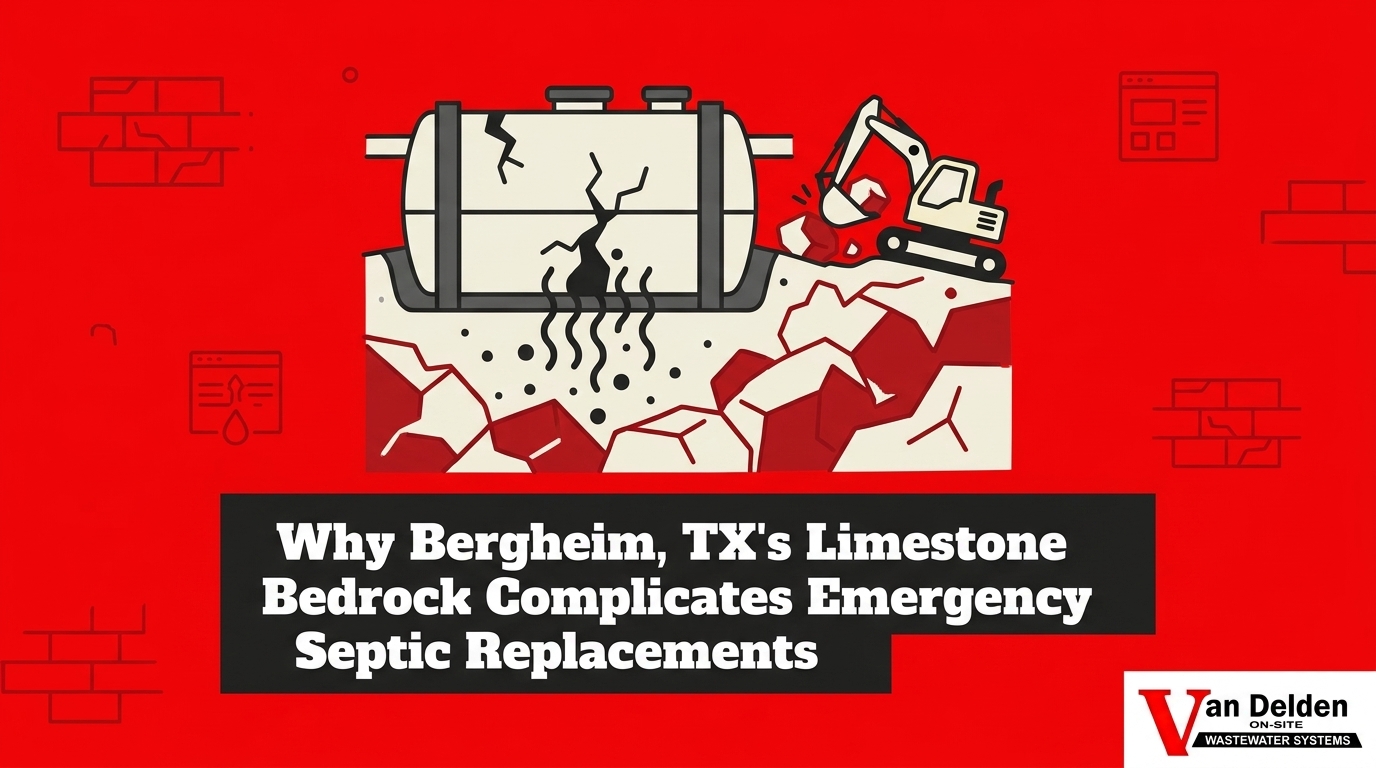
If you are dealing with shallow bedrock—a common sight in the Texas Hill Country—you may find that you literally cannot dig deep enough for a conventional trench.
Alternative Solutions for Challenging Terrain
Sometimes, neither a standard gravity system nor a basic aerobic system fits the bill. In those cases, we look at "alternative" designs:
- Mound Systems: We build a "hill" of specialized sand and soil above the natural ground level to provide the filtration that the native soil can't.
- Low Pressure Dosing (LPD): This uses a pump to distribute effluent evenly over a large area, which is great for thin soils. You can learn more about this at Faqs/Low Pressure Dosing System and our blog on Common Septic Systems Low Pressure Dosing System.
- Evapotranspiration (ET) Systems: These rely on the Texas sun to evaporate the water rather than letting it soak into the ground—ideal for very tight clays.
Conclusion
Choosing between a conventional and an aerobic septic system isn't just about what you want; it’s about what your land requires and what the law mandates. At Van Delden Wastewater Systems, we’ve been helping families navigate these choices since 1937.
Whether you are in Boerne, Bulverde, or San Antonio, our goal is to provide a professional consultation that looks at your specific soil, your lot size, and your family's water usage. We believe in homeowner education—the more you know about your system, the longer it will last and the less it will cost you in the long run.
If you’re ready to evaluate your property or if your current system is giving you trouble, don’t wait for a backup to happen. Reach out to us for a site evaluation. We’ll help you navigate the 2026 regulations and find the perfect Septic Systems solution for your home. A well-chosen septic system isn't just a utility—it's an investment in the health of your home and the Texas environment we all share.