Why Knowing Septic System Repair Signs and Solutions Can Save Your Home
Understanding septic system repair signs and solutions early is one of the most important things a homeowner can do to protect their property, their family's health, and their wallet.
Here is a quick overview of the most common warning signs and what to do about them:
| Warning Sign | What It Likely Means | What to Do |
|---|
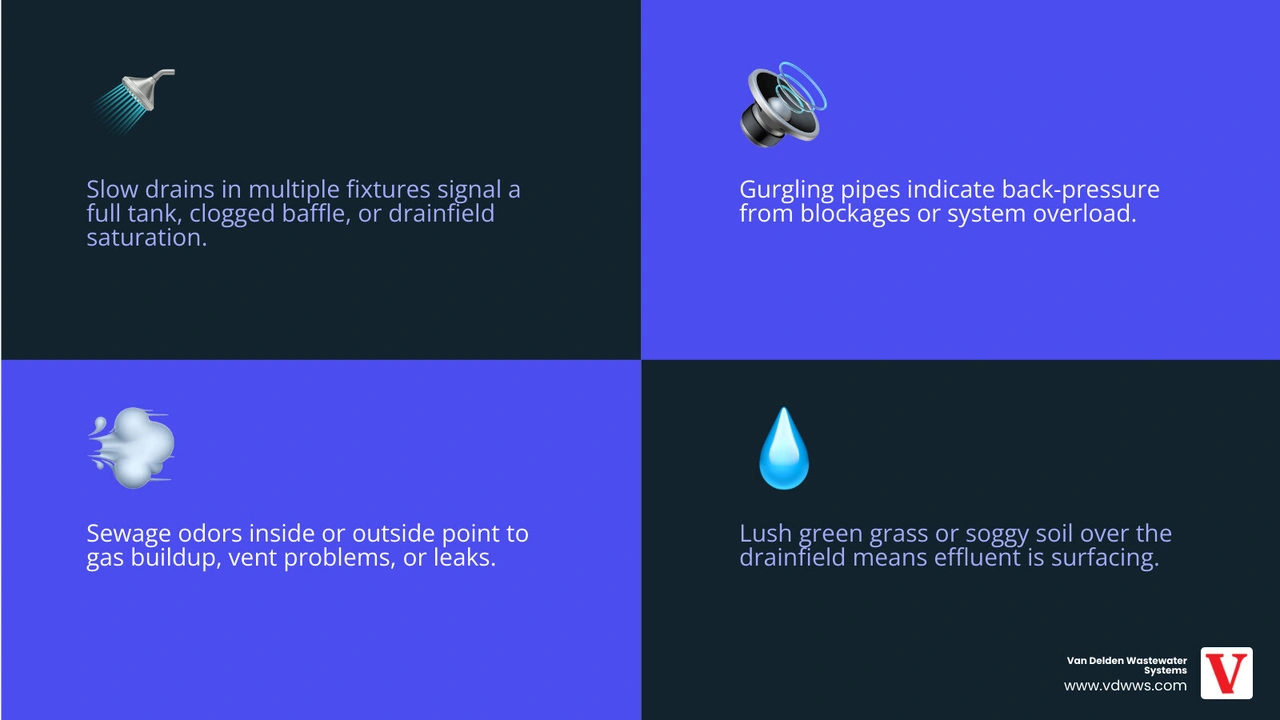
| Slow drains throughout the house | Full tank, clogged baffle, or drainfield issue | Stop heavy water use; call a professional |
| Gurgling sounds from drains or toilets | Blockage or back-pressure in the system | Schedule an inspection |
| Sewage odors indoors or outdoors | Gas buildup, vent issue, or system failure | Contact a septic professional |
| Standing water or soggy soil over drainfield | Effluent surfacing from a failing drainfield | Keep people and pets away; call for service |
| Unusually lush, green grass over the drainfield | Leaking wastewater fertilizing the soil | Get a professional evaluation |
| Sewage backing up into the lowest drains | Serious system blockage or full tank failure | Stop all water use immediately; call for emergency service |
Most septic systems work quietly underground, and it is easy to forget they exist — until something goes wrong. For many homeowners, that "out of sight, out of mind" approach works fine for years. But septic systems do not fail without warning. They almost always send signals first: a slow drain here, a strange smell there, a patch of grass that looks a little too green during a dry spell.
The trouble is that many homeowners do not recognize these early signs for what they are. By the time sewage is backing up into a shower or pooling in the yard, a simple maintenance issue has often turned into a much bigger problem. According to the U.S. EPA, most septic system failures come down to just two root causes: inappropriate design or poor maintenance.
The good news? When you know what to look for, you can catch problems early — before they become emergencies.
This guide walks you through everything you need to know: the warning signs, what causes them, how to respond, and how to keep your system running reliably for decades to come.
Septic System Repair Signs and Solutions Every Homeowner Should Know
When we talk about septic system repair signs and solutions, we are looking at a system that is essentially a living, breathing biological filter. Whether you live in Boerne, TX or San Antonio, your septic system relies on a delicate balance of bacteria and soil drainage. When that balance is disrupted, the signs can range from subtle to stomach-turning.
Common Septic Tank Warning Signs often start with things you can see and smell. If you notice standing water or soggy soil in your yard—even when it hasn't rained—your drainfield is likely struggling to process effluent. This "surfacing effluent" is a major health hazard and a clear signal that the soil is saturated or the system is overloaded.
The earliest indoor signs of septic trouble
Before the yard turns into a swamp, your home's plumbing will often try to tell you something is wrong. One of the most common 6 Signs You Have a Backed Up Septic System is multiple slow drains. If just one sink is slow, it’s probably a local clog. But if every drain in the house feels sluggish, the problem is further downstream in the tank or the main line.
Watch for these early indicators:
- Bubbling or Gurgling: If your toilet gurgles when you run the shower, it means air is being trapped by a blockage or back-pressure.
- Flushing Issues: Toilets that require multiple flushes or feel "weak" often point to a full tank. These are among the Top 3 Signs You Should Clean Your Septic Tank Right Now.
- Lowest Drain Backup: Check the floor drain in your basement or the shower on the ground floor. Because waste follows the path of least resistance, these low points are the first to show signs of a backup.
Outdoor septic system repair signs and solutions to watch for
Your yard is a window into the health of your septic system. If you see Signs of Drainfield Problems in San Antonio Home, it’s time to act. One of the most deceptive Drainfield Failure Signs is a patch of vibrantly green, lush grass. While it might look beautiful, it often means your grass is being "fertilized" by untreated wastewater that is leaking or surfacing.

Keep an eye out for:
- Spongy Soil: If the ground over the drainfield feels like walking on a wet sponge, it’s a sign of saturation.
- Odors in the Yard: A persistent smell of rotten eggs (hydrogen sulfide) near the tank or drainfield is never normal.
- Algae Blooms: If your property is near a pond or lake, excessive algae growth can indicate that nutrients from your failing septic system are leaching into the water.
When odors do and do not mean system failure
Smelling sewage is alarming, but it doesn't always mean you need a total system replacement. Sometimes, the solution is much simpler. For instance, How Do I Know If My Septic Tank Is Leaking might involve checking for indoor odors caused by "dry traps." If a guest bathroom sink isn't used for weeks, the water in the P-trap evaporates, allowing sewer gas to drift into the room. Simply running the water for a minute can fix this.
However, if odors persist, it could be a blocked roof vent or a downdraft pushing gases back into the home. In more serious cases, a missing or damaged inlet baffle can allow gases to escape the tank and enter your home's vents.
What Causes Septic Systems to Malfunction or Fail?
In our decades of experience serving areas like Timberwood Park and Shavano Park, we’ve found that The No. 1 Cause of Septic System Failure is a lack of maintenance. When a tank isn't pumped, solids build up and eventually flow out into the drainfield, clogging the soil pores.
Other Causes of Septic Tank Failure Timberwood Park include:
- Hydraulic Overload: Sending too much water into the system at once (like doing five loads of laundry in one day).
- Physical Damage: Driving vehicles over the drainfield or planting trees with invasive roots near the pipes.
- Soil Issues: High groundwater or compacted soil that prevents proper filtration.
Minor issue or major failure? How to tell the difference
It’s important to distinguish between a "full" tank and a "failed" system.
| Symptom | Minor Issue (Maintenance) | Major Issue (Failure) |
|---|
| Drains are slow | Tank needs routine pumping | Drainfield is saturated/clogged |
| Single backup | Localized clog in the house pipe | Main line or drainfield blockage |
| Lush grass | Minor leak or high water table | Biomat buildup preventing drainage |
A professional camera inspection is often the best way to tell the difference. We can see exactly where the blockage is—whether it’s a simple clogged baffle or a more serious line collapse.
Septic system repair signs and solutions by system type
Not all systems are the same. A Guide to Septic System Repairs must account for the specific hardware in your yard.
For those with Aerobic Septic System Repair Guide needs, you have extra components like air compressors, spray heads, and control panels. If your aerobic alarm goes off, it could be a failed pump or a blown fuse. Conventional systems are simpler but rely entirely on the soil’s health. Understanding these Septic System Issues and Solutions helps you communicate better with your technician.
If you suspect a problem, the first rule is: Stop using water. Every gallon you flush or pour down the drain adds pressure to a system that is already struggling.
For Emergency Septic Repairs in Boerne TX, we recommend these immediate steps:
- Minimize Water Use: No laundry, no dishwasher, and short "navy showers" only.
- Safety First: Keep children and pets away from any wet spots in the yard.
- Check the Alarm: If you have an aerobic system, look at the control panel to see which light is on.
If sewage backs up into the home
This is a health emergency. Raw sewage contains pathogens like E. coli and salmonella. Always wear personal protective equipment (PPE) like rubber boots and gloves. Contaminated porous materials (like carpets) usually need to be replaced. Clean hard surfaces with a solution of 90% water and 10% bleach, and allow the area to dry for at least 24 hours before use.
If wastewater surfaces in the yard
Do not mow over the area or drive vehicles nearby. This can compact the soil further and spread contamination. Surfacing effluent can run off into local waterways, creating an environmental hazard for your neighbors in the Hill Country.
What not to do while waiting for service
Avoid the temptation of Septic Repair and Why It's Not DIY. Do not pour "miracle" chemical additives down the drain; these can actually kill the beneficial bacteria your system needs. Also, do not attempt to dig up the tank yourself—septic tanks can contain lethal gases like methane.
Inspections, Pumping, and Preventive Maintenance That Avoid Major Repairs
The best way to handle septic system repair signs and solutions is to prevent the need for repairs in the first place. This starts with a regular inspection and pumping schedule.
How often a septic system should be inspected and pumped
As a rule of thumb, you should have your system inspected every 1 to 3 years and pumped every 3 to 5 years. However, if you have a large family or use a garbage disposal, you may need to pump more frequently. A tank should be pumped when the sludge and scum layers take up about one-third of the tank's total volume.
What a professional septic inspection typically includes
When we perform an inspection, we don't just look at the tank. We:
- Review your system's permit and service history.
- Open all covers to check sludge levels and the integrity of the baffles.
- Inspect the effluent filter (if present) and clean it.
- Check for signs of leaks or corrosion in the tank walls.
- Evaluate the drainfield for signs of stress or saturation.
Habits that help septic systems last longer
Longevity is all about how you treat your drains. We always tell our customers to:
- Spread out laundry: Don't do all your washing on Saturday. Spread it across the week to avoid hydraulic overload.
- Watch what you flush: Only human waste and toilet paper should go down the toilet. "Flushable" wipes are a leading cause of Troubleshooting Septic Tank Repair Problems.
- Protect the field: Never park cars or build structures (like sheds or pools) over your drainfield.
Common Septic Repairs, When Replacement Is Necessary, and How to Plan Ahead
Even with the best care, parts eventually wear out. Knowing the Residential Septic Repairs Boerne TX Guide basics can help you prepare.
Common repairs homeowners may face
- Baffle Replacement: These pipes prevent solids from entering the drainfield. If they corrode or break, they must be replaced immediately.
- Pump or Float Repair: In aerobic or lift systems, these electrical parts can fail after several years of service.
- Effluent Filter Cleaning: This is a simple task that can prevent massive drainfield damage.
- Riser Installation: Installing risers brings your tank lids to the surface, making future Affordable Septic Repairs Boerne TX Guide visits much easier.
When repair may still work and when replacement is the smarter move
If your tank is 30 years old and collapsing, or if your drainfield is completely "dead" due to a thick layer of biomat that no longer allows water to pass, replacement is likely necessary. Most septic systems last about 20 to 30 years. If you find yourself needing emergency pumping every few months, it's a sign that the system can no longer keep up.
Financing options and assistance programs
A full replacement is a significant investment. Many homeowners look into home improvement loans or specialized lending programs. Some local county health departments in Texas offer guidance on assistance programs for low-income households or properties that pose a significant environmental risk.
Frequently Asked Questions About Septic System Repair Signs and Solutions
How long do septic systems and drainfields usually last?
A well-maintained concrete tank can last 40 years or more, but the drainfield is usually the limiting factor. Most drainfields last between 15 and 30 years depending on soil quality and maintenance habits.
Should I pump the tank if my drains are slow?
If it has been more than three years since your last pump-out, yes. Pumping is the first step in troubleshooting. However, if the drains stay slow after pumping, you likely have a blockage in the lines or a failing drainfield.
Can heavy rain cause septic problems?
Yes. In areas like Fair Oaks Ranch or Bulverde, heavy rain can saturate the soil around your drainfield. This prevents the effluent from sinking in, which can cause temporary backups or standing water. If the problem persists after the ground dries, it’s a sign of a deeper issue.
Conclusion
At Van Delden Wastewater Systems, we believe in "service through education." Since 1937, our family-owned business has helped homeowners across San Antonio and the Hill Country navigate the complexities of septic care. Our technicians are non-commissioned, meaning they are there to solve your problem, not sell you parts you don't need. We provide detailed photo documentation so you can see exactly what’s happening underground.
If you’re noticing any of the signs mentioned in this guide, don’t wait for a disaster. Whether you need a Septic Repairs Boerne TX Guide or Septic System Repairs Maintenance in Georges Ranch Boerne TX, we are here to help.
Stop searching for Septic Tank Repair Companies Near Me and trust the experts who have been doing it right for nearly 90 years. More info about septic tank services is just a click away. Let us help you keep your home safe and your system running smoothly.