Why Knowing How to Protect Your Drainfield from Damage Could Save You Thousands
How to protect your drainfield from damage is one of the most important things you can do as a homeowner with a septic system. A well-maintained drainfield can last up to 50 years — but the wrong habits can cut that lifespan short and leave you facing a costly, messy failure.
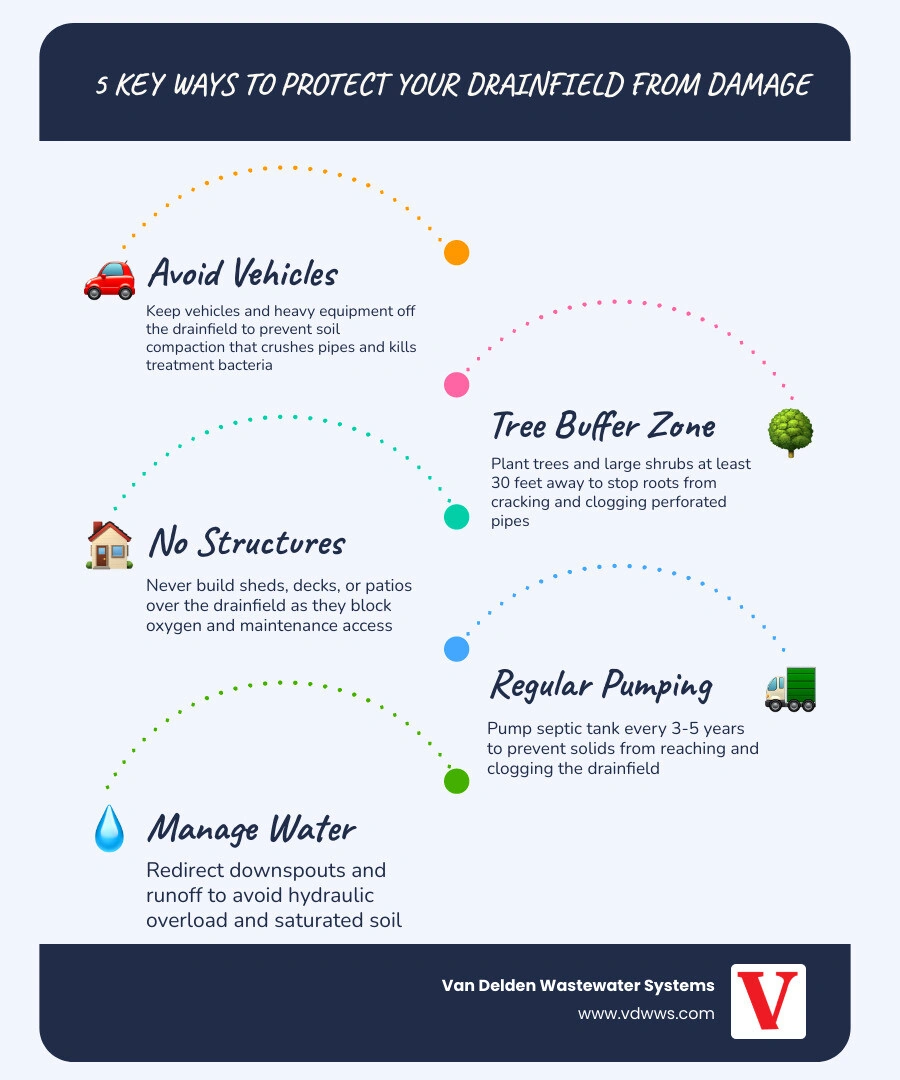
Here's a quick overview of the most important ways to protect your drainfield:
- Keep vehicles and heavy equipment off the drainfield — compacted soil crushes pipes and kills the beneficial bacteria that treat your wastewater
- Plant trees and large shrubs at least 30 feet away — roots can crack and clog your drain pipes
- Never build structures over the drainfield — sheds, decks, and patios block oxygen flow and prevent maintenance access
- Pump your septic tank every 3 to 5 years — this stops solid waste from reaching and clogging the drainfield
- Redirect downspouts and surface runoff away from the drainfield — saturated soil cannot filter wastewater properly
- Only flush human waste and septic-safe toilet paper — everything else risks clogging your system
- Use only shallow-rooted grasses or native plants over the drainfield — they protect the soil without damaging pipes
Your drainfield is not just a patch of yard — it's an underground treatment system. A network of perforated pipes sits just inches below the surface, slowly releasing treated wastewater into the surrounding soil. Oxygen-loving bacteria in that soil do the real filtration work, breaking down harmful pathogens before they reach groundwater. When the soil gets compacted, flooded, or invaded by roots, that biological process breaks down — and so does your entire septic system.
The good news? Most drainfield damage is preventable. Simple, consistent habits make the difference between a system that lasts decades and one that fails prematurely.
Understanding the Role of Your Septic Leach Field
To keep your backyard from turning into a swamp, it helps to understand what’s happening beneath the grass. The drainfield (also known as a leach field or absorption field) is the final stage of the wastewater treatment process. While the septic tank handles the heavy lifting of separating solids, the drainfield is where the actual purification happens.
Soil Purification and Oxygen-Loving Bacteria
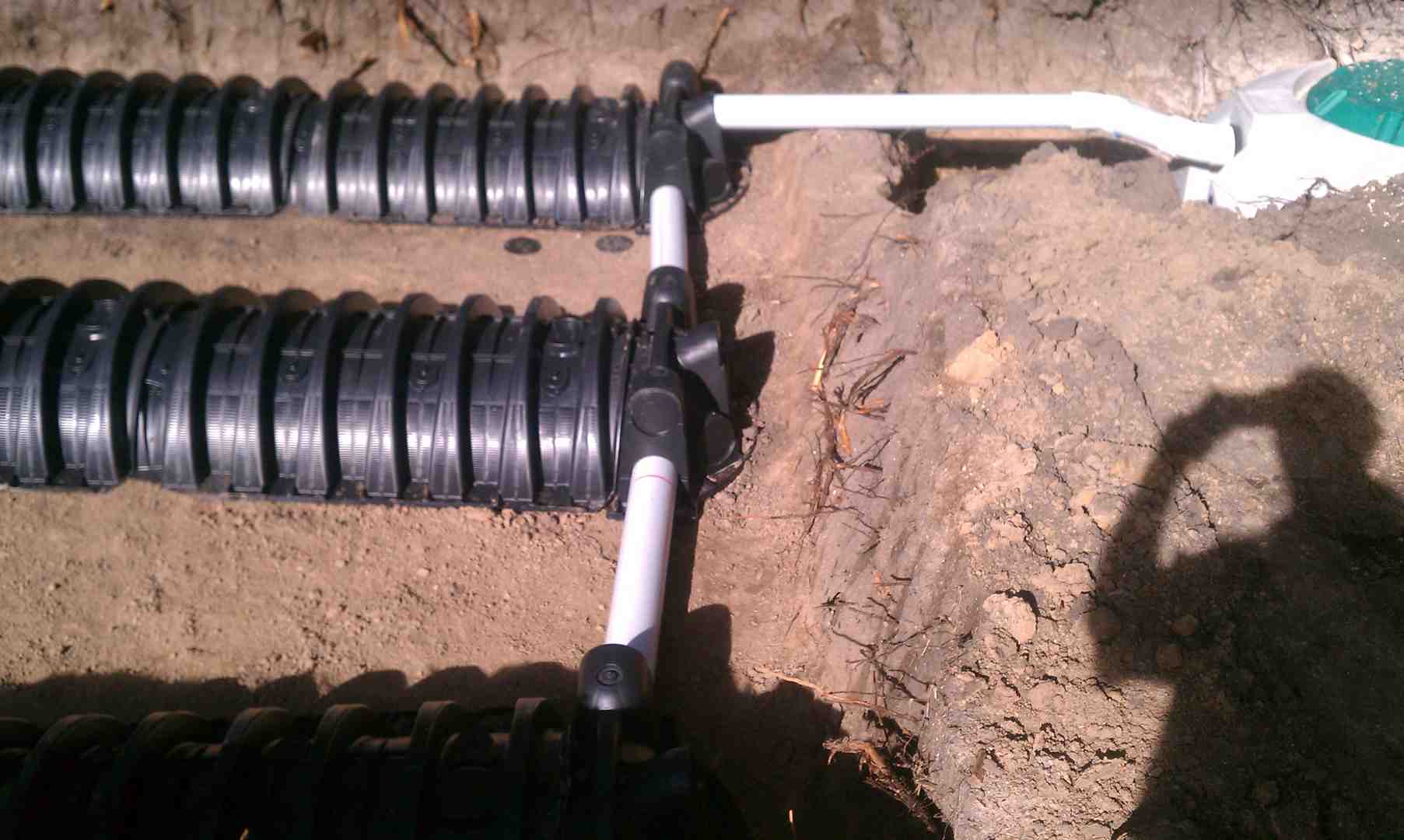
When liquid effluent leaves your tank, it flows into a series of perforated pipes buried in trenches. These pipes allow the water to trickle into the soil. Here, a specialized community of oxygen-loving bacteria lives in the soil pores. These microbes are the "good guys"—they consume organic matter and neutralize harmful pathogens. For these bacteria to thrive, the soil must be "breathable." If the soil is too packed down or flooded with water, these bacteria die off, and the treatment process stops.
The Mystery of the Biomat
Over time, a layer called a "biomat" forms at the bottom and sides of the trenches. This is a natural, jelly-like substance made of bacteria and organic matter. A healthy biomat helps regulate how fast water moves into the ground, ensuring the soil has time to filter it. However, if the system is neglected, Understanding Drainfield Biomat Formation becomes a lesson in failure; the biomat can become too thick, essentially "waterproofing" the trenches and causing water to back up into your home.
Groundwater Protection
In areas like San Antonio and the Texas Hill Country, protecting our groundwater is vital. A functional drainfield acts as a massive filter, removing about 60% of phosphorus and 30% of nitrogen waste before it reaches the water table. When you experience Common Septic Drainfield Problems, you aren't just looking at a plumbing bill—you're looking at a potential environmental hazard for your neighborhood.
How to Protect Your Drainfield from Damage: Physical Safeguards
The most common way homeowners accidentally ruin their septic system is through physical "trauma." Because the pipes are often buried only 18 to 36 inches deep, they are incredibly vulnerable to weight and pressure.
The Danger of Soil Compaction
Soil is like a sponge; it needs open pockets of air to move water and house bacteria. When you drive a car, park a boat, or operate heavy machinery over the field, you crush those air pockets. This is called soil compaction. Once the soil is compacted, it can no longer absorb effluent. Even worse, the weight can easily snap the Septic System Field Lines, leading to a total system collapse.
We all love shade, but trees are the natural enemies of septic pipes. Roots are biologically programmed to seek out moisture and nutrients—two things your drainfield has in abundance. Aggressive roots can enter the perforations in your pipes, expanding until they crack the lines or cause a Clogged Leach Field. To stay safe, keep large trees and shrubs at least 30 feet away from the edge of the field. For more on which species to watch out for, check out our guide on Septic Systems and Trees.
Prohibited Structures: No Sheds, No Decks
It might seem like a waste of a perfectly flat patch of yard, but you must never build over your drainfield. This includes:
- Storage sheds and garages
- Decks and patios
- Swimming pools (above-ground or in-ground)
- Paving or asphalt driveways
These structures block the exchange of oxygen into the soil and prevent evaporation. Furthermore, if we ever need to perform Drainfield Cleaning, having a shed on top of the pipes makes the job nearly impossible.
Managing Water Flow to Prevent Hydraulic Overload
Your drainfield has a "budget" for how much water it can handle in a day. If you exceed that budget, the soil becomes saturated, and the system fails to treat the waste. This is known as hydraulic overload.
Rainwater Diversion and Downspouts
In May 2026, as we look at the weather patterns in Spring Branch and Bulverde, heavy rain remains a major concern for septic owners. If your roof gutters empty directly onto your drainfield, you are essentially drowning the system. It is critical to Protect Septic System During Heavy Rainfall by redirecting downspouts at least 10 feet away from the absorption area. You want the rain to flow elsewhere so the drainfield can focus on its primary job: processing your household wastewater.
Household Water Conservation
Every drop that goes down your drain ends up in the field. To prevent overloading:
- Fix leaks immediately: A running toilet can add hundreds of gallons of water to your system every day.
- Space out laundry: Doing five loads of laundry on Saturday is a recipe for disaster. Spread them out across the week.
- Install low-flow fixtures: High-efficiency showerheads and toilets significantly reduce the daily load.
Understanding How Excessive Water Use Affects Drainfield health is the easiest way to prevent "phantom" failures where the system looks fine but can't keep up with the volume. This is especially true if you live in an area where High Water Tables Impact on Drainfields, as the soil already has less capacity to absorb extra liquid.
Best Practices for Landscaping and Household Habits
What you do on the ground and in the house matters just as much as where you park your truck.
Landscaping the Right Way
The best cover for a drainfield is a traditional lawn or a meadow of native grasses. These plants have shallow roots that stabilize the soil and help remove moisture through evaporation without interfering with the pipes.
| Safe Plants (Shallow Roots) | Dangerous Plants (Invasive Roots) |
|---|
| Bermuda Grass | Willow Trees |
| St. Augustine Grass | Maple Trees |
| Wildflowers | Oak Trees |
| Fescue | Large Woody Shrubs |
| Kentucky Bluegrass | Vegetable Gardens (due to over-watering) |
Changes in your yard can have unintended consequences. Learn How Landscaping Changes Affect Drainfield performance before you start your next gardening project.
The Pumping Rule
Most homeowners should have their septic tank pumped every 3 to 5 years. Why? Because the tank's job is to catch solids. If the tank gets too full, those solids (sludge) escape into the drainfield. Once solids enter the perforated pipes, they clog the holes and the soil pores, leading to a permanent failure. The Importance of Regular Drainfield Cleaning cannot be overstated—it is much cheaper to pump a tank than to replace a field.
Flushing Restrictions and Chemicals
Your septic system is a living biological reactor. If you pour bleach, drain cleaners, or paint thinner down the drain, you kill the bacteria that make the system work. Similarly, "flushable" wipes, grease, and feminine hygiene products do not break down. They travel to the drainfield and create physical blockages. Consistent Drainfield Cleaning for Septic System Maintenance starts with being mindful of what goes down the pipes.
Recognizing Warning Signs and When to Call a Pro
If you catch a problem early, you might save the system. If you ignore it, you’ll be calling us for an emergency replacement.
The "Too Green" Grass
Interestingly, a failing drainfield often looks "better" than the rest of the yard at first. If you notice a patch of grass that is incredibly lush, bright green, and grows faster than the surrounding area, it’s a sign that the grass is over-fertilized by surfacing effluent. This is one of the classic Drainfield Failure Signs.
Other Red Flags
- Sewage Odors: If the yard smells like a rotten egg, the waste isn't being filtered properly.
- Slow Drains and Gurgling: If your toilets are slow to flush or your pipes "talk" back to you with gurgling noises, the system is likely backed up.
- Standing Water: Pooling water or "spongy" soil over the trenches means the ground is saturated and can't take any more liquid.
If you notice these Signs of Drainfield Problems in San Antonio Home yards, it's time for a professional inspection. We provide expert Drainfield Cleaning San Antonio TX services to help homeowners identify if their system can be recovered or if it needs a more extensive solution.
Frequently Asked Questions about Drainfield Protection
How can I protect my drainfield from damage during heavy rain?
The best defense is a good offense. Ensure your yard is graded so that surface runoff flows away from the septic area. If you have a naturally low spot, consider installing a French drain to divert water elsewhere. Always Do You Keep an Eye on Your Septic Tank During Wet Weather? Monitoring for pooling during storms can help you spot drainage issues before they cause a backup.
What is the best way to protect your drainfield from damage caused by roots?
Stick to the 30-foot rule for all large trees. If you must have plants closer, choose herbaceous perennials or ornamental grasses that don't have woody, aggressive root systems. If you suspect a clog already exists, professional help is needed to clear the Clogged Leach Field without destroying the pipes.
Can I build a temporary structure over my septic area?
Even "temporary" items can be an issue. A heavy sandbox, a large pile of firewood, or even plastic sheeting can prevent oxygen exchange and compress the soil. There are 4 Common Causes of Septic Drainfield Failure, and physical interference—even if it's not a permanent building—is a major one. It’s always best to keep the area clear and open.
Conclusion: Trust the Experts at Van Delden Wastewater Systems
At Van Delden Wastewater Systems, we believe that an educated homeowner is a septic system's best friend. Since 1937, our family has been helping residents in Boerne, Bulverde, and throughout the San Antonio area keep their systems running smoothly. We pride ourselves on our non-commissioned technicians who take the time to explain your system to you, backed by photo documentation and detailed service forms.
Protecting your drainfield is about more than just avoiding a mess; it's about protecting your home's value and the local environment. Whether you need a routine inspection, a tank pumping, or specialized Drainfield Cleaning, we are here to provide honest, professional service. Don't wait for a plumbing disaster to strike—take the steps to protect your drainfield today!