When Your Yard Starts Speaking Sewage: Understanding Drain Field Distress
A clogged leach field happens when wastewater can't properly drain through your septic system's underground pipes and into the soil. Here are the key signs and immediate actions:
Warning Signs:
- Standing water or soggy spots in your yard
- Slow drains or gurgling sounds in your home
- Foul sewage odors near your tank or drain field
- Unusually lush, green grass over the leach field area
- Sewage backing up into toilets or sinks
Common Causes:
- Biomat buildup (natural bacterial layer)
- Tree roots invading pipes
- Septic tank not pumped regularly
- Too much water overwhelming the system
- Grease, wipes, or non-biodegradable items
What to Do:
- Reduce water usage immediately
- Have your septic tank pumped
- Call a professional for inspection
- Consider hydro-jetting or mechanical root removal
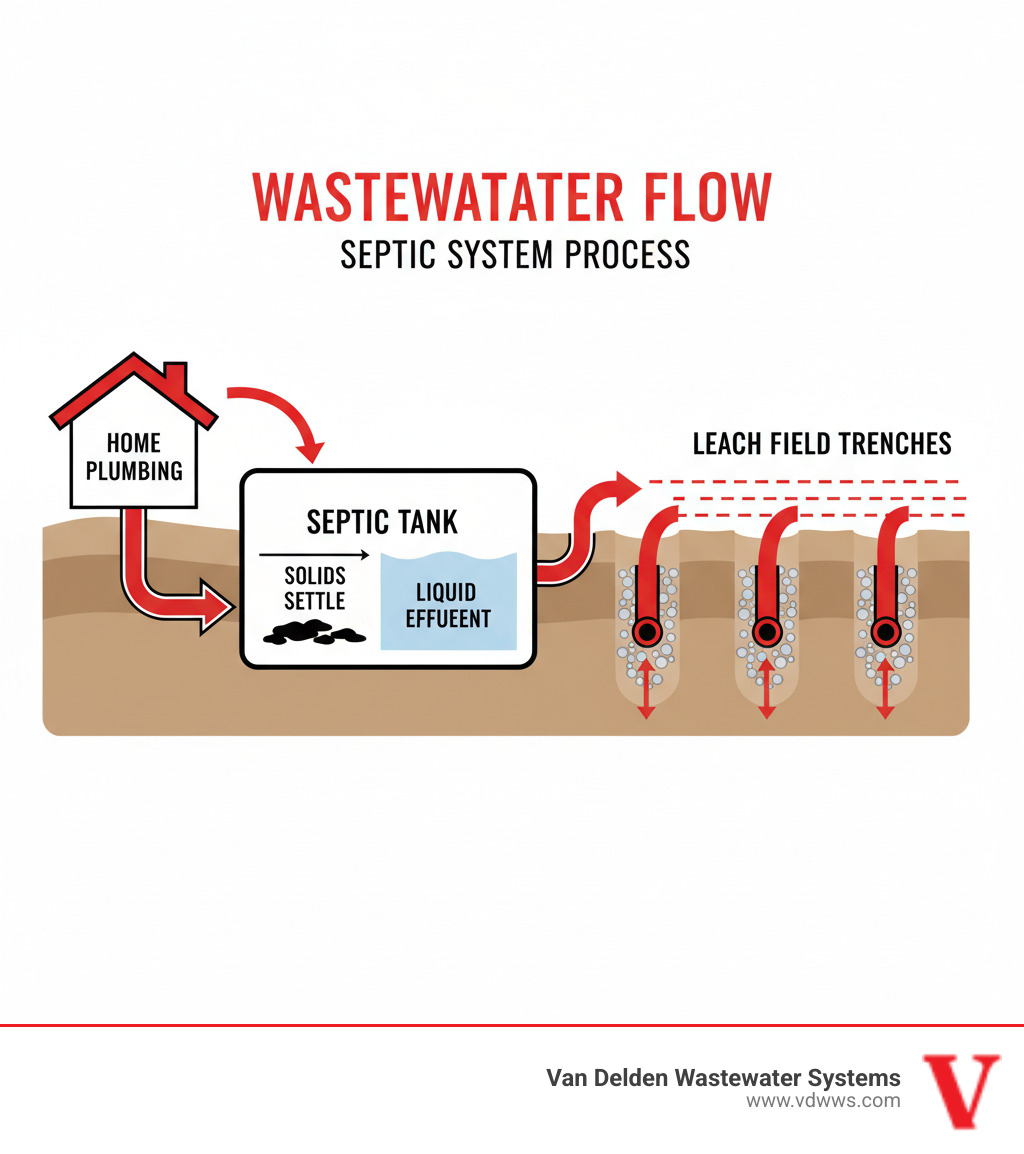
Your leach field (also called a drain field) is where wastewater from your septic tank flows through perforated pipes buried in gravel trenches. The soil naturally filters this water before it reaches the groundwater. When this system fails, you're facing what homeowners often describe as a "backyard horror story."
The good news? Most clogs are preventable with proper maintenance. And even when problems occur, early detection means easier fixes.
Understanding how your leach field works is the first step to protecting your home and your investment.
Is Your Backyard Sending an SOS? Key Signs of a Failing Leach Field
Your septic system has its own language, and a failing leach field will send clear distress signals. With our experience in the septic business since 1937, we've learned to spot these signs early, saving homeowners from major emergencies. A clogged leach field announces itself through clues in your yard and problems inside your home. If you're in the San Antonio area, you'll find helpful local insights in our articles on Signs of Drainfield Problems in San Antonio Home and Drainfield Saturation Signs in San Antonio.
Visual and Olfactory Clues
Your eyes and nose are your first line of defense in spotting leach field issues.
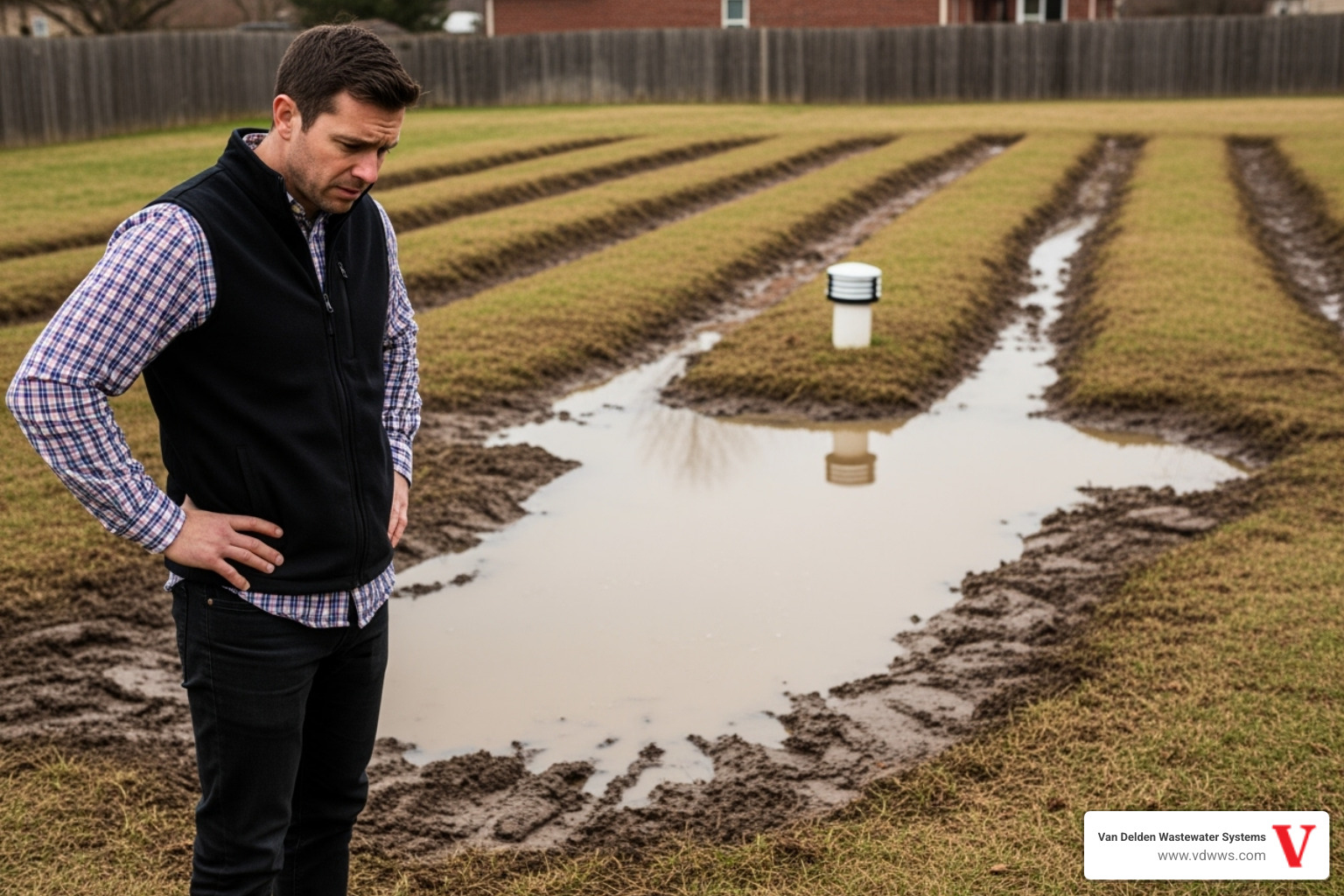
Standing water or soggy spots over your drain field, especially when it hasn't rained, are a major red flag. This is wastewater surfacing because it can no longer drain properly into the soil.
Unusually lush, green patches of grass directly over your leach field are another telltale sign. The grass is being over-fertilized by untreated wastewater surfacing from below.
Foul odors, like sewage or rotten eggs, near your septic tank or drain field mean untreated wastewater is escaping where it shouldn't.
Plumbing Problems Inside the Home
Outdoor problems eventually lead to indoor frustrations.
Slow drains throughout your home, especially when multiple fixtures are affected at once, suggest a system-wide backup that could originate from a clogged leach field.
Gurgling sounds from toilets or drains are caused by trapped air in the pipes due to a blockage. It's a clear sign your plumbing is struggling.
Sewage backing up into your toilets, sinks, or showers is the most alarming sign. This is a health emergency that requires immediate professional attention, as raw sewage contains dangerous pathogens that pose serious risks to your family.
Pay attention to these warning signs. If you spot them, call us for an honest assessment from our non-commissioned technicians. We focus on education and solutions, not sales pressure.
The Root of the Problem: Common Causes of a Clogged Leach Field
Understanding why a leach field clogs is key to preventing it. Most clogged leach field issues stem from three main areas: natural biological processes, what we put down our drains, and environmental factors. Our article on 4 Common Causes of Septic Drainfield Failure explores these issues in greater depth.

Understanding Biomat: The Natural Cause of a Clogged Leach Field
Surprisingly, a common cause of a clogged leach field is an overgrowth of something beneficial: biomat. This slimy layer of bacteria is a natural filter in your leach field, cleaning wastewater before it enters the groundwater. However, if the biomat grows too thick, it can waterproof the soil, preventing absorption and causing backups. It's a case of too much of a good thing, often resulting from a lack of regular maintenance. You can dive deeper into this process in our guide to Understanding Drainfield Biomat Formation.
Man-Made Blockages: From Grease to "Flushable" Wipes
What we send down our drains can wreak havoc on our leach fields.
- Fats, Oils, and Grease (FOG): When poured down the drain, FOG solidifies in pipes and the leach field, creating a waterproof barrier that blocks absorption.
- Non-Biodegradable Items: So-called "flushable" wipes, feminine hygiene products, paper towels, and dental floss do not break down. They accumulate and create physical blockages in the pipes.
- Harsh Chemicals: Bleach, drain cleaners, and antibacterial soaps kill the beneficial bacteria your septic system needs to break down waste, leading to solids buildup.
- Laundry Lint: Synthetic fibers from clothing don't biodegrade and can clog pipe perforations and soil pores over time.
Environmental Factors: Roots, Soil, and Water
Even with perfect habits, nature can cause problems.
- Tree Roots: Roots are drawn to the moisture in leach field pipes. They can infiltrate and block the pipes, sometimes even crushing them.
- Soil Compaction: Heavy vehicles driving over the leach field can compact the soil, squeezing out air pockets and preventing wastewater from flowing through.
- Poor Soil Conditions: If your field was installed in heavy clay soil, it may have poor natural drainage, making it prone to failure.
- Hydraulic Overload: Heavy rain or a high water table can saturate the ground, as explained in our article on How Excessive Water Use Affects Drainfield. When the soil is already full of water, it can't absorb any more from your septic system, leading to backups.
Your Action Plan: Methods for Unclogging and Repair
When you suspect a clogged leach field, it's crucial to diagnose the problem before attempting a solution. At Van Delden Wastewater Systems, our approach since 1937 has been to diagnose first, treat second. For a comprehensive look at repair options, check out our Drain Field Repair Complete Guide.
DIY Solutions for a Minor Clogged Leach Field and Their Limits
For minor issues, some DIY steps can be taken before calling a professional.
- Reduce Water Usage: Immediately cutting back on water gives your system a chance to catch up. Space out laundry and take shorter showers.
- Pump Your Septic Tank: While not a direct fix for the leach field, pumping an overdue tank (every 3-5 years) relieves pressure on the entire system.
- Bacterial Additives: These are often marketed as a fix. While they might help with minor biomat, they are ineffective against physical blockages like roots or grease and are no substitute for proper maintenance.
DIY Safety Warning: Septic system repairs are not like other home projects. You are dealing with dangerous sewer gases that can be odorless and deadly. Without professional equipment, you're working blind. If you see standing water, smell sewage, or have backups, it's time to call a professional for your own safety.
Professional Interventions: When to Bring in the Experts
Our certified technicians use specialized tools to accurately diagnose and fix your leach field problems. Since they don't work on commission, you get honest advice, not an upsell.
- Professional Inspection: We start with a thorough inspection of your entire system, documenting our findings with photos and detailed reports for full transparency.
- Sewer Camera Inspection: A waterproof camera allows us to see the exact problem inside your pipes—be it roots, a collapse, or biomat—eliminating guesswork.
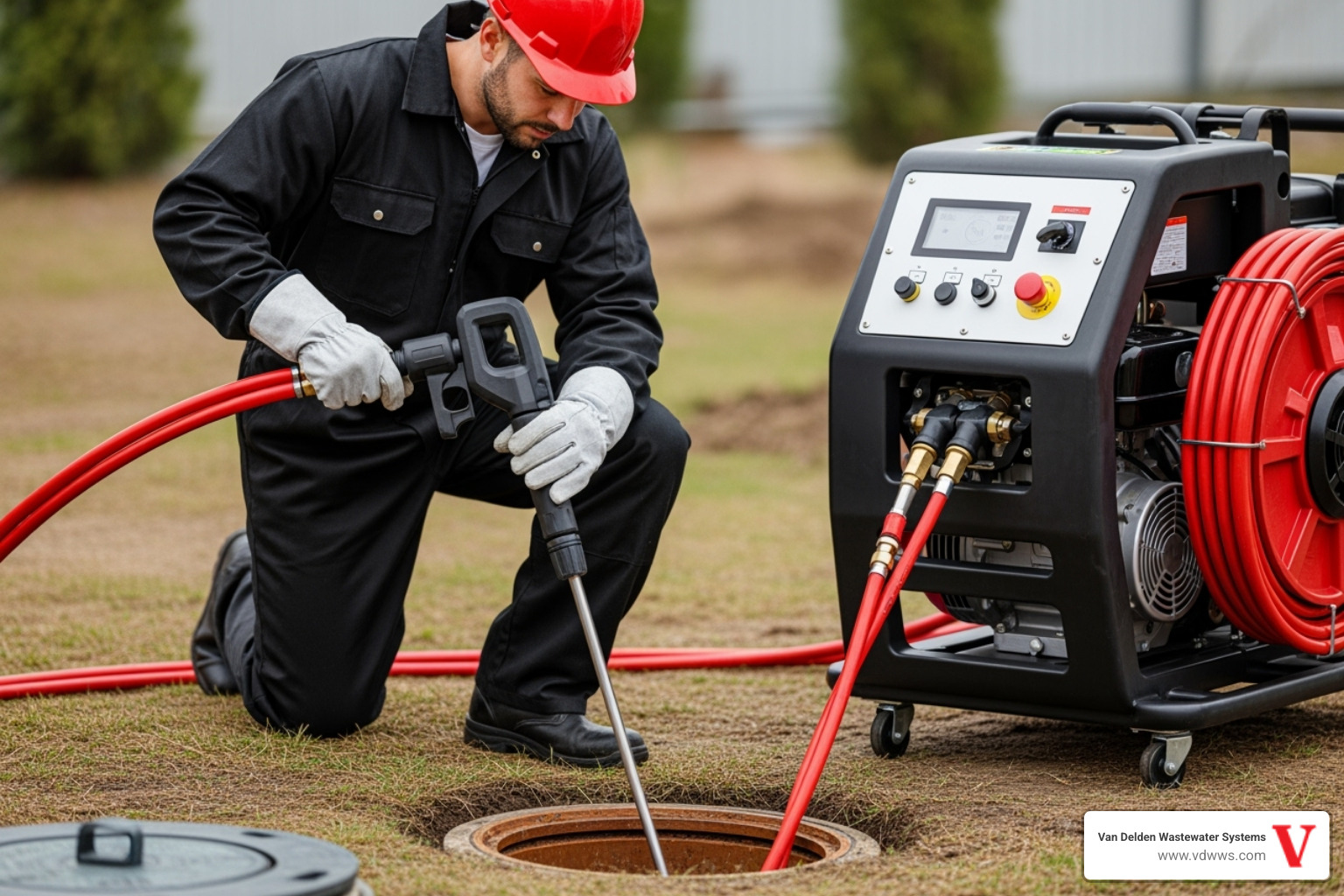
- Hydro-jetting: This powerful tool uses high-pressure water to scour pipes clean of biomat, grease, and sludge, restoring proper flow. Learn more in our article on Drainfield Cleaning for Septic System Maintenance.
- Mechanical Root Removal: We use mechanical augers to cut through tough tree roots, clearing the pipes. This is often followed by hydro-jetting to flush out debris.
- Distribution Box Repair: The D-box must evenly distribute wastewater. We inspect and repair it to prevent overloading of individual lines.
- Soil Remediation: In some cases of mild compaction or biomat, techniques like soil aeration or bio-remediation can help, as explained in our guide on Understanding Drainfield Recovery Methods.
Long-Term Health: Best Practices for Preventing Future Clogs
Proactive maintenance and mindful daily habits are your best defense against a clogged leach field. The healthiest septic systems belong to homeowners who give their systems regular attention. Our guides on Extending the Life of Your Drainfield and How to Care for Your Septic System and Why offer more details.
Protect Your System at the Source
Your septic system's health starts at the drain. The golden rule, per the EPA's guide to septic care, is simple: only flush human waste and toilet paper. Your septic system is not a trash can.
- What Not to Flush: Never flush "flushable" wipes, paper towels, feminine hygiene products, diapers, or dental floss. They don't break down and will cause clogs.
- Avoid Grease: Scrape cooking grease, fats, and oils into the trash. Pouring them down the drain creates stubborn blockages.
- Limit Food Waste: Use sink strainers to catch food scraps and use your garbage disposal sparingly. Food waste increases the solids in your tank, requiring more frequent pumping.
- Use Septic-Safe Products: Choose biodegradable toilet paper and gentle cleaners. Harsh chemicals and antibacterial soaps kill the beneficial bacteria your system needs.
The Importance of Regular Maintenance
An out-of-sight septic system should never be out of mind. Regular professional maintenance is the most important thing you can do to prevent a clogged leach field.
- Regular Pumping: Septic tank pumping every 3-5 years is essential, not optional. It removes solids that would otherwise clog your leach field. The frequency depends on your tank size and household usage. Our article on The Importance of Regular Drainfield Cleaning explains why this is critical.
- Annual Inspections: Professional inspections catch small problems early. Our non-commissioned technicians focus on educating you, not upselling.
- Water Conservation: The less water you use, the less stress on your leach field. Fix leaks, use low-flow fixtures, and space out laundry loads.
- Thoughtful Landscaping: Protect your leach field by keeping trees with deep roots at least 30 feet away. Never drive, park, or build on the drain field area to avoid soil compaction and pipe damage.
The Bigger Picture: Consequences and When Replacement is Necessary
Ignoring a clogged leach field is a recipe for disaster. A failing septic system is a threat to your family's health, your property value, and the local environment.
Environmental and Health Consequences
When a leach field fails, untreated wastewater pollutes the surrounding area.
- Groundwater Contamination: A failed system can release raw sewage into the groundwater, contaminating drinking wells with dangerous pathogens.
- Surface Water Pollution: Untreated sewage can pollute nearby streams, lakes, and rivers, causing algal blooms that kill aquatic life and make water unsafe for recreation.
- Health Risks: Raw sewage carries pathogens like E. coli and hepatitis, posing serious health risks, especially to children and the elderly. The CDC warns about the dangers of contact with untreated sewage.
- Property Damage and Value Loss: Sewage backups cause expensive damage to your home. A known septic failure can also significantly lower your property's value.
Knowing When to Repair vs. Replace
Sometimes a repair is sufficient, but other times replacement is the only viable option. We provide honest assessments to help you make the right choice.
- System Age: Most leach fields last 15-30 years. If your system is over 25 and failing, replacement is often the most cost-effective long-term solution, as detailed in our article When Septic System Repairs May Mean Needing a Totally New System.
- Extent of Damage: Collapsed, crushed, or severely root-invaded pipes often require replacement, as repairs are not a sustainable fix.
- Complete Failure: If the soil is permanently saturated and can no longer absorb water (a condition known as soil failure), the entire field must be replaced.
- Public Sewer Connection: If available in your area (like expanding parts of San Antonio, Boerne, etc.), connecting to the public sewer is a permanent solution that eliminates the need for a private system.
Septic replacement is a significant investment. We can help you explore financial assistance options, such as low-interest loans or grants from local health departments or the USDA for qualifying homeowners.
Frequently Asked Questions about Clogged Leach Fields
We've answered countless questions about clogged leach field problems. Here are some of the most common ones.
What is the average lifespan of a leach field?
A leach field typically lasts 15 to 30 years. The final lifespan depends on factors like soil type, initial installation quality, and, most importantly, proper maintenance. Regular pumping and careful usage can significantly extend its life, sometimes to 40 or 50 years in ideal conditions.
Can a leach field recover on its own?
In rare cases, a leach field can recover if the issue is temporary hydraulic overload (too much water at once). By drastically reducing water use, you can give the field time to dry out. However, this will not fix physical blockages like roots, grease, or compacted soil. These issues require professional intervention, as waiting too long can turn a repairable problem into a full replacement.
Are chemical or biological additives effective for clogs?
Most professionals are skeptical of additives. While biological additives might offer minor help with biomat, they cannot resolve physical clogs from roots, grease, or flushed items. Furthermore, chemical additives can harm the essential bacteria your system relies on. Proven maintenance and mechanical repairs like hydro-jetting are far more effective and reliable solutions.
Conclusion: Partnering with a Pro for a Healthy Septic System
A clogged leach field can be a major headache, but understanding the signs and causes is the first step to solving the problem. You've learned to spot symptoms like soggy soil and slow drains, and you understand common causes like biomat buildup, improper flushing, and root intrusion. While DIY steps like reducing water use are helpful, many issues require professional tools like hydro-jetting and camera inspections.
Proactive maintenance is key. Regular septic tank pumping every 3-5 years, careful water use, and protecting the drainfield area are the best ways to prevent clogs and extend your system's life. It's an investment in your home's health and your peace of mind.
Since 1937, Van Delden Wastewater Systems has served families in San Antonio, Boerne, Bulverde, Fair Oaks Ranch, Garden Ridge, Helotes, Timberwood Park, Hollywood Park, Shavano Park, and Spring Branch. We are passionate about educating our customers.
Our non-commissioned technicians provide honest assessments, not upsells. With detailed reports and photos, we focus on transparent solutions and preventative care. We're not just here to fix problems; we're here to help you prevent them.
Don't wait for a septic emergency. If you see signs of a clogged leach field or need routine maintenance, we're ready to help. Schedule your professional drainfield cleaning with us today, and let's keep your septic system working quietly and efficiently.