When Your Yard Is Trying to Tell You Something: Drainfield Failure Signs and Repair Options
Understanding drainfield failure signs and repair options is critical for any homeowner on a septic system — catching problems early can mean the difference between a straightforward fix and a full replacement costing tens of thousands of dollars.
Here is a quick overview of the most common warning signs and what they typically mean:
• Slow drains throughout the house — What It May Indicate: Early drainfield failure or clogged outlet
• Gurgling sounds in plumbing — What It May Indicate: Effluent backing up in pipes
• Sewage odors in the yard — What It May Indicate: Untreated wastewater surfacing
• Soggy or spongy ground over the field — What It May Indicate: Soil saturation or biomat buildup
• Unusually lush, green grass over the field — What It May Indicate: Nutrient-rich effluent leaking into soil
• Standing water or surfacing sewage — What It May Indicate: Advanced or complete drainfield failure
• Sewage backing up into the home — What It May Indicate: Severe failure requiring immediate action
A typical septic drainfield lasts anywhere from 15 to 30 years — but a neglected system can fail in under a decade. When solids escape an unpumped tank and reach the drainfield, they clog the soil and shut down the system's ability to treat and absorb wastewater. The result ranges from slow drains and foul smells all the way to raw sewage surfacing in your yard or backing up into your home.
The good news is that not every drainfield problem requires full replacement. Many issues — especially when caught early — can be addressed through targeted repairs, aeration, or soil treatment. But the window for those less invasive options closes quickly once failure progresses.
This guide walks you through every stage of drainfield failure, what causes it, how to tell how serious it is, and what repair options are available to you.
Understanding Drainfield Failure Signs and Repair Options
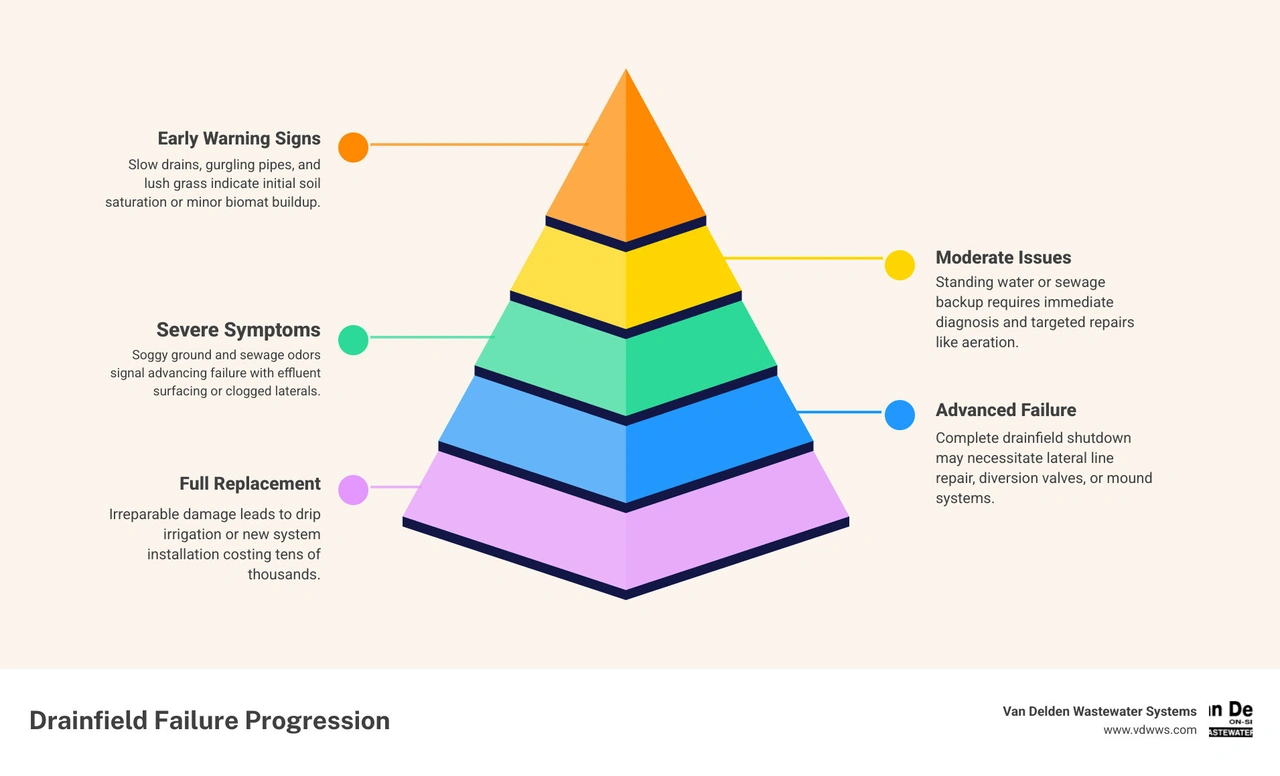
When a septic system struggles, it does not happen in a vacuum. Your yard, your drains, and even your nose will start sending signals. Because the drainfield is buried beneath the surface, many homeowners ignore these clues until sewage actually backs up into their tubs or sinks. However, understanding the progressive stages of Drainfield Failure Signs can save you from a major household emergency.
In the early stages, you might notice subtle shifts in how your home's plumbing behaves. Slow-draining sinks, showers that take a little too long to clear, and strange gurgling noises from your toilets are often the first indicators. This happens because wastewater cannot exit the septic tank efficiently if the drainfield lines are already waterlogged.
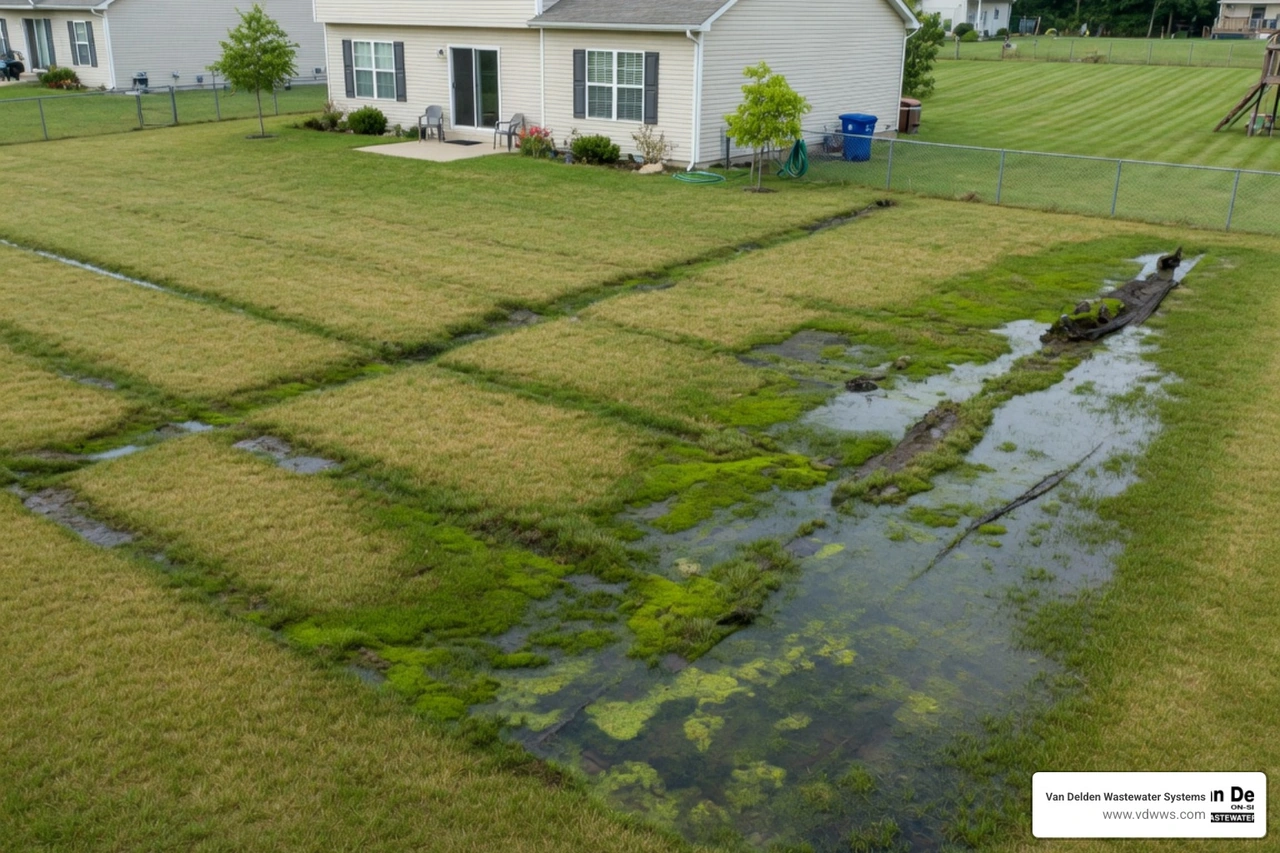
As the problem progresses to the intermediate stage, the signs move outdoors. You might notice patches of grass over the absorption trenches that look remarkably vibrant, thick, and dark green compared to the rest of your lawn. While a beautiful lawn is usually a good thing, in this context, it means the grass is feeding on untreated wastewater that is rising too close to the surface.
If left unaddressed, intermediate issues quickly spiral into advanced Common Septic Drainfield Problems. This is when you will experience spongy, wet soil underfoot even during dry Texas summers, persistent sewage odors wafting through your yard in Shavano Park or Hollywood Park, and eventually, standing pools of gray water or dark, slimy waste. Once the soil reaches its absolute limit of saturation, the wastewater has nowhere to go but backward, leading to a direct sewage backup inside your home.
What Causes a Septic Drainfield to Fail?
To choose the right remedy, we first have to understand what went wrong underground. A drainfield does not simply "quit" without a reason. Typically, failure is caused by one of several common culprits:
Biomat Overgrowth
In every functioning drainfield, a natural layer of anaerobic bacteria called a "biomat" forms along the bottom and sides of the trenches. This biomat is actually a critical part of the filtration process, feeding on organic waste. However, if the system is overloaded with solids or lacks oxygen, this slimy layer grows too thick, creating an impermeable, waterproof barrier. When this happens, wastewater can no longer filter through the soil. Understanding this biological process is key to preventing long-term damage, as detailed in our guide on Understanding Drainfield Biomat Formation.
Soil Compaction
The soil surrounding your drainfield lines needs to remain loose and porous to allow water to percolate. Heavy weight collapses these vital air pockets. Driving vehicles, parking trailers, or even allowing heavy livestock to roam over the absorption area will compact the soil, permanently ruining its ability to drain.
Hydraulic Overloading
Your drainfield is designed to process a specific volume of water per day. If your household exceeds this limit—due to running toilets, dripping faucets, or running multiple heavy loads of laundry in a single day—the soil becomes completely saturated. Without time to rest and dry out, the drainfield essentially drowns.
Root Intrusion
The moisture and nutrient-rich environment of a drainfield is incredibly attractive to nearby plants. The aggressive roots of large trees—such as the beautiful live oaks common in Boerne and Spring Branch—can easily infiltrate perforated drain pipes, block the flow of water, and crack the lines.
Sodium and Chemical Damage
If you use a traditional salt-based water softener, the high concentration of sodium discharged into your septic system can alter the structure of clay-heavy soils. The sodium binds with clay particles, compacting them into a dense, concrete-like layer known as "hardpan." Additionally, pouring harsh chemical drain cleaners down your sink kills the beneficial bacteria in your tank, allowing solid waste to flow directly into the lines. Regular professional maintenance and targeted flushing, as discussed in our resource on Drainfield Cleaning for Septic System Maintenance, can prevent these chemical imbalances from ruining your soil.
How to Diagnose and Address Drainfield Issues
If you suspect your system is failing, guessing is the worst thing you can do. A professional diagnostic process is essential to pinpointing whether the issue is a simple pipe blockage or a completely dead absorption field.
When we inspect a system, we look at several key components. First, we locate the distribution box (or D-box), which is responsible for evenly distributing wastewater among the various lateral lines. If the D-box is tilted, cracked, or clogged, it can send too much water to one single trench while leaving others dry, causing localized failure.
We also perform soil percolation tests and camera inspections. By running a high-resolution sewer camera down the lateral lines, we can see exactly where a pipe might be crushed, clogged with roots, or buried in solid sludge. This precise step-by-step approach is detailed in our guide on How to Diagnose and Fix Drainfield Failures.
Early Drainfield Failure Signs and Repair Options to Consider
If your system's issues are caught in the early stages, you may not need to replace the entire field. There are several highly effective, non-invasive repair methods that can restore proper drainage:
• Physical Aeration (Terralift): This process involves inserting a long probe into the soil around the lateral lines and releasing a blast of pressurized air. This instantly shatters compacted soil and breaks up thick biomat, creating new pathways for water to flow.
• Biological Shock Treatments: Introducing specialized, highly concentrated septic bacteria and enzymes can help digest excess biomat buildup and clear organic clogs without damaging the pipes.
• Lateral Line Repair: If a camera inspection reveals that only one or two sections of pipe have been crushed by a vehicle or penetrated by a tree root, we can perform a targeted repair on just those specific sections.
• Installing Diversion Valves: If your system has a diversion valve, we can temporarily redirect wastewater to a different section of the drainfield. This allows the saturated portion of the yard to completely dry out, naturally breaking down the biomat and restoring soil absorption capacity.
For homeowners in Boerne and surrounding areas, keeping these lines clean is a vital part of preventative care. You can find highly practical tips on this in our resource on Drainfield Cleaning Tips Boerne TX.
Advanced Drainfield Failure Signs and Repair Options for Severe Damage
When a drainfield has reached the end of its natural lifespan, or if years of solid waste accumulation have permanently ruined the surrounding soil, localized repairs will no longer suffice. In these advanced scenarios, a new system design is required:
• Mound Systems: In areas of the Texas Hill Country where the soil is incredibly thin or sits directly on top of solid limestone, a traditional gravity-fed trench system won't work. A mound system constructs an elevated absorption field above the natural grade using specially selected sand and soil to ensure proper filtration before wastewater reaches the groundwater.
• Drip Irrigation Systems: This advanced method uses highly specialized tubes buried just a few inches below the surface to slowly and evenly distribute treated wastewater across a large lawn area. It is highly efficient and excellent for challenging terrains, such as the rocky landscapes of Spring Branch and Bulverde.
• Full Drainfield Replacement: Sometimes, the only solution is to abandon the old, failed field entirely and excavate a brand-new set of trenches in a different area of your property.
To help you understand when a repair is still viable versus when it is time to start fresh, you can consult our detailed resources on Drainfield Replacement Spring Branch TX, When Septic System Repairs May Mean Needing a Totally New System, and Traditional Septic Systems: When to Repair or Replace.
Long-Term Maintenance to Prevent Drainfield Failure
The absolute best way to handle drainfield failure is to make sure it never happens in the first place. Because the soil absorption area is so sensitive, simple daily habits can dramatically extend its operational life.
First and foremost is regular septic tank pumping. For a typical family in San Antonio or Helotes, the tank should be pumped and inspected every 3 to 5 years. This prevents the heavy layer of sludge at the bottom of the tank from rising high enough to escape into the drainfield lines.
Second is water conservation. Installing low-flow showerheads, fixing running toilets immediately, and spreading out water-heavy chores (like laundry) throughout the week instead of doing them all on Saturday will give your drainfield soil the time it needs to process wastewater efficiently.
Lastly, practice smart landscaping. Never plant trees, shrubs, or vegetable gardens over or near your drainfield. Only plant shallow-rooted turf grass, which stabilizes the soil and aids in evaporation without invading the pipes. For a complete local perspective, check out our Drainfield Repair San Antonio TX Guide.
The table below outlines how basic preventative habits directly influence the health and lifespan of your absorption field:
• Pumping every 3–5 years — Direct Benefit to the Drainfield: Keeps solid waste and sludge confined to the tank — Risk of Neglecting This Habit: Solids escape, permanently clogging soil pores
• Spacing out laundry loads — Direct Benefit to the Drainfield: Prevents sudden hydraulic surges and soil drowning — Risk of Neglecting This Habit: Saturated soil, leading to temporary or permanent failure
• Directing gutters away — Direct Benefit to the Drainfield: Keeps rainwater from saturating the drainfield area — Risk of Neglecting This Habit: Excessive surface water prevents wastewater absorption
• Keeping vehicles off the yard — Direct Benefit to the Drainfield: Preserves soil porosity and prevents crushed pipes — Risk of Neglecting This Habit: Compacted soil and broken lateral lines
• Avoiding harsh chemicals — Direct Benefit to the Drainfield: Protects beneficial bacteria that break down biomat — Risk of Neglecting This Habit: Excessive biomat overgrowth, waterproofing the trenches
Frequently Asked Questions About Septic Drainfields
Can a saturated drainfield fix itself?
A saturated drainfield can occasionally appear to "fix itself" during prolonged dry spells or hot summer months when evaporation rates are high. However, this is usually a temporary relief rather than a genuine cure. If the saturation was caused by a temporary hydraulic overload (such as a houseguest visit or a running toilet that has since been repaired), the soil may recover once the water load decreases. But if the saturation is caused by thick biomat buildup, soil compaction, or a high seasonal water table, dry weather will not dissolve the underlying clog. The moment normal water usage resumes, the wet spots and slow drains will return.
How does a failing drainfield affect well water?
A failing drainfield poses a significant threat to groundwater safety. Because the soil's natural filtration system is compromised, untreated wastewater can seep directly down into shallow aquifers. This wastewater carries dangerous pathogens, viruses, bacteria (such as E. coli), and high levels of nitrates. If you or your neighbors rely on a private water well—which is very common in rural communities like Bulverde, Garden Ridge, and Timberwood Park—this contamination can enter your drinking water supply, leading to serious health risks.
Are there financial assistance programs for septic repairs?
Yes, there are several programs designed to help homeowners manage the costs of septic system repairs or replacements. The USDA offers the Single Family Housing Repair Loans & Grants program (also known as the Section 504 program), which provides low-interest loans and grants to low-income homeowners in eligible rural areas. Additionally, local Texas health departments or river authorities occasionally offer clean water funding or low-interest loan programs specifically aimed at protecting local watersheds from failing septic systems.
Conclusion
Your septic drainfield is the most critical—and often the most expensive—component of your home's wastewater management system. Recognizing the early warning signs of failure, from slow-draining sinks to unusually lush patches of lawn, gives you the opportunity to address issues before they turn into major, messy emergencies.
At Van Delden Wastewater Systems, we have been providing honest, high-quality septic solutions to families across the Texas Hill Country since 1937. As a family-owned business, we pride ourselves on our team of background-checked, non-commissioned technicians. We believe in educating our customers rather than upselling them, and we back up every job with detailed service forms and photo documentation so you can see exactly what is happening under your lawn.
Whether you are in San Antonio, Boerne, Spring Branch, or Bulverde, do not wait for a wet yard or a backed-up sink to take action.
Schedule your septic tank service today and let our family take care of yours.