What the Conventional vs Aerobic Treatment Quality Comparison Actually Means for Your Property
When homeowners start researching the conventional vs aerobic treatment quality comparison, the core question is simple: which system cleans wastewater better, and does that difference actually matter for your property?
Here is the short answer:
• Treatment process — Conventional System: Anaerobic (no oxygen) — Aerobic System: Aerobic (oxygen-injected)
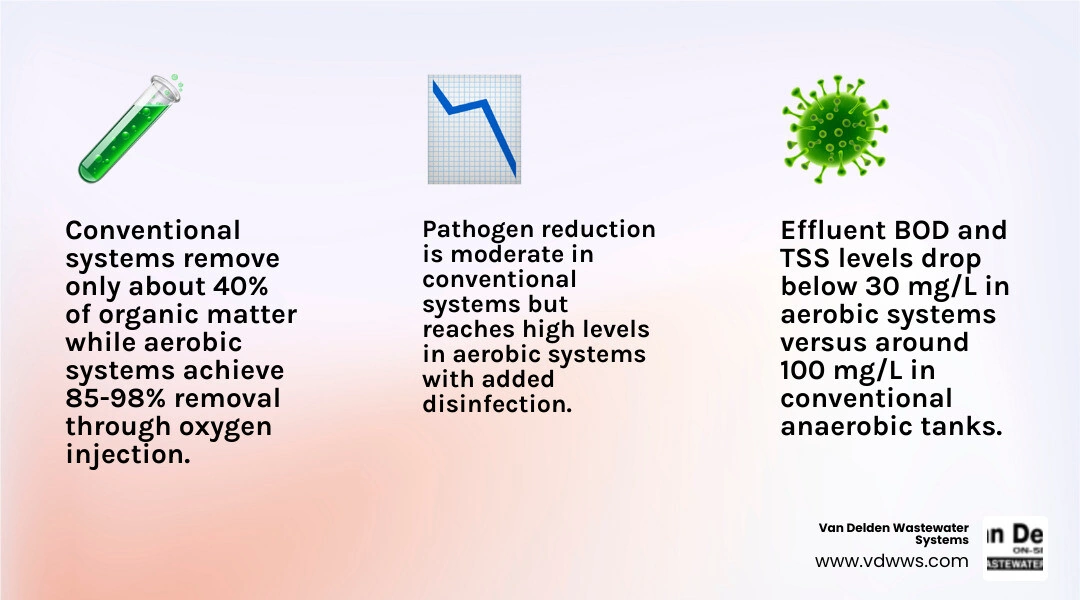
• Organic matter removal — Conventional System: ~40% — Aerobic System: 85–98%
• BOD/TSS in effluent — Conventional System: ~100 mg/L — Aerobic System: Under 30 mg/L
• Pathogen reduction — Conventional System: Moderate — Aerobic System: High (with disinfection)
• Drain field size — Conventional System: Standard — Aerobic System: Up to 50% smaller
• Power required — Conventional System: No — Aerobic System: Yes
• Maintenance intensity — Conventional System: Low — Aerobic System: Higher
Conventional septic systems treat wastewater through natural anaerobic bacterial action in a tank, then rely on the soil in a drain field to handle most of the actual filtration. Aerobic systems inject oxygen into the treatment process, supercharging bacterial activity and producing a far cleaner effluent before it ever reaches the ground.
The gap in treatment quality between the two systems is significant — and in certain site conditions, regulatory environments, or environmentally sensitive locations, that gap is the deciding factor in which system you are even permitted to install.
For a plain-language breakdown of the terminology involved, the Septic System Jargon Defined: Standard vs. Aerobic Systems guide is a helpful starting point before diving deeper into the comparison.
Relevant articles related to conventional vs aerobic treatment quality comparison:
• conventional vs aerobic septic system comparison
• cost difference conventional vs aerobic system
To truly understand the conventional vs aerobic treatment quality comparison, we have to look at the microscopic level. The fundamental difference between these two systems comes down to a single element: oxygen.
In a conventional septic system, the treatment process inside the tank is entirely anaerobic, meaning it occurs in the complete absence of oxygen. When wastewater enters a conventional septic tank, solids settle to the bottom as sludge, while oils and grease float to the top as scum. The liquid in the middle, known as clarified effluent, is then discharged into the drain field.
The anaerobic bacteria living inside a conventional tank are slow-moving and relatively inefficient. They break down organic matter at a sluggish pace, achieving roughly a 40% waste breakdown inside the tank. Consequently, the effluent leaving a conventional tank still contains a heavy load of organic waste, suspended solids, and pathogens. The real heavy lifting of purification is left to the soil beneath your drain field.
Aerobic systems, on the other hand, actively introduce oxygen into the wastewater using a mechanical air compressor or blower. This process typically occurs in a specialized aeration chamber. By constantly bubbling oxygen through the liquid, we create a highly favorable environment for aerobic bacteria.
These oxygen-loving microbes are incredibly active and reproduce rapidly. Aerobic bacteria are roughly 30% to 50% more effective at breaking down organic waste than their anaerobic counterparts. They consume organic pollutants at a much faster rate, converting them into carbon dioxide, water, and harmless biological byproducts.
Additionally, aerobic processes are highly efficient at managing biomass. Aerobic systems produce 60% to 80% less excess biomass per unit of chemical oxygen demand (COD) removed compared to anaerobic digestion. This means that the bacteria consume the waste so thoroughly that very little leftover biological sludge is generated in the process.
For a comprehensive head-to-head breakdown of how these mechanical and biological differences play out across different property types, explore our Aerobic vs. Conventional Septic System Comparison.
Oxygen-Rich Environments and the Primary Conventional vs Aerobic Treatment Quality Comparison
Inside the aeration chamber of an aerobic system, we are essentially running a miniature, highly optimized municipal wastewater treatment plant. The continuous infusion of oxygen keeps the bacterial colonies suspended in the liquid, ensuring they are constantly in contact with fresh organic matter.
This rapid treatment speed prevents the wastewater from stagnating and developing the foul, sulfurous odors associated with anaerobic decomposition. Because the bacteria are working in an oxygen-rich environment, they digest complex organic compounds, starches, and proteins in a fraction of the time it takes a conventional system.
By the time the wastewater leaves the aeration chamber and passes through a settling clarifier, it has undergone a dramatic transformation. The resulting liquid is remarkably clear, virtually odorless, and free of the heavy organic loading that characterizes conventional septic tank output.
To learn more about how this rapid biological digestion translates into real-world benefits for your property, read about the 4 Advantages of Aerobic Septic Systems.
Effluent Quality Metrics: BOD, TSS, and Pathogen Reduction
When engineers and environmental regulators evaluate septic systems, they do not rely on guesswork. They look at specific, quantifiable water quality metrics. The two primary benchmarks used to measure wastewater strength are Biochemical Oxygen Demand (BOD) and Total Suspended Solids (TSS).
• Biochemical Oxygen Demand (BOD) measures the amount of dissolved oxygen needed by aerobic biological organisms to break down the organic material present in a given water sample. A high BOD indicates a high concentration of organic pollution.
• Total Suspended Solids (TSS) measures the dry weight of particles trapped by a filter, indicating how many fine organic and inorganic solid particles remain suspended in the water.
In a conventional system, the effluent discharged to the drain field is highly concentrated, typically carrying BOD and TSS levels of around 100 mg/L or higher. In contrast, aerobic systems achieve an impressive 85% to 98% removal of organic matter and solids under typical operating conditions. This outstanding efficiency consistently produces highly treated effluent with less than 30 mg/L of both BOD and TSS.
To put these numbers into perspective, let's look at a direct comparison:
• BOD Reduction — Raw Sewage: 0% — Conventional Effluent: ~30% to 40% — Aerobic Effluent: 85% to 98%
• Typical BOD Level — Raw Sewage: 200–300 mg/L — Conventional Effluent: ~100–150 mg/L — Aerobic Effluent: < 30 mg/L
• TSS Reduction — Raw Sewage: 0% — Conventional Effluent: ~30% to 40% — Aerobic Effluent: 85% to 98%
• Typical TSS Level — Raw Sewage: 200–300 mg/L — Conventional Effluent: ~100–150 mg/L — Aerobic Effluent: < 30 mg/L
• Effluent Appearance — Raw Sewage: Turbid / Dark — Conventional Effluent: Cloudy / Grey — Aerobic Effluent: Clear / Odorless
For a detailed look at how these metrics impact system design and longevity in our local region, refer to our Conventional vs. Aerobic Septic Guide 2026.
Analyzing BOD and TSS in a Conventional vs Aerobic Treatment Quality Comparison
The difference between effluent with 100 mg/L of BOD/TSS and effluent with under 30 mg/L is night and day. The 30 mg/L threshold is highly significant because it represents the standard for secondary-treated wastewater—the same standard required for municipal sewage treatment plants before they can discharge treated water back into nature.
When high-BOD, high-TSS effluent from a conventional system is discharged into a drain field, it carries a heavy load of fine solids and dissolved sugars. As the anaerobic bacteria in the soil attempt to break down this material, they form a thick, jelly-like layer known as a biomat.
While a thin biomat is normal and helps filter out pathogens, an excessive accumulation of solids causes the biomat to grow too thick, clogging the soil pores. Once the soil is clogged, the wastewater can no longer percolate downward, leading to ponding on the surface, system backups, and premature drain field failure.
Because aerobic systems discharge effluent that is already highly purified, the risk of biomat clogging is virtually eliminated, preserving the receiving soil for decades.
Pathogen Reduction and Disinfection Capabilities
Beyond organic particles and solids, wastewater contains millions of microscopic pathogens, including harmful bacteria, viruses, and parasites that pose a direct threat to public health.
Conventional septic tanks provide very little pathogen reduction on their own. They rely almost entirely on the physical filtration and biological action of the soil in the drain field to remove these pathogens before they can reach groundwater tables. If your property has thin soil or sits over fractured limestone—a very common scenario in Hill Country areas like Boerne and Spring Branch—pathogens can easily slip through the soil untreated.
Aerobic systems provide a major advantage in pathogen reduction. The highly active aerobic environment is hostile to many anaerobic pathogens, naturally reducing their numbers by 90% or more during the biological treatment phase.
Furthermore, because aerobic effluent is so clear and free of suspended solids, it can be easily disinfected. Most aerobic systems installed in our service areas, such as Helotes or Bulverde, feature a final disinfection stage. This is typically a tablet chlorinator or a UV disinfection unit. By the time the water is dispersed—often via surface sprinklers—it has been thoroughly sanitized, making it safe for surface lawn irrigation and drastically reducing the risk of environmental contamination.
Nutrient Removal and Environmental Impact of Treated Effluent
While reducing BOD, TSS, and pathogens is vital for immediate health and safety, long-term environmental protection requires managing nutrients—specifically nitrogen and phosphorus.
When human waste breaks down, it releases high concentrations of ammonia and organic nitrogen. In a conventional anaerobic septic tank, this nitrogen remains largely untreated in the form of ammonium. When discharged into a conventional drain field, the ammonium converts to nitrate.
Nitrate is highly soluble in water and does not bind to soil particles. As a result, it easily leaches down through the soil, posing a significant threat to local groundwater supplies. High nitrate levels in drinking water wells can cause serious health issues, and when nitrates enter nearby creeks, rivers, or lakes, they fuel rapid algae growth, depleting dissolved oxygen and harming aquatic life.
Aerobic systems are inherently much better at managing nitrogen. The oxygen-rich environment inside the aeration chamber facilitates a natural biological process called nitrification, where specialized bacteria convert harmful ammonia into nitrate.
Many advanced aerobic systems are designed to cycle through brief periods of aeration and non-aeration. During the non-aeration (anoxic) phases, different groups of bacteria perform denitrification, converting the nitrate into harmless nitrogen gas, which safely vents into the atmosphere. This process can reduce the total nitrogen load in the effluent by 50% to 80%, providing a level of groundwater protection that conventional systems simply cannot match.
For properties located near sensitive water bodies or over critical recharge zones, this environmental safeguard is incredibly important. You can explore a deeper analysis of these environmental benefits in our guide, What’s Better: Conventional Septic or Aerobic?.
How High-Quality Effluent Affects Drain Field Sizing and Soil Requirements
The exceptional treatment quality of an aerobic system does not just protect the environment; it also directly impacts the physical layout and footprint of your septic system.
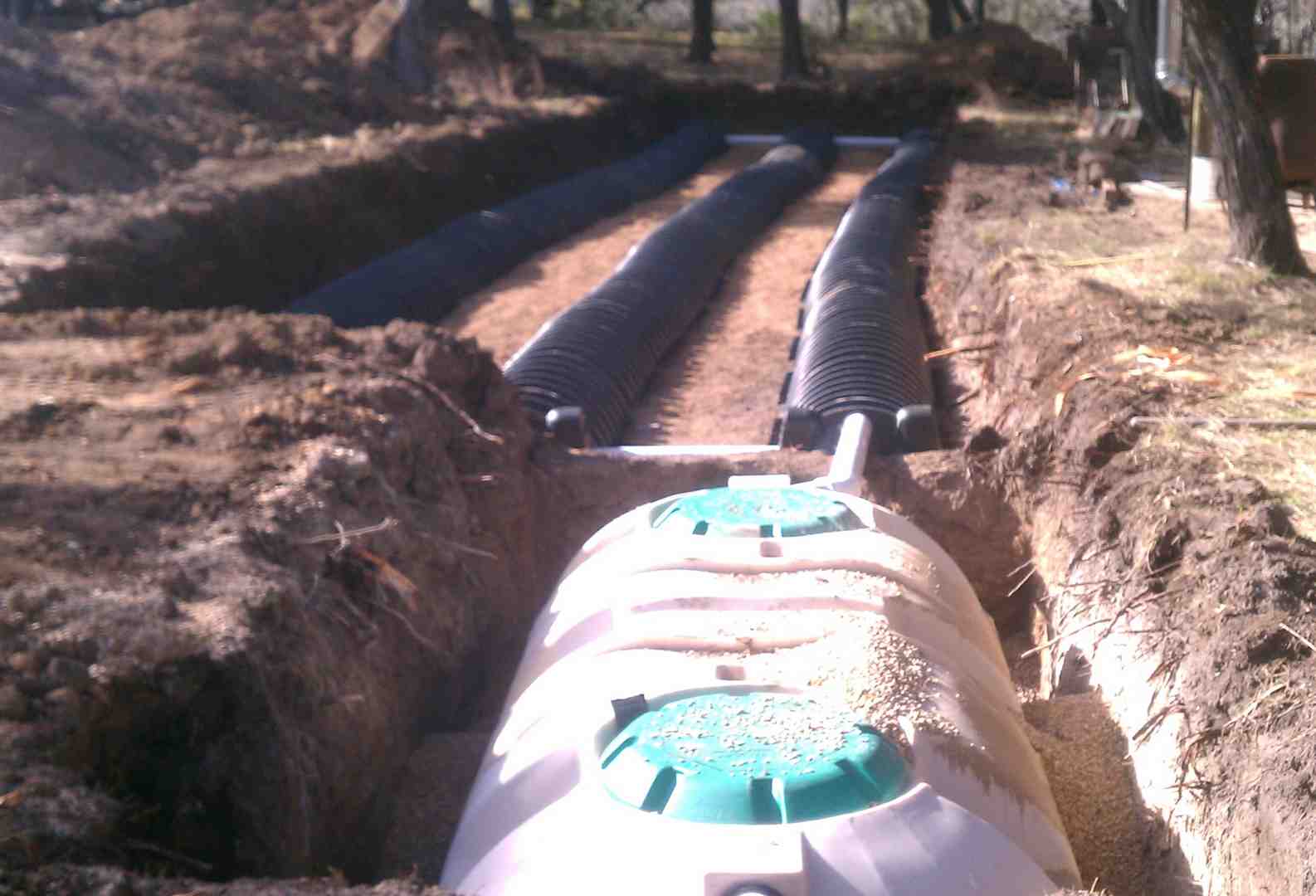
Because conventional systems discharge highly concentrated effluent, they require a large, deep layer of highly absorbent soil to complete the purification process. In areas with poor soil drainage, heavy clay, or shallow rocky ground, a conventional drain field must be incredibly large to distribute the wastewater safely.
Furthermore, Texas regulations (TCEQ) restrict where conventional systems can be installed based on soil classification. If your property consists of dense clay (Type IV soil) or sits on shallow limestone, a conventional gravity-fed drain field may not be permitted at all because the soil cannot absorb or filter the wastewater effectively.
Aerobic systems completely change this dynamic. Because the effluent leaving the aerobic unit is already highly treated and clear, the soil is no longer required to do the heavy lifting of biological purification.
This high-quality effluent allows for several major design advantages:
• Reduced Footprint: Aerobic systems can reduce the required size of the drain field by as much as half compared to conventional systems. This is a game-changer for smaller lots or properties with limited usable yard space.
• Flexible Dispersal Methods: Because the water is clear and disinfected, we do not have to rely on traditional gravity-fed gravel trenches. Aerobic systems can utilize advanced dispersal methods, such as surface spray irrigation (sprinklers) or subsurface drip distribution.
• Compatibility with Poor Soils: Surface spray and drip systems distribute treated water evenly over the surface or shallow soil layers, allowing the water to evaporate or be absorbed by lawn grass. This makes aerobic systems highly effective in heavy clay soils or rocky areas where conventional systems would fail.
Operational Demands and Maintenance Profiles
While the conventional vs aerobic treatment quality comparison clearly highlights the performance superiority of aerobic systems, that high-performance output comes with a trade-off in terms of operational demands and ongoing maintenance.
Conventional septic systems are passive, gravity-fed designs. They have no moving parts, require absolutely no electricity to operate, and can function perfectly during extended power outages.
Maintenance for a conventional system is incredibly simple:
• Have the tank professionally pumped every 3 to 5 years to remove accumulated solids.
• Clean the effluent filter (if installed) annually.
• Keep vehicles and heavy equipment off the drain field to prevent soil compaction.
Aerobic systems are mechanical, dynamic systems. They are essentially small machines running 24/7 on your property, which introduces several ongoing operational requirements:
• Electricity Consumption: The air compressor (blower) and discharge pump require continuous electricity. While modern compressors are highly efficient, homeowners should expect a modest increase in their annual electric bill.
• Mechanical Components: Aerobic systems rely on mechanical parts, including the air compressor, submersible pumps, float switches, and control panels with alarm systems. These mechanical components operate in a harsh environment and will eventually require repair or replacement, typically every 5 to 10 years.
• Routine Inspections and Service Contracts: Because aerobic systems are more complex and present a higher risk of malfunction if neglected, regulatory authorities require regular oversight. In Texas, owners of aerobic systems are typically required by law to maintain an active maintenance contract with a licensed provider, requiring three professional inspections per year.
• Disinfection Maintenance: If your aerobic system uses a tablet chlorinator for surface spray dispersal, you must regularly add approved chlorine tablets (calcium hypochlorite) to the system to ensure the discharged water remains properly sanitized.
Given the higher installation, electrical, and maintenance demands of an aerobic system, you might wonder: when is the higher treatment quality of an aerobic system actually necessary, and when is it worth the extra commitment?
For many properties in our local service areas—including San Antonio, Boerne, Bulverde, Fair Oaks Ranch, and Spring Branch—the decision is dictated by site constraints and local regulations rather than personal preference.
An aerobic system is generally necessary or highly recommended under the following conditions:
• Restrictive Soil Profiles: If a professional soil evaluation reveals dense clay, highly compacted soils, or extremely shallow soil over solid limestone, a conventional system cannot function. In these rocky Hill Country environments, an aerobic system is often the only viable, permittable option.
• High Groundwater Tables: If your property has a high water table or is prone to seasonal flooding, a conventional drain field will saturated, causing untreated sewage to back up or contaminate groundwater. Aerobic systems treat the water to high standards before dispersal, mitigating this risk.
• Small Lot Sizes and Tight Setbacks: If you are building on a small lot or have limited space due to property lines, water wells, swimming pools, or steep slopes, the compact footprint of an aerobic system with spray or drip irrigation is often the only way to meet strict regulatory setback requirements.
• Proximity to Sensitive Watersheds: In environmentally protected zones, such as the Edwards Aquifer recharge zone, local regulations enforce incredibly strict water quality standards. The advanced nutrient and pathogen reduction of an aerobic system is essential to protect these vital water resources.
If your property has deep, well-draining, sandy loam soil, plenty of open space, and no regulatory restrictions, a conventional system remains an excellent, highly reliable, and cost-effective choice. However, when site limitations are present, the superior treatment quality of an aerobic system makes otherwise unbuildable lots completely viable.
Frequently Asked Questions About Wastewater Treatment Quality
Which system is better for properties with poor soil drainage?
An aerobic system is vastly superior for properties with poor soil drainage or heavy clay. Conventional systems rely entirely on the soil's natural ability to absorb and filter large volumes of concentrated wastewater. In heavy clay, the water cannot drain away quickly enough, leading to system failure.
Because aerobic systems treat the water to a very high standard inside the tanks, they can utilize alternative dispersal methods like surface spray sprinklers or shallow drip irrigation. This allows the treated water to be absorbed by lawn grass or evaporate into the air, completely bypassing the need for deep soil drainage.
How does a power outage affect aerobic treatment quality?
During a power outage, the air compressor and pumps in an aerobic system will stop running. Without a continuous supply of forced oxygen, the highly active aerobic bacteria inside the aeration chamber will begin to run out of oxygen within a few hours.
If the outage is short (under 24 hours), the system will experience minimal disruption, and the bacterial colonies will quickly recover once power is restored. During an extended outage, the system will temporarily function like a conventional anaerobic septic tank.
Because the discharge pump cannot run without electricity, wastewater will accumulate in the tanks. It is highly recommended to minimize water usage during a power outage to prevent the tanks from overfilling.
Do aerobic systems produce less odor than conventional systems?
Yes, when operating correctly, a well-maintained aerobic system produces virtually no odor. Odor in wastewater systems is caused by gases released during anaerobic decomposition (such as hydrogen sulfide).
Because aerobic systems utilize continuous oxygen to break down waste rapidly and completely, these smelly gases are not produced. If you notice a strong, persistent sewer odor coming from an aerobic system, it is usually a clear warning sign that the air compressor has failed, a filter is clogged, or the system has lost power, causing it to revert to anaerobic conditions.
Conclusion
Choosing between a conventional and an aerobic system is one of the most important decisions you will make for your property's long-term value, functionality, and environmental safety. While conventional systems offer unmatched simplicity and passive reliability, aerobic systems provide a quantum leap in wastewater treatment quality, transforming raw sewage into clear, disinfected water that protects our precious Texas Hill Country environment.
At Van Delden Wastewater Systems, we have been guiding homeowners through these decisions since 1937. As a third-generation, family-owned business, we pride ourselves on providing honest, clear advice without high-pressure sales tactics. Our background-checked, non-commissioned technicians focus on educating you about your options, performing meticulous site evaluations, and delivering top-tier installations backed by detailed service forms and photo documentation.
Whether you are building a new home in Boerne, upgrading an older system in Bulverde, or navigating tight lot requirements in San Antonio, we are here to help you design the perfect septic solution for your unique property.
Schedule a professional septic consultation with our experienced team today, and let us help you find the right system for your home and budget.