
How Deep Is a Septic Tank Buried in the Texas Hill Country?
Generic online advice assumes septic tanks are buried deep in soft soil, but Texas Hill Country limestone changes everything. See why your system may sit much shallower.
How does an aerobic septic system work is a question many Texas homeowners face when a conventional septic system isn't an option for their property. The short answer: an aerobic system uses oxygen and aerobic bacteria to break down wastewater through multiple treatment stages — producing significantly cleaner effluent than a traditional anaerobic tank.
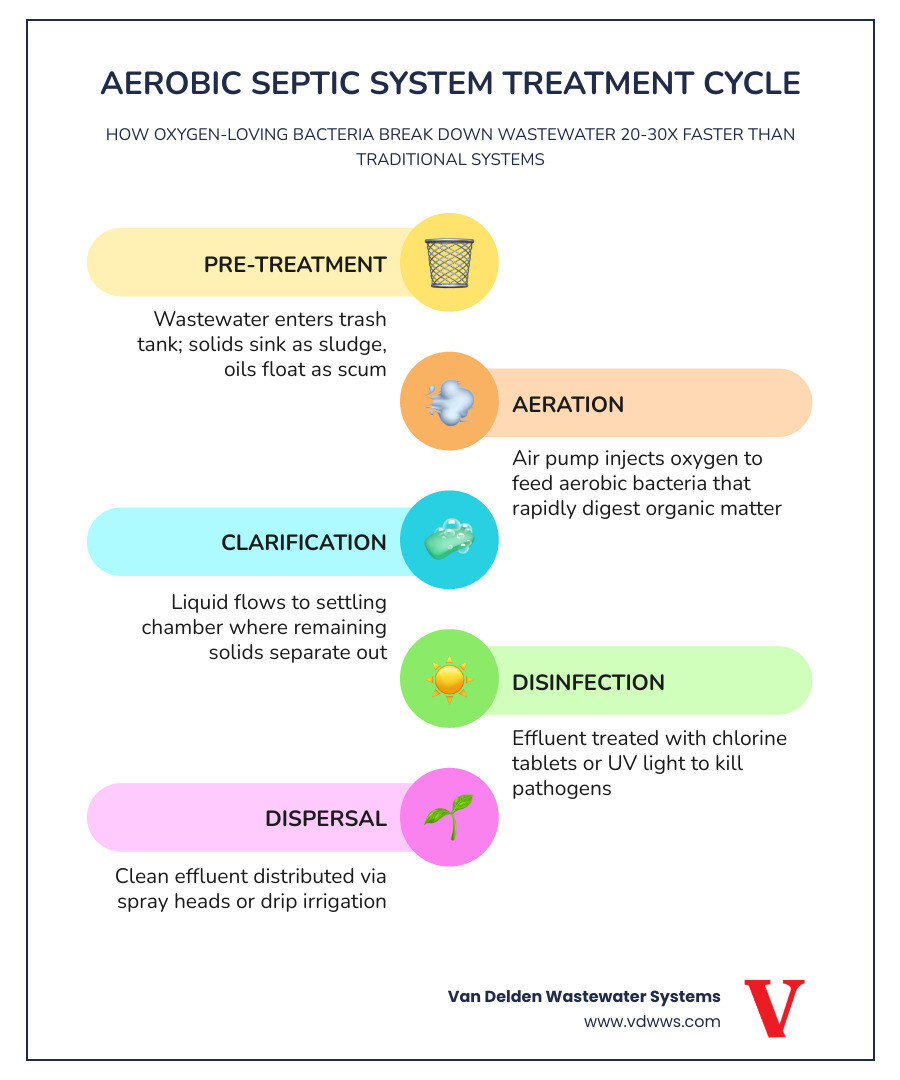
Here is a quick overview of how the process works:
Aerobic systems remove 85 to 98 percent of organic matter and solids from wastewater — far more than a standard septic tank manages on its own. That level of treatment is why they are required in areas with dense clay soils, high water tables, smaller lots, or proximity to sensitive water bodies.
If your property has been flagged by the Texas Commission on Environmental Quality (TCEQ) as unsuitable for a conventional system, understanding how an aerobic system works is the first step toward making the right decision for your home.
At its heart, an Aerobic Treatment Unit (ATU) is essentially a scaled-down version of a municipal sewage plant right in your backyard. While traditional systems rely on anaerobic bacteria (which live without oxygen), aerobic systems introduce dissolved oxygen into the wastewater. This oxygen acts like high-octane fuel for aerobic bacteria, allowing them to thrive and consume organic matter much more efficiently.
In the industry, we often refer to these as "extended treatment package systems." Because they use mechanical parts to "supercharge" the biological process, they must meet strict standards. Most residential units in Texas are certified under NSF Standard 40. This is a benchmark performance certification that ensures the unit can treat residential wastewater to a "Class I" level. A Class I certification means the system is capable of producing effluent that is clear and odorless, making it safe for various surface dispersal methods.
There are 4 Advantages Of Aerobic Septic Systems that typically stand out: they can be installed in poor soil, they require a smaller footprint, they protect groundwater better, and they provide a higher level of treatment for the environment. For a deeper dive into the technical nuances, you can explore our guide on Aerobic Systems Decoded.
To truly grasp the answer to "how does an aerobic septic system work," you have to follow the water. It isn't just one big tank; it is a series of controlled environments designed to strip away pollutants stage by stage. Most systems we install in areas like Boerne or San Antonio consist of either three separate tanks or a single large tank divided into three distinct compartments.
The goal of this multi-stage setup is to produce high-quality effluent. By the time the water leaves the final tank, it has undergone a dramatic transformation. Some systems even include flow equalization, which is a fancy way of saying the system holds back large "slugs" of water (like when you do four loads of laundry in a row) and releases them into the treatment stages slowly so the bacteria aren't overwhelmed. You can learn more about the specifics of this flow in our article on How Aerobic Septic Systems Work.
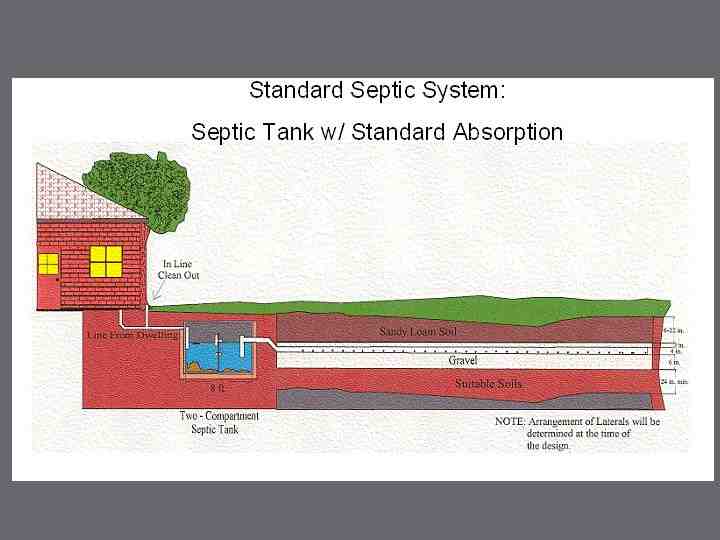
The first stop for everything that goes down your drain is the pre-treatment tank, often called the "trash tank." This stage functions very similarly to Common Septic Systems Standard Septic Systems.
Gravity is the worker here. As wastewater enters, the heavy solids sink to the bottom to form a layer of sludge. Lighter materials, like fats, oils, and greases, float to the top to form a scum layer. The relatively clear liquid in the middle—the "gray water"—is what moves forward to the next stage. This tank is vital because it catches non-biodegradable items (trash) that could damage the mechanical parts in the next chamber.
This is where the magic happens. The aeration chamber is the "engine room" of the system. An electric air pump (or blower) runs continuously, forcing air through diffusers located at the bottom of the tank. This creates a constant stream of bubbles, ensuring the dissolved oxygen concentration stays above 1 milligram per liter (preferably 2 mg/L).
This oxygen-rich environment allows billions of aerobic bacteria to grow. These microbes are much more aggressive than their anaerobic cousins; they consume organic waste 20 to 30 times faster. As they eat, they convert pollutants into gases, water, and new bacterial cells. This vigorous biological activity is explained further in our breakdown of the Common Septic Systems Aerobic System.
After the aeration chamber, the water flows into a settling chamber, or clarifier. Here, the water becomes still, allowing any remaining bacterial clusters (called "floc") to settle back to the bottom. In many designs, these settled solids are actually piped back to the aeration chamber to be "re-treated," ensuring nothing is wasted.
The final step before the water leaves the system is disinfection. Because the water might be sprayed on the surface of your lawn, it must be free of harmful pathogens. Most systems use a chlorinator, where the water passes over chlorine tablets. Some modern systems use UV disinfection, which kills bacteria using ultraviolet light. Once disinfected, the water is stored in a pump tank until it is ready for dispersal, a process often paired with an Aerobic System With Spray Irrigation.
When comparing Whats Better Conventional Septic Or Aerobic, it really comes down to your property's needs and your maintenance preferences. While we provide both, the differences in efficiency are stark.
| Feature | Traditional (Anaerobic) | Aerobic System (ATU) |
|---|---|---|
| Treatment Mechanism | Bacteria without oxygen | Oxygen-fed bacteria |
| BOD Removal | 30% – 40% | 85% – 98% |
| Treatment Speed | Slow | 20x – 30x Faster |
| Power Required | None (usually) | Continuous electricity |
| Drain Field Size | 100% (Standard) | 30% – 50% Smaller |
| Effluent Quality | High in organic matter | Near-clear water |
As you can see, the aerobic system is a much more powerful "digester." However, that power comes with the need for electricity and mechanical parts that require regular check-ups. To help clear up any confusion between the two, we’ve put together a guide on Septic System Jargon Defined Standard Vs Aerobic Systems.
In many parts of Texas—especially in areas like Bulverde, Spring Branch, and the rocky Hill Country—mother nature doesn't always provide the best soil for traditional septic drain fields. There are specific scenarios When And Why To Replace A Standard System With An Aerobic System:
Once the water is treated and disinfected, it has to go somewhere. In our service areas like San Antonio and Helotes, two methods are most common.
Spray Irrigation uses specially designed sprinkler heads to distribute the treated water over a designated "spray field" (usually your lawn). These systems often have a timer to only spray at night.
Drip Irrigation, on the other hand, uses a network of tubes buried about 6 to 12 inches underground. This is a very efficient way to reuse the water for your landscape without the "mist" of a spray system. You can find more details on this in our FAQ on Aerobic System With Drip Irrigation.
Because an aerobic system is a mechanical device, it isn't "set it and forget it." In Texas, the law actually requires homeowners to have a maintenance contract with a licensed provider. We perform quarterly inspections to ensure the air pump is humming, the alarms are functional, and the disinfection levels are correct.
One of the most important tests we perform is the 30-minute settleability test. We take a sample from the aeration chamber and let it sit for half an hour. This tells us if the "microbial city" in your tank is healthy or if the solids have built up to a point where the tank needs to be pumped.
Common Issues And Solutions With Aerobic Systems often involve the air pump. These pumps draw about 40 to 100 watts and run 24/7. Like any motor, they eventually wear out (typically lasting 3 to 7 years) and need replacement to keep the bacteria alive.
If a system is working correctly, it should not have a foul odor. Because the process is "aerobic," the byproducts are mostly odorless gases like carbon dioxide. If you notice a "rotten egg" smell, it usually means the air pump has failed or the bacteria have been killed off by harsh chemicals or bleach.
The concrete or fiberglass tanks themselves can last 30 to 50 years or more. However, the mechanical components—the air pump, the sprinkler pump, and the control panel—have shorter lifespans. With regular maintenance and timely repairs, an aerobic system can easily serve a home for decades.
When the power goes out, the air pump stops. Without a fresh supply of oxygen, the aerobic bacteria will eventually start to die off (usually after 4 to 6 hours). Additionally, the pump that sends water to your sprinklers won't work. During an outage, it is vital to drastically reduce water usage to prevent the tanks from overflowing.
Understanding how does an aerobic septic system work is essential for any homeowner who wants a reliable, environmentally friendly way to manage wastewater on a challenging property. From the initial separation in the trash tank to the high-speed digestion in the aeration chamber, these systems are marvels of modern engineering.
At Van Delden Wastewater Systems, we have been a family-owned business since 1937. We pride ourselves on providing honest, professional service across San Antonio, Boerne, and the surrounding Texas Hill Country. Our technicians are non-commissioned and background-checked, focusing on educating you about your system rather than just selling parts.
Whether you are in Fair Oaks Ranch, Garden Ridge, or Timberwood Park, we are here to ensure your system stays in peak condition. Schedule your aerobic system maintenance with us today and experience the peace of mind that comes with nearly 90 years of expertise.

Peter was personable, professional and thorough. Highly recommend Van Delden. You might be able to find a cheaper company but not better!
On time. 100% professional, knowledgeable, and courteous. Very helpful and straightforward. That is the bar all businesses should strive for.
It has been a pleasure working with your company. Not only did y’all communicate very well but your workers were always polite! Thank you!
“I thank Van Delden for such prompt service. Honest people are hard to come by these days. I will certainly recommend Van Delden to anyone! Jesse is an upstanding young man and very nice to talk to. I thank everyone at Van Delden for taking such good care of me.”
This is just a note to thank you for explaining the problem with my system. You didn’t have to be so kind and I appreciate your good business ethics and time spent. In the future you will have mine in return!