Why Resetting Your Septic Alarm Won't Fix a Failing Effluent Pump
Muting a buzzing septic alarm stops the noise, but it doesn't pause the wastewater filling your tank. Understand what this critical warning means before a total sewage backup occurs.
Spring maintenance to prevent summer failures is one of the most important things a Texas homeowner can do before the heat arrives. Here's what that looks like in practice:
Quick Answer: Key Spring Maintenance Tasks to Prevent Summer Failures
Most homeowners don't think about their HVAC or septic system until something goes wrong — usually on the hottest day of the year, when technicians are booked solid and emergency rates are at their highest. Industry data consistently shows that the vast majority of summer system breakdowns are preventable with simple spring checks. A little attention in April can save you days of discomfort, a long wait for service, and a repair bill that's far larger than it needed to be.
At Van Delden Wastewater Systems, we see this pattern every summer in the Texas Hill Country and surrounding areas — systems that were one spring inspection away from running smoothly all season long.
As we move through April 2026, the transition from mild spring days to the intense Texas summer heat is just around the corner. Proactive maintenance isn't just a suggestion; it’s a strategy for home preservation.
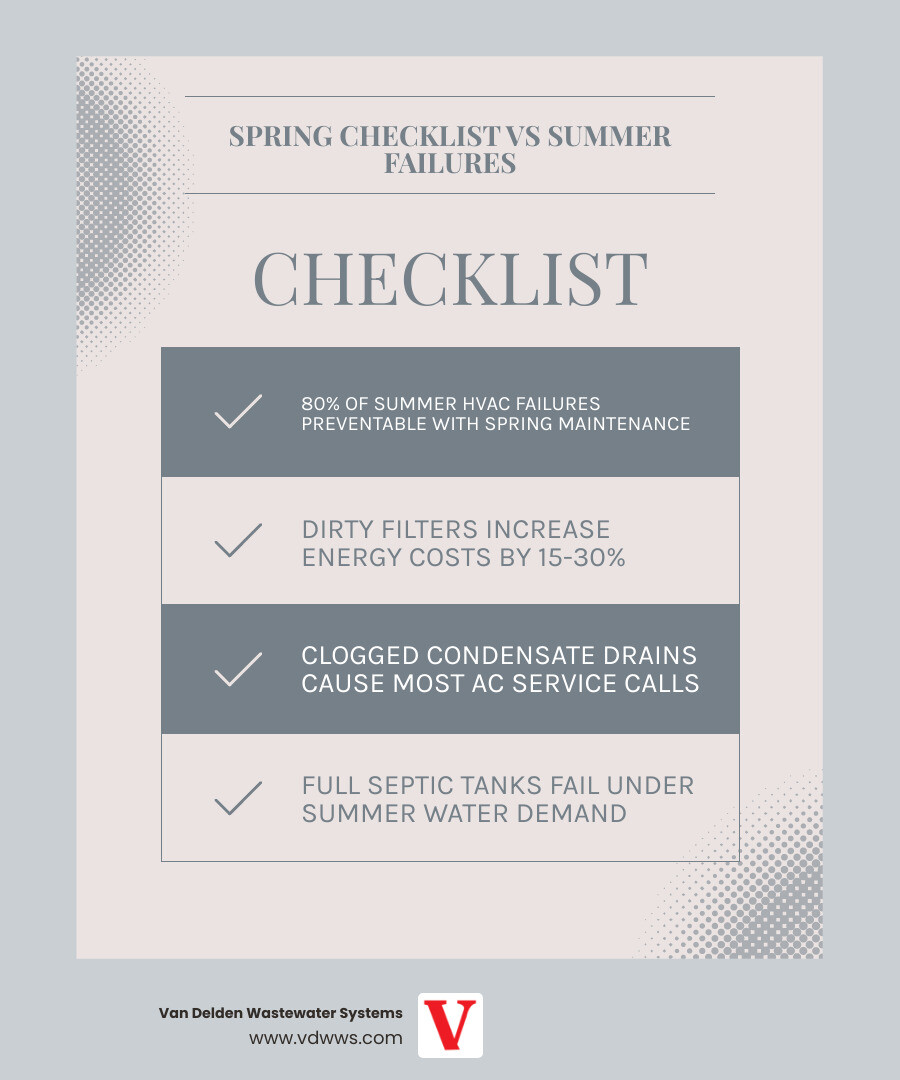
The primary benefit of spring maintenance to prevent summer failures is energy efficiency. When your HVAC system is clean and your septic system is flowing freely, they don't have to work nearly as hard. In fact, regular maintenance can improve HVAC efficiency by up to 15%. Conversely, a system struggling with a dirty filter or a clogged drain line can see energy costs spike by 15% to 30%.
Furthermore, system longevity is at stake. A well-maintained HVAC system can last 15 to 20 years, whereas a neglected one may fail prematurely, leaving you with a massive replacement project years earlier than expected. The same logic applies to your wastewater system. Don't Forget to Spring Clean Your Septic Tank because summer often brings more guests, more laundry, and higher water usage that can overwhelm a system already struggling with winter sludge buildup.
Finally, there is the matter of indoor air quality and emergency prevention. Spring is the time to clear out the dust, pollen, and mold spores that accumulated during the winter. By handling these tasks now, you avoid the "summer rush." During peak heat waves in Texas, emergency repair wait times can stretch from two to seven days. By acting in the spring, you ensure your family stays cool and your home remains sanitary when the thermometer hits triple digits.
To ensure your home is ready for the long haul, we recommend a dual-focus approach. Your air conditioning and your septic system are the two hardest-working components of a Texas home.
When it comes to your AC, the outdoor unit is your first line of defense. The condenser coils need to be free of dirt and debris to release heat effectively. If these coils are dirty, the system loses 15% to 30% of its efficiency, which can lead to frozen coils and compressor damage. A professional tune-up will also involve checking refrigerant levels and tightening electrical connections—loose wires actually account for about 30% of all AC failures.
On the wastewater side, Septic System Checks Before Spring Begins are vital. We often tell our neighbors in Boerne and San Antonio that The #1 Cause of Septic System Failure is simple neglect. If you haven't had your tank pumped in three to five years, the solids (sludge) can reach a level where they begin to exit the tank and enter your drain field. This causes irreparable damage. Spring Cleaning Don't Forget About Your Septic Tank to ensure the tank has the capacity to handle the increased "load" that summer activities bring.
While professional service is essential, there are several tasks you can handle yourself to keep things running smoothly:
Your septic system requires a different kind of vigilance. The goal of spring septic maintenance is to protect the drain field—the most expensive part of your system.
Drainfield Cleaning Tips Boerne TX often focus on what not to do. For instance, How Excessive Water Use Affects Drainfield is a major concern. If you use too much water in a short period (like doing five loads of laundry on a Saturday), you can "flood" the drain field, preventing it from treating wastewater properly.
If you notice slow drains throughout the house or gurgling sounds in your pipes, it’s time to call in the experts. If you find yourself asking, "I Think I Have a Clogged Leach Field Who Can I Call for Service in the Spring Branch Area," the answer is to find a licensed professional who can perform a thorough inspection before the soil becomes baked hard by the summer sun.
Homeowners in areas like Fair Oaks Ranch, Spring Branch, and Helotes face unique challenges. Unlike northern states where AC units might run for three months, Texas air conditioners often run for six to eight months continuously. This extended runtime accelerates wear and tear significantly.
Oak pollen season is another local hurdle. This fine yellow dust can coat your outdoor condenser coils like a blanket, suffocating the system. Furthermore, our high humidity means your AC isn't just cooling the air; it's removing massive amounts of water. A typical Texas AC unit produces 5 to 20 gallons of condensate daily. If your drain line is even slightly restricted by algae or dust, that water will back up, potentially causing thousands of dollars in water damage to your ceilings or flooring.
To help you plan, consider this comparison of timing:
| Feature | Spring Maintenance (March/April) | Summer Emergency (June/July) |
|---|---|---|
| Technician Availability | High (Same-day or next-day) | Low (2-7 day wait times) |
| Scheduling | Convenient appointments | Stressful "whenever they can get there" |
| System Stress | Low (Mild temperatures) | Extreme (100°F+ heat) |
| Risk of Failure | Preventative/Proactive | High (Reactive/Breakdown) |
If you live in the Hill Country, it is wise to Prepare Septic System for Spring in Fair Oaks Ranch or your specific local area. The rocky soil in our region can make drain field issues more complex to solve once the ground dries out and hardens in July. Protecting Your Septic System During Summer Months starts with a spring inspection to ensure your tank baffles are intact and your effluent filter is clean.
We hear many of the same questions every year as the seasons shift. Understanding the "why" behind maintenance can help you stay ahead of the curve.
Top 3 Signs It's Time to Replace Your Septic System often include persistent odors, frequent backups despite pumping, and standing water in the yard. However, many of these "replacement" scenarios can be avoided for years with consistent spring check-ups.
The "sweet spot" for scheduling is between late February and mid-April. During this window, HVAC and septic companies are transitioning out of the winter rush but haven't yet been hit by the summer surge. You'll have the best choice of appointment times and can ensure your system is ready before the first 90-degree day hits.
Don't ignore the "small" things. For HVAC, listen for grinding, squealing, or banging noises. For your septic system, watch for slow-draining sinks, "gurgling" toilets, or sewage odors near the tank or drain field. These are early warning signs that your system is struggling. Catching a failing capacitor or a full septic tank in April is a minor service; catching a burnt-out compressor or a clogged drain field in July is a major headache.
Your HVAC system is the "lungs" of your home. If the coils are covered in mold or the filters are packed with dust, that's what you're breathing. Furthermore, the EPA recommends keeping indoor humidity between 30% and 50%. A well-maintained AC system is much more effective at dehumidifying your home, which prevents mold growth and respiratory issues. In your backyard, a well-maintained septic system ensures that untreated wastewater doesn't surface, keeping your outdoor environment safe for pets and children.
Taking the time for spring maintenance to prevent summer failures is the smartest investment you can make in your home this year. Whether it's ensuring your AC can handle the 100-degree heat or making sure your septic system is ready for summer gatherings, a little preparation goes a long way.
At Van Delden Wastewater Systems, we've been helping our neighbors across Boerne, Bulverde, and San Antonio since 1937. Our family-owned business believes in educating our customers and providing honest, thorough service. We don't just "check a box"—we provide detailed documentation and photo evidence of our work so you can have total peace of mind.
Don't wait for the heat to find the weak spots in your home. Schedule your spring service in Spring Branch TX or any of our surrounding service areas today and enjoy a cool, worry-free summer.

Peter was personable, professional and thorough. Highly recommend Van Delden. You might be able to find a cheaper company but not better!
On time. 100% professional, knowledgeable, and courteous. Very helpful and straightforward. That is the bar all businesses should strive for.
It has been a pleasure working with your company. Not only did y’all communicate very well but your workers were always polite! Thank you!
“I thank Van Delden for such prompt service. Honest people are hard to come by these days. I will certainly recommend Van Delden to anyone! Jesse is an upstanding young man and very nice to talk to. I thank everyone at Van Delden for taking such good care of me.”
This is just a note to thank you for explaining the problem with my system. You didn’t have to be so kind and I appreciate your good business ethics and time spent. In the future you will have mine in return!