Why Drainage Patterns Are the Hidden Key to a Healthy Drainfield
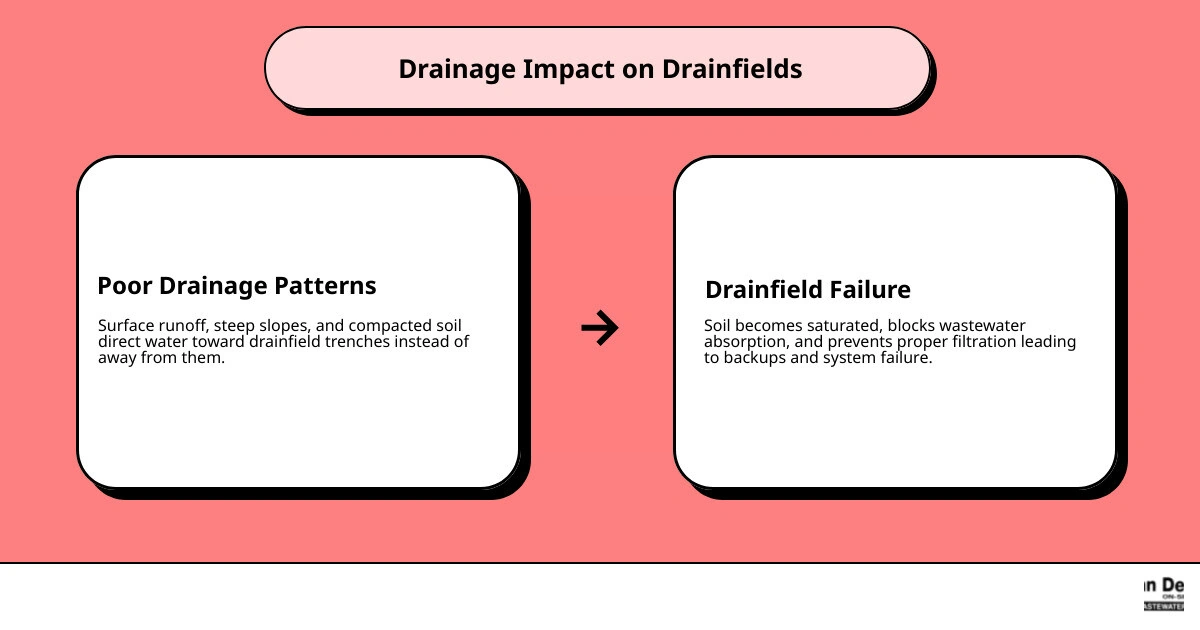
Understanding how drainage patterns affect your drainfield performance is one of the most important things a homeowner with a septic system can do. When water moves toward your drainfield instead of away from it — whether from rain, grading problems, or soil compaction — your system can quickly become overwhelmed and fail.
Here is a quick summary of how drainage patterns impact drainfield performance:
• Surface water runoff flowing toward the drainfield saturates the soil, leaving no room to absorb wastewater from your septic tank
• Poor yard grading or flat terrain causes water to pool directly over drainfield trenches, blocking the filtration process
• Steep slopes can cause effluent to move too quickly downhill, bypassing proper soil treatment
• Compacted soil from vehicles or foot traffic reduces the pore space that soil needs to absorb and filter wastewater
• Seasonal changes like heavy rainfall or drought shift the soil's moisture balance, stressing the system in different ways
More than 60 million Americans rely on septic systems, and approximately 10% fail every year — with poor drainage being one of the most common and preventable causes. A drainfield depends entirely on unsaturated, permeable soil to do its job. When drainage patterns work against that, the whole system suffers.
This guide walks you through exactly what is happening underground, what warning signs to watch for, and how to fix drainage problems before they become expensive failures.
To understand how drainage patterns affect your drainfield performance, we first need to look at how a septic system processes wastewater.
When you flush a toilet, run the washing machine, or wash dishes, the wastewater travels to your septic tank. Inside the tank, solids settle to the bottom, and oils float to the top. The liquid in the middle, known as effluent, flows out into your drainfield.
The drainfield consists of a series of perforated pipes buried in trenches filled with gravel or advanced chambers. The effluent trickles through these pipes, passes through the gravel, and enters the soil. This is where the magic happens: the soil acts as a natural biological filter, utilizing beneficial microbes to break down pathogens, organic matter, and nutrients before the water eventually returns to the deep groundwater supply.
However, this biological filtration process requires one critical element: unsaturated soil.
If the soil surrounding your drainfield is already filled with water from external drainage sources, there is no physical space left for the effluent to go. This is known as hydraulic overloading. Instead of filtering downward, the wastewater is forced upward to the surface of your yard or backward into your household plumbing.
When external drainage patterns continuously direct surface water or shallow groundwater toward your absorption area, you face the severe consequences of High Water Tables Impact on Drainfields. A high water table or a perched water zone saturates the soil from below, leaving the drainfield permanently waterlogged and unable to treat wastewater safely.
Topography plays a massive role in how water moves across your property. In our local South Texas service areas—ranging from the rolling hills of Boerne and Helotes to the flatter expanses of Shavano Park—slope and gravity dictate the path of every drop of rainwater.
In traditional gravity-fed septic systems, effluent relies on a gentle downward slope to flow evenly through the distribution pipes. However, if your yard has a steep slope, or if your drainfield is positioned at the base of a hill, you face two primary challenges:
1. Downhill Runoff Accumulation: Rainwater rushing down a hill will naturally pool at the bottom. If your drainfield is located in this low-lying zone, it becomes the collection basin for the entire hillside's runoff.
2. Effluent Runoff and Uneven Distribution: On steep slopes, wastewater within the trenches can rush to the lowest point of the pipes too quickly. This concentrates all the liquid in one small area of the drainfield, saturating that specific spot while leaving the rest of the system dry.
To combat these topographical challenges, alternative designs are often required. A Drip Irrigation vs Conventional Drainfield Comparison reveals that advanced drip systems, which use pressure distribution, are often far superior for sloped yards. They distribute effluent in precise, tiny doses across a wide area, preventing gravity from pooling all the wastewater at the bottom of the hill.
Soil Compaction, Grading, and Surface Water Flow
While natural topography is one factor, human activity and landscaping choices also shape drainage patterns.
Soil structure is full of tiny macro-pores and micro-pores. These pockets of air allow water to percolate downward and oxygen to reach the beneficial bacteria living in the soil. When heavy vehicles, lawnmowers, or even livestock repeatedly cross the drainfield, they crush these pore spaces, resulting in soil compaction. Compacted soil behaves like concrete; it cannot absorb wastewater, leading to immediate system backups.
Yard grading is another crucial element. Property owners must ensure that the ground surface is graded to slope away from the septic system. Over time, soil can settle, or landscaping projects can inadvertently create "bowls" or low spots directly over the drainfield trenches. These depressions collect surface water flow, trapping it right where you need dry soil.
Learning How to Protect Your Drainfield from Damage involves keeping all heavy loads off the area, ensuring proper surface grading, and avoiding any landscaping changes that redirect runoff toward your septic system.
Common Drainage Problems and Drainfield Failure
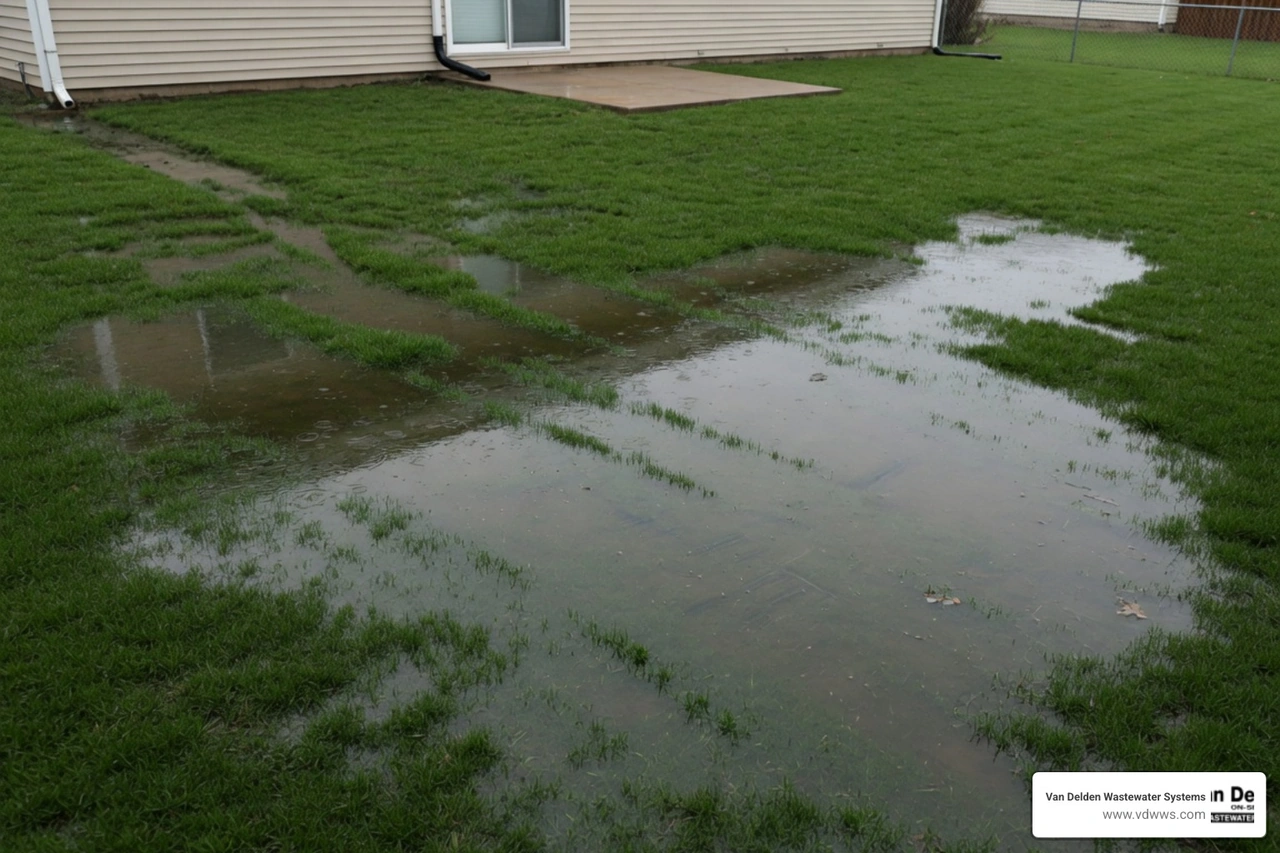
When drainage patterns are ignored, drainfield failure is rarely far behind. Approximately 10% of septic systems fail annually across the country, and a significant portion of these failures can be traced back to environmental factors like poor drainage, soil saturation, and compaction.
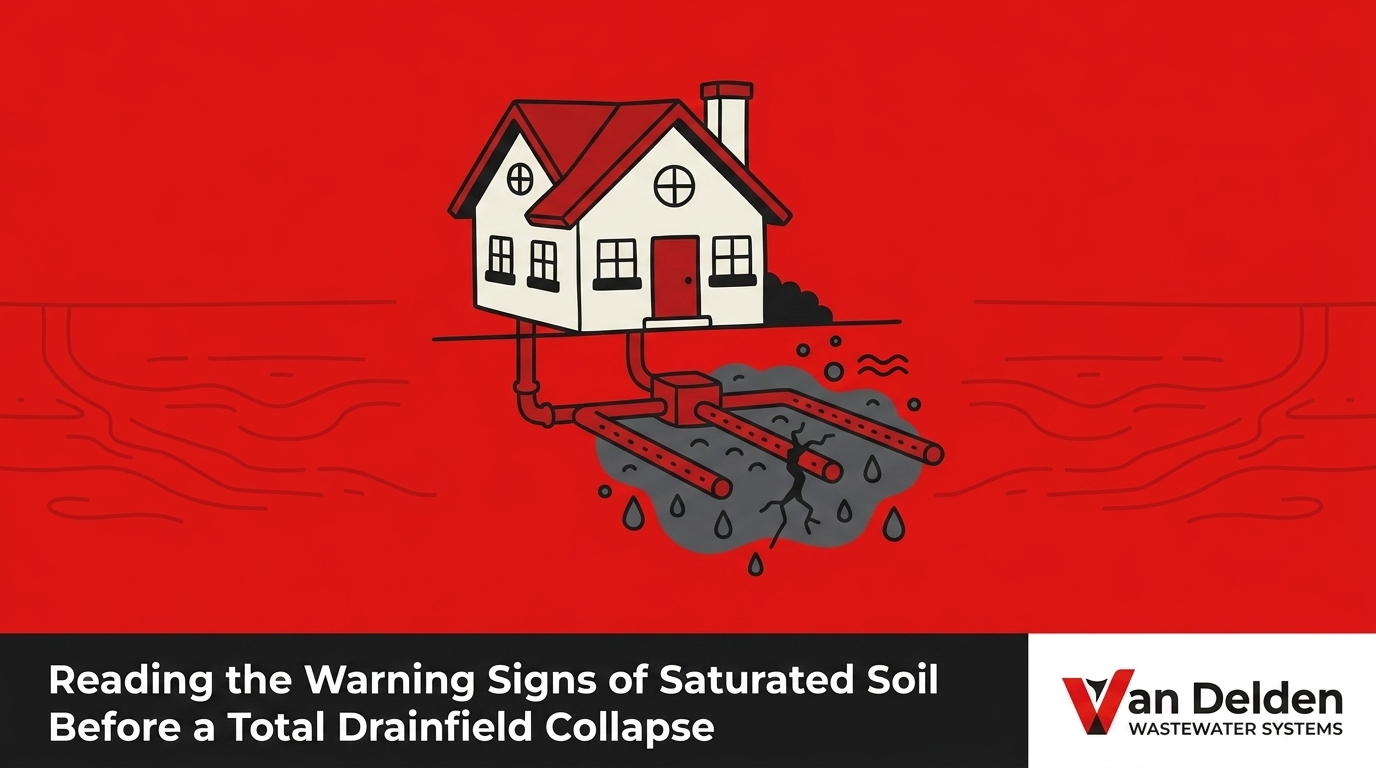
When a drainfield fails due to drainage issues, the soil becomes chronically saturated. This lack of oxygen shifts the soil environment from aerobic (oxygen-rich) to anaerobic (oxygen-poor). Under anaerobic conditions, a thick, slimy layer of bacteria known as a biomat grows out of control at the bottom of the trenches, sealing off the soil completely. Once this happens, the soil can no longer absorb liquid, even during dry periods.
Recognizing Common Septic Drainfield Problems early can save you from a complete, costly system replacement.
The type of soil on your property also dictates how vulnerable your system is to drainage-related failures. For example, the clay-heavy soils found in parts of San Antonio and Bulverde drain much slower than the sandy loams or fractured limestone found in other parts of the Texas Hill Country.
• Sandy Soil — Percolation Rate: Fast (1–5 minutes per inch) — Water Retention: Low — Vulnerability to Drainage Issues: Low (drains quickly, but offers less filtration time)
• Loamy Soil — Percolation Rate: Moderate (15–30 minutes per inch) — Water Retention: Medium — Vulnerability to Drainage Issues: Moderate (ideal balance for filtration and drainage)
• Clay Soil — Percolation Rate: Very Slow (45–60+ minutes per inch) — Water Retention: High — Vulnerability to Drainage Issues: High (easily saturated, prone to pooling and compaction)
Seasonal weather changes put the ultimate stress test on your drainfield's drainage patterns. In South Texas, we often experience long periods of dry weather followed by intense, heavy rainfall.
During heavy rain, saturated soil loses its ability to absorb any additional moisture. If your home's gutters, driveways, or patio runoff drain directly onto the drainfield, the sheer volume of water will drown the system.
Conversely, extended drought conditions can cause clay soils to shrink and crack, which can occasionally shift underground pipes. When the rains finally return, water rushes down these cracks, carrying silt and debris into the drainfield trenches and clogging the system.
Furthermore, while rare in our area, freezing temperatures can penetrate deeply into saturated soils, freezing the standing water inside the drainfield pipes and causing physical blockages or pipe ruptures.
Managing your indoor water use during these environmental extremes is vital. Understanding How Excessive Water Use Affects Drainfield performance is critical when the ground is already saturated by rain. If the soil is full of rainwater, and you run consecutive loads of laundry, you are virtually guaranteeing a backup.
How do you know if poor drainage patterns are actively harming your septic system? Keep a close eye out for these classic Drainfield Failure Signs:
• Soggy, Mushy Ground: Walking over your drainfield should feel like walking on the rest of your lawn. If it feels like a wet sponge, or if water squishes up around your shoes, the soil is saturated.
• Lush, Bright Green Grass: While a beautiful lawn is usually a good thing, a single strip of vibrant, fast-growing, ultra-green grass directly over a drainfield trench indicates that wastewater is rising to the surface, feeding the grass roots with untreated nutrients.
• Foul Odors: If you step outside and notice a persistent sewage or "rotten egg" smell near your drainfield, effluent is pooling near the surface instead of filtering downward.
• Slow Indoor Drains and Gurgling Pipes: When the drainfield cannot accept water, the entire septic system backs up. You may notice your sinks, showers, and toilets draining slowly, accompanied by strange gurgling sounds in your plumbing.
How to Correct and Improve Drainage Patterns Around Your Drainfield
If you have identified drainage issues on your property, don't panic. There are several highly effective ways to correct and improve drainage patterns to protect your septic investment:
1. Redirect Gutters and Downspouts: Walk around your house during a rainstorm. Where does your roof runoff go? If your downspouts discharge water toward your drainfield, install extensions to redirect that water at least 10 to 20 feet away from the absorption area.
2. Improve Yard Grading: Gently reshape the soil around the perimeter of your drainfield to ensure that rainwater naturally flows around and away from the trenches, rather than pooling on top of them. Always use light equipment or hand tools for this work to avoid compacting the soil.
3. Install French Drains or Swales: If your property sits at the bottom of a slope, you can install a French drain or a shallow, grass-lined ditch (a swale) uphill from your drainfield. This interceptor drain will capture downhill surface runoff and shallow groundwater, redirecting it safely around the septic area.
4. Plant the Right Vegetation: Plant grass or shallow-rooted ground covers over your drainfield. Their roots will help stabilize the soil, prevent erosion, and naturally absorb excess moisture through transpiration. Avoid planting trees or large shrubs within 30 feet of the field, as their aggressive roots can infiltrate and destroy septic pipes.
For homeowners in the Hill Country, scheduling professional maintenance like Drainfield Cleaning in Smithson Valley TX is an excellent way to clear out minor clogs and restore proper flow, ensuring that your system is fully prepared to handle the local drainage conditions.
Frequently Asked Questions About Drainfield Drainage
Why is my drainfield waterlogged after heavy rain?
Your drainfield becomes waterlogged after heavy rain because the surrounding soil has reached its maximum water-holding capacity. When the soil is fully saturated with rainwater, it cannot absorb the effluent coming from your septic tank.
To prevent this from causing a backup into your home, practice strict water conservation during and immediately after heavy storms. Space out your laundry loads, take shorter showers, and avoid running the dishwasher until the ground has had a chance to drain.
Can a sloped yard cause septic drainfield issues?
Yes, a sloped yard can cause issues if surface runoff from uphill is allowed to pool directly over the drainfield, or if the steepness of the slope causes effluent to collect at the lowest point of the trenches.
To protect a sloped system, implement erosion control measures, plant strong ground cover to bind the soil, and consider installing interceptor swales uphill to divert runoff. In some cases, terracing or upgrading to a pressure-dosed system may be necessary.
How often should I have my drainfield inspected for drainage issues?
We highly recommend having your septic system and drainfield professionally inspected every 1 to 3 years. Regular inspections allow us to identify subtle drainage changes, soil settling, or early signs of biomat accumulation before they turn into major system failures.
A professional evaluation is especially important before making any major landscaping changes, building additions, or installing new driveways on your property.
To understand how these biological clogs form in the first place, reading about Understanding Drainfield Biomat Formation can give you valuable insight into the delicate balance between soil bacteria and water flow.
Conclusion
Your septic drainfield is a highly efficient, natural filtration system, but its success depends entirely on how water moves across your property. By understanding how drainage patterns affect your drainfield performance, managing surface runoff, avoiding soil compaction, and keeping a close eye out for early warning signs, you can easily maximize the lifespan of your system.
At Van Delden Wastewater Systems, we have been providing comprehensive, reliable septic solutions across South Texas since 1937. As a family-owned business, we pride ourselves on our honest, background-checked, non-commissioned technicians who take the time to educate our customers. We ensure every job is done right, providing detailed service forms and photo documentation for your peace of mind.
If you are experiencing drainage issues, need professional troubleshooting, or want to explore your options for Drainfield Restoration Grey Forest TX or a complete Drainfield Replacement Spring Branch TX, we are here to help.
Ready to protect your septic system and ensure your drainfield performs at its best? Contact Van Delden Wastewater Systems today to schedule a professional evaluation with our expert team!