Why Knowing What Can and Cannot Go Down Your Septic System Protects Your Home
Understanding what can and cannot go down your septic system is one of the most important things you can do as a homeowner on a private system. Get it right, and your system can run quietly and reliably for decades. Get it wrong, and you could be looking at backed-up drains, a failed drain field, and a very expensive repair bill.
Here is a quick reference to answer this question directly:
• Toilet — Safe to Flush or Drain: Human waste, toilet paper — Never Flush or Drain: Wipes, feminine hygiene products, paper towels, dental floss, diapers, cigarette butts, medications, cotton balls
• Kitchen sink — Safe to Flush or Drain: Water, mild biodegradable dish soap — Never Flush or Drain: Cooking grease, fats, oils, food scraps, coffee grounds, eggshells
• Laundry/bathroom drains — Safe to Flush or Drain: Household wastewater, septic-safe detergents — Never Flush or Drain: Harsh chemicals, paint, solvents, pesticides, motor oil, concentrated bleach
• Anywhere — Safe to Flush or Drain: Mild cleaners used in moderation — Never Flush or Drain: Chemical drain cleaners, antibacterial agents, pharmaceuticals
About one in four homes across the United States relies on a septic system rather than a municipal sewer. That means everything that leaves your sinks, showers, toilets, and washing machine ends up in a tank buried in your yard — where living bacteria work around the clock to break it down. What you send into that tank either supports that process or disrupts it.
The good news is that protecting your system does not require complicated routines. It mostly comes down to knowing what belongs and what does not.
Understanding What Can and Cannot Go Down Your Septic System
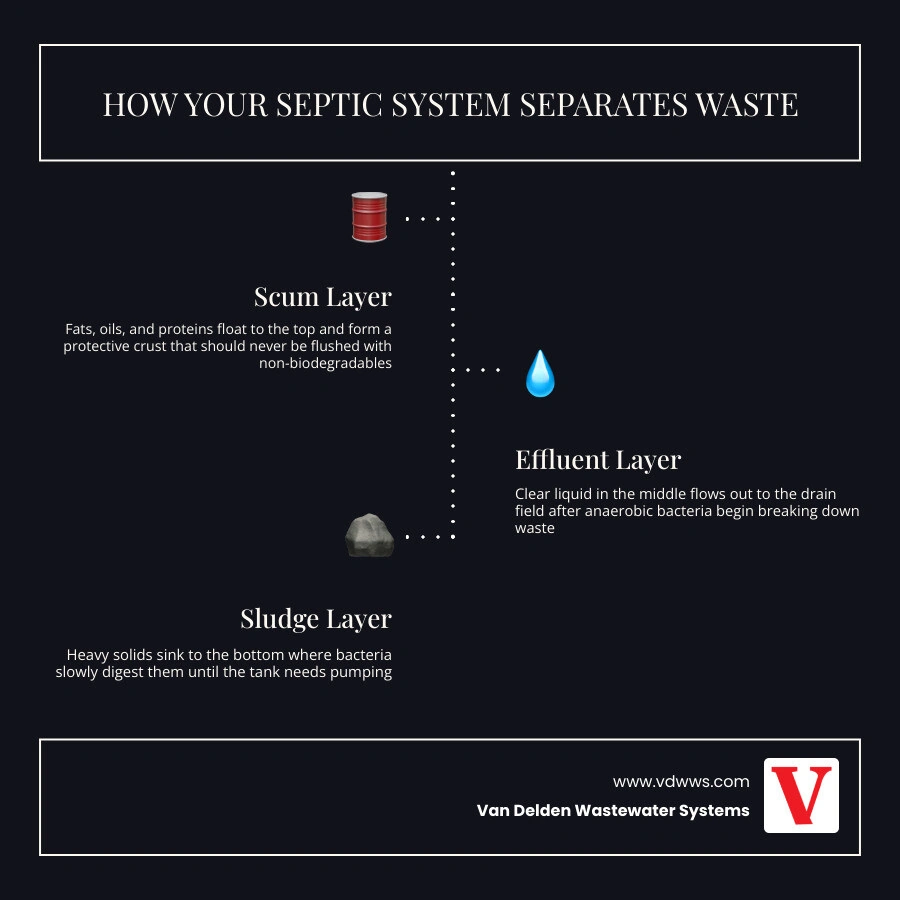
To keep your home running smoothly in communities like Boerne or San Antonio, it helps to view your septic system as a living organism. It isn't just a holding tank; it’s a biological treatment facility. When waste enters the tank, it naturally separates into three distinct layers. The heavy solids sink to the bottom to form the sludge layer. Fats, oils, and proteins float to the top, creating the scum layer. In the middle is the relatively clear liquid known as effluent.
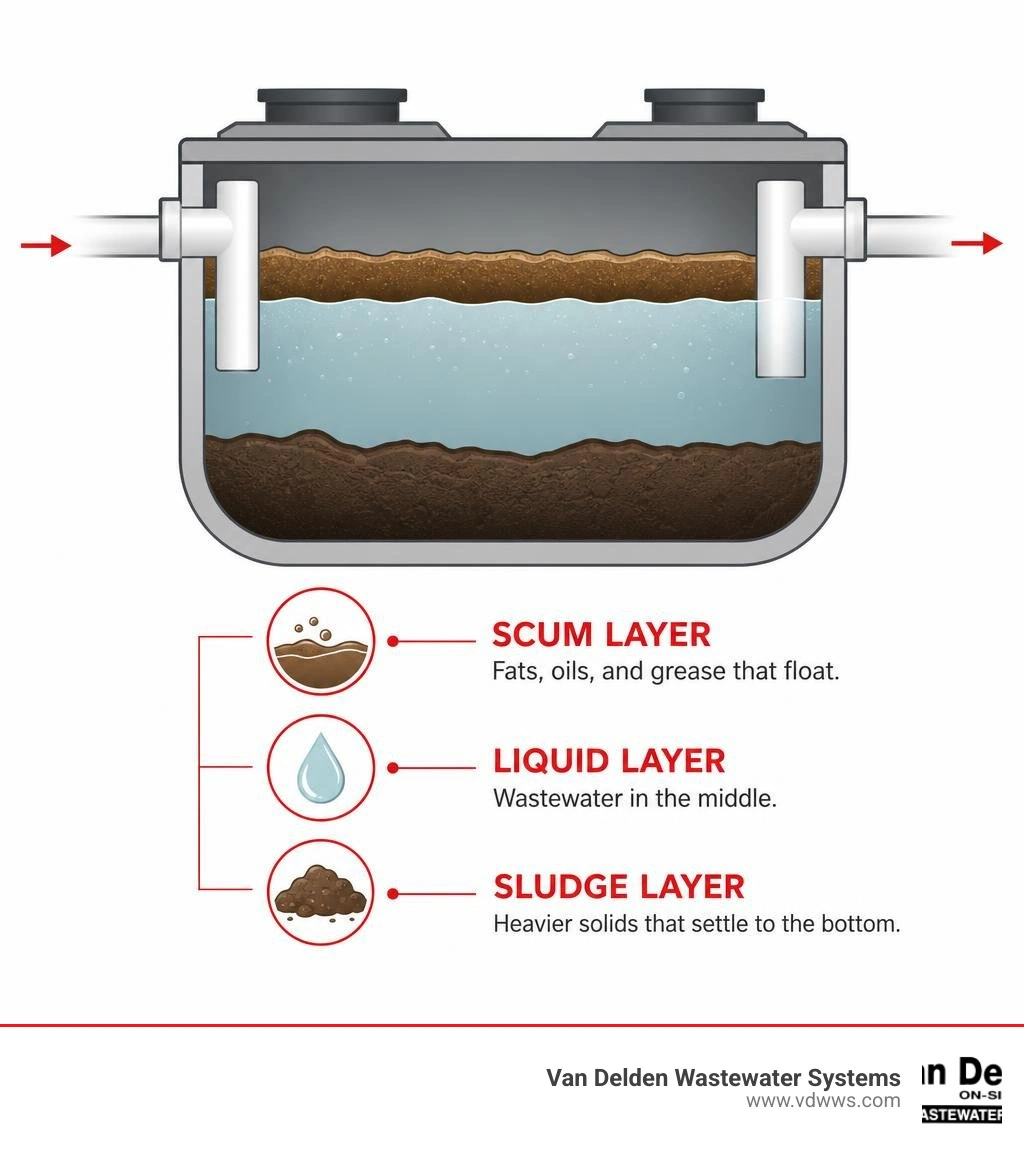
The real magic happens thanks to anaerobic bacteria. these "micro-livestock" live in your tank and eat away at the organic solids, breaking them down so the tank doesn't fill up instantly. However, these bacteria are sensitive. If you flush the wrong items, you can either physically clog the system or chemically "kill" the bacteria, stopping the treatment process entirely.
When the system is overwhelmed by too much water—a condition called hydraulic overload—the effluent is pushed out into the soil absorption area (the drain field) before the solids have had time to settle. This can lead to the "biomat" in your soil becoming clogged, which is often the beginning of the end for a septic system. To avoid this, it is vital to flush or not to flush based on what the system was designed to handle.
Safe Items: What Can Go Down Your Septic System
It might seem restrictive, but the list of safe items is actually quite simple. Your system is designed for three things: human waste, toilet paper, and household wastewater.
• Human Waste: This is what the bacteria in your tank are "trained" to process. It provides the organic matter they need to thrive.
• Toilet Paper: Most standard toilet papers are safe because they are designed to dissolve quickly in water. However, if you are concerned about thickness, you can perform a "jar test"—put a few squares in a jar of water and shake it. If it dissolves into small shreds within a few minutes, it’s septic-safe. You might wonder, can I use any kind of toilet paper? Generally, yes, but single-ply dissolves faster and produces less sludge over time. For those who prefer luxury, you can still use the good stuff as long as you are mindful of the volume and stay consistent with your pumping schedule.
• Household Wastewater: Water from your showers, sinks, and laundry is fine, provided it isn't entering the tank in a massive "flood" all at once.
• Biodegradable Soaps: Mild, liquid dish soaps and laundry detergents labeled as "septic-safe" or "biodegradable" are the best choices. They break down easily and won't harm your bacterial colony.
The "Dirty Dozen": Items That Should Never Be Flushed
Many items marketed as convenient are actually "system wreckers." These items don't break down; they simply take up space or create physical blockages that can lead to a messy backup in your Shavano Park or Helotes home.
One of the biggest culprits today is the "flushable" wipe. Despite the name, these wipes do not disintegrate like toilet paper. They can retain their structural integrity for months, often getting caught on the tank's baffles or wrapping around pump impellers. We often see things you think you can flush but really can't, and wipes are at the top of the list. Simply put, flushable does not mean septic safe.
Other items in the "Dirty Dozen" include:
1. Feminine Hygiene Products: These are designed to absorb liquid and expand, which is the exact opposite of what you want in a pipe or a septic tank.
2. Dental Floss: It’s basically tiny, unbreakable plastic string that can tangle and create a "net" inside your pipes, catching other waste.
3. Diapers: Even "biodegradable" ones are far too bulky and will never break down in a septic environment.
4. Cigarette Butts: These add non-organic plastic filters and toxic chemicals to your water.
5. Cotton Balls and Swabs: These do not dissolve and can clog the outlet screen or baffle.
6. Cat Litter: Even the "flushable" kind is made of clay or materials that clump and settle into a heavy, rock-like layer at the bottom of your tank.
Household Chemicals That Cannot Go Down Your Septic System
Chemicals are the silent killers of septic systems. Because the system relies on living bacteria, pouring "anti-bacterial" or "germ-killing" substances down the drain is like sending a poison cloud into your tank.
One common question we hear is, can I use Drano if I have a septic system? The answer is a firm no. Caustic drain cleaners are incredibly harsh and can kill off the beneficial bacteria in seconds. Instead, use a drain snake or boiling water to clear clogs. Similarly, your choice of household cleaners matters. While a little bit of diluted bleach in a load of whites is usually okay, you should avoid "automatic" toilet bowl cleaners that sit in the tank and release chemicals with every flush.
Medications are another major concern. Antibiotics, in particular, are designed to kill bacteria—and they don't stop working once they leave your body. Medications can weaken your septic system and even pass through the drain field into the groundwater. Other chemicals to keep out include:
• Paint thinners and solvents: These are toxic and can corrode your tank.
• Pesticides and Herbicides: These kill the "micro-livestock" and contaminate the soil.
• Antibacterial soaps: In large quantities, these disrupt the natural balance of the tank.
Kitchen and Laundry Habits That Impact System Health
The kitchen is often where the most damage happens to a septic system, specifically regarding grease and food waste. In May 2026, as we look at modern home trends, many people still rely heavily on garbage disposals. However, for a septic owner, the disposal is not your friend.
• Impact on Tank — Garbage Disposal: Increases sludge by up to 40% — Composting/Trash: No impact on sludge levels
• Pumping Frequency — Garbage Disposal: Requires pumping 30% more often — Composting/Trash: Standard 3-5 year interval
• Risk — Garbage Disposal: Can clog drain field with fine particles — Composting/Trash: Zero risk to plumbing
• Bacterial Strain — Garbage Disposal: Adds undigested solids bacteria struggle to eat — Composting/Trash: Keeps bacteria focused on human waste
We strongly recommend that you understand the relationship between your garbage disposal and your septic system. If you must use one, keep it to a minimum and be prepared to pump your tank much more frequently.
Grease is another major "septic wrecker." When you pour warm oils and grease in your septic tank, they eventually cool and solidify. This creates a thick scum layer that can block the inlet or outlet pipes. Grease and fat are some of the hardest substances for bacteria to break down. Even small things like coffee grounds and eggshells should be avoided; they are heavy and do not decompose easily in an anaerobic environment. You might also wonder, do coffee and soda affect my septic system? In moderation, they are fine, but their high acidity can shift the pH of your tank if poured down the drain in large quantities.
In the laundry room, water conservation is key. Running five loads of laundry on a Saturday morning can send 150 to 200 gallons of water into the tank in a few hours. This "washes out" the bacteria and can push solids into the drain field. It is much better to spread your laundry out throughout the week. Using ENERGY STAR appliances can help, as they use up to 50% less water than older models.
Maintenance and Warning Signs of Septic Failure
Even if you are perfect at monitoring what can and cannot go down your septic system, the tank still needs regular professional attention. Most households in the San Antonio area need their septic tank pumped every three to five years. Skipping this allows the sludge layer to grow too high, which eventually forces solids into the drain field, causing permanent damage.
A common myth is that you can avoid pumping by using additives. We are often asked, should I use additives in my septic system? The truth is that additives are a waste of money. There is no "magic pill" that can eliminate the need for physical pumping. In fact, some chemicals in these products can actually harm your system. So, do I need to pump my tank if I use additives? Yes, absolutely. Pumping is the only way to remove the inorganic solids and accumulated sludge that bacteria cannot digest.
Keep an eye (and a nose) out for these warning signs:
• Slow Drains: If your sinks or tubs are draining slowly despite no obvious clog, the tank might be full.
• Gurgling Pipes: This sound often indicates that air is being trapped in the plumbing because the water has nowhere to go.
• Sewage Odors: If you smell "rotten eggs" near the tank or drain field, something is wrong.
• Lush Green Patches: If the grass over your drain field is suddenly much greener and faster-growing than the rest of the yard, it may be receiving too much "fertilizer" from a failing system.
Frequently Asked Questions about Septic Care
How often should I have my septic system inspected in Texas?
In Texas, we recommend a professional inspection at least every three years. During this visit, a technician will measure the sludge and scum layers to determine if it's time for a pump-out. They will also check the baffles (the T-shaped pipes that keep solids in the tank) and the overall structural integrity of the tank. For advanced systems like aerobic units, inspections are often required more frequently—sometimes every six months—by local regulations in counties like Bexar or Comal.
Can a leaky toilet damage my septic drain field?
Yes, surprisingly so. A single running toilet can add up to 200 gallons of water per day to your system. This constant flow creates a "hydraulic overload," never giving the solids a chance to settle. This pushes fine particles into the drain field, where they can clog the soil pores and damage the "biomat" (the layer of organisms that treats the water in the soil). If you hear a toilet running, fix it immediately to protect your system.
What is the best way to dispose of grease and medications?
For grease, the best method is to let it cool in a pan or pour it into a disposable container (like an old coffee can), then scrape it into the trash. For medications, never flush them. Many pharmacies in Boerne and San Antonio offer take-back programs. If those aren't available, you can mix medications with an unappealing substance like used coffee grounds or kitty litter, seal them in a bag, and place them in the household trash. For harsh chemicals like paint or pesticides, check with your local municipality for hazardous waste disposal days.
Conclusion
Your septic system is one of the most vital components of your home, and its health is entirely in your hands. By being mindful of what can and cannot go down your septic system, you are making a direct investment in the longevity and value of your property. From Spring Branch to Timberwood Park, we have seen that a little bit of education goes a long way in preventing major headaches.
At Van Delden Wastewater Systems, we have been providing comprehensive septic solutions since 1937. As a family-owned business, we pride ourselves on our honest, background-checked, and non-commissioned technicians who take the time to educate every customer. We don't just pump tanks; we provide detailed service forms and photo documentation so you know exactly what is happening under your lawn.
Whether you need a routine inspection, a pump-out, or have questions about a gurgling drain, our team is here to help. Schedule your septic tank service today and let us help you keep your system running smoothly for years to come.