Tracing an Unexplained Septic Odor When Your Tank Isn't Full
Tracing an Unexplained Septic Odor When Your Tank Isn't Full
When Sewage Smells Strike but Your System Is Functioning
If you find yourself tracing an unexplained septic odor when your tank isn't full, you already know how frustrating it can feel, especially when that foul smell hits your home during the intense August late-summer heat. Here at Van Delden Wastewater Systems, we frequently receive panicked calls from homeowners who walk into their hallway or guest bathroom and are immediately met with the unmistakable scent of raw sewage. Naturally, most homeowners panic. The immediate assumption our team hears is that the system is completely backing up, leading to fears of a failing drainfield or a flooded yard.
However, you check your records or have one of our technicians verify the levels, and you confirm that the tank was recently pumped or is operating at a perfectly normal liquid level. This is the critical decision point: you must determine whether this persistent smell is a simple, easily corrected interior plumbing anomaly or a more serious exterior structural fault before you pay for an unnecessary tank pumping service. Weather patterns, household habits, and minor plumbing quirks can easily create phantom odors that trick you into thinking your system is failing.
Getting the right help: To learn more about how your entire setup functions, read our comprehensive guide on septic systems, or schedule a diagnostic consultation to have our experts pinpoint the exact source of the smell.
The False Culprit: Why Pumping Isn't Always the Answer
In our decades of serving the Texas Hill Country, a common misconception our technicians encounter is that any sewage smell inside or around the house means the tank is overflowing and requires immediate pumping. In reality, a normal liquid level does not cause indoor odors. When we explain how the system breaks down waste, it becomes clear to our customers why a knee-jerk reaction to pump a non-full tank is a waste of resources if the root cause is actually plumbing-related.
Your system is designed to hold liquid, allowing heavy solids to settle at the bottom as sludge while lighter fats and oils float to the top as a scum layer. The bacteria inside work tirelessly to break down these organic materials. This natural biological process produces gases, including hydrogen sulfide and methane. However, your home's plumbing and the tank itself are engineered to safely vent these gases up and away from your living spaces through roof vent pipes. When our team investigates odors inside many Boerne TX area homes, it rarely means the tank is too full; it usually means a barrier designed to keep those naturally occurring gases outside has been compromised.
Understanding Normal Tank Levels
What does a "normal" operating level actually look like? When we inspect systems, we look for a healthy tank that is full of liquid up to the outlet pipe. This is the normal operating level. Every time you run a load of laundry or flush a toilet, an equal amount of effluent exits the tank and flows into the drainfield. Because tanks are designed to hold liquid constantly, pumping them out just because you smell an odor will only temporarily empty the vessel. Within a few weeks of normal water usage, the tank will fill right back up to the outlet pipe, and if the venting issue hasn't been resolved, the smell will return.
• Tank liquid is at the outlet pipe level — Typical Cause: Normal daily water usage and proper system function. — Correct Action: No pumping needed; investigate plumbing vents and traps.
• Odors strictly inside the home — Typical Cause: Dry P-traps, failing wax rings, or downdrafts. — Correct Action: Perform indoor water tests and inspect toilet seals.
• Tank liquid is above the outlet pipe — Typical Cause: Clogged outlet line, failing drainfield, or heavy rain saturation. — Correct Action: Professional diagnostic required to locate the blockage.
• Odors near the exterior tank lids — Typical Cause: Damaged lid seals or cracked risers allowing gas to escape. — Correct Action: Replace rubber gaskets or damaged concrete lids.
To better understand the components that hold and process your wastewater, review our detailed information on septic tanks. Knowing what is normal helps you avoid unnecessary service calls.
The Impact of Texas Weather on Indoor Plumbing
One of the most frequent and easily overlooked causes of indoor sewage odors our team discovers has nothing to do with your exterior tank and everything to do with your indoor plumbing traps. The regional climate plays a massive role in how these plumbing components behave. Understanding the mechanics of dry P-traps can save you from assuming your entire wastewater system has failed.
The Science of the P-Trap
Every sink, shower, bathtub, and floor drain in your home is equipped with a P-trap. This is the curved, U-shaped section of pipe located directly beneath the drain. The purpose of this curve is to hold a small amount of standing water at all times. This water creates a physical, airtight seal that prevents sewer gases from backing up through the plumbing lines and entering your home.
Because gases follow the path of least resistance, they will naturally rise through the pipes. As long as that water barrier is in place, the gases are forced to exit through the roof vent stack. However, if that water evaporates, the seal is broken, and the foul odors have a direct, unimpeded pathway straight into your bathroom or kitchen.
How Heat Accelerates Evaporation
Under normal, temperate conditions, the water in a standard P-trap might take three to four weeks to evaporate completely. However, as we see every year, the August late-summer heat in the Texas Hill Country severely accelerates the evaporation of water in P-traps. High ambient temperatures, especially in unconditioned or poorly ventilated spaces, cause the water seal to vanish much faster than you might expect.
This phenomenon is particularly common in specific areas of the house. The most vulnerable locations we regularly identify include:
• Unused guest bathrooms: Showers and sinks in spare rooms that go untouched for weeks are the primary offenders for dry traps.
• Utility sinks in garages: Garages bear the brunt of the Texas heat, causing the water in these traps to evaporate rapidly.
• Floor drains: Often located in laundry rooms or basements, these drains are rarely flushed with water and dry out easily.
• Standalone tubs: Large soaking tubs that are only used for special occasions frequently lose their water seal between uses.
Safe, Non-DIY Steps to Trace Indoor Odors
Before assuming you have a massive failure, we always advise our customers to perform a clear, safe diagnostic walkthrough to rule out simple interior issues. These steps are strictly observational and preventative. They require no special tools and pose no risk to your plumbing.
By systematically checking the common failure points inside Boerne TX area homes, you can often solve the problem in minutes.
The Water Test for Unused Drains
The very first step is to replenish the water seals throughout your house. Follow this simple progression to eliminate dry P-traps as the culprit:
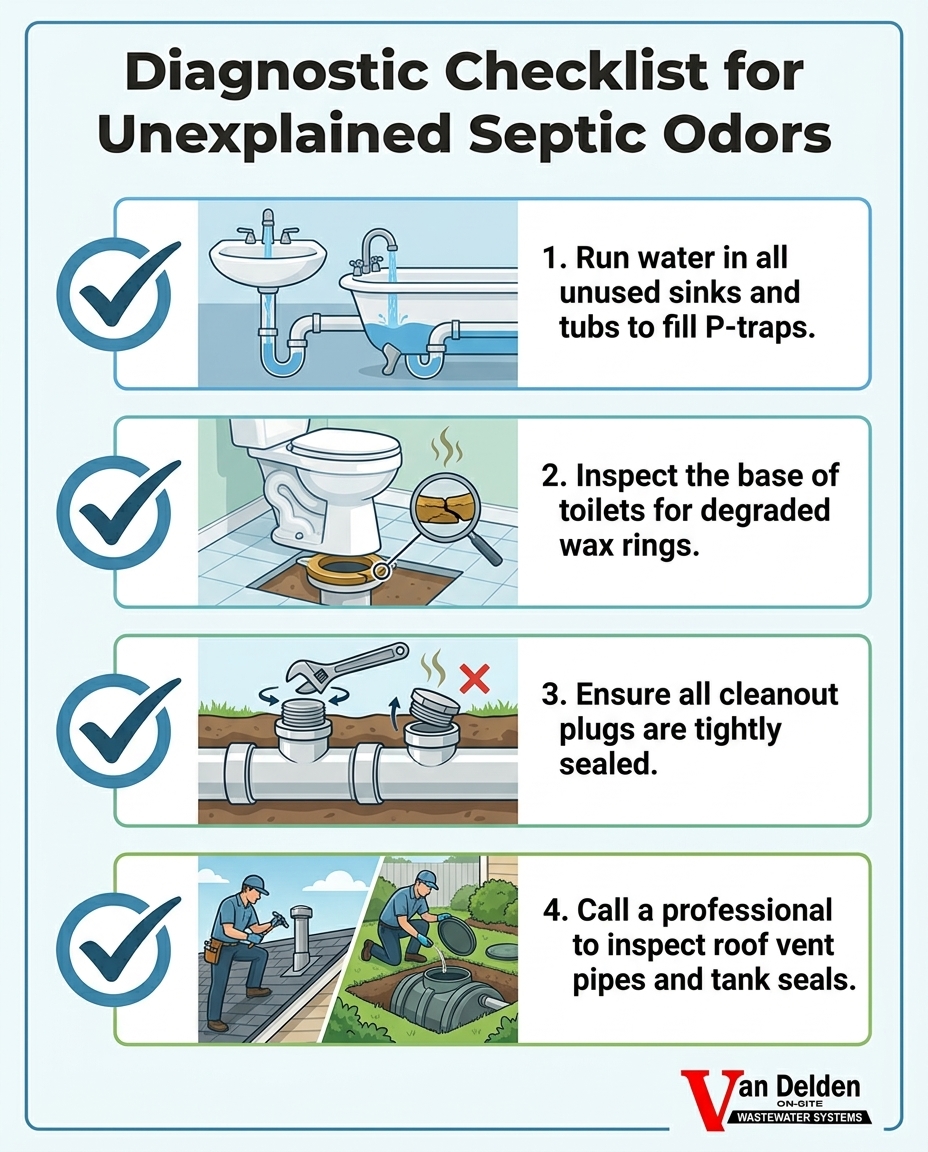
1. Run water in all suspect drains: Go to every guest bathroom, utility sink, and floor drain in the house. Turn on both the hot and cold water and let it run for 30 to 60 seconds. This is more than enough time to completely refill the P-trap.
2. Flush rarely used toilets: Toilets also have built-in traps. Give every toilet in the house a flush to ensure the water level in the bowl is at its proper height.
3. Inspect toilet wax rings: Look closely at the base of your toilets where they meet the floor. If the wax ring that seals the toilet to the drain pipe has degraded, gases can escape. Look for dark discoloration on the floor or gently press your knee against the bowl to see if the toilet rocks. A rocking toilet almost always means a broken wax seal.
4. Check cleanout plugs: Look under your sinks and near your washing machine for plumbing cleanouts. Ensure the threaded caps are tightly secured. A loose cap provides a tiny gap for gases to leak into the room.
5. Wait and observe: After running the water and checking the seals, open a window to air out the room. If a dry trap was the cause, the odor should dissipate entirely within a few hours and not return.
If you happen to have a different style of wastewater treatment and are experiencing similar issues, you might find our guide on why your aerobic system smells helpful for understanding system-specific quirks.
Diagnostic Checklist for Unexplained Septic Odors
Exterior Structural Faults: When to Suspect a Cracked Vent Pipe
If you have run water in every drain, checked every toilet, and the odor remains strong, you have successfully ruled out the simple interior faults. At this point, our technicians often find that the issue is an exterior structural fault that requires professional intervention. One of the most common culprits we see is a compromised roof vent pipe.
Every house has PVC vent pipes protruding from the roof. These pipes are crucial for maintaining proper atmospheric pressure in your plumbing lines, allowing wastewater to flow smoothly while simultaneously venting harmful sewer gases safely outdoors. When these pipes are damaged, the gases they are supposed to carry away can leak into your attic, wall cavities, or directly outside your windows.
Signs of Soil Shifting and UV Degradation
Vent pipes face harsh environmental conditions. The intense August late-summer heat and relentless sun exposure cause severe UV degradation over time. The PVC material loses its plasticizers, becoming brittle, chalky, and prone to hairline cracks.
Furthermore, Texas Hill Country dry spells can cause significant soil shifting. As the expansive clay soil dries out and shrinks, it pulls on the underground plumbing connections. This settling puts immense stress on the exterior plumbing lines and vertical vent pipes, which we often see causing joints to separate or pipes to fracture entirely.
Warning signs of structural venting faults include:
• Odors strongest in the yard: If the smell is highly concentrated near the exterior walls rather than the tank lids, a buried line or vent stack may be cracked.
• Smells isolated to the attic: A vent pipe that has separated at a joint inside the attic space will fill the upper levels of the home with gas.
• Weather-dependent odors: Sometimes, the pipes are perfectly intact, but strong downdrafts or improper pipe height push the vented gases back down toward your patio or open windows.
A critical safety warning: Climbing on roofs to inspect vent stacks or attempting to dig up and patch exterior plumbing lines is dangerous. These structural repairs require a licensed professional who understands local plumbing codes and possesses the right equipment.
Knowing When to Call a Diagnostic Professional
There is a clear transition point where DIY tracing ends and professional diagnostics begin. If water has been run in all the traps, the cleanouts are tight, the toilets are secure, and the smell still persists, it is time to bring in an expert. Continuing to guess or blindly ordering a tank pumping service will only waste your time and money.
A professional diagnostic inspection goes far beyond just looking at the tank. Our technicians will evaluate the entire ecosystem of your wastewater setup. We check the integrity of the vent stacks, inspect the main sewer lines for root intrusions or sags, and verify that all tank seals, risers, and lids are completely airtight.
Working with a technician who prioritizes root-cause analysis over selling an immediate, unneeded pumping service is vital to us. For example, one homeowner recently reached out because they needed to understand the fundamentals and inner workings of their septic tank system to track down an issue. To ensure complete clarity, Courtney Van Delden personally accompanied the technician to explain the fundamentals and visually demonstrate the system's inner workings. This level of thorough education ensures that homeowners in Boerne TX area homes fully understand their system's behavior.
Leveraging our deep expertise since 1937, we know that a thorough diagnostic capability always outweighs just blindly pumping a tank that doesn't need it. Accurate knowledge of your system saves money and prevents recurring issues. If you are unsure about what steps to take next, you can browse our septic system FAQs for more insights on what a professional visit entails.
Frequently Asked Questions About Septic Odors
Why does my house smell like sewage but no backup? Our team often finds that a sewage smell without a backup points to a venting issue rather than a full tank. The most common cause is a dry P-trap in an unused sink or shower, which allows sewer gases to bypass the water seal and enter the home.
Can a septic tank smell if it's not full? Yes, a tank naturally produces odorous gases regardless of its liquid level. If these gases are escaping into your home or yard, it indicates a compromised seal, a cracked vent pipe, or a dry plumbing trap, not necessarily a tank that requires pumping.
How do you find where a sewer smell is coming from? We recommend starting by isolating the odor to a specific room and running water in all nearby drains to refill the P-traps. If the smell persists, check the base of the toilets for failing wax rings and ensure all under-sink cleanout plugs are tightly sealed.
How long does it take for a P-trap to dry out? Under moderate conditions, a P-trap can dry out in three to four weeks. However, in hot, unconditioned spaces—such as a garage or a guest bathroom during the intense summer heat—the water can evaporate much faster.
Does a dry P-trap mean my septic system is failing? No, a dry P-trap is strictly an interior plumbing issue and has no bearing on the health or functionality of your exterior wastewater system. Running water for 60 seconds will restore the seal and stop the odor.
Why do I only smell sewage in unused guest bathrooms? Unused guest bathrooms lack regular water flow, causing the water barrier in the sink and shower drains to evaporate over time. Because Boerne TX area homes often experience high ambient heat, these traps dry out quickly, allowing gases to enter those specific rooms.
Stop Guessing and Start Solving Your Odor Issue
Unexplained odors are entirely solvable when you apply the right diagnostic approach. You don't have to live with the stress of wondering if your system is on the verge of failure, especially when dealing with the sweltering August late-summer heat. By ruling out simple plumbing issues first, you protect your home and your wallet.
If you have performed the basic interior checks and the smell refuses to dissipate, it is time for a professional evaluation from our experienced team. Stop guessing at the cause and schedule a diagnostic consultation with Van Delden Wastewater Systems today to get a clear, safe resolution to your odor problem.
Peter was personable, professional and thorough. Highly recommend Van Delden. You might be able to find a cheaper company but not better!
Wendell E
On time. 100% professional, knowledgeable, and courteous. Very helpful and straightforward. That is the bar all businesses should strive for.
Andy R
It has been a pleasure working with your company. Not only did y’all communicate very well but your workers were always polite! Thank you!
Kate R.
“I thank Van Delden for such prompt service. Honest people are hard to come by these days. I will certainly recommend Van Delden to anyone! Jesse is an upstanding young man and very nice to talk to. I thank everyone at Van Delden for taking such good care of me.”
Charles H
This is just a note to thank you for explaining the problem with my system. You didn’t have to be so kind and I appreciate your good business ethics and time spent. In the future you will have mine in return!