Why Summer Can Be Tough on Septic Systems
How summer heat affects your septic system is something most homeowners don't think about until something goes wrong — and by then, the damage is often already done. Rising temperatures, increased water use, dry soil, and aggressive root growth all combine to put serious stress on your septic system during the hottest months of the year.
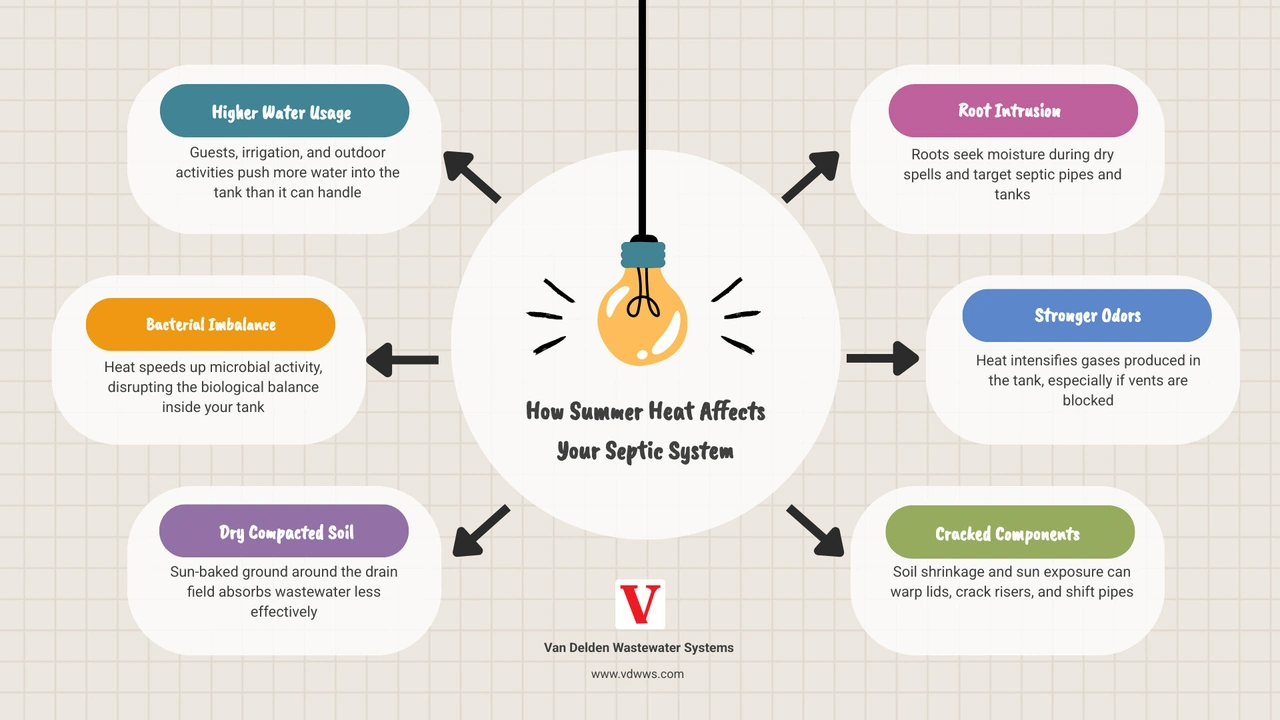
Here's a quick summary of the main ways summer heat impacts your septic system:
• Higher water usage — Guests, outdoor activities, and irrigation push more water into the tank than it's designed to handle in a short period
• Bacterial imbalance — Heat speeds up microbial activity, which can throw off the biological balance inside your tank
• Dry, compacted soil — Sun-baked ground around the drain field absorbs wastewater less effectively, leading to pooling or slow drainage
• Root intrusion — Tree and shrub roots seek out moisture during dry spells, targeting septic pipes and tanks
• Stronger odors — Heat intensifies gases produced in the tank, especially if vents are blocked or the tank is nearly full
• Cracked or shifted components — Soil shrinkage and direct sun exposure can warp lids, crack risers, and shift pipes
It's worth knowing that roughly one in four Americans rely on a septic system for wastewater treatment, making proper seasonal care a genuinely widespread concern. Summer might feel like a carefree season, but for your septic system, it can be one of the most demanding times of year.
How Summer Heat Affects Your Septic System
In the San Antonio area and surrounding communities like Boerne, Bulverde, Fair Oaks Ranch, Garden Ridge, Helotes, Hollywood Park, Shavano Park, Spring Branch, and Timberwood Park, summer often brings long dry stretches, intense sun, and periods of very heavy water use. That combination matters underground.
A typical septic system has two main working areas:
• The septic tank, where solids settle and bacteria break down waste
• The drain field, where clarified wastewater moves into the soil for final treatment
Heat can interfere with both parts at once. More water enters the system, soil gets harder and drier, odors become stronger, and roots start hunting for moisture like they are on a mission. If a system is already overdue for service or close to capacity, summer can push it from "mostly fine" to "why does the yard smell weird?"
How summer heat affects your septic system inside the tank
Inside the tank, beneficial bacteria do the hard work of breaking down waste. Warmer conditions can increase bacterial activity, which sounds helpful at first. But more activity is not always better.
In hot weather, a few things can happen:
• Waste may break down faster for a period
• Gas production can increase, which can make odors more noticeable
• Heavy water use can reduce the time solids have to settle properly
• The biological balance can get disrupted if the tank is overworked
That last point is important. Septic tanks function best when there is a steady rhythm of wastewater entering the tank and enough retention time for separation to happen. If summer traffic means back-to-back showers, extra laundry, more dishwashing, and houseguests all at once, the tank may not separate solids and liquid as effectively.
When retention time drops, solids can stay suspended instead of settling where they belong. That increases the risk of material moving out toward the drain field, which is exactly what we do not want.
How summer heat affects your septic system in the drain field
The drain field depends on soil conditions. Wastewater leaves the tank and needs to move slowly through the soil, where natural filtration and treatment continue. Hot, dry weather can make that process harder.
Common summer drain field stressors include:
• Soil drying out and shrinking
• Surface hardening and compaction
• Reduced pore space for wastewater absorption
• Uneven percolation after heat waves
• Sudden oversaturation after summer storms
When soil gets too dry and compacted, wastewater cannot move through it as easily. Instead of soaking in evenly, effluent may begin to pool near the surface or move too slowly, causing sluggish drains inside the home.

Increased Summer Water Use Can Overload the System
Summer is often a high-demand season for septic systems. Even if the weather itself did nothing, household habits would still create extra pressure.
A standard residential system is designed to handle normal daily wastewater flow, and in many states septic tanks must have a minimum capacity of 1,000 gallons. But capacity is not the same thing as unlimited short-term volume. A system can still be overloaded if too much water enters too quickly.
Common summer sources of extra water include:
• More frequent showers
• Kids home from school
• Guests staying overnight
• Vacation rental turnover
• Extra laundry and dishes
• Outdoor cleanup
• Leaky hose bibs or toilets
• Water softener or appliance discharge patterns
Pool drainage and heavy irrigation should also be kept away from septic components and the drain field. Sending large amounts of outside water toward the system can overload the soil and reduce treatment efficiency.
Too much incoming water causes hydraulic overload. In plain English, that means the system gets more liquid than it can treat effectively in the moment.
That creates several problems:
• Wastewater moves through the tank too quickly
• Solids have less time to settle
• Scum and sludge layers can get disturbed
• More suspended solids may move toward the outlet
• The drain field has to absorb more water than normal
If a tank is already nearing its pumping interval, summer use can make the problem more obvious. Septic tanks should generally be pumped every 3 to 5 years, depending on household size, tank size, and water use habits. Waiting too long reduces usable capacity and leaves less room for those summer spikes.
Smart ways to spread out household water use
The goal is not to stop using water. It is to avoid dumping too much into the system all at once.
Here are smart summer habits that help:
• Spread laundry loads throughout the week instead of doing many loads in one day
• Avoid back-to-back showers when guests are staying over
• Run the dishwasher at a different time than laundry
• Fix leaking toilets, faucets, and outdoor fixtures promptly
• Use water-saving fixtures and appliances where possible
• Direct sprinklers away from the drain field
• Keep kiddie pools, slip-and-slides, and other water play away from septic areas
• Do not drain hot tubs or pools into the septic system
• Pay attention to slow drains or gurgling sounds during high-use weekends
For more seasonal guidance, see How to Keep Your Septic System Running Happily During the Summer Heat.
Heat, Drought, and Soil Changes Around the Drain Field
South Texas summers can change the ground around your septic system in ways homeowners do not always see right away. Heat and drought affect the soil first, then the soil affects the septic system.
Dry ground can become:
• Harder
• More compacted
• Less porous
• More likely to crack or shift
That is bad news for a drain field, which depends on open soil structure to absorb and filter wastewater properly.
How dry, compacted soil reduces wastewater absorption
Healthy drain field soil contains spaces between particles. Those spaces allow effluent to move through the ground gradually. When the soil bakes in the sun and gets compacted by dryness, traffic, or weight, those spaces shrink.
The result can be:
• Slower absorption
• Surface ponding
• Wet spots over the drain field
• Wastewater backing up toward the home
• Reduced filtration before water enters the surrounding soil
Compaction gets worse when people drive, park, or place heavy equipment over the drain field. Even repeated foot traffic in the same area can contribute over time. Summer gatherings are fun, but your drain field would prefer not to be the parking lot.
How cracked or shifted components can develop in extreme heat
Extreme heat and dry soil can also affect physical components of the system.
Potential issues include:
• Soil shrinkage that allows pipes to shift slightly
• Stress on connections between components
• Small leaks at compromised joints
• Cracks in risers or lids
• Warping of some exposed or sun-beaten plastic parts
When the ground dries and contracts, it can change the support around buried lines and tanks. That movement is not always dramatic, but even minor shifting can create long-term trouble if joints loosen or if runoff later enters through a crack.
Why roots become more aggressive in hot, dry weather
Plants need water, and when the surrounding soil is hot and dry, roots start looking harder for a reliable source. Septic pipes, tanks, and drain lines can become very attractive targets because they contain moisture.
Root intrusion can lead to:
• Cracked or separated pipes
• Partial blockages
• Slower drainage inside the house
• Damage to distribution lines
• Repeat clogs that keep coming back
Trees and large shrubs should be planted well away from septic components. Even if the trunk seems far enough away today, roots can travel much farther than people expect.
For more guidance, visit Protecting Your Septic System During Summer Months.
Why Septic Odors Get Stronger in Hot Weather
One of the most common homeowner complaints in summer is simple: "Why does it suddenly smell worse outside?"
Heat does not create septic odors out of nowhere, but it can make existing issues much more noticeable. Higher temperatures can intensify the gases naturally produced during waste breakdown. If the tank is full, the venting is poor, or the drain field is under stress, those smells can become hard to ignore.
Common causes of stronger septic smells in summer
Summer odors often point to one or more of these issues:
• Increased gas production in the tank
• A tank that is close to full
• Blocked or inadequate venting
• Drain field absorption problems
• Extra water use stirring up the system
• Minor leaks around lids or access points
Sometimes the smell is strongest around the tank. Other times it shows up near plumbing fixtures, yard vents, or wet spots in the lawn. Hot weather basically turns the volume up.
Warning signs that summer heat is stressing your septic system
Heat-related septic stress usually gives warning signs before a full failure. Pay attention if you notice:
• Slow drains in sinks, tubs, or showers
• Gurgling toilets or bubbling drains
• Sewage odors indoors or outdoors
• Wet or soggy spots near the tank or drain field
• Patches of grass that are much greener or faster-growing than the surrounding lawn
• Water pooling in the yard
• Backups into toilets, tubs, or floor drains
Here is a simple comparison:
• Dry lawn in hot weather — Possible septic trouble sign: One soggy or persistently damp patch
• Warm outdoor air — Possible septic trouble sign: Distinct sewage smell near tank, yard, or drains
• Seasonal grass growth — Possible septic trouble sign: One unusually lush green strip over drain lines
• Busy holiday weekend — Possible septic trouble sign: Slow drains and toilet gurgling afterward
• Heavy rain followed by drying — Possible septic trouble sign: Standing wastewater that does not go away
Summer Septic Maintenance Steps Homeowners Should Take
The best summer septic strategy is simple: reduce stress before warning signs show up. Routine care matters more than emergency reaction.
For most homes, that means staying on top of inspections and pumping intervals. As noted earlier, septic tanks should usually be pumped every 3 to 5 years to prevent solids from overflowing into the drain field. Some households need more frequent service based on family size and usage patterns.
Seasonal habits that help prevent midsummer failures
Useful warm-weather habits include:
• Schedule pumping before peak summer use if your tank is nearly due
• Have the system inspected regularly
• Check lids and risers for visible cracking or warping
• Make sure vents are clear
• Clean filters if your system includes them
• Repair plumbing leaks promptly
• Avoid harsh chemicals that can upset bacterial balance
• Let grass over the drain field grow a bit longer to help shade soil and hold moisture
A little prevention goes a long way. Septic systems prefer consistency, not surprise water marathons.
Drain field and landscaping best practices
Protecting the drain field is one of the most important things we can do in summer.
Best practices include:
• Keep vehicles, trailers, and heavy equipment off the drain field
• Do not place sheds, patios, play equipment, or other heavy structures over it
• Maintain healthy grass cover
• Avoid deep-rooted trees and shrubs nearby
• Redirect roof runoff and surface drainage away from the area
• Do not overwater the lawn above the drain field
• Keep an accurate map of where your septic components are located
If you want more practical advice, read Taking Care of Your Septic System This Summer and Top 7 Septic Tips for Summer.
How to protect your system during parties and holiday weekends
Summer entertaining is great. A septic overload on the same weekend is less great.
Before a gathering:
• Pump the tank if service is already due
• Fix any slow drains or known plumbing issues
• Remind guests which bathroom gets the heaviest use
• Stock trash cans so wipes, paper towels, and hygiene products stay out of toilets
During the event:
• Space out showers and laundry
• Run the dishwasher once guests leave rather than during peak bathroom use
• Keep outdoor water activities away from the drain field
• Do not let extra vehicles park over septic components
For more event-specific tips, see How to Protect Your Septic System During Summer Get-Togethers.
Frequently Asked Questions About How Summer Heat Affects Your Septic System
Can hot weather kill septic tank bacteria?
Hot weather usually speeds up bacterial activity before it causes direct die-off. The bigger issue is imbalance. If the tank becomes overworked, receives too much water too quickly, or gets hit with harsh cleaners, treatment efficiency can drop. In other words, summer heat alone is not usually the villain, but heat plus overload can be.
Should I pump my tank before summer if it is nearly due?
Yes. If your tank is close to its recommended pumping interval, doing it before the heaviest summer use is a smart move. Since most systems need pumping every 3 to 5 years, and summer often brings higher water demand, preventive service helps preserve tank capacity and protects the drain field.
What should I do if I notice odors or wet spots during a heat wave?
Start by reducing water use right away. Spread out showers, laundry, and dishwasher use. Keep people and vehicles off the affected area. Do not rely on additives as a shortcut, and do not ignore the problem hoping it will bake away in the sun. Odors, wet spots, slow drains, or gurgling usually mean the system needs attention.
Conclusion: Protect Your Septic System Before Heat Causes Bigger Problems
Summer in our part of Texas can be hard on septic systems. Extra water use, dry and compacted soil, stronger odors, root intrusion, and shifting components can all combine to create trouble fast. The good news is that early maintenance and smart habits can make a big difference.
If your septic system is showing signs of stress, or if it is simply nearing its regular service window, we can help. At Van Delden Wastewater Systems, we provide comprehensive septic solutions with honest guidance, detailed service documentation, and experienced technicians who focus on doing the job right.
Learn more about our septic tank cleaning services and take care of your system before summer heat turns a manageable issue into a much bigger one.