Why Septic Tank Locating Services and Why They Matter More Than Most Homeowners Realize
Septic tank locating services and why they matter comes down to one simple truth: you cannot properly maintain, repair, or protect a system you cannot find. Approximately 21% of U.S. households rely on septic systems, and a surprising number of those homeowners have no idea where their tank or drainfield is buried. That gap in knowledge can turn a routine pumping visit into an expensive ordeal — or a simple landscaping project into a sewage disaster.
Here is a quick summary of why septic tank locating matters:
- Routine maintenance: Pumping and inspection require direct access to the tank lid — impossible without knowing the location
- Preventing accidental damage: Digging, trenching, or building over buried components can crack tanks and break pipes
- Emergency response: During a backup or failure, not knowing the tank location delays repairs and extends damage
- Real estate transactions: Buyers and sellers need verified system locations for inspections and permits
- Drainfield protection: Drain lines can sit as shallow as 6 inches below the surface and are easily crushed by vehicles or structures
- Groundwater safety: A damaged or neglected system can contaminate nearby water sources with harmful pathogens
The EPA recommends pumping septic tanks every 3 to 5 years. That schedule only works if the tank can actually be accessed. Without a known location, every service call starts with a search — and that search costs time, money, and unnecessary disruption to your yard.
What Is Septic Tank Locating and Why Homeowners Need It
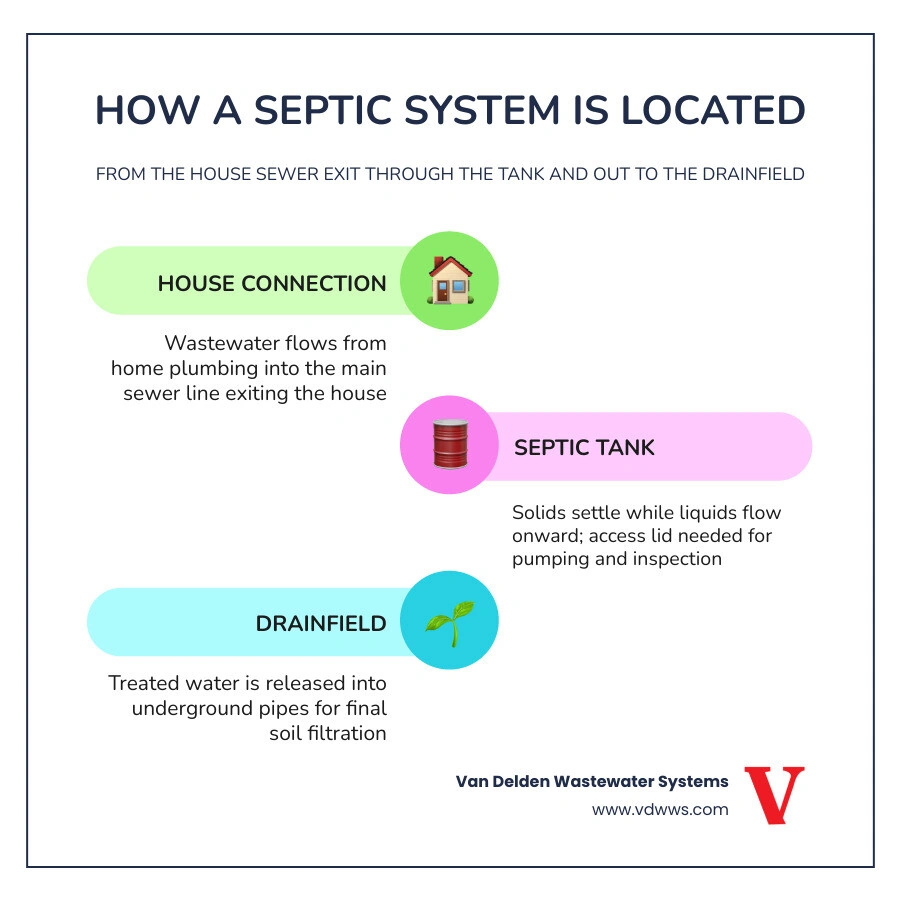
Septic tank locating is the process of identifying the exact position of the buried septic tank, access lids, and often the surrounding system components such as the outlet line, distribution box, and drainfield area. For homeowners in Boerne, Bulverde, Fair Oaks Ranch, Garden Ridge, Helotes, Timberwood Park, Hollywood Park, Shavano Park, San Antonio, and Spring Branch, this matters more than many people expect.
A septic system is out of sight by design. That is good for the yard, but not so good when it is time for pumping, inspection, repairs, or a home project. Most tanks are not sitting in obvious plain view with a little sign that says "dig here." If only.
Knowing where your tank is helps us:
- Access the tank faster for pumping and inspections
- Reduce unnecessary digging
- Protect the drainfield from traffic and construction
- Plan repairs more accurately
- Avoid delays during backups or emergencies
- Help homeowners keep better long-term records
It also supports public health. Failing septic systems can release untreated wastewater into soil, groundwater, or nearby surface water. That can spread pathogens and nutrients where they do not belong.
Why septic tank locating services and why they matter for routine maintenance
Routine maintenance is one of the biggest reasons homeowners need a precise tank location. The EPA recommends pumping septic tanks every 3 to 5 years, and inspections should be done regularly as well. If the lids are buried and no one knows exactly where they are, a basic service visit becomes a guessing game.
Professional locating helps with:
- Finding buried lids quickly
- Confirming where the inlet and outlet access points are
- Reducing yard disturbance during service
- Identifying whether risers would make future service easier
- Making repeat pumping visits more efficient
If you want more lid-specific guidance, our article on the best way to find septic tank lid is a useful next read.
Why septic tank locating services and why they matter before digging or building
Locating matters just as much before any yard work or improvement project. We are talking about:
- Fences
- Patios
- Pools
- Sheds
- Utility trenching
- Drainage work
- Tree planting
- Grading or excavation
Septic components are vulnerable. Drain lines may be much shallower than homeowners expect, and the soil over a drainfield is not meant to support heavy structures or vehicle traffic. Building over a tank or drainfield can block access, compact soil, crush pipes, and cause system failure.
If you are planning a project and do not know where your system is, start by reading How to Find Septic and then consider having the system professionally marked before the first shovel goes in the ground.
How Professionals Locate Septic Tanks Without Tearing Up the Yard
Professional locating is not random digging. A good locating process is methodical, minimally invasive, and based on evidence. We work from the house outward, using records, site clues, and specialized tools to narrow down and confirm the location with as little disruption as possible.
Start with records, permits, and clues on the property
The first step is usually paperwork and observation.
We may review:
- Septic permits
- As-built drawings
- Prior inspection reports
- Property surveys
- Previous pumping or maintenance records
These records can give a likely tank placement, but they are not always perfect. Systems may have been altered over time, landscaping may have changed, and older records are sometimes incomplete. That is why we also look at what the property itself tells us.
Common on-site clues include:
- The direction of the main sewer line leaving the home
- Exterior cleanouts
- Slight depressions or raised areas in the lawn
- Rectangular patches in the yard
- Unusual grass growth
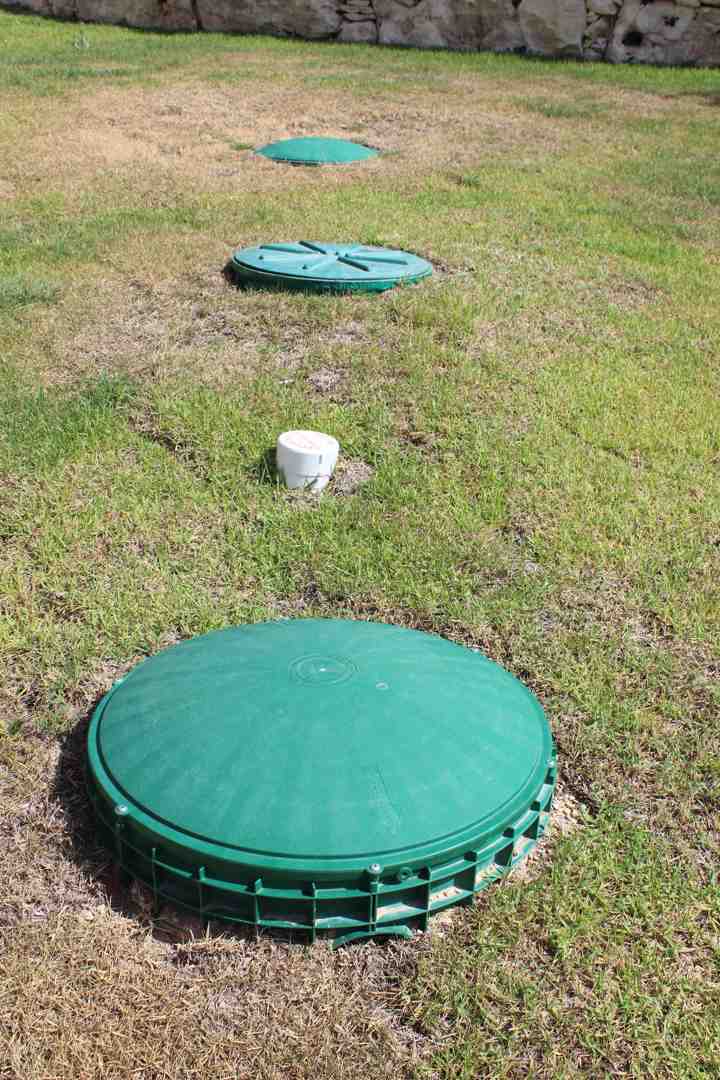
- Old risers or inspection ports
- Areas with less mature landscaping because the ground was disturbed in the past
In many homes, the tank is installed a modest distance from the home, often along the path of the building sewer. If you are local and want a more area-specific overview, see our Septic Tank Locating Guide Helotes TX.
Once we have a likely search area, professional tools help confirm the location.
These may include:
- Electronic locators that trace underground piping
- Sewer cameras
- Sondes or transmitters used with a camera to track pipe path
- Soil probes used carefully to identify tank edges or lids
- Ground-penetrating radar in conditions where it is appropriate
A common method is to access the sewer line from a cleanout, send a camera through the line, and track the signal as it travels toward the tank. This helps us identify where the house sewer exits and where it meets the tank. It is especially helpful when the tank is deeper, the yard has changed significantly, or visible clues are limited.
Careful probing can also help map the perimeter once the approximate location is known. The goal is not to stab wildly into the yard. It is controlled confirmation based on a narrowed search area.
For more on lid access and related search methods, visit Finding Septic Tank Lid.
How soil and site conditions change the locating process
Not every property locates the same way. Soil and site conditions change what works best.
In our service areas around San Antonio and the Hill Country, conditions can vary quite a bit. Factors that influence the locating process include:
- Clay-heavy soil that can make probing and drainage patterns less predictable
- Rocky ground that limits simple probing
- Sloped lots that change how systems are installed
- Wet soil after rain, which can affect visibility and access
- Dense landscaping that hides clues
- Older properties where records may be missing or outdated
- Remodels, additions, or hardscaping that cover original access points
Ground-penetrating radar can be useful in some settings, but no single tool is perfect on every property. That is why layered methods usually produce the best results.
Signs and Clues That Can Help Identify a Septic Tank Location
Even before a professional visit, homeowners sometimes notice surface signs that hint at where a tank or drainfield might be buried. These clues are helpful, but they are not always definitive.
Typical clues include:
- A patch of greener grass
- A dry or stressed patch above buried concrete
- Slightly sunken or raised soil
- A rectangular area in the yard
- Small vertical pipes or capped ports
- Sewer odors outdoors
- Damp spots or soggy soil
- The path of the home sewer line from the house
Many septic tanks are rectangular, and many are located somewhere beyond the point where the main sewer line exits the home. But "somewhere" is not the same thing as "verified." That is an important difference.
Common visual clues homeowners notice first
Homeowners usually spot the obvious things first:
- Grass that grows faster in one area
- A shallow depression where soil has settled over time
- A low mound
- A patch that stays wet longer after rain
- A visible riser or inspection cover
- Odors near one part of the yard
- A section of lawn that looks slightly different in shape or color
These clues can point you in the right direction, but they can also mislead you. Greener grass might indicate a drainfield, not the tank. A depression might be old settling from another buried feature. Odor can come from several system components.
DIY locating methods and where they fall short
Yes, homeowners can sometimes find their own septic tank, especially when records are available and the property has clear clues. Safe DIY checks include:
- Looking through closing paperwork or old permits
- Checking county or local septic records
- Finding the sewer line exit from the home
- Looking for cleanouts, risers, or ports
- Watching for rectangular patterns, depressions, or unusual grass growth
- Asking prior owners if records were passed along
DIY methods become less reliable when:
- Records are missing
- The tank is buried deeper
- Landscaping has changed
- There are multiple tanks or components
- The property is older
- You need exact lid depth or full system mapping
A few important cautions:
- Always avoid random deep digging
- Do not assume a metal detector will solve it; many tanks are concrete or plastic
- Never enter a septic tank under any circumstance
- Call for utility locates before probing so you do not strike buried lines
For a local article on budget-minded planning and expectations, read our Affordable Septic Tank Locating Guide Comfort TX.
When to Call a Professional Septic Tank Locating Service
There are times when DIY is reasonable, and there are times when professional locating is clearly the smarter move. In our experience, it is best to call when accuracy matters, time matters, or the stakes are high.
You should strongly consider professional locating when:
- You need the tank pumped and cannot find the lids
- You are having slow drains, backups, or odors
- You are buying or selling a home
- You are planning construction, trenching, or major landscaping
- Records are missing or unreliable
- The yard has been reworked over the years
- You suspect multiple tanks or an unusual layout
- You need the drainfield or other components marked too
Situations where professional locating is the smart move
Some situations especially call for professional help:
- Before adding a driveway, patio, or addition
- Before installing fencing or irrigation
- Before drainage corrections or grading work
- After storm events or erosion
- During recurring septic problems
- When a permit or inspection requires verified access
- During real estate due diligence
When the location is verified, everyone works smarter. Pumping crews know where to go. Contractors know what to avoid. Homeowners stop guessing.
For another local resource, see Septic Tank Locating Services Inspection in Bergheim TX.
What can go wrong when the location is unknown
Not knowing where the system is can create real risks, including:
- Cracked tanks from heavy equipment
- Broken inlet or outlet pipes
- Crushed drainfield lines
- Compacted soil that reduces treatment performance
- Delayed repairs during backups
- Extra digging and yard damage
- Contamination risks to soil, groundwater, or nearby water bodies
- More expensive long-term repairs
Failing systems can expose people and pets to untreated wastewater. They can also affect water quality. That is why locating is not just a convenience issue. It is a health, safety, and property-protection issue.
If you need urgent help understanding access-related situations, our 24-Hour Septic Tank Locating Services in Comfort TX article may help explain the urgency side of locating.
What to Do After the Tank Is Found
Finding the tank is only step one. The real long-term value comes from documenting what was found and making future access easier.
After locating, homeowners should keep a clear record of:
- Tank location in relation to the house
- Measurements from permanent landmarks
- Photos of the area and access points
- Lid depth
- Number of lids
- Tank size if known
- Drainfield footprint if identified
- Distribution box location if identified
- Date of locating and service performed
If the lids are deeply buried, installing risers may be worth considering. Risers bring access closer to grade so future inspections and pumping do not start with another excavation project.
Documentation every homeowner should keep
A simple record file can save a lot of frustration later.
Keep:
- A copy of the as-built drawing if available
- Septic permits
- Service forms
- Inspection reports
- Pumping dates
- Photos showing location and landmarks
- Notes on lid depth and access
- Any contractor drawings or site maps
Because we believe homeowners should understand their system, we provide detailed service forms and photo documentation so there is a useful record to refer back to later.
| Component | What to record | Why it helps |
|---|
| Tank | Location, size, depth, date found | Speeds future pumping and repairs |
| Lids | Number of lids, exact positions, lid depth | Reduces repeated digging |
| Drainfield | Approximate footprint and no-drive zones | Helps protect lines during yard work |
| Records | Permit, service history, inspection notes | Supports maintenance and resale |
| Photos | Images with measurements or landmarks | Makes the location easier to recognize later |
How knowing the exact location helps with maintenance and property improvements
Once the exact location is known, future decisions become much easier.
Benefits include:
- Faster pumping and inspection visits
- Less repeat digging
- Easier emergency access
- Better contractor planning
- Safer utility routing
- Smarter landscaping choices
- Reduced chance of building over septic components
- Better records for future buyers
That knowledge can protect your yard and your budget for years. For more local guidance, visit our Septic Locating Boerne TX Guide.
Frequently Asked Questions About Septic Tank Locating Services and Why They Matter
Can a homeowner find a septic tank without professional help?
Sometimes, yes. A homeowner may be able to narrow down the likely location by checking records, tracing the sewer line from the house, and looking for surface clues. But DIY methods usually provide an approximate area, not the precise access points needed for service. If you need certainty, especially before digging or pumping, professional locating is the better choice.
How deep is a septic tank usually buried?
There is no single standard depth. Lid depth varies by property, grading, age of the system, and past landscaping work. Some lids are fairly shallow, while others may be buried much deeper. In general, deeper lids make professional locating and riser installation more useful because future access becomes much easier.
Is locating only for the tank, or also for the drainfield and other parts?
It can be either, depending on what the homeowner needs. Basic locating may focus on the tank and access lids. More complete locating can also identify the distribution box, drainfield footprint, line direction, and other components. This is especially helpful before construction, drainage work, or property improvements.
Conclusion
Knowing where your septic tank is buried is not a small detail. It is the starting point for proper maintenance, safer digging, faster repairs, and smarter property planning. That is the real answer to septic tank locating services and why they matter.
At Van Delden Wastewater Systems, we have been helping homeowners care for their wastewater systems since 1937. As a family-owned company, we believe in honest service, clear communication, and practical education. Our background-checked, non-commissioned technicians focus on doing quality work and documenting it well, so you are not left guessing about what was found or what comes next.
If you need help locating your septic tank or mapping key system components, learn more here: More info about septic-tank-locating services
Contact us today to schedule a septic system inspection or maintenance service.