Understanding Septic Backups in the Texas Hill Country

Septic tank cleaning backing up in waring tx is a frustrating and urgent problem that affects rural homeowners throughout Kendall County. When wastewater starts backing up into your home, it signals that something in your septic system has failed or become overwhelmed. This isn't just inconvenient—it's a health hazard that demands immediate attention. Whether your system is overdue for pumping, suffering from a clogged pipe, or dealing with a failing drainfield, understanding the warning signs and knowing how to respond can save you thousands of dollars in emergency repairs.
Quick Answer: If Your Septic System Is Backing Up:
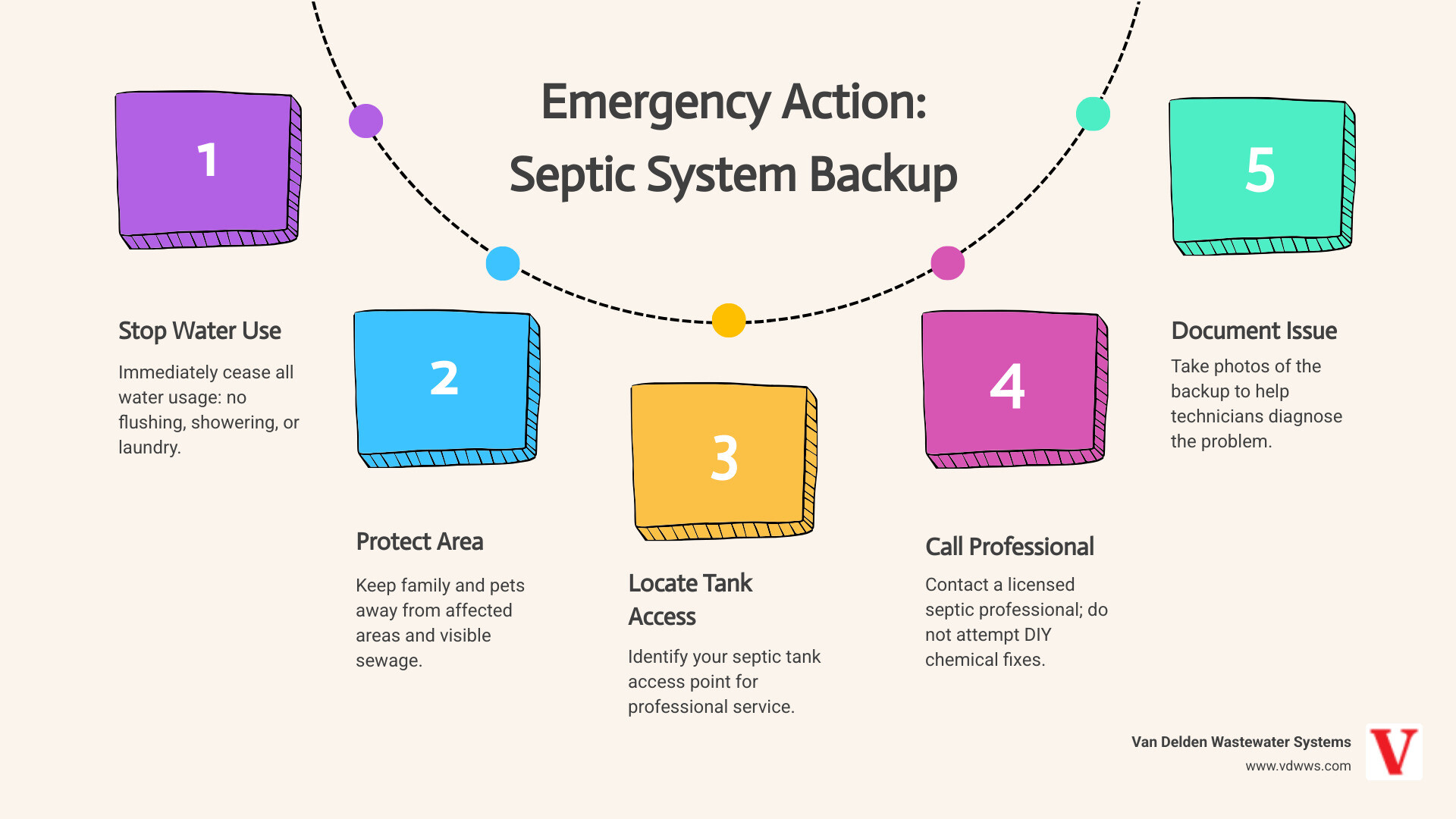
- Stop using all water immediately - No flushing, showering, or laundry
- Keep family and pets away from affected areas and visible sewage
- Locate your septic tank access - You'll need this for the service team
- Call a licensed professional - Don't wait or try DIY fixes with chemicals
- Document the issue - Photos help technicians diagnose problems faster
For comprehensive septic system guidance, see our septic system maintenance overview, or if you need immediate help, contact Van Delden Wastewater Systems for emergency septic service.
Most septic backups happen because the tank hasn't been pumped in years, pipes have become clogged with grease or non-biodegradable items, or the household is simply using more water than the system was designed to handle. In Waring and the surrounding Texas Hill Country, where many homes rely entirely on septic systems rather than municipal sewer lines, knowing how your system works and what it needs is essential to avoiding these messy emergencies.
Easy septic tank cleaning backing up in waring tx word list:
First Alert: Recognizing the Signs of a Septic Backup
When your septic system is struggling, it often sends out subtle distress signals before a full-blown backup occurs. As homeowners in Waring, TX, it’s crucial to recognize these signs early. Ignoring them can turn a minor issue into a major, costly, and unsanitary problem. We want to help you catch these symptoms before they escalate.
Here are the key signs and symptoms that Waring, TX residents should look out for:
- Slow Drains: Are your sinks, showers, or bathtubs draining much slower than usual? This is often one of the first indicators that there's a blockage or that your septic tank is nearing its capacity. It suggests that wastewater isn't flowing freely through the pipes or into the drainfield.
- Gurgling Pipes: Strange gurgling sounds coming from your drains or toilets, especially after flushing or using water, can signal an issue. This often happens when air is trapped in the plumbing system due to a blockage in the outlet pipe from the septic tank, preventing proper venting.
- Foul Odors: An unmistakable smell of sewage, either inside your home or outside around your septic tank and drainfield, is a serious warning sign. These odors indicate that wastewater is not being contained or treated properly, allowing gases to escape.
- Sewage in Tubs or Toilets: This is the most obvious and alarming sign of a septic backup. If sewage is backing up into your lowest drains, like the bathtub or toilet, it means the entire system is overwhelmed and wastewater has nowhere else to go. This typically occurs when the septic tank is completely full or there's a severe blockage in the main sewer line leading to the tank.
- Standing Water Over Drainfield: If you notice unusually wet or soggy areas, or even puddles of standing water, in your yard over the drainfield (also known as the leach field), it's a strong indication that the drainfield is failing and can no longer absorb effluent. This can lead to wastewater surfacing.
- Unusually Green Grass: While lush green grass might seem appealing, if a specific area of your lawn, particularly over your drainfield, is significantly greener and healthier than the surrounding grass, it could be a sign of septic effluent surfacing. The nutrients in the wastewater act as a fertilizer, but this is an unhealthy situation.
If you observe any of these symptoms, especially multiple ones, it’s time to act. Early detection can prevent extensive property damage and health risks.
Uncovering the Culprit: Common Causes of Septic Backups
Understanding why your septic system might be backing up is the first step toward finding a lasting solution. In Waring, TX, like many other areas relying on septic systems, several common culprits are usually behind these messy situations. Our experience has shown us these issues time and again.
Let's explore the most frequent causes:
- Full Septic Tank: This is perhaps the most common reason for a backup. Over time, solids accumulate at the bottom of your septic tank. While bacteria break down some organic matter, inorganic solids and fats form layers of sludge and scum. If your tank isn't pumped regularly (typically every 3-5 years, as recommended by the EPA), these layers will build up, reducing the tank's capacity. Eventually, there's no room for new wastewater, causing it to back up into your home.
- Clogged Inlet or Outlet Pipes:
- Inlet Pipe: This pipe carries wastewater from your home to the septic tank. It can become clogged due to:
- Improper Pitch or Sags: If the pipe doesn't have the correct downward slope (ideally 1/4" per foot of run), solids can settle and accumulate, creating a blockage. Low spots or "sags" in the pipe can also trap wastewater and solids.
- Missing or Damaged Baffle: The inlet baffle ensures wastewater enters the tank below the scum layer. If it's missing or broken, solids can directly enter and clog the pipe.
- Roots: Tree and shrub roots are attracted to the moisture and nutrients in pipes and can infiltrate cracks, growing and creating significant blockages.
- Outlet Pipe: This pipe carries treated effluent from the septic tank to the drainfield. It can clog with:
- Scum Buildup: If the outlet baffle is compromised, scum (fats, oils, grease) can escape the tank and solidify in the outlet pipe.
- Foreign Materials: Non-biodegradable items (discussed below) can pass through the tank and get stuck here.
- Excessive Solids: If the tank is too full, solids can be pushed into the outlet pipe, leading to a clog.
- Failing Drainfield: The drainfield (also known as a leach field) is where the partially treated wastewater (effluent) is dispersed into the soil for final purification. A failing drainfield can no longer absorb this water, causing it to back up into the septic tank and eventually your home. Reasons for failure include:
- Oversaturation: Prolonged heavy water usage can overwhelm the drainfield's capacity to absorb water.
- Soil Compaction: Driving heavy vehicles or placing structures over the drainfield can compact the soil, reducing its ability to absorb water.
- Clogging: Solids escaping a full septic tank can clog the drainfield's soil pores, preventing absorption.
- Age: Drainfields have a finite lifespan, typically 20-30 years, after which the soil's absorption capacity naturally diminishes.
- Excessive Water Usage: Our septic systems are designed to handle a specific volume of wastewater. If your household consistently uses more water than the system was designed for, it can overwhelm the tank and drainfield. Leaking toilets (a leaking flapper can add 2,000 gallons per day!), dripping faucets (50 gallons per day), or malfunctioning water softeners (3,000 gallons per day) can dramatically increase water input, leading to backups.
- Flushing Non-Biodegradable Items: Your septic system is not a trash can. Flushing items like "flushable" wipes (they're not truly flushable!), paper towels, feminine hygiene products, dental floss, cat litter, or cigarette butts can lead to severe clogs in pipes and the tank. These items do not break down and accumulate, forming stubborn blockages.
- Grease and Chemical Disposal: Pouring grease, fats, and oils down the drain is detrimental to your septic system. They solidify and contribute to the scum layer, reducing tank capacity and potentially clogging pipes. Harsh chemicals, such as excessive drain cleaners, strong detergents, and pesticides, can kill the beneficial bacteria in your septic tank that are essential for breaking down waste, leading to an imbalance and system failure.
Understanding these causes empowers you to take preventative measures and recognize when professional intervention is necessary.
Emergency Action Plan: What to Do When Your Septic System Backs Up
A septic backup can be alarming, but the first step is always to remain calm. We've seen countless backups in Waring, TX and the surrounding areas, and we know that taking the right immediate actions can significantly reduce damage and simplify the repair process.
Here’s your emergency action plan when your septic system backs up:
- Stop All Water Use Immediately: This is the most crucial first step. Do not flush toilets, run water in sinks or showers, or use any appliances that consume water (washing machine, dishwasher). Every drop of water you use will only add to the backup, potentially worsening the situation and increasing the amount of sewage overflowing into your home or yard.
- Protect the Area from Children and Pets: Septic backups contain harmful bacteria, viruses, and other pathogens. Keep everyone, especially children and pets, away from any areas where sewage has surfaced, whether inside your home or in the yard. If possible, cordon off affected areas.
- Locate Your System Components: Knowing the general location of your septic tank and drainfield will be helpful for the professionals you call. If you have a diagram of your system, have it ready. If not, try to recall where the tank access lids are.
- Avoid Chemical Additives or DIY Fixes: Do not attempt to use chemical drain cleaners or septic additives as a solution. These products rarely resolve the root cause of a backup and can often harm the beneficial bacteria in your septic tank, making the problem worse or damaging your system. Leave the diagnosis and repair to the experts.
- Call for Professional Help: As soon as you notice a backup, contact us at Van Delden Wastewater Systems. We are your local experts for septic tank cleaning backing up in waring tx. We have licensed and trained technicians who can quickly diagnose the problem and provide the right solution. Trying to fix complex septic issues yourself, especially those involving the tank or drainfield, can be dangerous due to toxic gases (like hydrogen sulfide) and falling hazards if the tank is opened. Never leave an open septic tank unattended.
- Document the Issue: Take photos or videos of the backup, both inside your home and in your yard. This documentation can be very helpful for our technicians in understanding the scope of the problem and for any potential insurance claims.
A septic backup is an emergency that requires professional attention. We are always ready to assist homeowners in Waring, TX, and the wider Kendall County area with reliable, prompt service.
Proactive Maintenance to Prevent Septic Tank Cleaning Backing Up in Waring TX
Preventing a septic backup is always better than dealing with the aftermath. For homeowners in Waring, TX, proactive maintenance is key to a healthy, long-lasting septic system. We believe in educating our customers so they can avoid the stress and expense of an emergency.
Determining the Right Schedule for Septic Tank Cleaning Backing Up in Waring TX
One of the most critical maintenance tasks is regular septic tank pumping. But how often is "regular"? While the EPA recommends pumping your septic tank every 3-5 years, this is a general guideline. Several factors influence the ideal frequency for your specific home in Waring, TX:
- Pumping Frequency: The standard recommendation is every 3-5 years. This ensures that the accumulated sludge and scum layers are removed before they can overflow into the drainfield or back up into your home.
- Tank Size: A larger septic tank has more capacity to hold solids, allowing for longer intervals between pumpings. Conversely, a smaller tank will need more frequent attention.
- Household Size: More occupants mean more wastewater and more solids entering the tank. A single person might need pumping less often than a large family in the same size home. We often calculate based on two occupants per bedroom.
- Water Usage: High water usage, even with fewer people, can lead to more frequent pumping needs. This includes long showers, multiple daily laundry loads, or frequently running dishwashers.
- Garbage Disposal Impact: If you use a garbage disposal regularly, your tank will accumulate solids much faster. Food scraps are considered "high-strength waste" and take longer to break down, necessitating more frequent pumping, potentially every 1-2 years.
- High-Strength Waste: Beyond garbage disposals, other high-strength waste like excessive grease, certain medications, and harsh cleaning products can accelerate sludge buildup and impact bacterial activity, calling for earlier tank cleaning.
We can help you assess these factors and recommend a customized pumping schedule to keep your septic system running smoothly.
Best Practices for a Healthy Septic System in the Texas Hill Country
Beyond regular pumping, daily habits play a huge role in preventing septic tank cleaning backing up in waring tx. Here are our best practices for maintaining a healthy septic system:
- Water Conservation: Reduce the amount of wastewater entering your system. Fix leaky faucets and toilets promptly (a small leak can waste thousands of gallons). Install water-saving fixtures, such as low-flow toilets and showerheads. Spread out laundry loads throughout the week instead of doing several loads in one day to avoid overwhelming the system.
- Septic-Safe Products: Use biodegradable and septic-safe cleaning products. Avoid harsh chemicals, excessive bleach, and antibacterial soaps, as these can kill the beneficial bacteria in your tank that are vital for waste breakdown.
- Proper Waste Disposal: As we mentioned, your septic system is not a trash can. Never flush anything other than human waste and toilet paper. This means no "flushable" wipes, paper towels, feminine hygiene products, dental floss, cat litter, coffee grounds, or cigarette butts. Also, avoid pouring grease, fats, and oils down the drain, as they solidify and create clogs.
- Drainfield Protection: Your drainfield is a delicate part of your system. Do not drive or park heavy vehicles over it, as this can compact the soil and damage the pipes. Avoid planting trees or shrubs with aggressive root systems near the drainfield, as roots can infiltrate and clog lines. Maintain a healthy grass cover over the drainfield to help with evaporation and prevent erosion.
- Regular Professional Inspections: Schedule professional inspections every 1-3 years. Our technicians can assess the condition of your tank, baffles, and drainfield, identify potential issues early, and recommend preventative maintenance or minor repairs before they become major problems. Detailed septic inspections provide peace of mind.
Understanding the Health Risks of a Septic Tank Cleaning Backing Up in Waring TX
When a septic system backs up, it's more than just an inconvenience; it poses significant health and environmental risks that homeowners in Waring, TX, must take seriously. A poorly maintained or failing septic system can create serious hazards.
The potential risks include:
- Health Hazards: Raw sewage contains a cocktail of harmful bacteria (like E. coli), viruses (such as Norovirus and Hepatitis A), and parasites. Direct contact with or inhalation of aerosols from sewage can lead to severe gastrointestinal illnesses, skin infections, and other serious health problems for humans and pets.
- Environmental Risks:
- Groundwater Contamination: If the drainfield is failing, untreated wastewater can seep into the groundwater, contaminating drinking water sources for your home and neighboring properties.
- Surface Water Contamination: Backups can lead to sewage runoff into nearby streams, rivers, or lakes, harming aquatic life and making recreational waters unsafe.
- Soil Contamination: Untreated effluent saturating the soil can render areas of your property unusable and unhealthy for gardening or recreation.
- Property Damage: Sewage backing up into your home can cause extensive damage to flooring, walls, furniture, and personal belongings. The cost of cleanup and restoration can be substantial, often requiring professional remediation to ensure all contaminants are removed.
- Foul Odors: While not directly a health risk, the pervasive and unpleasant odors from a backup can make your home uninhabitable and significantly reduce your quality of life.
Timely care of septic systems is necessary to prevent these backups, foul odors, environmental hazards, and expensive repairs.
Navigating Local Rules: Kendall County Septic Regulations
For homeowners in Waring, TX, understanding local regulations regarding septic systems is an important part of responsible ownership. Septic systems are regulated at both state and local levels to protect public health and the environment. We are well-versed in the requirements that apply to our service areas, including Kendall County.
Here's what you should be aware of:
- TCEQ Standards: In Texas, the Texas Commission on Environmental Quality (TCEQ) sets the statewide standards for On-Site Sewage Facilities (OSSFs), which include septic systems. These regulations cover everything from design and installation to maintenance and repair. All septic systems in Texas must comply with TCEQ rules.
- Kendall County Requirements: While TCEQ provides the overarching framework, individual counties, like Kendall County, often have their own specific ordinances and permitting processes. These local rules might address aspects such as:
- Permits: You will almost certainly need a permit from Kendall County for any new septic system installation, major repairs, or alterations to an existing system. Attempting work without a permit can lead to fines and necessitate costly re-work.
- Inspections: The county may require inspections during various stages of installation or repair.
- Maintenance Contracts: In some Texas counties, a maintenance contract for the life of a septic system, particularly for aerobic systems, is required. It's always best to check with Kendall County's environmental or permitting department to confirm specific requirements for your system type.
- Importance of Licensed Technicians: To ensure compliance with all state and local regulations, it is crucial to use licensed and insured septic professionals for any work on your system. Our technicians are not only highly educated and trained but also hold the necessary licenses to perform septic services in Kendall County and the surrounding Texas Hill Country. This ensures that all work is done correctly, safely, and in accordance with legal requirements. We pride ourselves on providing reliable, honest solutions.
Navigating these regulations can be complex, but you don't have to do it alone. We are here to help you understand and comply with all necessary rules, ensuring your septic system is always up to code.
Conclusion: Your Partner in Septic System Health
Experiencing septic tank cleaning backing up in waring tx can be a daunting challenge, but with the right knowledge and a trusted partner, it's a problem that can be effectively managed and often prevented. We've explored the critical signs of a backup, dug into the common causes, provided an immediate action plan, and outlined proactive maintenance strategies custom for the Texas Hill Country. We also touched upon the important health risks and local regulations that homeowners in Kendall County should consider.
The key takeaways are clear:
- Early Detection is Crucial: Pay attention to slow drains, gurgling pipes, foul odors, and wet spots in your yard.
- Proactive Maintenance is Your Best Defense: Regular pumping, mindful water use, proper waste disposal, and professional inspections are non-negotiable for a healthy system.
- Don't Delay Professional Help: When a backup occurs, cease water use immediately and call licensed professionals like us. Trying DIY fixes can worsen the problem and pose health risks.
At Van Delden Wastewater Systems, we understand the unique challenges faced by homeowners in Waring, TX, and the surrounding areas. As a family-owned business operating since 1937, we bring nearly nine decades of licensed experience to every job. Our background-checked, non-commissioned technicians are dedicated to educating our customers, providing transparent pricing, and delivering high-quality work, always backed by detailed service forms and photo documentation. We are your go-to team for dependable service and long-lasting results.
Don't let a septic backup disrupt your peace of mind or compromise your home's safety. Partner with us for comprehensive septic solutions and keep your system flowing smoothly for years to come.
Schedule your septic tank cleaning service