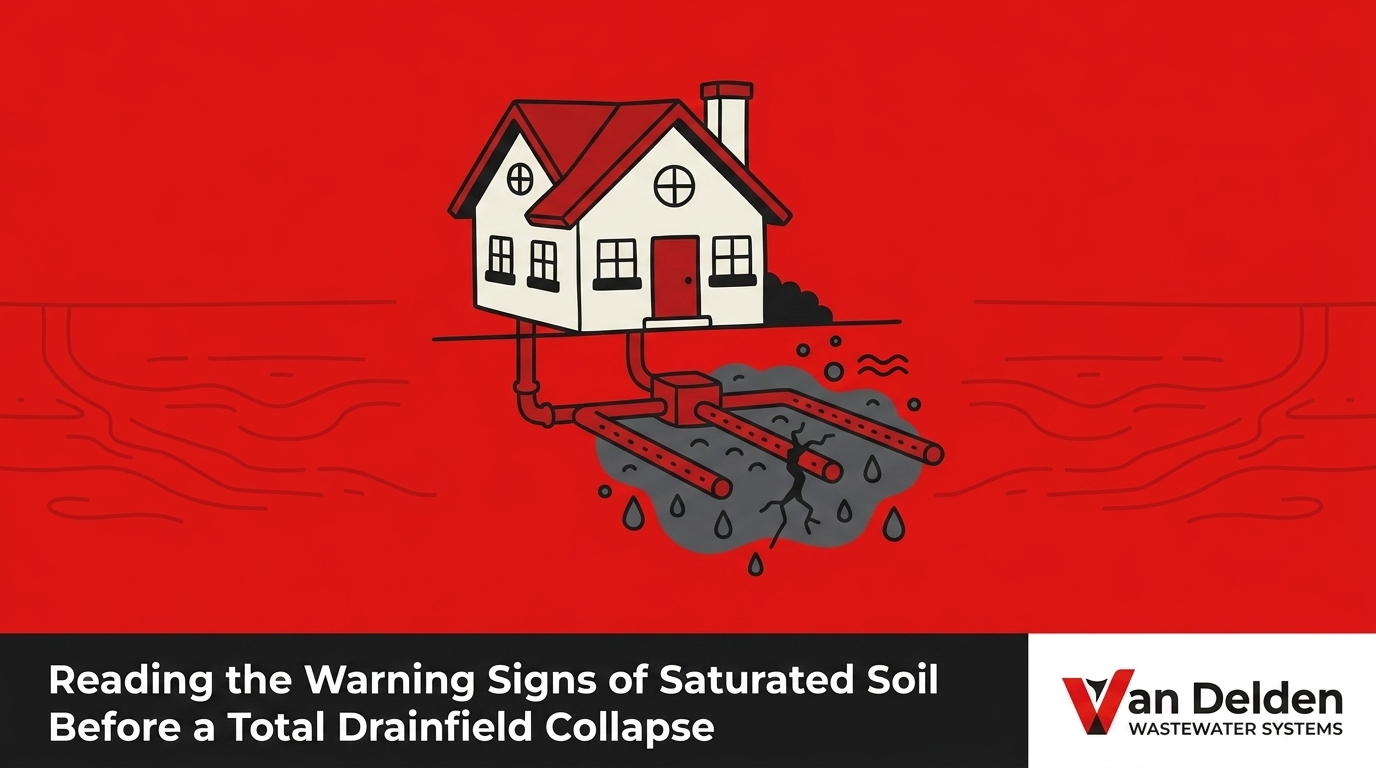
Understanding how grease and fat damage your septic tank starts with knowing what actually happens once cooking oil, meat drippings, or butter rinse down your kitchen drain. The short answer: it's slow, silent, and expensive.
How grease and fat damage a septic tank — quick summary:
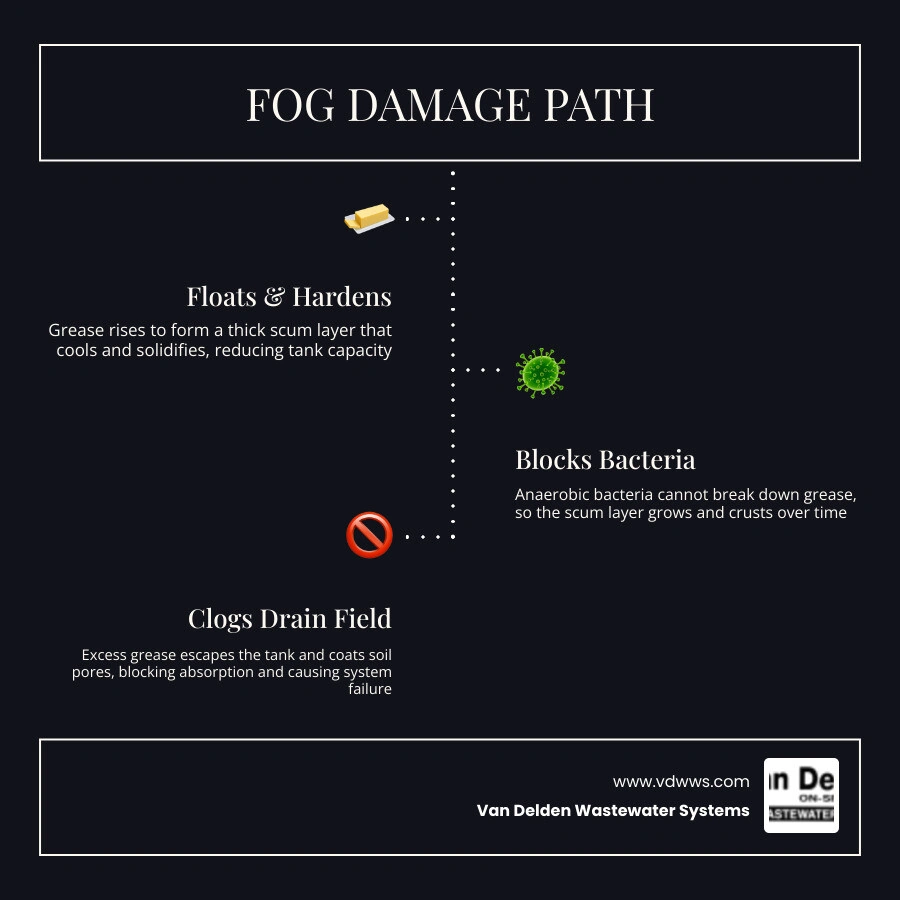
• Grease floats to the top of the tank and forms a thick, hardening scum layer
• That scum layer grows over time, reducing the tank's working capacity
• Beneficial bacteria cannot efficiently break down grease, so it accumulates rather than disappearing
• Excess grease pushes out of the tank into the drain field, coating soil pores and blocking absorption
• Pipes, baffles, and filters clog with hardened fat, restricting flow and causing backups
• The result is more frequent pump-outs, costly repairs, and potentially a failed drain field
Over 60 million Americans rely on septic systems, according to the EPA. For every one of those households, fats, oils, and grease — commonly called FOG — are among the most damaging things that can enter the system. Unlike toilet paper or organic waste that bacteria readily break down, grease behaves differently. It hardens as it cools, floats rather than settles, and resists the natural biological processes that keep a septic tank working. Even small amounts compound over time, and as one widely shared observation in the septic industry puts it: there is no safe level of grease disposal down a drain connected to a septic system.
This guide walks you through exactly what FOG does inside your tank, the warning signs to watch for, and the habits that protect your system for the long haul.
Understanding FOG: How Grease and Fat Damage Your Septic Tank
To truly grasp the threat, we have to look at what FOG actually is. FOG stands for Fats, Oils, and Grease. It is a broad category that includes everything from the bacon grease left in your morning skillet to the olive oil in your salad dressing, the butter in your baking pans, and even the hidden fats in dairy products, sauces, and cosmetic lotions.
Chemically, these substances are hydrophobic, meaning they do not mix with water. They also have a lower density than water. When wastewater from your kitchen sink, dishwasher, or shower enters the septic tank, it undergoes a natural separation process. Because grease and oils are lighter than water, they immediately rise to the surface.
In a healthy system, wastewater should separate into three distinct layers:
1. The Sludge Layer (Bottom): Heavy solids sink to the floor of the tank, where anaerobic bacteria slowly break them down.
2. The Effluent Layer (Middle): Relatively clear liquid wastewater, which is eventually pushed out into the drain field.
3. The Scum Layer (Top): Light solids, fats, oils, and grease float here.
When we allow excessive FOG into our drains, we disrupt this delicate balance. To learn more about how these substances behave once they cross the threshold of your plumbing, read our detailed breakdown on Oils and Grease in Your Septic Tank.
The Physical Behavior of Fats and Oils Inside the Tank
Once FOG enters the septic tank, it doesn't remain a warm, flowing liquid for long. The interior of an underground septic tank in Texas areas like San Antonio or Boerne typically hovers at a much cooler temperature than the hot water coming out of your kitchen tap.
As soon as warm grease hits the cooler environment of the tank, it begins to solidify. Animal fats, such as lard, butter, and bacon grease, have a high concentration of saturated fatty acids, which cause them to solidify at relatively warm temperatures—typically below 80 degrees Fahrenheit. When these fats cool, they form a sticky, viscous, and eventually rock-hard crust on top of the water.
Vegetable oils, on the other hand, contain unsaturated fats that remain liquid at lower temperatures. While they do not solidify into a hard crust as quickly as animal fats, they still float to the surface. Over time, these liquid oils can coat other floating solids, bonding them together into a stubborn, leathery sheet. This physical transformation is why we refer to FOG as Septic System Wreckers: Grease and Fat.
Why Septic Bacteria Cannot Efficiently Break Down Grease
Your septic tank is not just a holding box; it is a living biological reactor. It relies on billions of anaerobic bacteria to digest organic waste. However, these bacteria are highly specialized, and grease is incredibly difficult for them to process.
Anaerobic bacteria lack the heavy-duty enzymes required to break down the complex chemical bonds of lipids (fats) efficiently. While toilet paper and human waste are easily decomposed, grease breaks down at an incredibly slow rate.
Furthermore, as the grease layer hardens into a thick, airtight crust on the surface of the water, it blocks oxygen transfer and creates an environment that can suffocate or severely disrupt the beneficial bacterial colonies. When the bacterial population is compromised, the overall treatment efficiency of your entire tank drops. Instead of being digested, the organic solids simply pile up, leading to rapid system clogging.
The Path of Destruction: Pipes, Baffles, and Drain Fields
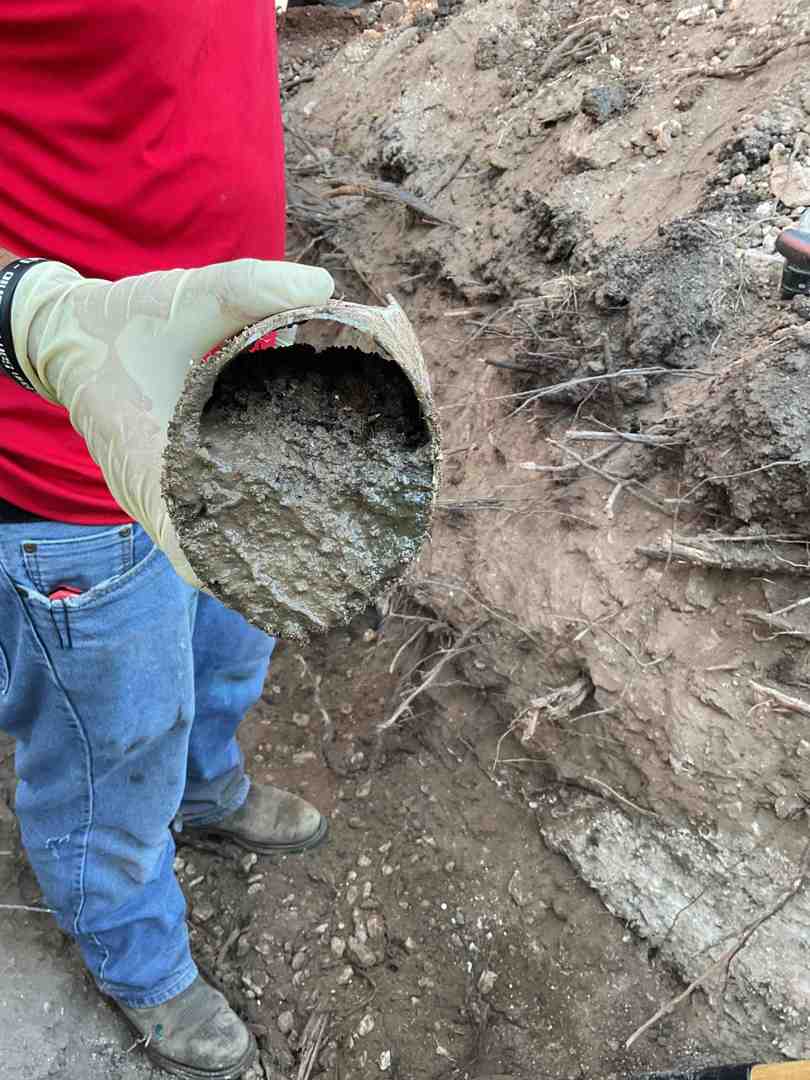
The damage caused by FOG is not confined to a single area. It is a progressive journey of destruction that starts in your kitchen plumbing and ends in the soil of your yard.
First, let's look at your home's internal plumbing. As warm grease travels down your household pipes, it clings to the pipe walls. It acts like cholesterol in human arteries, narrowing the passage with every pour. Food particles and hair get caught in this sticky residue, creating stubborn blockages before the waste even reaches the tank.
If the grease makes it to the tank, it encounters the inlet and outlet baffles (or T-shaped pipes). These baffles are critical components designed to keep the floating scum layer inside the tank while allowing the clear middle liquid (effluent) to flow safely out to the drain field.
When grease builds up, it coats these baffles and clogs the effluent filter. If the outlet baffle or filter becomes completely blocked, wastewater has nowhere to go but backward, resulting in sewage backing up into your home's lowest drains. This is why FOG is widely recognized as The #1 Cause of Septic System Failure.
How Grease and Fat Damage Your Septic Tank Drain Field
The absolute worst-case scenario occurs when grease escapes the septic tank and travels into the drain field (also known as the leach field or soakaway). This happens when the scum layer becomes so thick that it extends below the bottom of the outlet baffle, allowing raw grease to flow out with the effluent.
Once grease enters the perforated lateral lines of your drain field, it plugs the small holes designed to distribute water into the ground. Worse yet, the grease that does manage to seep into the surrounding gravel and soil coats the soil pores.
This creates a completely waterproof barrier. The soil loses its natural ability to filter and absorb wastewater. When the soil is sealed by a layer of grease, the wastewater cannot drain downward. It has no choice but to rise to the surface of your lawn, creating a swamp of raw, smelly sewage in your backyard. Once a drain field is thoroughly contaminated with grease, it often cannot be cleaned or salvaged; the only solution is to dig it up and replace it, which is an incredibly invasive and expensive process.
Overlooked Household Sources of Fats, Oils, and Grease
Most homeowners know not to pour a pan of hot bacon grease directly down the sink. However, grease enters our systems in many sneaky, overlooked ways during daily household chores:
• Meat Drippings: Rinsing plates containing residual grease from grilled meats, roasts, or poultry.
• Dairy Products: Pouring spoiled milk, heavy cream, sour cream, or yogurt down the drain.
• Salad Dressings and Cooking Oils: Rinsing bowls coated in olive oil, canola oil, or mayonnaise-based dressings.
• Baking Ingredients: Washing bowls used for mixing butter, shortening, margarine, or lard.
• Cosmetics and Personal Care Products: Bath oils, heavy moisturizers, makeup-removing oils, and petroleum-based body lotions washed down the shower or bathroom sink drains.
Even natural oils from our skin contribute to the grease layer over time, making it even more important to eliminate the avoidable sources of FOG in the kitchen.
Debunking Common Myths About Grease Disposal
Over the decades, several household myths have persisted regarding how to safely wash grease down the sink. Let's look at the reality behind these common misconceptions.
• "Hot water melts the grease so it washes away safely." — The Septic Reality: Hot water only liquefies grease temporarily. As soon as the water travels a few feet down your cold underground pipes, the grease cools, solidifies, and clings to your plumbing or tank walls.
• "Dish soap breaks down grease, making it safe for the tank." — The Septic Reality: Soap chemically emulsifies grease, breaking it into tiny droplets. However, this is temporary. Once in the septic tank, the soap dilutes, the grease separates from the water again, and it floats to the top—or worse, remains suspended and flows directly into your drain field.
• "My garbage disposal grinds up fatty foods, so they break down easily." — The Septic Reality: Garbage disposals do not change the chemical properties of grease. They simply chop greasy food scraps into tiny particles that settle into your tank as a highly concentrated, hard-to-digest sludge, rapidly filling your system.
Because your septic system is buried underground, it can be easy to ignore until a major emergency strikes. However, your plumbing will usually give you several warning signs that grease is beginning to choke the system:
• Slow Drains: Sinks, showers, and bathtubs take much longer to drain than usual.
• Gurgling Pipes: You hear strange bubbling or gurgling noises coming from your pipes when you flush the toilet or run the washing machine.
• Foul Sewage Odors: A persistent, sour smell of sewage or rotten grease wafts from your drains or near the area of your septic tank and drain field.
• Soggy Soil or Pooling Water: You notice unusually lush, green patches of grass, muddy soil, or actual pooling water over your drain field, even when it hasn't rained.
If you notice any of these red flags, it is crucial to act immediately. Ignoring these indicators can turn a simple maintenance issue into a catastrophic system failure. For a deeper look at what these signs mean, read our guide on the Signs You Are Overdue for Septic Pumping.
How Grease and Fat Damage Your Septic Tank and Increase Pumping Frequency
When grease accumulates in your tank, it takes up valuable physical space. A septic tank needs a certain amount of clear liquid volume to allow solids enough time to settle properly before the water exits to the drain field.
As the scum layer grows thicker from grease, the working capacity of the tank shrinks. This means wastewater moves through the tank much faster, giving solids less time to settle. Consequently, more suspended solids and grease are pushed out into your drain field.
To prevent this, households that dump grease down the drain are forced to pump their tanks far more frequently than the standard 3-to-5-year recommendation. Neglecting this maintenance leads to severe consequences, which we detail in our article on What Happens If I Don't Pump My Septic Tank.
When you do call in the professionals, it's also helpful to understand the level of service you are receiving. Learn about the crucial distinctions in our guide on Septic Tank Pumping vs Cleaning: What's the Difference.
Best Practices for Preventing Grease Damage
Preventing grease damage is entirely about building good household habits. By making a few small adjustments to your daily kitchen routine, you can save yourself thousands of dollars in premature septic repairs:
• Scrape, Don't Rinse: Before putting any pots, pans, plates, or baking dishes in the sink or dishwasher, scrape all leftover food and solidified grease directly into the trash can.
• The Paper Towel Wipe: Keep a roll of paper towels handy. Use a sheet to wipe down greasy pans, salad bowls, and plates to absorb residual oils before washing them.
• Use Sink Strainers: Place fine-mesh strainers in all your kitchen sink drains to catch small, greasy food particles that escape during food prep. Empty these strainers into the trash.
• Collect and Cool: Keep an empty metal can or glass jar under the sink. Pour warm cooking oils, bacon grease, and meat drippings into the jar, let it cool and solidify, and then throw the container in the garbage.
• Maintain Grease Traps: If you run a commercial kitchen or a highly active home business in areas like Bulverde or Spring Branch, consider installing a grease trap. To keep it functioning, make sure to schedule a professional Grease Trap Cleaning Service regularly.
Frequently Asked Questions about Septic Grease
Can I use chemical additives or enzymes to dissolve grease in my septic tank?
We strongly advise against using harsh chemical additives or quick-fix store-bought enzymes. While some chemical treatments claim to "dissolve" grease, they often do so by emulsifying it or breaking it down temporarily. This allows the liquefied grease to flow out of the tank and directly into your drain field, where it cools and permanently seals the soil pores. Furthermore, harsh chemicals can kill the beneficial natural bacteria in your tank, ruining the biological digestion process entirely.
Does vegetable oil damage septic systems differently than animal fat?
Yes, they behave slightly differently due to their solidification temperatures. Animal fats (like butter and bacon grease) solidify quickly inside the tank, adding to the thick, hard scum layer. Vegetable oils (like olive or canola oil) stay liquid longer. While they don't form a hard crust as quickly, they are much more likely to remain suspended in the wastewater and escape into the drain field, where they coat the soil and cause rapid clog damage. Both are highly destructive and should be kept out of your drains.
How often should a septic tank be pumped if grease is a concern?
For a standard household, we recommend professional septic tank pumping every 3 to 5 years. However, if your household does a lot of cooking with oils and fats, or if you use a garbage disposal, your scum and sludge layers will build up much faster. In these cases, you should have your system inspected annually to measure the thickness of the grease layer and pump it out as soon as the scum layer reaches within 6 inches of the outlet baffle.
Conclusion
Protecting your septic system from the devastating effects of fats, oils, and grease doesn't require complex science—it simply requires consistent, healthy household habits. By keeping grease out of your drains, scraping your plates, and avoiding the myths of hot water and soap, you can ensure your system remains clean, efficient, and trouble-free.
Since 1937, Van Delden Wastewater Systems has been providing honest, reliable, and expert septic services to homeowners across San Antonio, Boerne, Bulverde, Spring Branch, Helotes, and the surrounding areas. As a family-owned business, we pride ourselves on our non-commissioned, background-checked technicians who focus on educating our customers. We provide detailed service forms and photo documentation with every job so you know exactly what is happening beneath your lawn.
Whether you need a routine inspection, a professional pump-out, or a complete system evaluation, we are here to help you maximize your system's longevity. Contact us today to schedule your next service and keep your home running smoothly.
To learn more about our services or to schedule an inspection, visit our Van Delden Wastewater Systems Septic Tanks page.