
How Deep Is a Septic Tank Buried in the Texas Hill Country?
Generic online advice assumes septic tanks are buried deep in soft soil, but Texas Hill Country limestone changes everything. See why your system may sit much shallower.
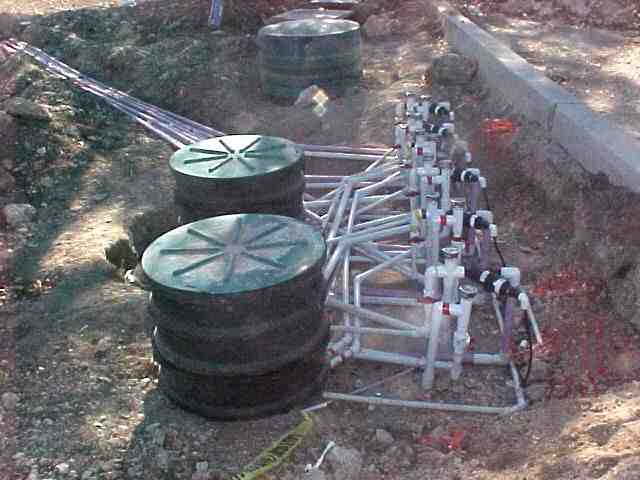
Home septic installation in boerne, tx is more than just digging a hole and dropping in a tank—it's a critical investment in your property's functionality, value, and long-term health. Whether you're building a new home in the Texas Hill Country or replacing an aging system, understanding the installation process and local requirements will save you from costly mistakes and future headaches.
Quick Guide: What You Need to Know Before Installing a Septic System in Boerne
If you're ready to explore your options, check out our complete guide to the septic system installation process or contact Van Delden for a free consultation.
For many homeowners new to septic systems, managing your own wastewater treatment can feel overwhelming. But with the right information and a trusted local expert, septic installation becomes a straightforward process. Boerne's unique soil composition and local regulations mean that one-size-fits-all solutions don't work here, making professional guidance from a company familiar with Kendall County's requirements essential.
When it comes to your home's wastewater management, a professional home septic installation in boerne, tx is essential for long-term property value and peace of mind. Choosing the right local expert makes the difference between a system that lasts for decades and one that fails within years, preventing backups and costly repairs.
A contractor familiar with the Texas Hill Country can steer the specific challenges of the area.
For more insights, you can read our guide on finding a reliable contractor to design and install your septic system.
A failing septic system can cause property damage and health hazards. Recognizing the warning signs early can save you from major headaches. Here are key indicators that your system may need replacement:
If you notice any of these signs, contact a professional for an evaluation to prevent further damage.
Selecting the right septic system is a critical decision that depends on your property size, household water usage, and local soil conditions. In an area like Boerne with its varied terrain, a one-size-fits-all approach doesn't work. Understanding the different types of septic systems will help you make an informed choice for a reliable wastewater solution. For a comprehensive overview, refer to our guide to septic system installation.
Here's a comparison of the main types of septic systems we commonly install in the Boerne area:
| Feature | Conventional Septic System | Aerobic Treatment Unit (ATU) | Mound System |
|---|---|---|---|
| How it Works | Uses a tank and drain field for natural filtration. | Uses oxygen to break down waste more efficiently, with treated water often used for irrigation. | An engineered, raised drain field for properties with poor soil or high water tables. |
| Best For | Properties with suitable, permeable soil and ample space. | Properties with poor soil, high water tables, or limited space. | Properties with shallow soil, high water tables, or where a conventional drain field is not feasible. |
| Pros | Simple design, lower initial cost, and requires no electricity. | High-quality effluent, can be used for irrigation, and is suitable for challenging sites. | Effective in difficult soil conditions, provides excellent wastewater treatment, and protects groundwater. |
| Cons | Requires specific soil conditions, larger space for the drain field, and is often restricted by modern regulations. | Higher initial cost, requires electricity and regular maintenance, and involves a service contract. | Higher installation cost, visually prominent, and requires specific materials and design. |
Conventional systems are a traditional choice, consisting of a septic tank and a drain field. Wastewater flows into the tank, where solids settle and are broken down by bacteria. The liquid then flows to the drain field for natural filtration through the soil. However, these systems require specific soil conditions, and Texas regulations often restrict their use in areas with rocky or clay-heavy soil like the Hill Country. For more details, you can review our septic system design and installation process.
Aerobic Treatment Units (ATUs) are an advanced solution that uses oxygen to break down waste more effectively than conventional systems. This process produces a higher quality of treated water that, after disinfection, can be used for landscape irrigation. ATUs are ideal for properties with poor soil, high water tables, or limited space where conventional systems aren't an option. While they require electricity and regular maintenance, they offer a superior level of treatment. Learn more about how we install aerobic septic units.
For properties with particularly challenging conditions like shallow soil or a high water table, a mound system may be the best solution. A mound system is essentially an engineered drain field built above the natural ground level. It uses a specific sand fill to create a filtration layer that treats wastewater before it reaches the native soil. This provides an extra layer of protection for groundwater. Choosing the right alternative system requires a detailed site assessment and knowledge of local regulations. For a broader understanding of various septic solutions, explore our main page on septic system installation.
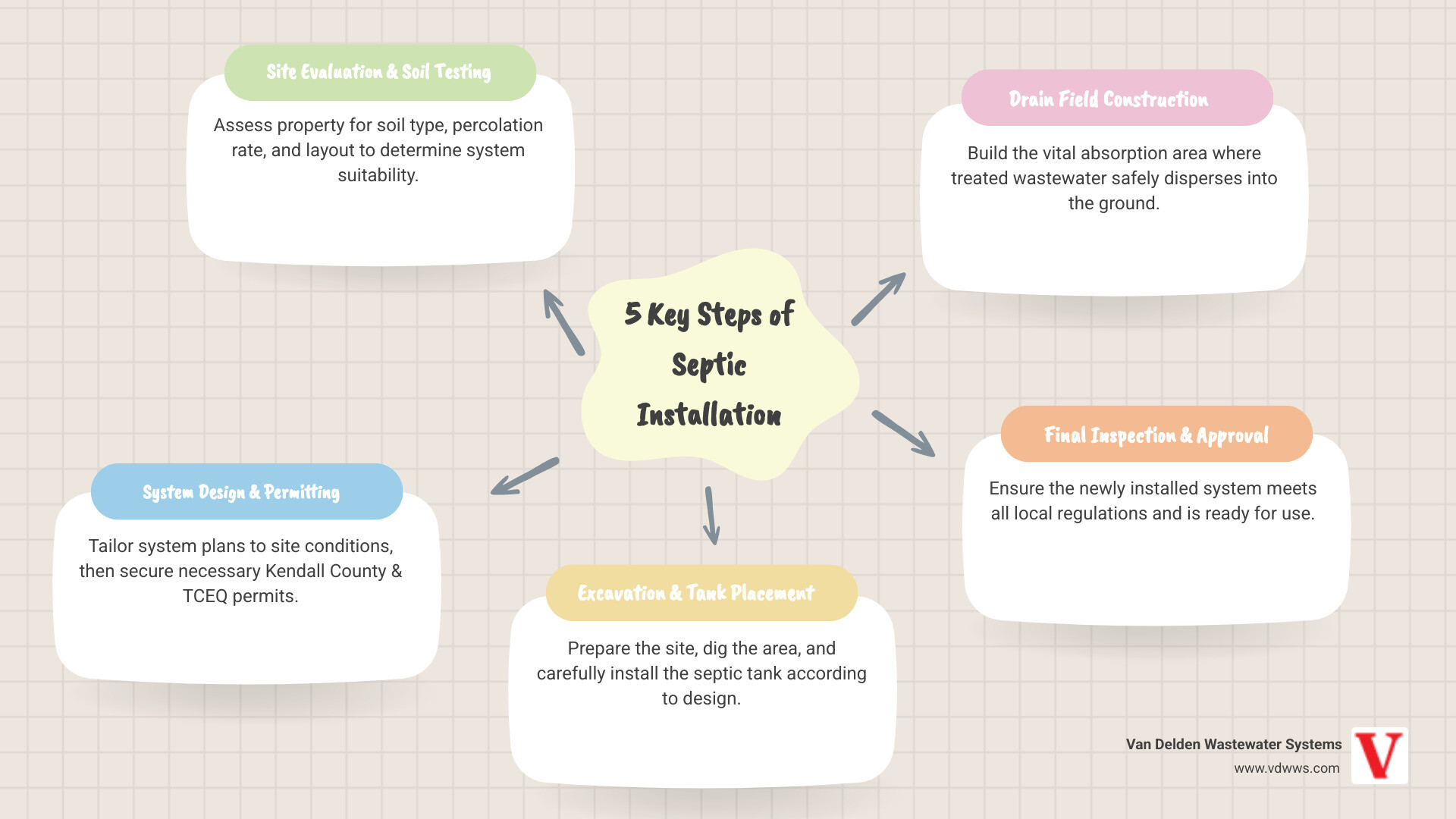
A professional home septic installation in boerne, tx is a streamlined process that typically takes 3-7 days, depending on the site and system. Here’s a breakdown of what to expect:
For a deeper dive into the steps involved, read our article on what to expect during septic system installation.
A successful installation requires navigating potential obstacles. Here’s how we address common challenges in the Boerne area:
Once your home septic installation in boerne, tx is complete, proper maintenance is key to ensuring it lasts for decades. A well-cared-for system can prevent costly repairs and protect your investment.
Following these maintenance tips will keep your system running smoothly. For more details, check out our best septic installation Boerne guide.
DO's:
DON'Ts:
Here are answers to some common questions about septic systems.
With proper maintenance, a septic tank can last for decades. The lifespan depends on the material (concrete tanks are very durable), soil conditions, and how regularly it's pumped and inspected. A well-maintained system can last 40 years or more.
As a general rule, have your septic tank pumped every three to five years. However, this can vary based on the size of your household, the volume of wastewater you generate, and the size of your tank.
It's best to only plant grass over your drain field. The roots of trees, shrubs, and other deep-rooted plants can grow into the pipes, causing clogs and serious damage. Avoid any planting that could interfere with the underground components of your system.
Navigating septic systems, from installation to maintenance, can be complex. With Van Delden Wastewater Systems, you have a partner committed to providing professional guidance and ensuring your peace of mind. As a family-owned business since 1937, we have built a legacy of quality and service across the Texas Hill Country.
We understand that a successful home septic installation in boerne, tx requires a deep understanding of local conditions. Our licensed, insured, and non-commissioned technicians provide honest, knowledgeable service focused on your needs, not on upselling. We prioritize educating our customers on proper system care to help you save money and extend the life of your system.
We ensure transparency and quality in every job, providing photo documentation and detailed service reports. Whether you need a new installation, a system replacement, or reliable maintenance, we are here to provide a practical, long-lasting solution.
Contact us today to start on your path toward a reliable and efficient wastewater system. Our dedicated team is ready to provide personalized assistance for your specific needs. Schedule expert service or ask a question, and let us show you why we are the trusted name for Boerne, TX septic installation services.

Peter was personable, professional and thorough. Highly recommend Van Delden. You might be able to find a cheaper company but not better!
On time. 100% professional, knowledgeable, and courteous. Very helpful and straightforward. That is the bar all businesses should strive for.
It has been a pleasure working with your company. Not only did y’all communicate very well but your workers were always polite! Thank you!
“I thank Van Delden for such prompt service. Honest people are hard to come by these days. I will certainly recommend Van Delden to anyone! Jesse is an upstanding young man and very nice to talk to. I thank everyone at Van Delden for taking such good care of me.”
This is just a note to thank you for explaining the problem with my system. You didn’t have to be so kind and I appreciate your good business ethics and time spent. In the future you will have mine in return!