Why Your Drainfield Deserves More Than Just a Passing Glance
Drainfield serivce timberwood park tx services are essential for protecting your home's wastewater treatment system and preventing costly failures. Here's what you need to know:
Quick Answer for Timberwood Park Residents:
- Schedule service every 1-3 years depending on your system.
- Watch for warning signs like slow drains, soggy yards, or foul odors.
- Professional inspections prevent expensive emergency repairs or system replacement.
- Local soil conditions in Bexar County require specialized expertise.
- Contact Van Delden Wastewater Systems for certified inspections.
Your drainfield is the underground hero of your septic system, filtering and cleaning wastewater before it returns to the environment. But for most homeowners, it's a classic case of out of sight, out of mind.
Ignoring your drainfield until something goes wrong can turn a simple maintenance issue into an expensive emergency. In areas like Timberwood Park, where expansive clay soil can shift and compact, your drainfield faces unique challenges that demand regular attention.
A professional drainfield inspection spots problems early, potentially extending your system's lifespan by 10-20 years and saving you from the nightmare of a sewage backup. Proactive maintenance always beats reactive repairs. Your drainfield works 24/7 to protect your property and family—it deserves a professional checkup.

Telltale Signs Your Timberwood Park Drainfield Needs Attention
When your drainfield has a problem, it communicates through subtle (and sometimes not-so-subtle) signs. Recognizing them early can help you avoid a messy, expensive emergency.
- Slow drains: If your sinks, showers, and tubs drain sluggishly, your drainfield might be overwhelmed or clogged.
- Gurgling noises: Strange sounds from your pipes often point to blockages or a drainfield that isn't functioning correctly.
- Sewage backups: If wastewater comes back up through your drains, your drainfield has likely reached its breaking point and needs immediate professional attention.
- Foul odors: Unpleasant smells near the drainfield area signal that untreated wastewater is surfacing or gases are escaping.
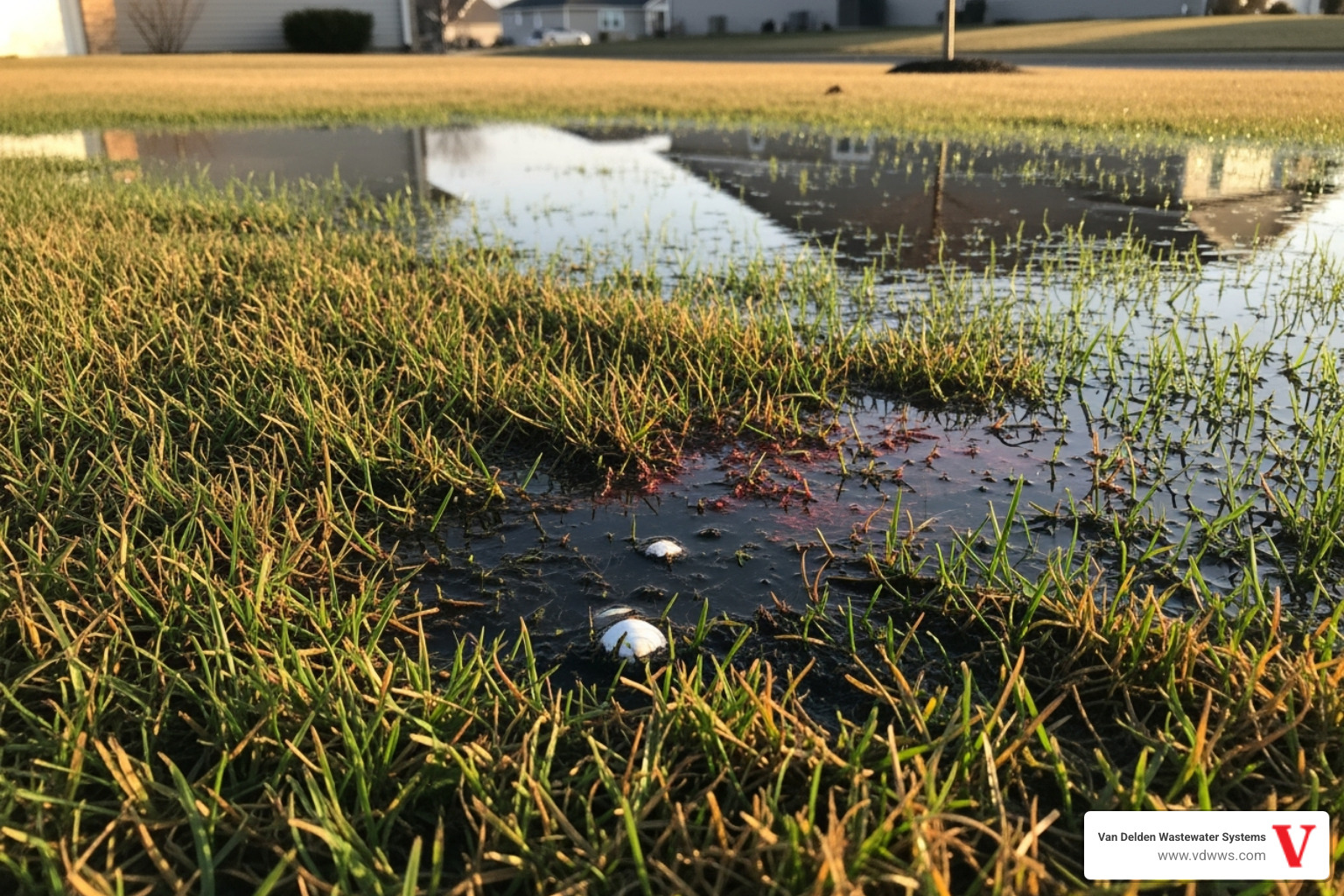
- Unusually lush grass: While a green lawn is nice, vibrant patches over your drainfield can mean wastewater is surfacing and over-fertilizing the area.
- Standing water: Soggy ground in your yard (when it hasn't rained) is a clear sign your soil can't absorb any more wastewater and the drainfield has reached capacity.
The Texas Hill Country climate, with its cycles of drought and heavy rain, combined with Bexar County's expansive clay soil, puts extra stress on drainfield systems. This makes a professional drainfield inspection Timberwood Park TX service even more critical.
Why You Can't Ignore the Warning Signs
Ignoring these signs is a recipe for disaster. A failing drainfield can lead to:
- Environmental contamination: Untreated wastewater can seep into the soil and contaminate groundwater, affecting your property and the community's water supply.
- Health risks: Exposure to raw sewage can cause waterborne diseases, putting your family and pets at risk.
- Costly repairs: Catching problems early with regular inspections is far less expensive than dealing with a complete system failure, which is one of the costliest home repairs.
As a family-owned business since 1937, we've seen how preventive care saves homeowners from major headaches. These warning signs are your drainfield's cry for help—listening to them will save you from bigger problems later.
The Professional Drainfield Inspection Timberwood Park TX Process
When you call us for a professional drainfield inspection Timberwood Park TX, we perform a thorough, multi-point check to understand exactly what's happening with your system.
Our process begins with a visual inspection of the drainfield area, looking for soggy spots, unusual grass growth, foul odors, or signs of soil compaction. We then inspect the septic tank to ensure it's properly separating solids from liquids, as a failing tank can quickly overwhelm the drainfield. We also examine the distribution box (D-box), which must be level and clear to evenly spread wastewater to all drainfield lines.
We assess the soil conditions to determine if the soil can effectively absorb and treat effluent. Finally, we check the integrity of your system components, including the underground pipes, for signs of collapse, blockages, or root intrusion.

Our background-checked technicians educate you about your system, providing detailed service forms and photo documentation so you can see what we see.
Advanced Diagnostic Technologies
To get a complete picture, we use advanced diagnostic tools to eliminate guesswork:
- Sewer Camera Inspection: A high-intensity camera gives us a clear view inside your pipes to spot clogs, root invasions, sediment buildup, and physical damage.
- Hydraulic Load Testing: We introduce a controlled amount of water to test your drainfield's absorption capacity under real-world conditions.
- Soil Percolation Test: This test measures how quickly water drains into your soil, confirming if it's acting as a proper natural filter.
- Component Locating: We use specialized equipment to accurately map your septic tank, D-box, and drainfield lines.
- Blockage Identification: Our tools pinpoint the exact location of blockages from grease or tree roots, allowing for targeted solutions like hydro-jetting.
- Biomat Assessment: We evaluate the thickness of the biomat—a biological layer that can choke your system—and recommend remediation if needed.
How Local Soil and Climate Affect Your Drainfield
Timberwood Park's local conditions create unique challenges for drainfields. Bexar County's expansive clay soil swells when wet and shrinks when dry, putting constant stress on underground pipes that can lead to cracks or collapse.
Our region's drought and heavy rain cycles worsen this issue. Droughts cause the soil to shrink, creating gaps around pipes, while heavy rains can saturate the ground, leaving no room for wastewater absorption and causing the soil to expand rapidly, potentially crushing components. Soil compaction from vehicles or construction further reduces the soil's ability to absorb wastewater.
These factors combine to put significant system stress on your drainfield, especially on older installations. That's why a cookie-cutter inspection isn't enough. Our technicians understand these local challenges, allowing us to provide a thorough inspection and advice custom to your property.
Best Practices for a Healthy Drainfield System
Treating your drainfield right is the secret to its longevity. It's all about developing good habits to prevent stress on your system.

- Conserve Water: Every gallon you save reduces the load on your drainfield. Spread out laundry loads, fix leaks, and choose high-efficiency appliances.
- Dispose of Waste Properly: Only human waste and toilet paper should be flushed. Never pour grease down the drain, as it solidifies and creates clogs.
- Choose Landscaping Carefully: Avoid planting deep-rooted trees and shrubs near your drainfield, as their roots will seek out your pipes for water. Stick with shallow-rooted grass.
- Protect the Drainfield Area: Never drive or park heavy vehicles over your drainfield. This compacts the soil, especially problematic in Timberwood Park's clay, and can crush pipes.
- Use Septic-Safe Products: Harsh chemical drain cleaners can kill the beneficial bacteria your septic tank needs to break down waste. Opt for biodegradable, septic-safe cleaners.
Here's what should never go down your drains or toilet:
- Grease, fats, and cooking oils
- Any type of wipes (even "flushable" ones)
- Feminine hygiene products and diapers
- Paper towels, tissues, and napkins
- Food scraps and coffee grounds
- Hair, dental floss, and cotton swabs
- Cigarette butts
- Chemicals, paints, and solvents
- Prescription medications
- Cat litter
For more tips, the EPA's guide to septic care offers excellent advice that complements regular drainfield inspection Timberwood Park TX services.
Recommended Maintenance Schedule
Routine maintenance is key to a healthy septic system. Inspection frequency for most conventional systems should be every 1-3 years. Annual inspections are wise for large families, older systems, or homes in areas with challenging soil like Timberwood Park. Your pumping schedule is typically every 3-5 years, but high-usage homes may need it more often to prevent solids from clogging the drainfield.
Aerobic systems are more complex and require more frequent maintenance, often quarterly visits from certified professionals as mandated by their service contracts. In contrast, conventional systems rely on gravity and natural filtration, making regular inspections and pumping their primary maintenance needs. Consistent maintenance can extend your system's lifespan, especially for older homes facing stress from our local soil and climate.
Navigating Regulations and Post-Inspection Steps
After your drainfield inspection Timberwood Park TX, you'll receive a comprehensive report with detailed findings and photo documentation. We explain what we found in plain English, outlining your repair options so you can make informed decisions.
Always work with licensed professionals for any septic repairs. In Bexar County, all septic work must meet strict standards to protect public health and the environment. Understanding Bexar County OSSF regulations is crucial for compliance, as permits are required for new installations and major repairs. We ensure all our recommendations align with local regulations to keep your system healthy and compliant.
What to Do if Your Inspection Reveals Problems
Finding issues is the first step toward a solution. Our technicians will review every finding with you. Common problems and their solutions include:
- Root Intrusion: For minor root problems, hydro-jetting can clear the lines. Severe cases may require pipe repairs or removing the offending tree.
- Biomat Remediation: When the natural biomat layer becomes too thick and clogs the soil, professional treatments can break it down and restore your drainfield's absorption capacity.
- Line Jetting: High-pressure water scours the inside of pipes to clear stubborn clogs from grease, debris, or other buildup, restoring proper flow.
- Component Repair: We can repair or replace damaged components like distribution boxes, cracked pipes, or failing septic tank baffles to ensure the entire system functions correctly.
- System Replacement: In cases of widespread failure, replacement may be the only option. We can guide you through modern solutions like conventional drainfields, raised beds, or mound systems that meet all state and local standards.
Whatever the issue, our Van Delden Wastewater Systems team will guide you through every step, from diagnosis to implementing the most effective solution for your Timberwood Park home.
Frequently Asked Questions about Drainfield Inspections
Here are answers to the most common questions we hear from Timberwood Park homeowners about their septic systems.
How often should I have my drainfield inspected?
For most systems, a professional drainfield inspection Timberwood Park TX is recommended every 1-3 years. However, the ideal frequency depends on a few factors:
- System Type: Conventional systems need inspection every 1-3 years, while more complex aerobic systems require more frequent checks, often quarterly, as part of a service contract.
- Household Size & Usage: Larger families or homes with high water usage put more stress on a system and benefit from more frequent inspections.
- System Age: Systems over 20 years old should be monitored more closely to catch age-related issues before they cause a failure.
If you notice warning signs like slow drains or soggy spots, call for an inspection immediately, regardless of your schedule.
While homeowners play a vital role in spotting obvious warning signs like soggy ground or foul odors, a comprehensive inspection requires professional expertise and tools. Our technicians use specialized equipment like sewer cameras and soil probes to diagnose issues underground that are invisible from the surface. We have the training to interpret subtle signs and understand the challenges of Timberwood Park's clay soil. Furthermore, handling septic components can pose serious health risks from wastewater pathogens, and all work must comply with Bexar County regulations. It's a job best left to trained, licensed professionals.
What is a biomat and why is it bad for my drainfield?
A biomat is a slimy, blackish biological layer that naturally forms in the soil around your drainfield trenches. It's created by microorganisms that break down waste in the effluent. A thin biomat is beneficial, acting as a final filter for wastewater.
However, over time, the biomat can become too thick and dense. When this happens, it clogs the pores in the soil, preventing wastewater from being absorbed. This reduced soil absorption is the primary problem. The drainfield essentially chokes, leading to wastewater backing up, soggy yards, and eventual system failure. Regular maintenance, including tank pumping and water conservation, helps manage biomat growth. If an inspection reveals excessive buildup, professional remediation may be necessary.
Your Partner in Septic System Health
Your drainfield works tirelessly to protect your home and family. We've covered the warning signs to watch for, the importance of professional inspections, and the unique challenges of Timberwood Park's soil. The key takeaway is simple: proactive care is essential.
Ignoring your drainfield leads to expensive, disruptive emergencies. A professional drainfield inspection Timberwood Park TX service is a smart investment that can extend your system's lifespan by years, saving you from the nightmare of a sewage backup or environmental contamination.
At Van Delden Wastewater Systems, we've been a trusted, family-owned septic partner since 1937. Our background-checked, non-commissioned technicians don't just inspect your system—they educate you. You'll receive detailed reports with photo documentation, giving you clear, honest information to make the best decisions for your home.
We are proud to serve the Texas Hill Country, and we have decades of experience with Bexar County's specific soil, climate, and regulations. You can trust that our recommendations will keep your system both healthy and compliant.
Don't wait for a problem to surface. Give your drainfield the professional attention it deserves.
Ready to schedule your comprehensive drainfield inspection? Learn more about our drainfield services to see how we can help keep your septic system running smoothly for decades to come.