Why Septic Root Intrusion Is a Critical Issue for Helotes Homeowners
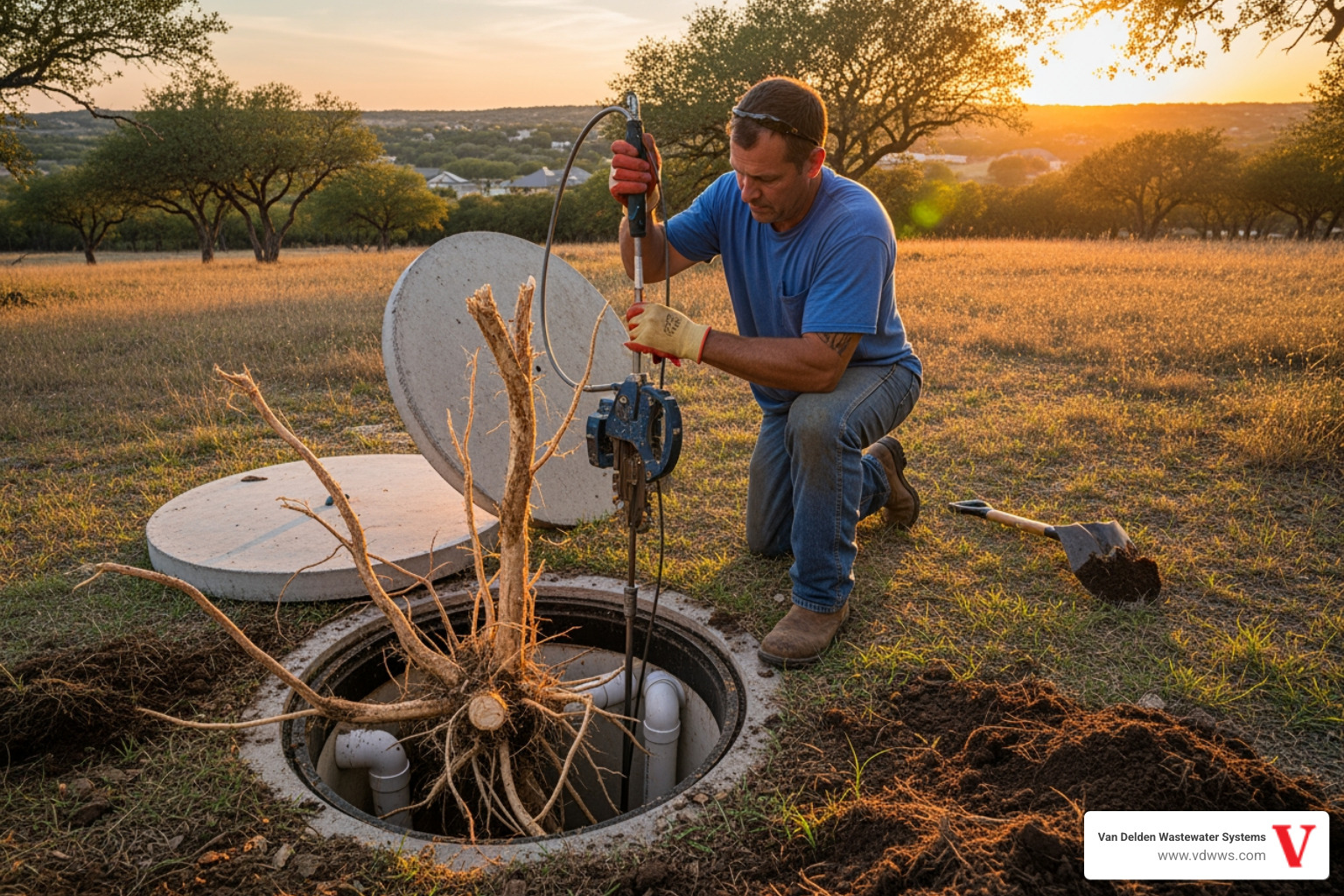
Septic root removal helotes tx is a service that becomes necessary when tree roots infiltrate your septic system's pipes, tanks, or drainfield. Roots are naturally drawn to the moisture and nutrients your septic system provides, and once they find even the smallest crack or weak seam in a pipe, they'll work their way inside. Over time, these roots expand, creating blockages that prevent wastewater from flowing properly. In Helotes, where native trees like Live Oaks have extensive root systems adapted to local soil conditions, this problem is particularly common.
What You Need to Know About Septic Root Removal in Helotes, TX:
- The Problem: Tree roots enter septic pipes through tiny cracks, then grow inside, causing clogs and structural damage
- Warning Signs: Slow drains, gurgling sounds, sewage odors, wet spots in your yard, or backups in your home
- Professional Solutions: Video camera inspection, mechanical root cutting, hydro-jetting, and approved root treatments
- Prevention: Strategic landscaping, maintaining safe planting distances, regular inspections, and routine septic maintenance
- Why It Matters: Ignoring root intrusion leads to system failure, significant repairs, property damage, and potential health hazards
If you're dealing with septic issues in Helotes, professional septic repair services can diagnose and resolve root problems before they cause catastrophic damage.
The good news is that with proper diagnosis and professional intervention, root intrusion can be effectively managed. Understanding how roots invade your system, recognizing the warning signs early, and taking preventative action are your best defenses against expensive emergency repairs.
Recognizing the Signs of Tree Root Intrusion
Tree roots are cunning invaders, often working their way into your septic system silently until the damage is significant. However, your home and yard often provide clues that something is amiss. Recognizing these common signs of root intrusion in your Helotes septic system early can save you from major headaches and expensive repairs.
One of the most frequent indicators is slow drains. If water in your sinks, showers, or tubs drains unusually slowly, roots could be partially blocking your septic pipes. This suggests reduced flow capacity in your system.
Gurgling plumbing sounds are another red flag. A strange gurgle from your toilet or drains after flushing or running water often means air is trapped by a blockage, struggling to get past an obstruction like a mass of tree roots.
Perhaps the most unpleasant sign is unpleasant odors near the drainfield or inside your home. A sewage smell indicates that wastewater isn't flowing freely and might be backing up or leaking. These odors are a clear signal that something is wrong and needs immediate attention.
In severe cases, you might experience sewage backups in the home. This is the most alarming sign, as the blockage is so complete that wastewater has nowhere to go but back into your house. This poses significant health risks and requires emergency service.
Finally, keep an eye on your yard. Soggy or unusually green patches of grass over the septic system or drainfield can indicate that wastewater is surfacing due to a blockage or damage caused by roots. Roots can overload the system, causing effluent to rise to the surface and create these tell-tale wet, lush spots.
If you observe any of these symptoms, it's crucial to act quickly, as ignoring them will only allow the problem to worsen. For more detailed information on identifying and addressing common septic issues, we recommend reading our guide on Troubleshooting Septic Tank Repair Problems. Early detection is your best defense against tree root intrusion.
How Tree Roots Cause Catastrophic Septic System Damage
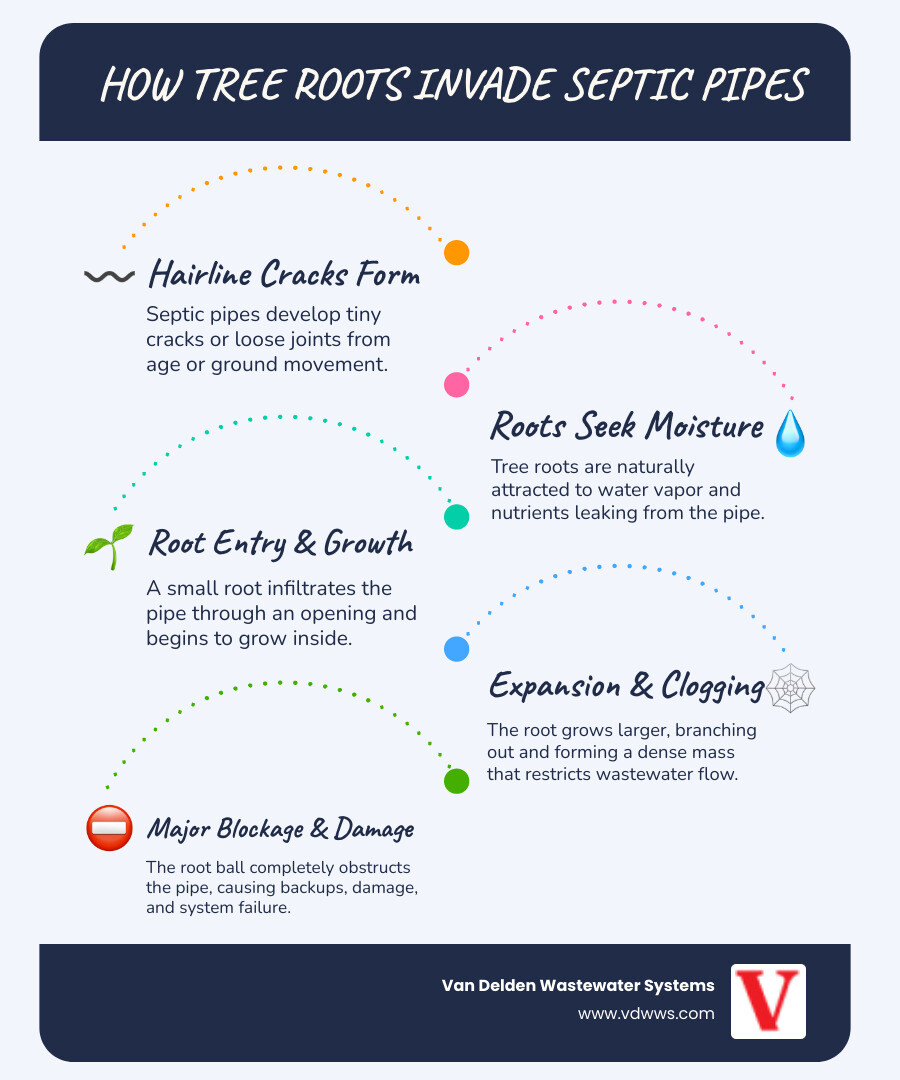
It may seem incredible that a tree root can wreak havoc on a robust septic system, but they are a primary culprit behind many septic system failures. Their relentless search for moisture and nutrients makes your septic system, with its constant supply of water and organic material, an irresistible target.
The damage typically begins with pipe infiltration. Septic pipes can develop tiny cracks or weakened seams over time due to age, shifting soil, or ground movement. A pinpoint hole is all a root needs to squeeze through, drawn by the nutrient-rich wastewater inside.
Once inside, the roots grow, feeding on the abundant resources. This growth leads to crack expansion. As the root thickens, it exerts pressure on the pipe walls, widening the initial crack and creating larger entry points for more roots. This cycle weakens the pipe's integrity.
The expanding roots and the debris they catch then lead to significant clogs and blockages. As more roots grow, they form a dense, fibrous mass inside the pipe. This mass acts like a net, catching toilet paper, grease, and other solids. Eventually, this accumulation will completely block wastewater flow, causing backups and system failure.
Beyond blockages, tree roots can cause severe structural damage to pipes. The persistent pressure from growing roots can crack, crush, or dislodge pipe sections, leading to leaks and compromising the entire system. This damage often requires extensive repairs.
While less common, roots can also inflict septic tank damage. Though septic tanks are robust, roots can exploit existing cracks or weak points, particularly at inlet and outlet connections. This can lead to leaks, allowing untreated wastewater to escape into the surrounding soil or groundwater.
The most severe consequence is drainfield failure. The drainfield is where wastewater is dispersed and treated. If roots infiltrate these pipes, they can clog the distribution system and surrounding soil, preventing proper absorption. This leads to standing water, foul odors, and the inability of the system to treat wastewater, resulting in costly drainfield replacement. We have more information on this in our guide on Tree Root Damage to Septic Systems and tips on Drainfield Cleaning Helotes TX.
Professional Septic Root Removal in Helotes TX
When tree roots invade your septic system, it's not a DIY project. The complexities, specialized equipment, and potential for further damage necessitate professional expertise. Our team understands the unique challenges of septic root removal Helotes TX and is equipped to handle these issues safely and effectively.
Professional diagnosis is the critical first step. Without identifying the problem's source and extent, any removal attempt might be ineffective or harmful. Our licensed and insured technicians ensure your system is in capable hands. DIY repairs or hiring inexperienced individuals often leads to more damage and higher costs. We always emphasize why Septic Repair and Why It's Not DIY is essential for homeowners.
Diagnostic Methods: Finding the Source of the Problem
Before we can effectively remove roots, we need to know exactly where they are and how much damage they've caused. Our diagnostic process is thorough and precise:
- Video Camera Inspection: This is our go-to method for pinpointing the problem. We insert a high-resolution camera on a flexible rod into your septic pipes for a real-time, clear view of the interior. We can see exactly where roots have infiltrated, their density, and the extent of any related damage.
- Pinpointing Root Entry Points: The camera helps us precisely locate the cracks, joints, or other weak points where roots entered the pipes. This information is crucial for removing the current intrusion and for planning future preventative measures or repairs.
- Assessing Pipe Condition: The camera inspection also allows us to assess the overall condition of your pipes. We can identify other issues like corrosion, breaks, or structural defects that might be contributing to the problem.
- Determining the Extent of the Invasion: By traversing the affected pipe section, we can determine how far the roots have spread and how densely they've grown. This informs our removal strategy and helps us recommend the most appropriate long-term solution.
Methods for Septic Root Removal in Helotes TX
Once we've identified the problem, we employ a combination of proven methods for effective septic root removal Helotes TX:
- Mechanical Root Cutting: For significant root masses, we use specialized tools on a plumbing auger or cable. A cutter head rotates at high speed, slicing through and breaking up the roots. This clears the blockage and restores flow. While mechanical cutting removes the immediate obstruction, it doesn't kill the roots, so they can grow back.
- High-Pressure Hydro-Jetting: This advanced technique uses highly pressurized water to blast away blockages and clean the interior walls of your pipes. Hydro-jetting is incredibly effective at removing roots, grease, sediment, and other buildup. The force of the water thoroughly cleans the pipe, leaving it smooth and less susceptible to future root adhesion. It's safe for most pipes and is an excellent option for preventive maintenance.
- Professional Root Treatments: We also offer professional-grade chemical treatments that are safe and approved for septic systems when used correctly. These treatments, like copper sulfate or foaming root killers, inhibit root growth or kill existing roots without harming the beneficial bacteria in your septic tank. Foaming root killers are particularly effective as they expand to fill the pipe, coating roots to prevent regrowth. These are often used with mechanical removal for a more lasting solution.
Our approach combines these methods as needed, ensuring we clear the current blockage and address the underlying issue to prevent rapid recurrence.
Deciding Between Repair and Replacement
After root removal, the next step is to evaluate your septic system's integrity. Sometimes, the damage is minor and allows for a targeted repair; other times, replacement is the only viable option. Our goal is to provide an honest assessment and the most cost-effective, long-term solution for your Helotes property.
Here's a comparison of criteria we consider when deciding between repair and replacement:
| Criteria | Septic Pipe Repair (Sufficient) | Septic System Replacement (Necessary) |
|---|
| Extent of Damage | Isolated cracks, minor root intrusion, small sections compromised. | Extensive cracking, multiple sections damaged, pipe collapse/rupture. |
| Age of System/Pipes | Newer pipes with localized issues. | Older, deteriorating pipes nearing or past their expected lifespan. |
| Frequency of Issues | First-time occurrence or infrequent, easily resolved blockages. | Chronic root intrusion, recurring backups despite maintenance. |
| Pipe Material/Type | Can be repaired if material is still sound. | Brittle, corroded, or incompatible materials with modern standards. |
| Overall System Health | Rest of the system (tank, drainfield) is in good condition. | Tank or drainfield also compromised, indicating widespread failure. |
For pipe repair, we might use:
- Pipe Relining: This trenchless method involves inserting a resin-impregnated liner into the damaged pipe. The liner is inflated and cures, creating a new, seamless pipe within the old one. This is a less invasive option that avoids extensive digging.
- Trenchless Repair: Beyond relining, other trenchless methods can repair or replace pipe sections without excavating the entire line, minimizing disruption to your yard.
- Sectional Pipe Replacement: If only a small, isolated section of pipe is severely damaged, we can excavate and replace just that portion.
However, if roots have caused substantial damage, the pipe has collapsed, or it's a chronic issue that drain cleaning can no longer manage, replacement becomes necessary. This often involves replacing significant sections of the septic lines or the entire drainfield. We sometimes find that When Septic System Repairs May Mean Needing a Totally New System is the most viable path forward. Our team will always provide a clear explanation of the damage and our recommended solutions, ensuring you make an informed decision.
Long-Term Prevention and Management Strategies
After dealing with root intrusion, you don't want a repeat performance. The key to keeping your septic system flowing freely in Helotes is a combination of proactive care, smart landscaping, and routine maintenance. Preventing future root issues is always more economical and less disruptive than reactive repairs.
We believe in empowering homeowners with the knowledge to protect their investments. By implementing the right strategies, you can significantly reduce the risk of future root problems. For more insights, check out our article on 3 Ways to Prevent Septic System Root Intrusion.
Strategic Landscaping for Helotes Homes
The Helotes environment presents unique challenges for landscaping around septic systems. Our local soil and native Texas trees, like Live Oaks, are known for extensive, aggressive root systems that seek moisture in our dry climate. This makes strategic planting even more critical.
- Helotes Soil Conditions & Native Trees: Understand that many native trees thrive here because their roots spread far and deep. When planting, consider the mature height and spread of a tree's root system, not just its canopy.
- Safe Planting Zones: Establish a "safe zone" of at least 20 feet between any trees or large shrubs and your septic system components (tank, distribution box, and drainfield). For trees with particularly aggressive roots, an even greater distance is advisable.
- Septic-Safe, Shallow-Rooted Plants: Instead of large trees and shrubs, opt for plants with contained, shallow root systems. Here's a list of generally septic-safe plants suitable for the Helotes area:
- Grasses (e.g., native Texas grasses, turfgrass)
- Groundcovers (e.g., Frogfruit, Horseherb, Purple Heart)
- Wildflowers (e.g., Bluebonnets, Indian Paintbrush, Coreopsis)
- Annual Flowers (e.g., Petunias, Marigolds)
- Small Perennials (e.g., Lavender, Rosemary, Salvia)
- Installing Root Barriers: For existing trees that are too close to your septic system, or as an added layer of protection, consider installing physical or chemical root barriers. Physical barriers are solid sheets inserted into the ground to redirect root growth, while chemical barriers release root-inhibiting compounds. These can be particularly effective when strategically placed between a problematic tree and your septic lines.
By thoughtfully planning your landscaping, you can create a beautiful yard that coexists peacefully with your septic system.
Proactive Septic System Maintenance
Beyond smart landscaping, consistent maintenance is paramount to preventing root intrusion and ensuring the longevity of your septic system. Regular care allows us to catch minor issues before they escalate into major, costly problems.
- Regular Septic Inspections: We recommend scheduling routine septic system inspections. Our technicians can perform visual checks, assess flow, and use diagnostic tools to identify any early signs of root intrusion or other issues. This vigilance helps us spot potential problems before they become critical.
- Routine Tank Pumping: Septic tanks should typically be pumped every 3 to 5 years, depending on the tank's size and your household's occupancy. Regular pumping prevents the accumulation of solids that could potentially flow into the drainfield and attract roots. If you're unsure about your schedule, we can assess your system and provide guidance on How Often to Pump Septic Tank in Helotes.
- Effluent Filter Cleaning: Many modern septic systems include an effluent filter at the outlet of the septic tank, designed to prevent solids from entering and clogging the drainfield. Cleaning this filter regularly, usually during routine pumping or inspection, is crucial. This ensures proper flow and protects your drainfield from material that could attract roots. For more on this, consult our guide on how to Maintain Drainfield System in Helotes.
Many of our Helotes, TX customers opt for periodic drain cleaning service, often every year or so, as a proactive measure. This helps prevent roots from growing too large and creating significant blockages, especially in pipes prone to root intrusion. We can create a customized maintenance schedule to help reduce future emergencies for your specific property.
The Consequences of Ignoring Septic Root Removal in Helotes TX
Ignoring tree root damage to your septic system is akin to ignoring a slow leak in your roof – it will inevitably lead to much bigger, more expensive problems. The consequences of neglecting septic root removal Helotes TX are severe, impacting your finances, property value, and even your family's health.
- System Failure: The most direct consequence is complete septic system failure. When roots completely block pipes or destroy drainfield lines, your system can no longer process wastewater. This means no flushing toilets, no running water, and a complete shutdown of your home's wastewater management.
- Property Damage: A failing septic system often results in sewage backups into your home. This can cause catastrophic damage to floors, walls, furniture, and personal belongings. Outside, raw sewage can surface in your yard, creating unsightly, foul-smelling puddles that damage your landscaping and make your property unusable.
- Environmental Contamination: An overflowing or leaking septic system releases untreated wastewater into the soil and potentially into groundwater or nearby surface water bodies. This contaminates the environment with harmful bacteria, viruses, and nutrients, posing a threat to local ecosystems and drinking water sources.
- Health Risks: Wastewater contains pathogens that can cause serious illnesses. Exposure to raw sewage, whether through backups in your home or surfacing in your yard, presents significant health hazards to your family, pets, and anyone who comes into contact with it.
- Increased Repair Costs: Delaying action almost always leads to more extensive and costly repairs. A minor root intrusion that could have been cleared with a simple service can escalate to a complete pipe replacement or drainfield overhaul if left unaddressed. As we discuss in Why Delay Can Worsen a Septic Repair Problem, timely intervention is crucial.
Don't let a seemingly small problem turn into a nightmare. Addressing root intrusion promptly is an investment in the health and longevity of your septic system and your property.
Frequently Asked Questions about Septic Root Intrusion
We often hear similar questions from Helotes homeowners concerned about tree roots and their septic systems. Here are some of the most common inquiries, along with our expert answers:
Can I use store-bought chemical root killers in my septic system?
While some store-bought chemical root killers are available, we generally advise caution. Many DIY drain cleaning solutions, including some chemical root killers, often only clear a portion of the blockage or can push the problem further down the line. More importantly, certain harsh chemicals can damage your pipes or negatively impact the beneficial bacterial ecosystem within your septic tank, which is crucial for wastewater treatment.
It's essential to use professional-grade, approved products that are specifically designed to be safe for septic systems. These are typically applied by trained technicians who understand the correct dosage and application methods to effectively kill roots without harming your system or the environment. Incorrect application can be ineffective, cause pipe damage, or lead to environmental safety concerns. When in doubt, it's always best to consult with us before introducing any chemicals into your septic system.
Will removing a problematic tree solve the root issue?
Removing a problematic tree is a significant step towards preventing future root intrusion, but it typically won't solve an existing root issue immediately. Here's why:
- Remaining Roots: Once roots have infiltrated your pipes, they will remain there even after the tree is cut down. These dead roots can still act as a blockage, catching debris and causing clogs.
- Decomposing Roots: While the roots will eventually decompose, this process takes time, and during decomposition, they can still cause issues or leave behind pathways for new roots from other nearby vegetation to exploit.
- Continued Growth: If the tree was merely cut at the trunk, the root system itself might still be alive for a period, potentially continuing to grow or even sprout new shoots.
Therefore, even after removing a tree, it's crucial to have the existing roots cleared from your septic pipes using mechanical or hydro-jetting methods. This ensures the immediate blockage is removed and the system can flow freely again. For long-term prevention, removing the tree is a great start, but it needs to be paired with professional root removal from the pipes.
How often should I have my septic lines checked for roots?
The frequency of septic line checks for roots can vary based on several factors:
- Proximity of Trees: If you have large, mature trees with aggressive root systems (common in Helotes) growing relatively close to your septic system, you might need more frequent checks.
- Age of System: Older septic systems with clay or concrete pipes, or pipes with more joints, are generally more susceptible to root intrusion than newer systems with seamless PVC piping.
- History of Clogs: If your septic system has a history of recurring clogs or previous root intrusions, a more proactive schedule is warranted.
- General Recommendations: For pipes prone to root intrusion or recurring clogs, many of our Helotes, TX customers opt for drain cleaning service every year or two. For homes with older plumbing or significant tree coverage, annual or bi-annual professional drain cleaning is often recommended.
During routine septic system inspections, our technicians will assess the risk of root intrusion and can recommend a customized maintenance schedule that helps reduce future emergencies and keeps your system healthy.
Conclusion: Protect Your Helotes Property with Professional Septic Care
Tree root intrusion is a common and challenging problem for homeowners in Helotes, TX, but it doesn't have to be a catastrophic one. With vigilance, proactive prevention, and timely professional intervention, you can keep your septic system functioning optimally for years to come.
We've explored the tell-tale signs of root invasion, from slow drains to sewage backups, and digd into how these persistent roots can cause severe damage, leading to blockages and structural compromise. We've also highlighted the critical role of professional septic root removal Helotes TX, emphasizing advanced diagnostic methods like camera inspections and effective removal techniques such as mechanical cutting and hydro-jetting.
Strategic landscaping, maintaining safe planting distances, and adhering to a regular septic maintenance schedule are your best defenses against future root issues. Ignoring the problem, however, can lead to costly repairs, property damage, environmental contamination, and significant health risks.
At Van Delden Wastewater Systems, we're a family-owned business established in 1937, and we pride ourselves on providing comprehensive septic solutions with professional, honest, and background-checked technicians. We believe in educating our customers, ensuring quality work, and providing detailed service forms with photo documentation so you're always informed.
For expert Septic Repair Services Helotes TX, contact our team today. We're here to address issues quickly and thoroughly, helping you avoid unexpected repairs and ensuring your system remains healthy and functional for years to come.