Translating a Septic Inspection Report for Kendall County Homebuyers
Don't let technical septic jargon derail your late-summer closing. We break down which inspection findings are routine maintenance items and which are true dealbreakers.
Should I repair or replace my septic system is one of the most stressful questions a homeowner can face — especially when the warning signs show up without warning. The short answer depends on a few key factors: your system's age, the type and severity of the problem, and whether repairs will actually solve the issue long-term or just delay a bigger failure.
Here's a quick-reference guide to help you decide:
| Situation | Likely Answer |
|---|---|
| Isolated issue, system under 20 years old | Repair |
| First-time backup or slow drain | Repair |
| System is 25+ years old with recurring problems | Replace |
| Drainfield is saturated or failed | Replace |
| Repair cost exceeds 50% of replacement cost | Replace |
| Tank is cracked, collapsed, or leaking badly | Replace |
| Minor clog, pump issue, or filter problem | Repair |
Most homeowners don't think about their septic system until something goes wrong. But by the time you're noticing foul odors in your yard, soggy patches of grass that shouldn't be there, or drains that seem to be moving in slow motion, the system is already telling you something important. The question is whether that something is a fixable problem — or a sign that the system has reached the end of its useful life.
Septic systems generally last between 20 and 40 years, but that range depends heavily on how well they've been maintained, what they're made of, and how hard they've been worked. A system that's been pumped regularly and inspected every few years can keep going strong well past the two-decade mark. One that's been neglected, overloaded, or damaged by roots or heavy equipment may fail well before then.
In this guide, Van Delden Wastewater Systems walks you through everything you need to know to make a confident, informed decision — from reading the warning signs to understanding what a professional inspection should uncover.
If you're asking should I repair or replace my septic system, start with what your home and yard are telling you. Septic problems usually send warning signals before total failure. The trick is noticing them early enough to act before your backyard turns into an unwanted water feature.
Watch for these common symptoms:
One slow sink alone may just be a plumbing clog. But when multiple fixtures start acting up at once, that points to a system-wide issue rather than one stubborn hairball.
The visible signs above can point to several different problems below ground:
That greener grass some homeowners notice is not your lawn suddenly becoming ambitious. It can mean wastewater is leaking and acting like fertilizer. Foul odors may mean failure, but they can also show up when a tank is overdue for service or venting is inadequate.
If you'd like a deeper look at common failure points, here is more on septic system issues and solutions.
Not every septic problem means replacement. In many cases, a targeted repair can prevent a much bigger issue later, especially if the system is otherwise in good shape.
Examples include:
The key is timing. A fixable problem can become a replacement project if it is ignored too long. For more on common repair scenarios, see our guide to septic system repairs.
A septic system is not forever, but it is not disposable either. With proper care, many systems serve a home for decades.
In general, septic systems last about 20 to 40 years. Typical ranges include:
If your system is approaching 25 to 30 years old, it is wise to plan ahead even if it is still operating. Age alone does not mean failure, but it does mean you should evaluate condition carefully.
A septic system's lifespan depends heavily on how it is used and maintained. Common life-shortening factors include:
Soil and property conditions matter too. Poor-draining soil can put extra strain on the drainfield, while repeated overloading from large households or frequent guests can push even a good system too hard.
Routine maintenance often makes the difference between a manageable repair and a premature replacement.
Best practice is to:
Regular maintenance costs are modest compared with the disruption of a major failure. It also helps us spot problems early, before solids enter the drainfield or structural damage gets worse.
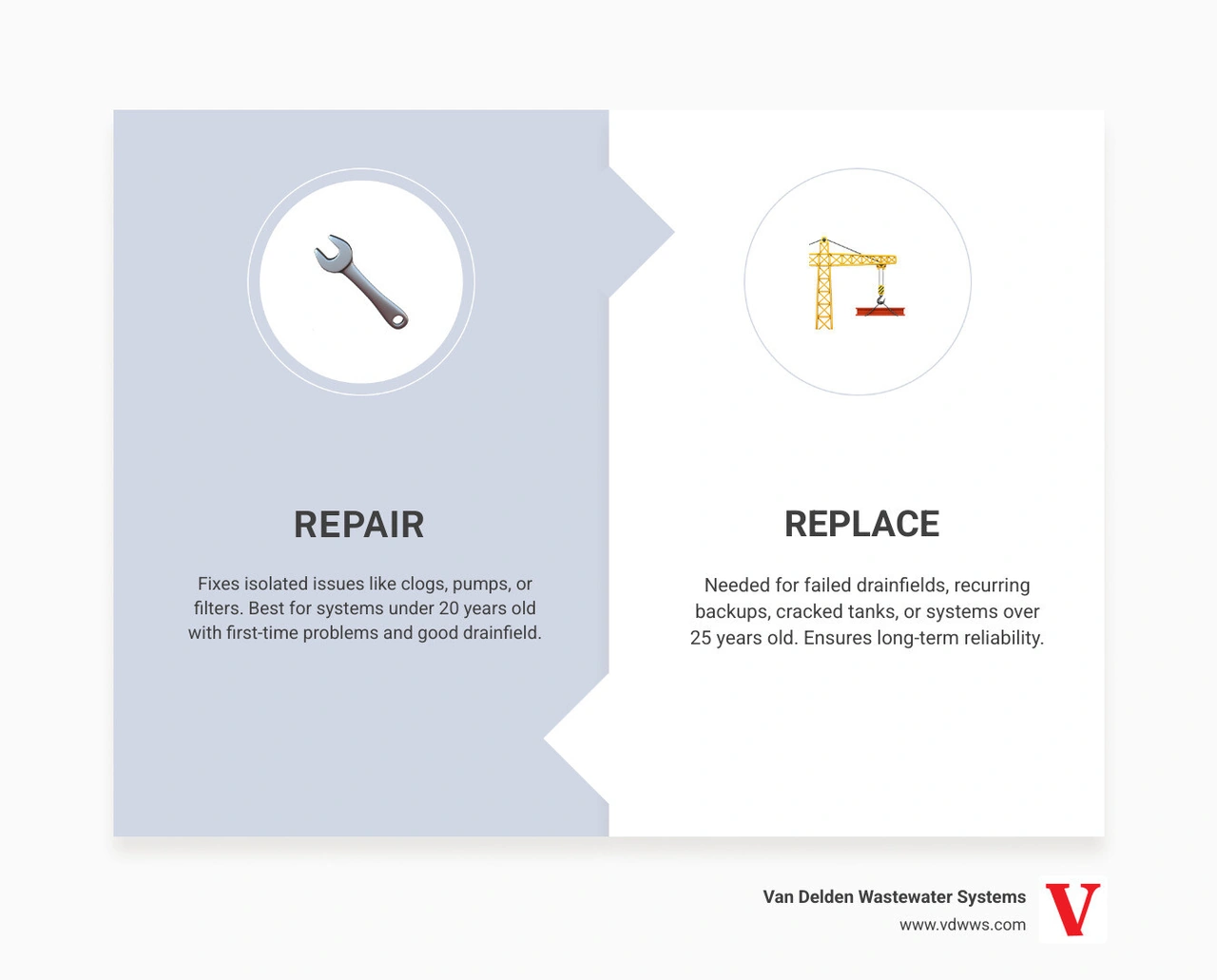
The biggest difference between repair and replacement is not just the size of the job. It is whether the work addresses the root cause.
A repair is usually a targeted solution for a specific problem. A replacement is a broader reset when the system, or a major part of it, no longer performs safely or reliably.
Repair is usually the right move when:
Examples include replacing a pump, fixing a broken inlet or outlet pipe, repairing a baffle, or pumping and cleaning a neglected tank before secondary damage occurs.
You can read more in traditional septic systems: when to repair or replace.
Replacement is often the better long-term answer when:
Replacement may also be necessary if a property remodel, bedroom addition, or code issue means the old design no longer matches current use.
For related guidance, see when septic system repairs may mean needing a totally new system.
One widely used guideline is the 50% rule:
There are other practical rules too:
| Decision factor | Lean toward repair | Lean toward replacement |
|---|---|---|
| System age | Under 20 years | 25+ years |
| Problem history | First issue | Repeated failures |
| Drainfield condition | Working normally | Saturated or failed |
| Structural condition | Tank sound | Tank cracked or collapsing |
| Compliance | Meets requirements | No longer compliant |
| Household plans | Short-term fix needed and appropriate | Long-term solution needed |
A good inspection puts these rules into real-world context for your property.
Before deciding anything, you need a clear picture of what you actually have. Many homeowners know they have a septic system, but not what type, how old it is, or whether it was properly sized in the first place.
To estimate system age, check:
If the installation date is unknown, do not guess. Unknown age is itself a reason to get a professional evaluation, especially before major repairs or a home purchase.
A thorough septic inspection should evaluate more than whether the toilet flushes today. It should look at the system's condition, performance, and risk factors.
A proper inspection may include:
At Van Delden Wastewater Systems, we believe homeowners deserve clear information, not mystery. That is why documented findings matter.
In the San Antonio area and surrounding communities we serve, local requirements and property conditions can strongly influence whether repair is possible or replacement is required.
Important factors include:
Sometimes a system can technically be repaired, but replacement is the smarter option because the property needs an upgraded design to meet present use and regulatory requirements. For a broader overview, see what you need to know for a septic system replacement.
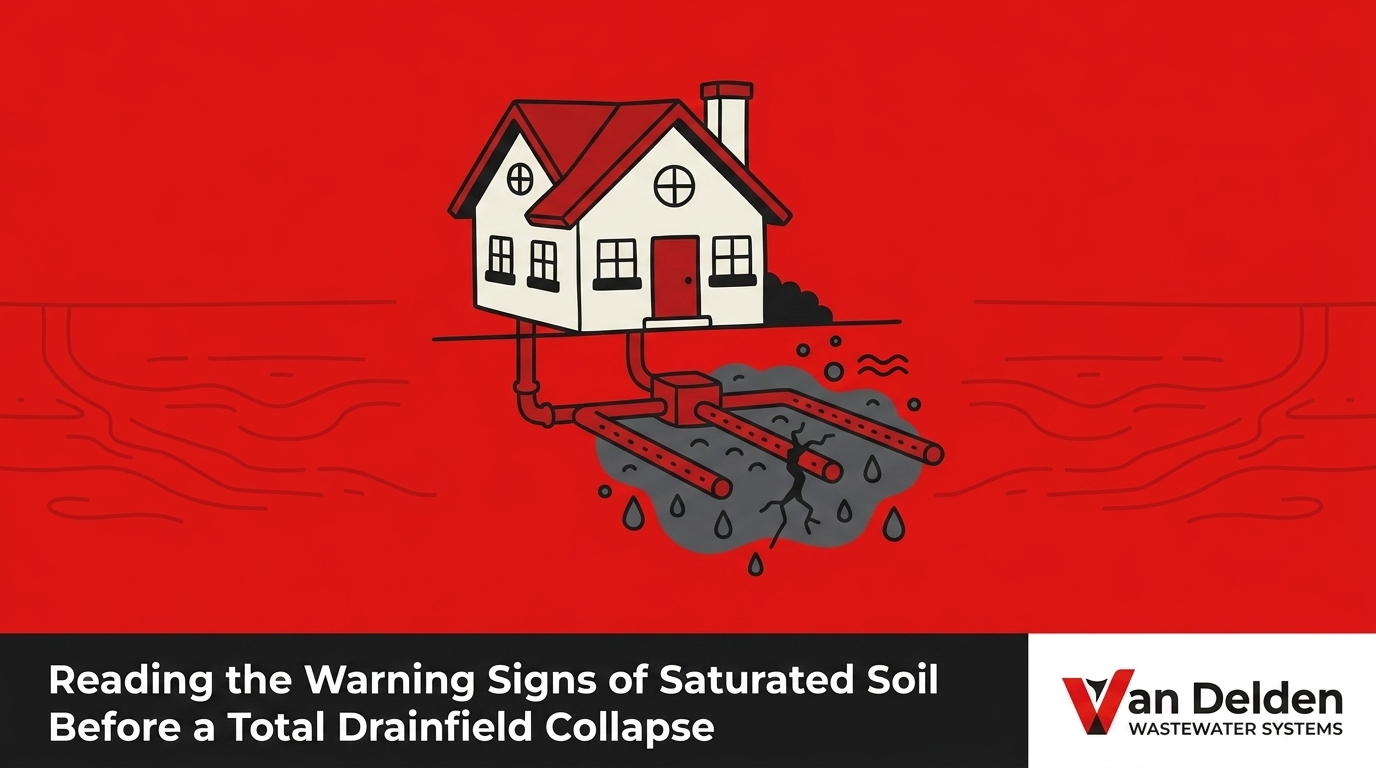
When homeowners ask us should I repair or replace my septic system, the drainfield is often the deciding factor. A tank problem may be repairable. A failed drainfield is much more serious.
Common signs of drainfield trouble include:
If these symptoms sound familiar, read more about signs of a failing drainfield and actions.
Drainfields fail for several common reasons:
Heavy rain can also expose existing weaknesses by saturating an already stressed field. For more detail, see 4 common causes of septic drainfield failure.
Waiting rarely makes septic problems cheaper, cleaner, or less stressful.
Delays can lead to:
Across the U.S., septic systems handle billions of gallons of wastewater every day, and about 20% of households rely on them. When one system fails, the impacts are local and very personal. For more on diagnosis and action steps, visit how to diagnose and fix drainfield failures.
A good repair-or-replace decision is not based on one symptom alone. It should account for your home, your family, your property, and your future plans.
Ask yourself:
These questions help frame whether a repair is a smart investment or just a temporary patch.
Financing options may also be worth exploring if a major upgrade is necessary, especially when replacement is the safer long-term solution. The right time to ask about planning is before an emergency, not when the bathtub starts making threats.
Not all septic decisions should be made from the surface. Choose a professional who offers:
At Van Delden Wastewater Systems, we have served local homeowners since 1937. Our family-owned team uses honest, background-checked, non-commissioned technicians who focus on education, detailed service forms, and photo documentation so you can make informed decisions.
Once your system is working properly again, a few habits go a long way:
If you are still asking should I repair or replace my septic system, the best answer is this: choose the option that fixes the real problem, protects your property, and makes sense for the age and condition of the system.
A minor repair on a healthy, well-maintained system can be the right move. But recurring backups, drainfield failure, structural tank damage, or an aging system near the end of its life usually point toward replacement.
The most important step is getting a professional inspection before making a costly decision. At Van Delden Wastewater Systems, we believe homeowners deserve straightforward answers, thorough documentation, and a long-term solution, not guesswork.
If you need help evaluating your next step in San Antonio, Boerne, Bulverde, Fair Oaks Ranch, Garden Ridge, Helotes, Timberwood Park, Hollywood Park, Shavano Park, or Spring Branch, learn more about our septic tank repair services.

Peter was personable, professional and thorough. Highly recommend Van Delden. You might be able to find a cheaper company but not better!
On time. 100% professional, knowledgeable, and courteous. Very helpful and straightforward. That is the bar all businesses should strive for.
It has been a pleasure working with your company. Not only did y’all communicate very well but your workers were always polite! Thank you!
“I thank Van Delden for such prompt service. Honest people are hard to come by these days. I will certainly recommend Van Delden to anyone! Jesse is an upstanding young man and very nice to talk to. I thank everyone at Van Delden for taking such good care of me.”
This is just a note to thank you for explaining the problem with my system. You didn’t have to be so kind and I appreciate your good business ethics and time spent. In the future you will have mine in return!