Translating a Septic Inspection Report for Kendall County Homebuyers
Don't let technical septic jargon derail your late-summer closing. We break down which inspection findings are routine maintenance items and which are true dealbreakers.
How your septic tank processes wastewater is something every homeowner on an onsite system should understand — not just when something goes wrong, but long before it does. Over 21 million U.S. homes rely on septic systems, yet most owners have little idea what happens once wastewater leaves the drain.
Here is a quick overview of how the process works:
1. Wastewater leaves your home through a main sewer line and flows by gravity into the buried septic tank.
2. The tank separates solids from liquids — heavy solids sink to form a sludge layer at the bottom, fats and oils float to form a scum layer at the top, and clarified liquid (effluent) remains in the middle.
3. Anaerobic bacteria go to work inside the tank, breaking down organic matter in the sludge and reducing its volume.
4. Effluent exits the tank through an outlet baffle and filter, which block solids and scum from escaping.
5. A distribution box spreads effluent evenly across the drain field (also called a leach field or drainfield).
6. The drain field and soil complete treatment — effluent seeps through perforated pipes, gravel, and soil layers where aerobic bacteria and natural filtration remove pathogens, nutrients, and contaminants before the water returns to the groundwater table.
The septic tank handles primary treatment — removing roughly 30–50% of organic matter and 50–70% of suspended solids. The drain field and soil do the heavy lifting for final purification, including the removal of harmful bacteria and viruses.
Understanding this process helps you make smarter decisions about what goes down your drains, when to schedule maintenance, and how to spot trouble early — before a small problem becomes a costly repair.
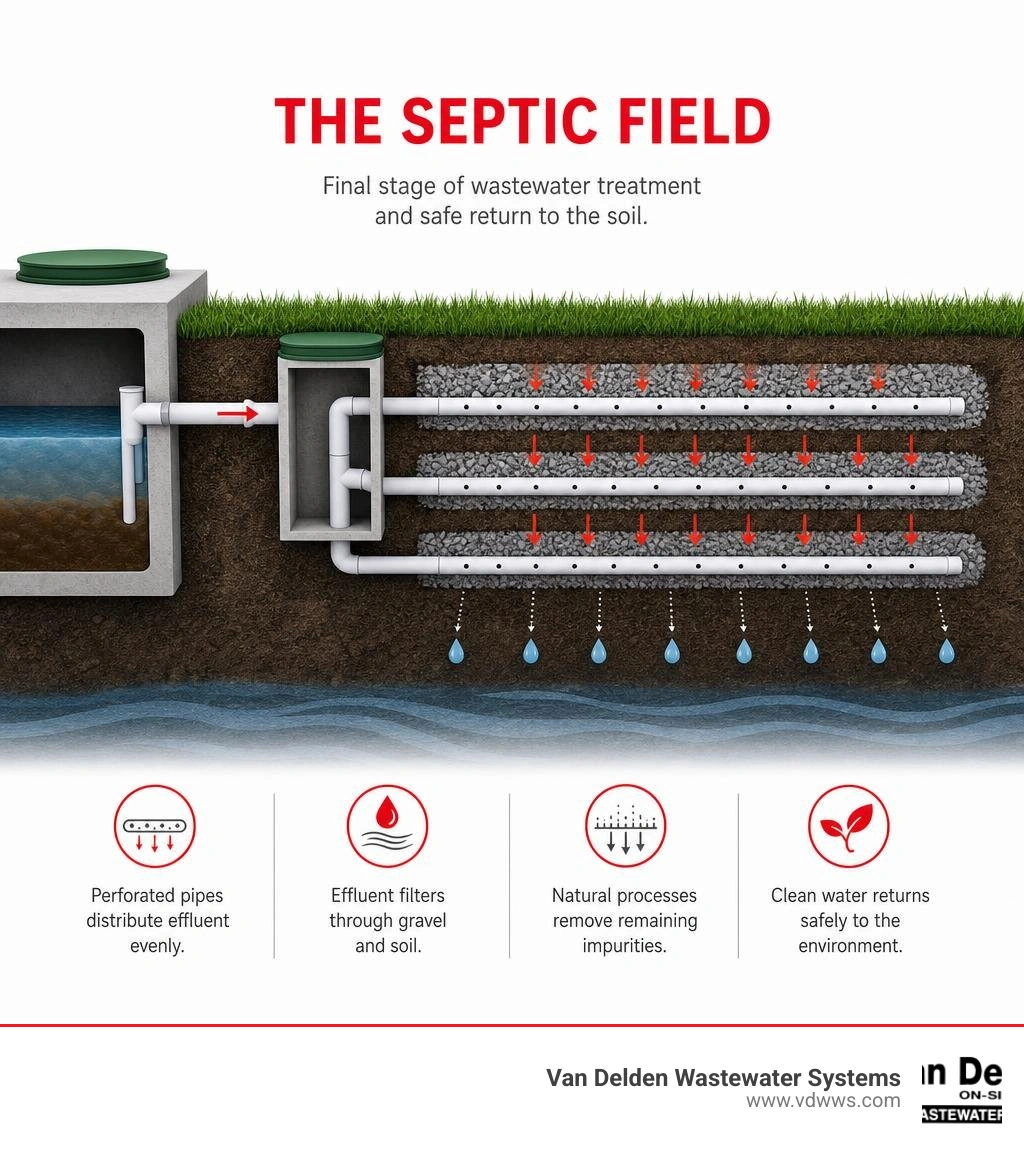
To truly grasp how your septic tank processes wastewater, it helps to look at your yard as a highly efficient, subterranean water reclamation facility. A conventional septic system does not rely on complex mechanical parts or municipal power grids. Instead, it uses simple physics, natural biology, and the force of gravity to safely treat and dispose of household waste right on your property.
For homeowners living in areas like Boerne, Bulverde, or Spring Branch, TX, where public sewer lines do not reach, a properly designed onsite system is a critical piece of infrastructure. The entire system is comprised of several core components working in a precise sequence:
• The Main Sewer Line: This is the single pipe that collects all the wastewater from your toilets, sinks, showers, washing machines, and dishwashers, channeling it out of your home and toward the buried tank.
• The Septic Tank: Typically a 1,000- to 1,500-gallon watertight container buried close to the home. It is constructed from highly durable materials like concrete, fiberglass, or heavy-duty polyethylene, with concrete being the most common choice in our local Texas Hill Country due to its structural strength and longevity.
• The Distribution Box (D-Box): A small concrete or plastic junction box that receives clarified liquid from the tank and splits the flow evenly among the various trenches of the drain field.
• The Drain Field (Leach Field): A network of perforated pipes buried in gravel-filled trenches. This area acts as the final biological treatment zone.
• The Soil: The ultimate destination of the treated water. As the water percolates downward, the soil acts as a natural physical and chemical filter.
In a standard setup, gravity does all the work. Wastewater naturally flows downhill from your plumbing fixtures into the tank, and as new water enters, it displaces older, clarified water, pushing it out toward the distribution box and drain field. To learn more about the basic layout of these parts, you can read our guide on How Septic Systems Work.
The journey of wastewater treatment begins the second you flush a toilet or run a faucet. What seems like a single, continuous stream of dirty water is actually a complex mixture of organic materials, suspended solids, household chemicals, and pathogens.
Once this mixture enters the septic tank, a highly coordinated, multi-stage separation and digestion process begins. For a deep dive into this entire sequence, check out our How Septic Works Ultimate Guide.
The primary role of the septic tank is physical separation. As wastewater enters the relatively calm environment of the sealed tank, its flow velocity drops significantly. This deceleration allows gravity to take over, separating the waste into three distinct layers over a retention period of 24 to 48 hours:
1. The Sludge Layer (Bottom): Heavier organic and inorganic solids—such as human waste, food scraps, and soil particles—sink to the very bottom of the tank. Here, anaerobic bacteria (microorganisms that thrive without oxygen) begin digesting these solids, converting them into soluble compounds and gases like methane and carbon dioxide.
2. The Scum Layer (Top): Lighter substances—including fats, oils, greases (FOG), soaps, and waxes—float to the surface. This layer forms a thick, airtight mat that actually helps insulate the liquid below, maintaining the warm temperatures that anaerobic bacteria need to stay active.
3. The Clarified Effluent (Middle): Between the sludge and the scum sits a middle layer of relatively clear liquid wastewater, known as effluent. This liquid still contains dissolved organic matter, nutrients, and microscopic pathogens, but the bulk of the heavy solids have been successfully separated out.
Through this natural settling process, a healthy septic tank achieves primary treatment by removing 50–70% of suspended solids and 30–50% of the organic pollutants before the liquid ever leaves the tank.
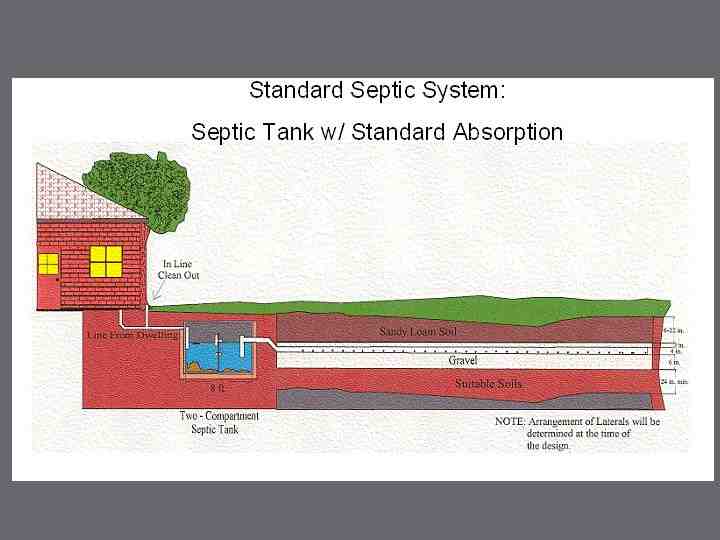
While the physical separation of solids is impressive, the biological decomposition occurring inside the tank is where the real magic happens. The sealed, oxygen-depleted environment of the tank is the perfect breeding ground for anaerobic bacteria.
These microscopic "unpaid employees" work around the clock to consume and break down the complex organic compounds suspended in the liquid effluent. As they feed, they break down complex proteins, carbohydrates, and fats into simpler organic acids and gases.
This bacterial digestion is vital because it significantly reduces the volume of the sludge layer, preventing the tank from filling up too quickly. However, because anaerobic digestion is a relatively slow and incomplete process, the effluent leaving the tank is still considered highly contaminated. It contains millions of coliform bacteria (which serve as indicators of human fecal contamination) along with viruses, nitrogen, and phosphorus. To achieve safe, complete purification, this effluent must travel to the next phase of the system: the drain field.
If raw solids or grease from the scum layer escape the septic tank and reach the drain field, they will quickly clog the perforated pipes and seal the surrounding soil, causing the entire system to back up into your home. To prevent this catastrophic failure, your tank relies on three unsung heroes: the inlet baffle, the outlet baffle, and the effluent filter.
• The Inlet Baffle: Located where the main sewer line enters the tank, this T-shaped pipe or concrete baffle directs incoming wastewater downward. This prevents the incoming rush of water from stirring up the sludge layer or disrupting the floating scum mat.
• The Outlet Baffle: Located on the opposite side of the tank, the outlet baffle is designed to draw liquid exclusively from the clear middle zone of the tank—typically extending 12 to 18 inches below the liquid surface. This ensures that neither the floating scum on top nor the settled sludge on the bottom can slip out into the drain field.
• The Effluent Filter: Many modern or upgraded tanks feature a fine mesh filter inserted directly into the outlet baffle. This filter acts as a physical safety screen, catching tiny suspended particles that haven't fully settled.
A damaged or missing outlet baffle is the single most common cause of premature drain field failure. To understand how these components guard your soil, read our detailed breakdown on Septic System Knowledge 101 Inlet and Outlet Baffles.
Once the clarified effluent passes safely through the outlet baffle and effluent filter, it flows into the distribution box, which routes it into the drain field. In a conventional gravity-fed system, the drain field consists of several parallel trenches dug 18 to 36 inches below the ground, filled with clean gravel or stone, and fitted with perforated lateral pipes.
As the effluent trickles out of the pipe perforations and down through the gravel, it reaches the gravel-soil interface. Here, a critical biological phenomenon occurs: the formation of the biomat.
The biomat is a dense, jelly-like layer of anaerobic bacteria and organic matter that naturally builds up along the bottom and sides of the trenches. While it sounds unappealing, the biomat performs a vital role:
• It slows down the flow of water, ensuring it doesn't rush through the soil too quickly before being treated.
• It acts as a biological filter, consuming organic nutrients and trapping pathogens.
• It achieves a remarkable 90–99% reduction in harmful pathogens and viruses right at the trench boundary.
To learn more about how this layer forms and how to keep it healthy, see our article on Understanding Drainfield Biomat Formation.
Once the water passes through the biomat, it enters the unsaturated soil zone. Here, aerobic bacteria (which require oxygen to survive) take over. Because aerobic bacteria break down organic waste 20 to 30 times faster than anaerobic bacteria, they rapidly consume any remaining organic matter.
As the water continues its downward journey, natural soil processes like physical filtration, adsorption (where viruses and nutrients cling to clay particles), and ion exchange complete the purification process. By the time the water reaches the deep groundwater table, it is clean, safe, and fully recycled back into the environment.
Every property in the San Antonio and Texas Hill Country region is unique. In places like Fair Oaks Ranch, Helotes, or Hollywood Park, homeowners often run into challenging site conditions, such as shallow soils, dense clay, high water tables, or steep slopes. When standard gravity flow cannot safely treat wastewater, we utilize alternative system designs.
These are the traditional systems described above. They require deep, highly permeable soils (such as sandy loam) and plenty of flat yard space. They run entirely on gravity, making them incredibly reliable and cheap to operate since they require no electricity.
When soil is shallow or has a poor percolation rate, gravity systems can cause uneven distribution, overloading the beginning of the trenches while leaving the ends dry. A pressure distribution system solves this by adding a pump chamber equipped with a submersible pump. The pump delivers effluent to the drain field in controlled, high-pressure "doses," ensuring the entire trench network is utilized evenly.
Think of an ATU as a miniature, highly advanced municipal wastewater plant for your backyard. Unlike conventional tanks that rely on slow anaerobic digestion, an ATU uses an electric aerator to force oxygen into the treatment chamber. This allows highly efficient aerobic bacteria to thrive inside the tank itself.
ATUs provide exceptional secondary treatment, producing effluent that is nearly clear and odorless before it even reaches the soil. They are highly effective at reducing nutrients, achieving a 55–80% reduction in nitrogen compared to a mere 5% reduction in a conventional septic tank. They are the gold standard for properties with extremely poor soil, tight space constraints, or close proximity to sensitive bodies of water.
• Conventional — Primary Digestion Method: Anaerobic (No Oxygen) — Electricity Required?: No — Best Suited For: Deep, permeable soils; flat terrain — Nitrogen Reduction: ~5%
• Pressure Distribution — Primary Digestion Method: Anaerobic + Pumped Dosing — Electricity Required?: Yes (For Pump) — Best Suited For: Shallow soils; sloped yards — Nitrogen Reduction: ~5%
• Aerobic Treatment (ATU) — Primary Digestion Method: Aerobic (Oxygen Forced) — Electricity Required?: Yes (For Aerator/Pump) — Best Suited For: Clay soils; tight spaces; eco-sensitive zones — Nitrogen Reduction: 55–80%
As a general rule, most residential septic tanks should be professionally pumped every three to five years. However, the exact frequency depends heavily on your household size, water usage, and the capacity of your tank.
For example, a typical 1,000-gallon tank supporting a family of four in Shavano Park or Garden Ridge will accumulate sludge and scum faster than a 1,500-gallon tank used by a retired couple. If you use a garbage disposal, you are introducing a massive amount of undigested organic solids into your system, which can increase your solid accumulation rate by up to 50%, requiring much more frequent pumping.
It is important to understand the difference between routine maintenance options. To learn about what happens during these services, read our article on Septic Tank Pumping vs Cleaning What's the Difference.
A failing septic system rarely happens overnight; it usually drops several hints before a total backup occurs. Keep a close eye (and nose) out for these common warning signs:
• Slow Drains or Gurgling Pipes: If sinks, tubs, and toilets throughout your home are draining slowly, or if you hear a distinct gurgling sound in your pipes, your tank or main sewer line may be reaching its capacity limit.
• Foul Odors: Persistent, sewage-like odors lingering inside your home or around your yard (especially near the tank or drain field) indicate that gases are escaping or effluent is surfacing.
• Soggy Spots or Pooling Water: Wet, muddy patches or standing water over your drain field—even when it hasn't rained—mean the soil is saturated and can no longer absorb effluent.
• Unusually Lush, Bright Green Grass: If the grass over your drain field or tank is growing significantly faster and looking much greener than the rest of your lawn, it is drinking in overflowing effluent and nutrients from a failing system.
• Sewage Backups: The ultimate nightmare. If dark, foul-smelling water backs up into your lowest household drains (usually the shower or basement drain), you have an immediate emergency.
Your septic tank is a living biological ecosystem, not a trash can. To protect the beneficial bacteria inside your tank and prevent physical clogs in your pipes, you should never flush or pour any of the following items down your drains:
• "Flushable" Wipes & Paper Towels: Despite what the packaging claims, these synthetic wipes do not break down in water and will quickly clog your inlet baffle or tank.
• Feminine Hygiene Products: Tampons and pads are designed to absorb liquid and expand, making them a prime cause of severe system blockages.
• Cooking Fats, Oils, and Grease (FOG): These substances solidify as they cool, rapidly building up a massive scum layer that can bypass baffles and seal your drain field soil.
• Chemical Drain Cleaners & Bleach: Heavy use of harsh chemicals, antibacterial soaps, and large volumes of bleach will poison and kill the beneficial anaerobic bacteria inside your tank, halting the natural digestion of waste.
• Medications & Paint: Leftover prescriptions, chemical solvents, and latex paints contaminate groundwater and destroy the biological balance of your system.
A well-designed, properly maintained conventional septic system can easily last 25 to 30 years, and concrete tanks themselves often last 40 years or more. However, the longevity of your system is entirely in your hands. Preventative maintenance is the key to protecting your wallet, your property value, and the surrounding Texas Hill Country environment.
At Van Delden Wastewater Systems, we have been providing comprehensive, reliable septic solutions since 1937. As a multi-generational, family-owned business serving San Antonio, Boerne, Bulverde, Helotes, and the surrounding areas, we pride ourselves on exceptional service. Our technicians are honest, background-checked, and non-commissioned, meaning they are there to educate you on your system's health—not upsell you on unnecessary repairs. We document all of our work with detailed service forms and photo records for your peace of mind.
Whether you need a routine pump-out, a professional inspection, or a complete system installation, we are here to help. Contact us today to schedule your next service and keep your system running smoothly for decades to come. To learn more about our services, visit our main page on Septic Systems.

Peter was personable, professional and thorough. Highly recommend Van Delden. You might be able to find a cheaper company but not better!
On time. 100% professional, knowledgeable, and courteous. Very helpful and straightforward. That is the bar all businesses should strive for.
It has been a pleasure working with your company. Not only did y’all communicate very well but your workers were always polite! Thank you!
“I thank Van Delden for such prompt service. Honest people are hard to come by these days. I will certainly recommend Van Delden to anyone! Jesse is an upstanding young man and very nice to talk to. I thank everyone at Van Delden for taking such good care of me.”
This is just a note to thank you for explaining the problem with my system. You didn’t have to be so kind and I appreciate your good business ethics and time spent. In the future you will have mine in return!