What Goes Into a Professional Septic Tank Pumping Service?
When homeowners search for the price to empty septic tank systems, they often find that there's no single answer. The service required for most residential properties depends on several key factors, including tank size, location, accessibility, and the type of service needed.
Quick Answer: What Determines Your Septic Service Needs?
- Tank Size: Larger tanks (over 1,000 gallons) require more time to service.
- Location: Rural properties may involve additional travel time.
- Accessibility: Buried lids require digging, adding to the scope of work.
- Service Type: Basic pumping is less involved than a full cleaning with hydro-jetting.
- Tank Condition: Heavy sludge buildup may require more intensive work.
- Timing: Emergency or after-hours calls involve a different service structure.
If you're a homeowner with a septic system, you know that proper maintenance is crucial. But septic pumping isn't a one-size-fits-all service; it's customized to your specific situation. Many homeowners only think about their septic tank when something goes wrong, but waiting for a problem often leads to more extensive and disruptive repairs than routine maintenance. Understanding what influences the scope of a pumping service helps you make informed decisions.
The reason for the variability is that every septic system is different. Your neighbor might require a different level of service than you do—and both can be completely appropriate for the individual circumstances.
At Van Delden Wastewater Systems, we believe in transparent communication. Our non-commissioned technicians focus on educating you about your system rather than upselling. We'll explain exactly what your service entails and help you make the best decisions for your septic maintenance.
Key Factors That Determine Your Septic Service Needs
When you reach out for septic service, you might wonder why there isn't a single, standard service package. The truth is, when it comes to the price to empty septic tank systems, the scope of work isn't one-size-fits-all. Your system is as unique as your home, and several important factors shape what your service will involve.
There's no flat rate for service because no two jobs are exactly alike. At Van Delden Wastewater Systems, our technicians assess your specific situation before outlining the required work. We're committed to transparency, which means explaining exactly what influences your service needs. If you'd like a deeper understanding of our approach, our guide on what to expect from a septic tank cleaning walks you through the process.
How Tank Size and Waste Volume Influence the Scope of Work
Your septic tank's capacity plays a major role in determining the service required. Tanks are measured in gallons, and a 2,000-gallon system naturally takes longer to service than a 600-gallon one. Larger tanks hold more waste, which means our trucks need more time and capacity to handle the job.
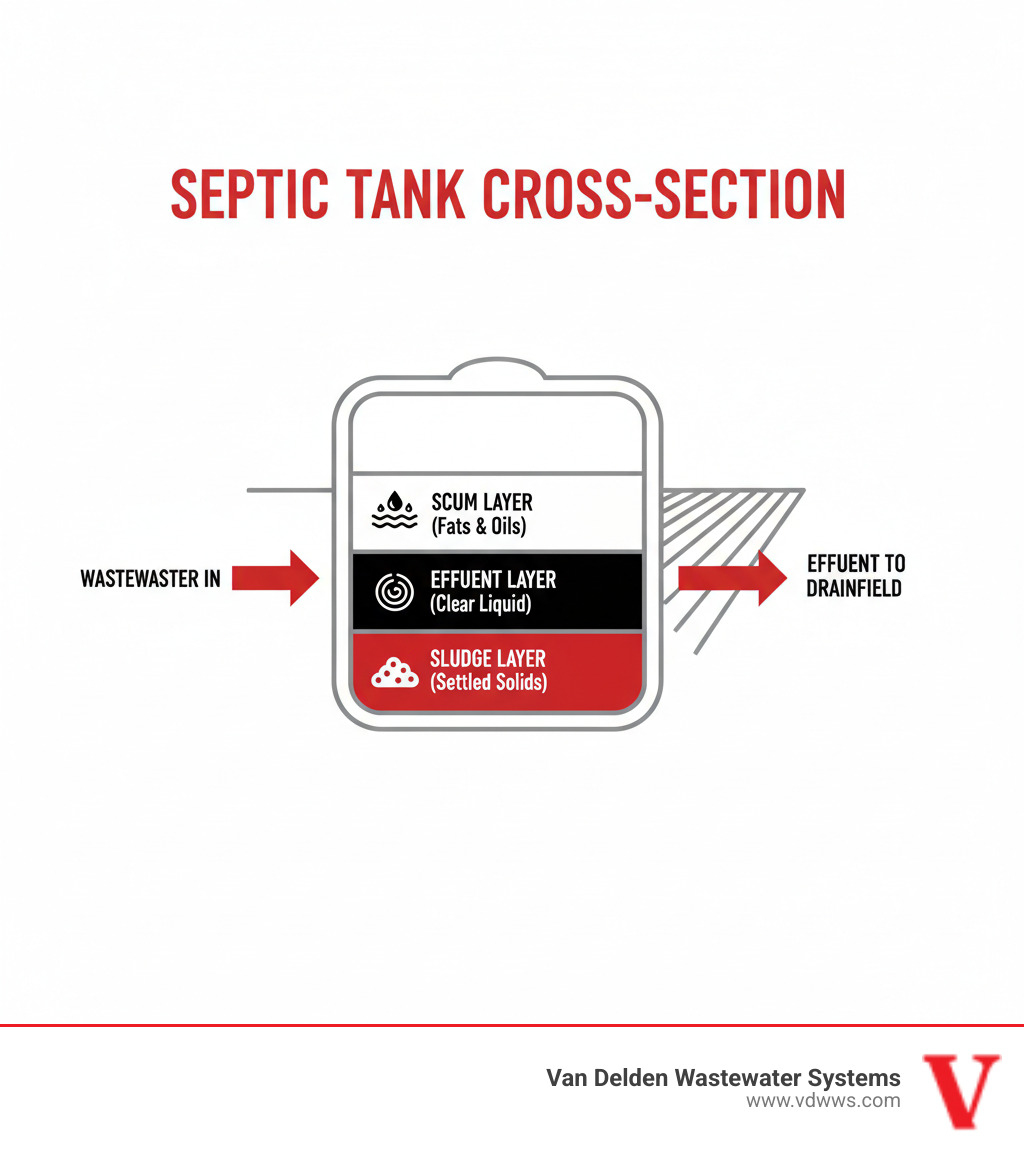
However, the tank's size is just part of the equation. The amount of accumulated waste—the sludge level at the bottom and the scum layer on top—tells the real story. If you've kept up with your pumping frequency, your tank likely has a manageable amount of solids. But if it's been years since your last service, an overfull tank with dense, compacted waste will require extra effort to break apart and remove.
The Impact of Your Geographic Location and Tank Accessibility
Living in beautiful rural areas like Boerne, Bulverde, or the Hill Country sometimes means more travel distance for our service trucks. The farther we need to go, the more time is involved in getting to you and properly disposing of the waste at approved facilities.
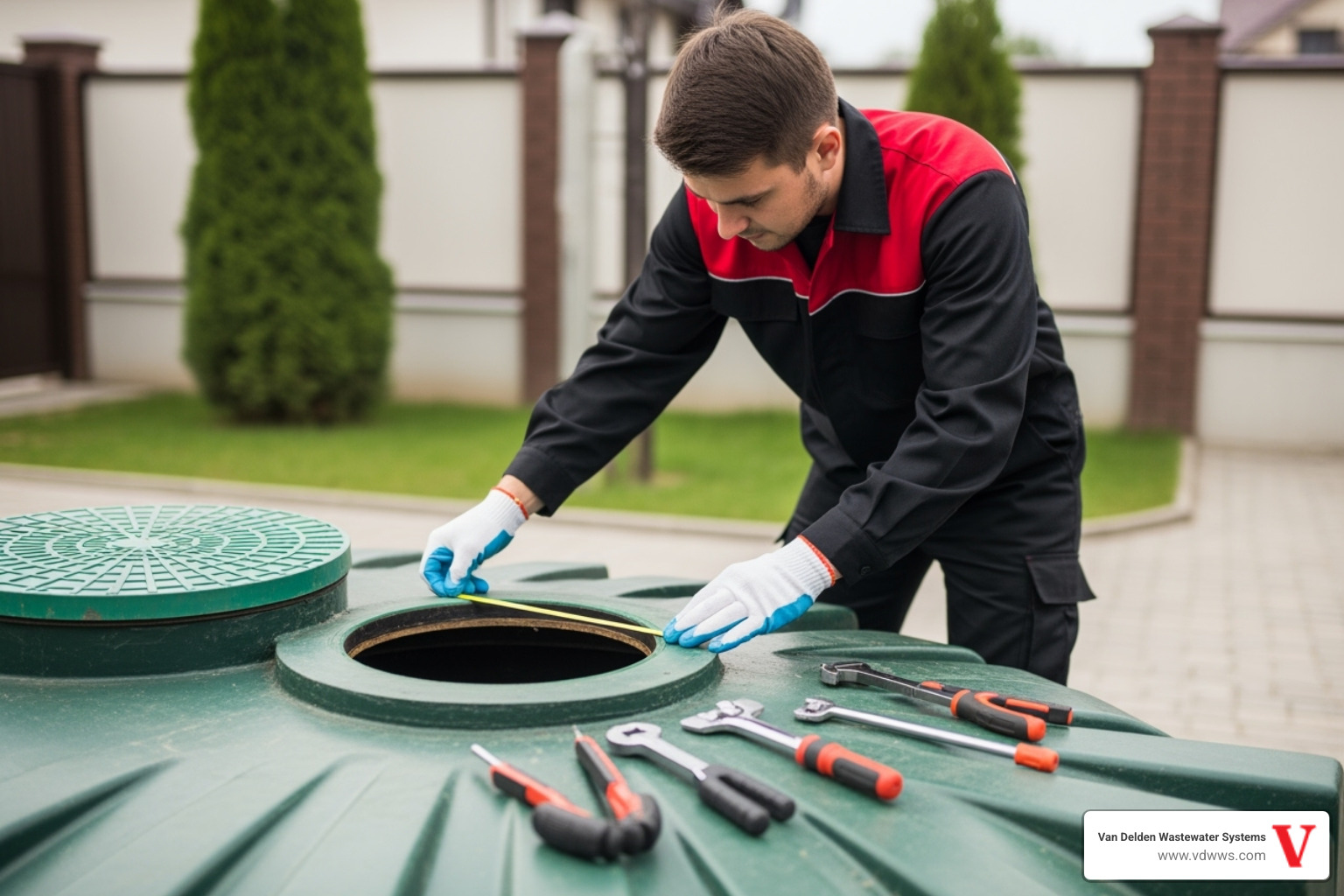
Then there's the question of reaching your tank. Some lids sit at ground level, making access quick and easy. Others are buried lids hidden under soil or landscaping, which require locating and excavation before we can begin pumping. This necessary work adds time to the service. Landscaping obstacles like trees, fences, or decks can also make access tricky.
The good news is you can eliminate these access issues with a riser installation. Risers extend your tank's opening to ground level, making future services much faster and simpler. It's an upgrade that pays off in convenience every time you need maintenance. Learn more in our article: Making Septic Tank Cleaning Easier.
How the Type of Septic System Affects Service Requirements
Most homes have a conventional system—a straightforward, gravity-fed setup that is relatively simple to service. However, many properties require more sophisticated solutions like aerobic systems. These systems use pumps and aerators to boost waste breakdown and have multiple chambers that need attention during service.
Alternative systems like mound systems or advanced treatment units each have their own complex components that require specialized knowledge. Our technicians are trained to handle all these variations, but the additional equipment and steps naturally influence the service requirements. The EPA provides helpful information about the various Types of septic systems.
Additional Services That Can Affect Your Appointment
Sometimes a routine pumping reveals additional needs.
Emergency situations require immediate attention. After-hours calls for issues like sewage backups involve special scheduling and faster response times, which affects the service structure.
During pumping, our technicians also perform filter cleaning. Most modern tanks have an effluent filter that needs regular cleaning to prevent solids from reaching your drainfield.
If our technicians spot the need for minor repairs—like a damaged baffle or cracked lid—they'll let you know. Addressing these small issues promptly prevents them from becoming major problems later.
When a tank has heavy, compacted sludge, standard pumping may not be enough. In these cases, hydro-jetting is necessary. This technique uses high-pressure water to break apart the toughest deposits, ensuring a truly clean tank. Our article on Techniques for Septic Tank Cleaning explains this process.
We never perform additional services without discussing them with you first. You'll always know what we're recommending and why.
Pumping vs. Cleaning: What Service Do You Really Need?
You've probably heard the terms septic tank pumping and cleaning used interchangeably, but they refer to two different levels of service. Understanding the distinction helps you communicate your needs and make better maintenance decisions.
Pumping is the standard maintenance service most homeowners need regularly. Our technicians remove the liquid wastewater (effluent) and the floating scum layer of oils and fats. This process gives your tank the capacity it needs to function properly. A small amount of residual sludge is typically left at the bottom, as it contains beneficial bacteria that help break down new waste.
Cleaning is a more comprehensive service that tackles the bottom layer of accumulated sludge. Our technicians use techniques like backflushing—spraying water back into the tank—to agitate and loosen stubborn, compacted solids. The goal is to remove virtually all waste material and restore your tank to a near-pristine condition.
So when do you need one versus the other? For most homeowners on a regular maintenance schedule, pumping every three to five years is sufficient. However, if a tank hasn't been serviced in many years or an inspection reveals excessive sludge, we might recommend a full cleaning to give the system a fresh start.
During your appointment, our technicians will assess your tank's condition and recommend the appropriate service. Our non-commissioned approach means we focus on what's genuinely best for your system. If you're curious about the technical details, our article on Septic Tank Pumping vs Cleaning: What's the Difference breaks it down further.
The service your system requires will depend on its condition, which is why a professional assessment is so important.

The Importance of Regular Pumping for System Longevity
Regular septic tank maintenance is one of the most important things you can do as a homeowner. Think of it like changing your car's oil—you don't wait until the engine seizes up. The same logic applies to your septic system.
Regular pumping is preventative maintenance at its finest. It's the key to avoiding a system failure that could catch you completely off guard.
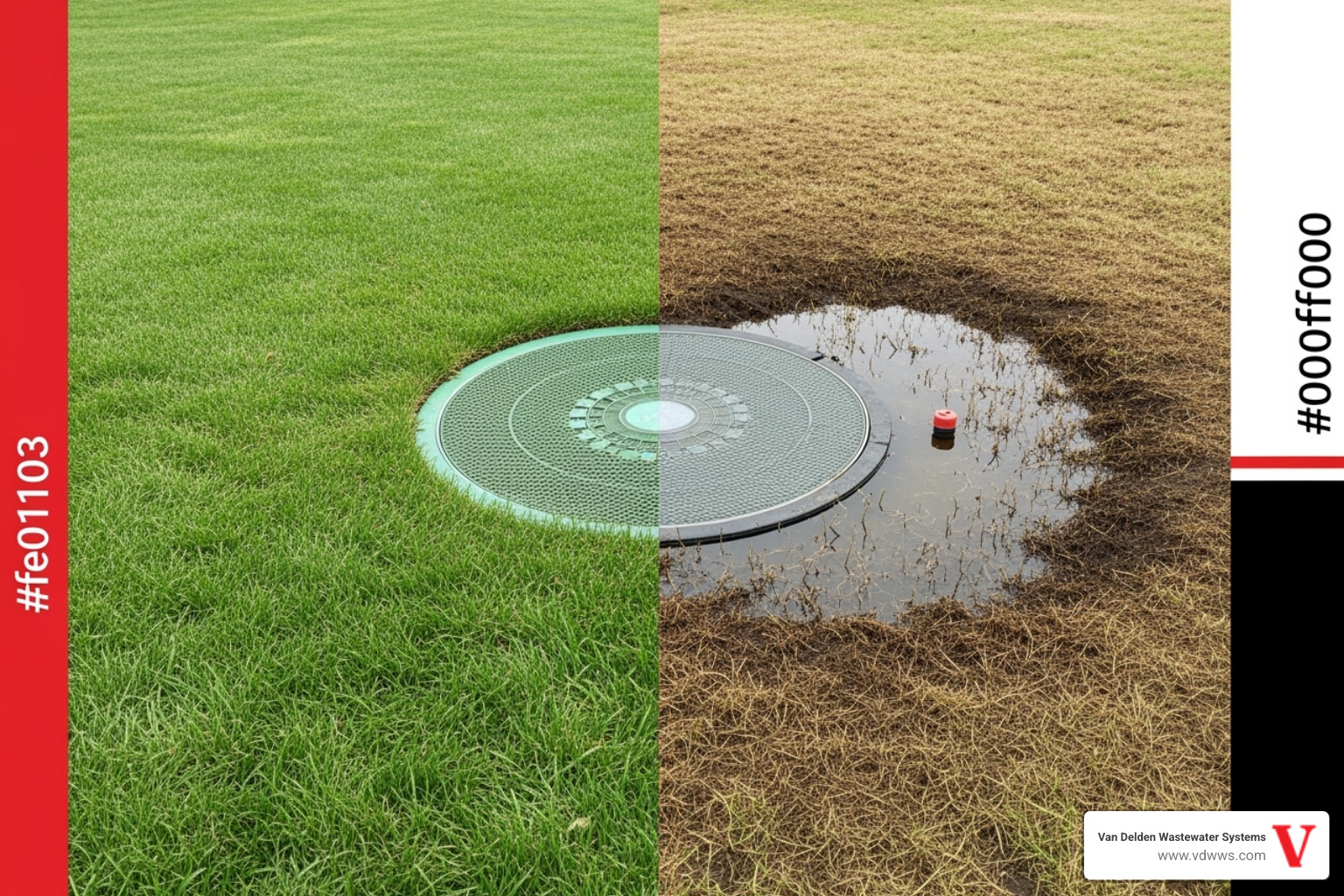
When you skip pumping, the sludge layer in your tank grows until solids escape into your drainfield—the part of your system that filters wastewater. Once solids clog the drainfield, you're looking at a major system failure.
A failed drainfield is a nightmare. You might notice soggy, foul-smelling patches in your yard where wastewater is surfacing. In the worst cases, sewage backs up into your home through drains and toilets. Imagine the property damage, the disruption to your daily life, and the serious health hazards that raw sewage presents to your family.
These aren't scare tactics—they're real consequences we've seen countless times. Homeowners who delay maintenance often face emergency repairs, professional cleanup services, and sometimes even temporary housing while their homes are remediated.
Regular pumping removes solids before they can cause blockages, extending the lifespan of your entire septic system. A well-maintained system can last for decades, while a neglected one might fail in just a few years.
At Van Delden Wastewater Systems, we've been helping homeowners since 1937, and we've learned that proactive maintenance is always better than reactive repairs. Our non-commissioned technicians will never pressure you, but we will always be honest about what your system needs to stay healthy.
For a detailed look at how routine care protects your home, check out our article: The Benefits of Regular Septic Tank Cleaning.
The Professional Pumping Process: What to Expect
Scheduling a septic tank pumping might feel mysterious if you've never done it before. At Van Delden Wastewater Systems, we follow a thorough, professional process to take the guesswork out of the experience.
Locating the Tank: First, we find your septic tank. Our technicians are skilled at locating tanks using methods like probing the ground or reviewing property records, so don't worry if you're unsure of its location.
Uncovering Lids: Next, we access the tank's lids. If you have risers installed to ground level, this step is quick. If your lids are buried, our team will carefully dig them up, minimizing disruption to your landscaping.
Pumping Waste: Now for the main event. We insert a large vacuum hose from our pumper truck into the tank and begin removing the wastewater, scum, and sludge. We work to thoroughly remove the contents, giving your system a fresh start.
Inspecting Baffles and Tank Condition: While pumping, we inspect the health of your system. Our technicians check the baffles—internal dividers that protect your drainfield—for any damage. We also examine the tank's overall structural condition.
Checking for Issues: We also look for broader system problems, like drainfield saturation or pipe blockages. Catching these issues early can prevent major problems and hassle down the road.
Waste Disposal: The waste we remove is transported to approved, licensed disposal facilities that meet all environmental regulations. Responsible waste management is a critical part of our commitment to the community.
Final Inspection and Recommendations: Before leaving, we secure the access points and provide you with a detailed service form. This document includes our observations and any recommendations for future maintenance. We take the time to answer your questions and explain what we found.
A typical service takes 20 to 60 minutes for a standard residential tank, though this can vary based on accessibility, tank size, and the condition of the waste.
For a more detailed walkthrough, see our guide: What to Expect During Septic Tank Cleaning. You can also learn more about our general Septic tank pumping services.
Throughout the process, our non-commissioned technicians focus on quality work and keeping you informed. We're here to help you understand your system and make smart maintenance decisions.
Frequently Asked Questions About Septic Tank Pumping
We've been in the septic business since 1937, and certain questions come up often. Here are the most common questions homeowners ask us about septic tank pumping.
How often should a septic tank be pumped?
There is no universal answer, as your pumping schedule depends on your unique household.
Household size is a major factor—a larger family produces more wastewater. Tank size also matters, as a larger tank can go longer between services. Finally, your family's water usage habits impact how quickly your tank fills. Even a leaky toilet can add hundreds of gallons of unnecessary water to your system each month.
As a general rule, most residential septic tanks should be pumped every three to five years. However, a large family might need service every two to four years, while a single person could go longer. The best approach is a professional inspection to measure the sludge and scum layers. Our non-commissioned technicians will give you an honest, personalized recommendation. For a deeper look, check out our article: How Often Should My Septic Tank Be Cleaned. The EPA also offers helpful guidance on How to care for your septic system.
What are the signs my septic tank needs to be pumped?
Your system will give you warning signs when it's time for service.
- Slow drains in sinks, tubs, or showers are often the first hint.
- Gurgling sounds from your plumbing can indicate a full system.
- Foul odors near drains or in your yard are a clear signal that something is wrong.
- Pooling water near the tank or drainfield suggests liquid isn't draining properly.
- Unusually lush grass over your drainfield, especially in dry weather, can mean wastewater is surfacing.
The most urgent sign is sewage backup into your home. If you experience any of these symptoms, don't wait. Our article, How Can I Tell If My Septic Tank Is Full, goes into more detail.
Can I pump my septic tank myself?
While we appreciate the DIY spirit, this is one job that must be left to professionals for several critical reasons.
First, it requires specialized equipment, namely a commercial vacuum truck that requires training to operate safely.
Second, there are serious health hazards. Septic waste contains bacteria and viruses that can cause dangerous infections. Professionals use protective equipment and follow strict safety protocols.
Third, septic tanks contain toxic gases like methane and hydrogen sulfide, which can be fatal. Professionals are trained in confined space safety and use gas monitors.
Fourth, there are strict laws for legal disposal. Septic waste must be transported to licensed facilities. Improper disposal can result in significant legal penalties and environmental damage.
Finally, professional expertise includes a full inspection. Our technicians check baffles, look for cracks, and spot potential problems before they become major issues. This comprehensive service is what protects your investment. Hiring a professional is a crucial step for safety and proper system care, far outweighing the severe risks of a DIY attempt. For more on this, read Why You Should Have Your Septic Tank Cleaned Part 1.
Conclusion: Taking Control of Your Septic Maintenance
You now have a solid understanding of what goes into a professional septic tank service and why this maintenance is so important for your home. It's not about finding a quick fix—it's about recognizing the value of proper care and making informed decisions that protect your property in the long run.
Every septic system tells a different story. Your tank size, location, accessibility, and system type all contribute to a service plan that's uniquely yours. This customized approach ensures you're getting exactly the service your system needs.
Proactive maintenance is your secret weapon against the nightmare scenarios of failed drainfields and sewage backups. A little preventative care today saves you from major headaches and disruptions tomorrow.
At Van Delden Wastewater Systems, we've been doing this since 1937. Our family-owned business operates on a straightforward principle: honest service from people who care about your system. Our non-commissioned technicians are here to educate you, answer your questions, and make sure your septic system gets the care it deserves.
We document every service with detailed forms and photos because transparency matters. You should know exactly what's happening with your system, every time we visit. That's how we do business in Boerne, Bulverde, Fair Oaks Ranch, Garden Ridge, Helotes, Timberwood Park, Hollywood Park, San Antonio, Shavano Park, and Spring Branch.
Don't wait for an emergency. Take charge of your septic maintenance now.
Schedule your septic tank cleaning service today and give your septic system the professional care it needs to work for years to come.