Why Every Boerne Homeowner Needs a Proper Septic Inspection
Septic inspection Boerne TX services protect Hill Country homeowners from thousands of dollars in surprise repairs and system failures. Whether you're buying a home, listing property, or simply maintaining your system, finding the right inspector matters. A bad inspection can leave you with a massive replacement bill after you close on a home.
Many inspectors only perform a "visual" check, which involves running water and watching for backups. This is insufficient and misses most problems. A full inspection, where the tank is opened and components are checked, is essential. This is especially true in Boerne, where the limestone and clay soils require local expertise. Many homes also have aerobic systems, which need specialized inspection steps.
You need an inspector with NAWT certification and a TCEQ OSSF license who understands the unique challenges of the Hill Country, from shallow bedrock to the mix of conventional and aerobic systems. They must know the difference between a visual screen and a full evaluation and be able to steer local permit records.
Below, you'll find an 11-point checklist to vet any inspector, a breakdown of what a thorough inspection includes, and the local regulations that affect your system.

Important Septic inspection Boerne TX terms:
Your 11‑Point Checklist to Choose the Right Inspector in Boerne
Choosing the right septic inspection Boerne TX professional can mean the difference between peace of mind and a costly surprise after closing. After nearly 90 years in the wastewater business, we've learned what separates a thorough inspection from a quick walk-around. This checklist will help you spot the difference. For a deeper dive, see our quick tips for choosing a septic inspector.
1) Verify septic-specific credentials (NAWT + TCEQ OSSF)
A general home inspector is not a septic expert. You need someone with NAWT certification (National Association of Wastewater Technicians) and a TCEQ OSSF license (Texas Commission on Environmental Quality, On-Site Sewage Facilities). These credentials prove the inspector has specialized training and understands Texas-specific codes. Learn more about why you should check credentials when choosing a septic inspector.
2) Confirm Boerne/Hill Country experience and references
Boerne's limestone and clay soils create unique challenges. An inspector with local experience will understand how high water tables and shallow bedrock affect systems in the area. Ask for references from homeowners in Hill Country neighborhoods to ensure they have relevant expertise.
3) Demand a full inspection, not just "visual"
A visual-only inspection is almost worthless. It won't detect a cracked tank, missing baffles, or high sludge levels. A full inspection requires opening the septic tank, measuring sludge and scum layers, checking internal components, and evaluating the drain field. It's the only way to know the true condition of the system. We've documented many examples of what visual septic inspections miss.
4) Ask exactly what components are inspected on your system type
Before booking, get a detailed list of what the inspector will check. For conventional systems, this includes the tank, lids, baffles, filter, distribution box, and leach field. For aerobic systems, it must also include the air pump, control panel, alarms, disinfection equipment, and sprinkler heads or drip lines.
5) Require a clear, photo-rich written report and site sketch
The report is the permanent record of your system's condition. It should include photographs of all major components, measured findings (like sludge depth), specific repair recommendations, and a site sketch showing component locations. For more on what a thorough inspection entails, see what happens during a septic system inspection, part I.
6) Ensure they never rely on dye-only testing
Dye testing can give a false "pass" by missing major issues like a cracked tank or a failing drain field. A proper inspection requires opening the tank and conducting hands-on evaluations. Dye testing alone is a shortcut that leaves you vulnerable. Learn how to conduct a septic system inspection the right way.
7) Check insurance and non-commissioned practices
Confirm the inspector carries liability insurance. Also, choose companies with non-commissioned technicians. This ensures their recommendations are unbiased and not driven by a sales incentive. Our technicians are paid to give you honest findings, and all are background-checked.
8) Make sure they inspect aerobic systems properly
Aerobic systems are complex and require specialized knowledge. A thorough inspection includes testing the air pump, chlorination system, sprinkler dispersal, and all timers, panels, and alarms. Don't trust this to someone only familiar with conventional tanks. For a detailed look, see what happens during a septic system inspection, part II.
9) Confirm real estate transaction experience
An inspector familiar with real estate transactions will understand option periods, communicate clearly with agents, and provide reports that meet lender requirements. This experience is crucial for a smooth closing. For insights, read our guide to septic system inspections in real estate.
10) Septic inspection Boerne TX: Ask about local permitting knowledge
Boerne has a unique mix of city and county regulations. Your inspector should know how to pull permit records and understand local maintenance and reporting requirements. This knowledge helps you stay compliant. You can find more information on local rules from the City of Boerne and for county regulations from Bexar County OSSF.
11) Request sample reports before you book
Ask to see a sample inspection report. It should be detailed, with plenty of photos, measurable data, and clear, prioritized recommendations. A vague or confusing sample report is a major red flag.
Septic inspection Boerne TX: What a Thorough Inspection Includes
A thorough septic inspection Boerne TX is a comprehensive assessment of your system's health, going far beyond a quick glance. It's an essential step to gain peace of mind about what's happening underground. For a deeper understanding, check out our local guide.
Components a pro will check, step by step
A professional inspection is a systematic process. We locate the tank, uncover the lids, and open it for access. Inside, we measure sludge and scum layers to determine if pumping is needed. We inspect the baffles and tees for damage, as they are crucial for preventing solids from clogging your drain field. We also check the tank's structural integrity for cracks or leaks.
We then conduct flow tests to ensure wastewater moves correctly to the absorption area. Finally, we evaluate the drain field for any signs of failure, like soggy ground or odors. For aerobic systems, we also test the air pump, alarms, disinfection unit, and sprinklers. For more details, visit our guide on professional septic inspection.
Types of inspections: visual vs full (and when each applies)
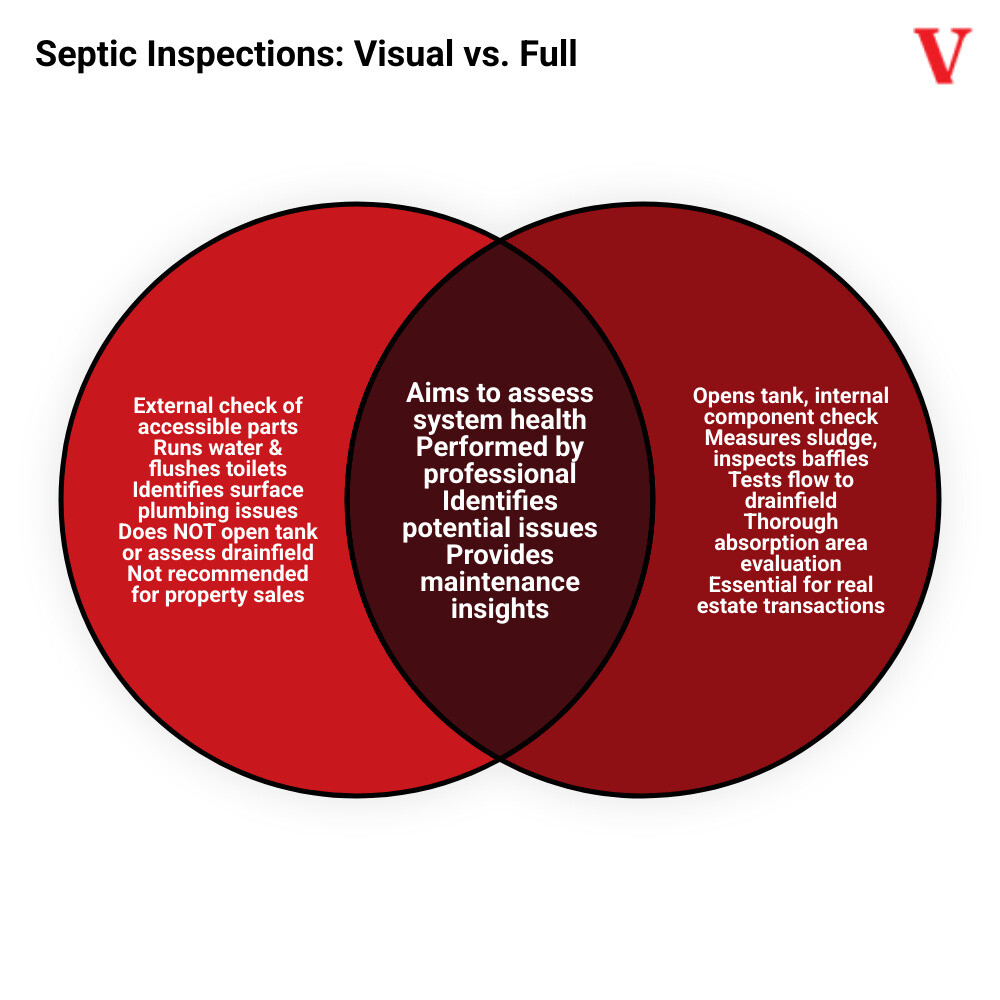
A visual-only inspection involves running water and checking for obvious backups without opening the tank. It's a surface-level check that misses most major problems.
A full inspection is an internal investigation of all components. The inspector opens the tank, measures its contents, evaluates baffles, and tests the entire system. This is the only way to know the true condition of your septic system and is essential for real estate transactions. Visual inspections give a false sense of security; learn more about the risks of visual vs. full inspections.
Signs of trouble an inspection can reveal
A thorough inspection can uncover issues like slow drains, gurgling sounds, foul odors, or soggy patches in your yard. Inside the tank, we look for corrosion, damaged baffles, and signs that water is leaking in or out. We also identify problems like undersized systems or improper installations, such as a driveway built over the tank. See real-world examples in our case studies.
Home inspector vs septic specialist: what's the difference?
Most home inspectors are generalists and lack the specialized tools, training, and liability coverage to perform a full septic evaluation. A septic specialist has NAWT certification, TCEQ OSSF licensing, and years of focused experience. We open the tank for a hands-on evaluation and have deep knowledge of both conventional and complex aerobic systems. Learn more about whether your home inspector can perform your septic inspection.
Septic inspection Boerne TX: What your inspector needs from you beforehand
To help your inspector, gather any available information. This includes pumping history, an as-built drawing or septic map, and maintenance contracts for aerobic systems. Also, provide information on property access, the number of occupants in the home, and any recent renovations. For a complete list, see our guide on questions to ask when hiring an inspector for real estate transactions.
What should be in your inspection report
A quality report is your most valuable takeaway. It should include your system type and size, measured sludge and scum levels, and a condition rating for each component supported by photos. It must also contain a system diagram, findings categorized by urgency, and a future maintenance plan with specific repair recommendations. For more on report quality, read our article on septic inspections when buying or selling property.
Your 11‑Point Checklist to Choose the Right Inspector in Boerne
Finding the right septic inspection Boerne TX professional isn't just about picking a name from a search result. It's about protecting your home and avoiding costly problems after closing. After inspecting systems in the Hill Country since 1937, we've created this checklist to help you avoid hidden septic disasters. For more background, check out our guide on choosing an inspector.
1) Verify septic-specific credentials (NAWT + TCEQ OSSF)
A general home inspector is not a septic expert. You need someone with NAWT (National Association of Wastewater Technicians) certification and a TCEQ OSSF (On-Site Sewage Facility) license. These credentials prove the inspector has specialized training and understands Texas-specific codes. If you want to understand why these credentials matter so much, read our article on checking credentials.
2) Confirm Boerne/Hill Country experience and references
Boerne's limestone and clay soils create unique challenges. An inspector with local experience will understand how high water tables and geology affect drain fields. Ask for references from Boerne homeowners to ensure they have relevant expertise.
3) Demand a full inspection, not just "visual"
A visual-only inspection is almost worthless. It won't detect a cracked tank, missing baffles, or high sludge levels. A full inspection means opening the tank, measuring sludge and scum layers, and checking all internal components. It's the only way to know the true condition of the system. See real examples of what visual inspections miss.
4) Ask exactly what components are inspected on your system type
Before booking, get a detailed list of what the inspector will check. For a conventional system, this includes the tank, baffles, filter, and drain field. For an aerobic system, it must also include the air pump, control panel, alarms, disinfection unit, and sprinklers. A professional should be able to explain why each component matters.
5) Require a clear, photo-rich written report and site sketch
Your report should be a clear roadmap. Insist on measured data, photos of every major component, and repair recommendations ranked by urgency. We provide detailed service forms with extensive photo documentation. To see what a thorough inspection process looks like, read about what happens during inspections.
6) Ensure they never rely on dye-only testing
Dye testing alone is nearly useless. It can give a false "pass" while missing major issues like a failing drain field. A proper inspection requires opening the tank and conducting hands-on evaluations. Our guide on how to conduct a septic system inspection explains the right way to evaluate a system.
7) Check insurance and non-commissioned practices
Confirm the inspector carries liability insurance. Also, choose companies with non-commissioned technicians. This ensures their recommendations are unbiased and not driven by a sales incentive. All our technicians are background-checked and non-commissioned.
8) Make sure they inspect aerobic systems properly
Aerobic systems are complex. A thorough inspection includes testing the air pump, aeration process, disinfection system, and sprinkler heads. The inspector must also test all timers, control panels, and alarm systems. For more details on aerobic system inspections, see our article on inspection details.
9) Confirm real estate transaction experience
An inspector familiar with real estate knows how to work within an option period, communicate clearly with all parties, and provide reports that meet lender requirements. This experience is crucial for a smooth closing. Our guide on septic system inspections in real estate explains what to expect.
10) Septic inspection Boerne TX: Ask about local permitting knowledge
Boerne has a unique mix of city and county regulations. Your inspector should know how to access permit records and understand local maintenance and reporting requirements. This knowledge helps you stay compliant. You can find more information on local rules from the City of Boerne and for county regulations from Bexar County OSSF.
11) Request sample reports before you book
Ask to see a sample report. It should be detailed, with clear photos, measurable data, and prioritized recommendations. A vague or confusing sample report is a major red flag. Our post on buying or selling property shows what a comprehensive report should include.
Septic inspection Boerne TX: What a Thorough Inspection Includes
A thorough septic inspection Boerne TX is a comprehensive assessment designed to give you a complete picture of your system's health. We aim to educate our customers on every step of this process. For a deeper understanding, check out our local guide.
Components a pro will check, step by step
A professional inspection is a systematic process. We locate the tank, uncover the lids, and measure sludge and scum layers. We then inspect baffles and tees, which are crucial for proper flow. Our technicians also check the tank's structural integrity for cracks or leaks. We conduct flow tests to ensure wastewater moves correctly to the absorption area and evaluate the leach field for signs of failure. For aerobic systems, we also test the air pump, alarms, disinfection unit, and sprinklers. For more details, visit our guide on professional septic inspection.
Types of inspections: visual vs full (and when each applies)
A visual-only inspection is a surface-level look that involves running water to check for backups. It does not involve opening the tank and can miss major underlying problems.
A full inspection involves an internal investigation of all components, including opening the tank to evaluate its function. It's the difference between looking at a house from the curb and walking through every room. A full inspection is essential when buying a home. For more context, read about visual vs. full inspections.
Signs of trouble an inspection can reveal
A quality inspection can uncover problems before they become emergencies. Red flags include slow drains, gurgling sounds, sewage odors, and soggy or unusually green patches in your yard. Inside the tank, we might find corrosion, missing baffles, or signs of leaks. We've even found undersized systems and tanks buried under driveways. For real-world examples, check out our case studies.
Home inspector vs septic specialist: what's the difference?
General home inspectors have scope limitations and lack the specialized tools and expertise to properly assess a septic system. A septic specialist brings specialized tools and skills, including knowledge of complex aerobic systems. We are required to open the tank for a hands-on evaluation, providing a much deeper level of reporting. For more information, read our article on home inspectors vs. septic specialists.
Septic inspection Boerne TX: What your inspector needs from you beforehand
To conduct the most thorough inspection, we need some information from you. Your pumping history, any as-built drawings or septic maps, and maintenance contracts for aerobic systems are incredibly valuable. Also, let us know about property access, home occupancy, and any recent renovations. For more tips, see our guide on questions to ask when hiring an inspector.
What should be in your inspection report
A quality report is your most valuable takeaway. It should document the system type and size, include measured sludge and scum levels, and provide a condition assessment for every component, supported by photos. Look for a system diagram, a prioritized list of findings, and a forward-looking maintenance plan. For more information, read our article on septic inspections for buying or selling property.