Why Boerne Businesses Need the Right Septic System
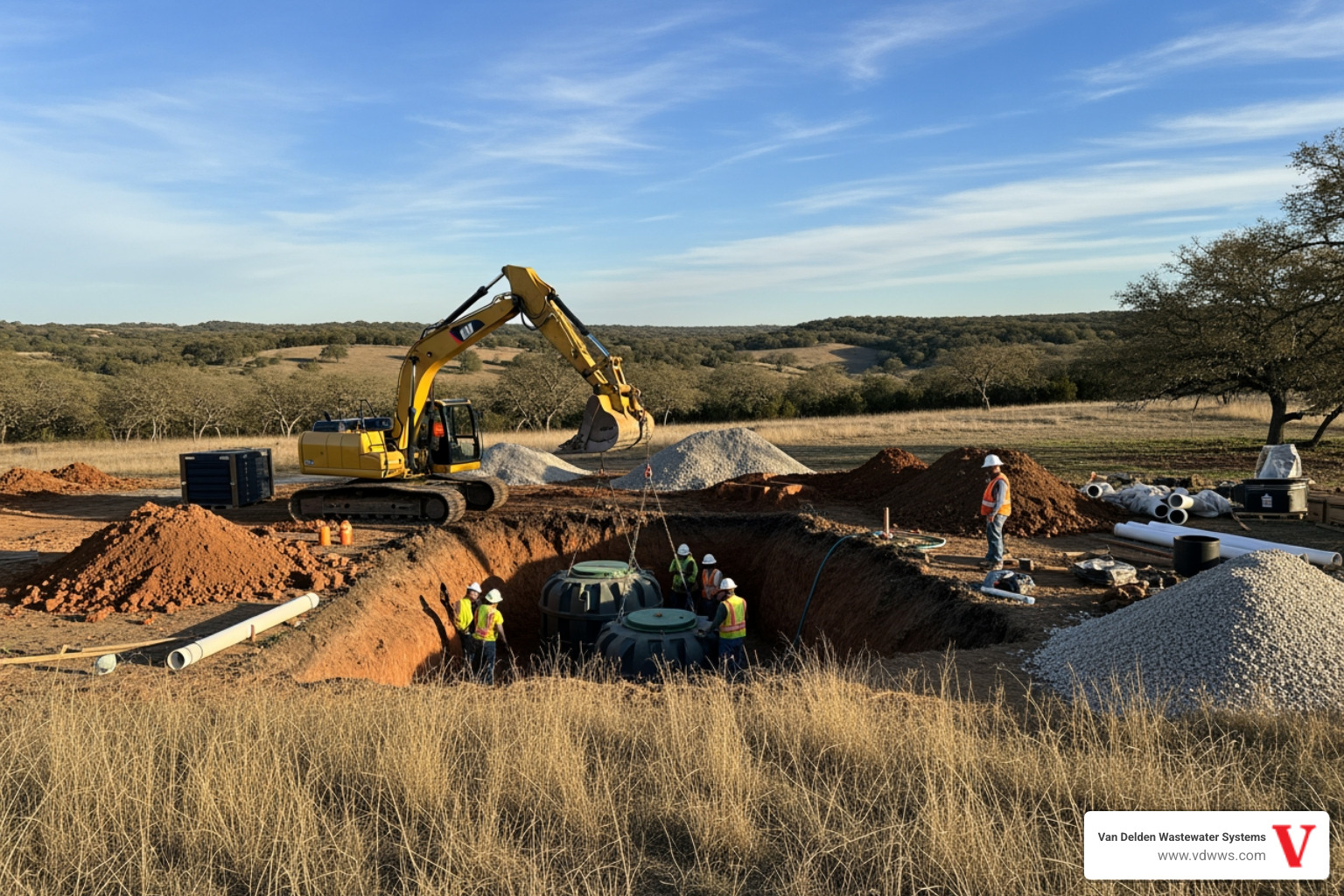
For any business in Boerne, TX, a reliable wastewater management system is not just a utility—it's a critical component of your daily operations. Unlike residential properties, commercial establishments have unique and demanding requirements that necessitate a specialized approach to septic system design and installation. A properly engineered commercial septic installation in Boerne, TX, is more than just digging a hole and dropping in a tank; it's a complex process that must account for the area's sensitive environment and your business's specific operational needs.
The Texas Hill Country, with its stunning landscapes, also presents significant geological challenges. The region is characterized by porous limestone and a shallow water table, particularly over the environmentally sensitive Edwards Aquifer recharge zone. This means that any wastewater system must be designed with the utmost care to prevent groundwater contamination. Businesses—from busy restaurants and popular breweries to office complexes, retail centers, and industrial facilities—generate far greater volumes of wastewater with higher concentrations of organic matter, grease, and chemicals than a typical household. A standard residential system would quickly fail under such loads, leading to costly repairs, business interruptions, and potential environmental fines.
Navigating this process requires professional expertise. This guide will walk you through the essential considerations for a successful commercial septic installation in the Boerne area.
Quick Overview: What You Need to Know
- Site & Soil Evaluation: This is the foundational step. A professional assessment of your property's soil composition, depth, and percolation rate is crucial for determining the most suitable type of septic system.
- Permitting & Regulations: All septic systems in the area require permits from regulatory bodies like the Texas Commission on Environmental Quality (TCEQ) and Kendall County. Understanding and adhering to these regulations is non-negotiable.
- System Types & Design: Commercial properties often require more advanced solutions than standard systems. Options range from conventional septic systems for suitable soil conditions to advanced Aerobic Treatment Units (ATUs) for environmentally sensitive areas or properties with poor soil.
- Professional Installation: The long-term performance of your septic system hinges on a correct, compliant installation. This is a job for experienced, licensed professionals who understand the local geology and regulations.
- Ongoing Maintenance: A commercial septic system is a significant investment. Regular maintenance, including pumping and inspections, is essential to protect that investment, ensure smooth operation, and prevent costly failures.
For a complete overview of septic system planning, see our Septic System Planning Guide. When you're ready to move forward, contact Van Delden Wastewater Systems for a professional evaluation and installation.
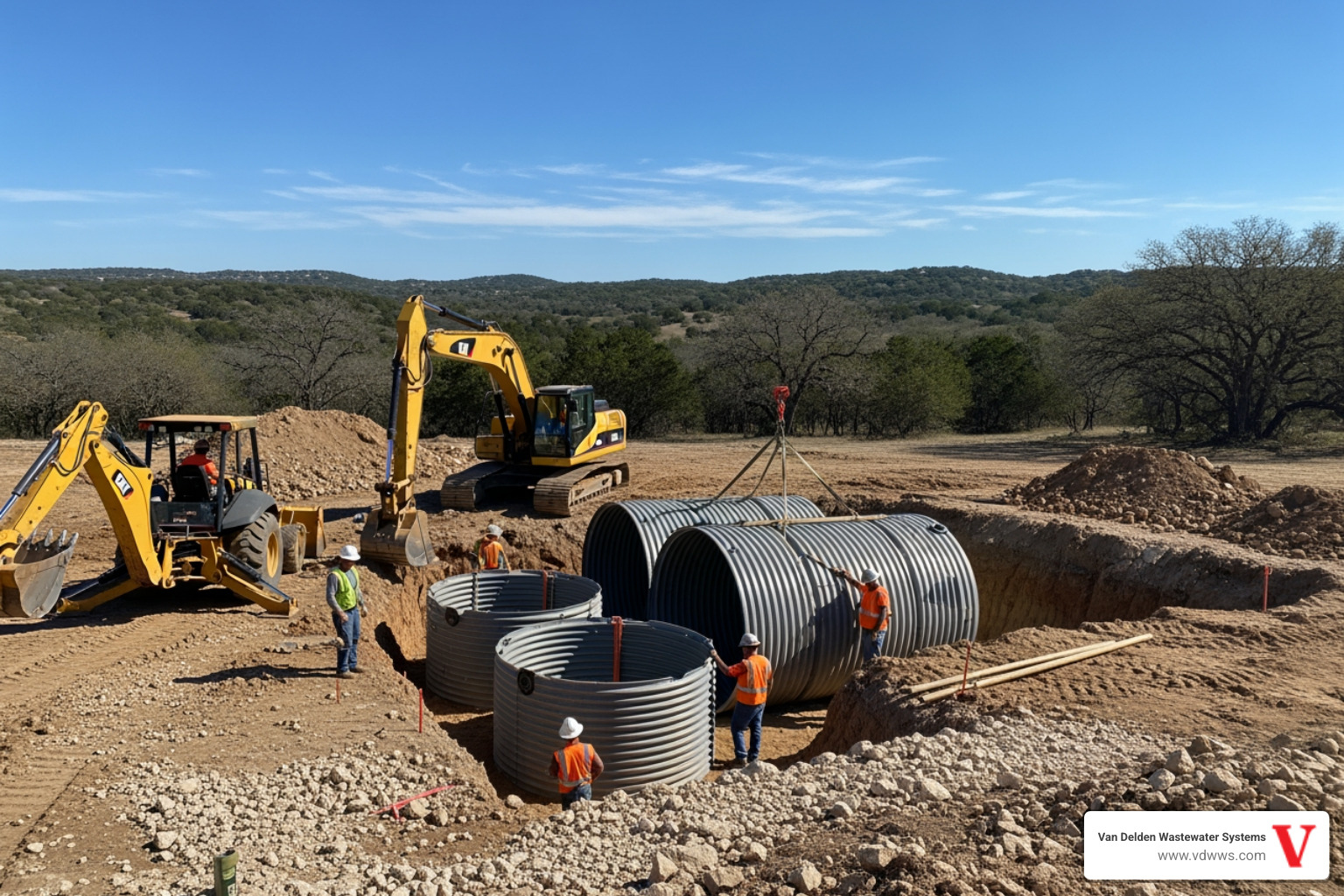
Understanding the Unique Demands of Commercial Septic Systems in Boerne
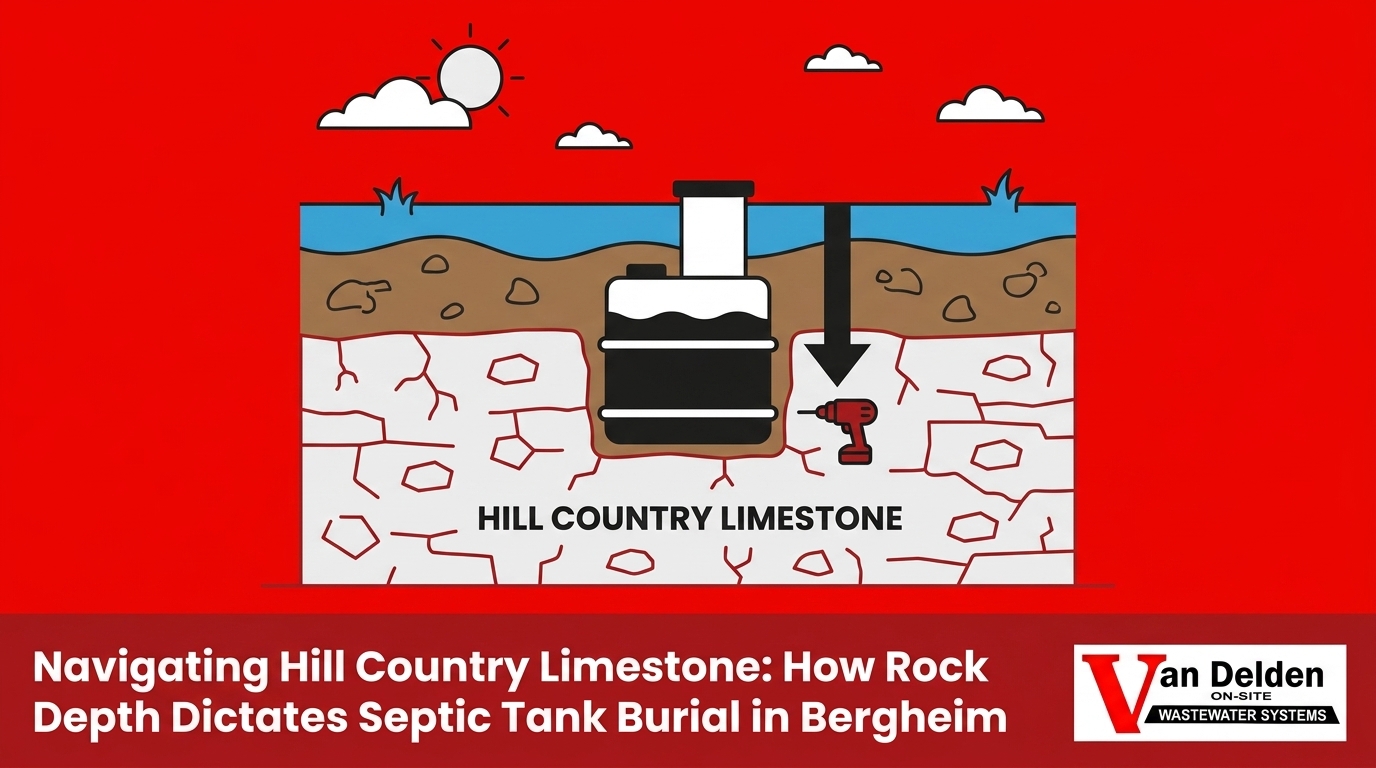
Installing a commercial septic system in Boerne, TX, is a specialized undertaking that requires a deep understanding of local environmental factors and regulatory requirements. Our picturesque Hill Country environment, while beautiful, presents specific geological and hydrological considerations that significantly impact wastewater management. We're talking about porous limestone, often shallow topsoil, and a high water table in many areas. These factors, combined with the critical need to protect the sensitive Edwards Aquifer, mean that every commercial septic installation must be carefully planned and executed by professionals.
The regional geology of the Texas Hill Country, particularly the prevalence of porous limestone, means that wastewater can percolate quickly, potentially reaching groundwater sources if not adequately treated. This makes environmental considerations paramount. The Edwards Aquifer is a vital source of drinking water for millions of people, and protecting it from contamination is a top priority for state and local agencies. We must ensure that any wastewater returning to the environment is treated to the highest standards, safeguarding our precious natural resources. Understanding and adhering to these environmental considerations is not just about compliance; it's about being good stewards of our community and natural surroundings. For a deeper dive into these requirements, we often refer to resources like our guide on Septic System Regulations a Guide for New Constructions in South Texas.
Commercial vs. Residential Systems
It's a common misconception that a septic system is a one-size-fits-all solution. However, commercial septic systems differ significantly from their residential counterparts in nearly every aspect, from design and capacity to maintenance requirements.
Here's how they differ:
- Higher Wastewater Volume: Businesses, whether they're restaurants, retail spaces, or offices, typically generate a much larger and more variable volume of wastewater daily compared to a single-family home. A system must be sized to handle peak flow without backing up or failing.
- Stronger Waste Concentration: The type of waste produced by commercial establishments can be far more concentrated and contain different contaminants. For instance, restaurants produce significant amounts of fats, oils, and grease (FOG), as well as food solids. Industrial facilities might discharge chemicals or other substances that require specialized treatment.
- Grease Traps: A crucial distinction for many commercial operations, particularly food service establishments, is the mandatory inclusion of grease traps. These devices are installed in the plumbing line to intercept fats, oils, and grease (FOG) before they enter the main septic tank. This prevents these substances from solidifying and causing severe clogs in the tank and drainfield, which can lead to system failure. Residential systems rarely require these.
- Larger Tank Capacity and More Complex Drainfields: Due to increased volume and concentration, commercial septic tanks are substantially larger. Their drainfields (or leach fields) are also more extensive and often employ advanced dispersal methods, like low-pressure dosing (LPD) systems, to handle the higher hydraulic load and ensure proper effluent treatment.
- Durability and Construction: Commercial systems are built to withstand heavier and more consistent usage. This often means using more robust materials, such as precast concrete for tanks, and more complex designs to ensure longevity and reliability under demanding conditions. As we discussed in our article, Septic System Planning What to Know When Building a New Home, proper planning is foundational, and for commercial properties, this foundation needs to be extra strong.
Key Challenges for Boerne Businesses
Beyond the general differences between commercial and residential systems, businesses in Boerne, TX, face specific challenges when it comes to their septic infrastructure:
- Variable Flow Rates: Unlike the relatively predictable water usage patterns of a home, commercial properties often experience highly variable wastewater flows. A restaurant, for example, might have intense usage during lunch and dinner hours, followed by long periods of low flow overnight. The septic system must be designed to handle these fluctuations without becoming overwhelmed during peak times or having the beneficial bacteria die off during lulls.
- High-Strength Waste: Businesses like breweries, wineries, and certain manufacturing facilities produce wastewater with a much higher biological oxygen demand (BOD) and total suspended solids (TSS) than typical domestic sewage. This "high-strength waste" requires more intensive treatment to break down the organic matter, often necessitating advanced aerobic systems to prevent system failure and environmental contamination.
- Limited Space: Many commercial properties, especially those in developing areas of Boerne, may have limited land available for a sprawling conventional drainfield. This constraint often steers the design towards more compact, advanced treatment options like aerobic treatment units (ATUs) that can produce a higher quality effluent suitable for smaller disposal areas.
- Strict Local Regulations: Boerne, situated within Kendall County and the Edwards Aquifer Recharge Zone, operates under stringent wastewater treatment and disposal regulations set by local authorities and the Texas Commission on Environmental Quality (TCEQ). These rules dictate everything from the type of system allowed to the required maintenance schedule. Compliance is not optional; it's a legal and environmental necessity.
- Protecting Groundwater: The primary concern for all septic systems in our area, especially commercial ones, is the protection of the Edwards Aquifer. This critical water source demands that all systems achieve a high level of treatment before effluent is dispersed into the soil, ensuring that no contaminants reach the groundwater supply.
These challenges underscore why a generic, one-size-fits-all approach to commercial septic installation simply won't work in Boerne. It requires a deep understanding of local conditions, regulatory frameworks, and specialized engineering to design and build a system that is both effective and compliant.
Selecting the Right Septic System for Your Boerne Business
Choosing the appropriate septic system for your commercial establishment in Boerne, TX, is a critical decision that impacts your business's operational efficiency, environmental compliance, and long-term costs. The selection process is not arbitrary; it's a science-driven determination based on a thorough system design phase. This includes a comprehensive site evaluation, detailed soil testing, and careful consideration of your property's size, topography, and the specific nature of your business operations. As we emphasize in our guide on the Septic System Design and Installation Process, getting the design right from the start is paramount to avoiding future failures and costly repairs.
Here's a comparison of common septic system types suitable for commercial use, helping you understand which might be best for your Boerne business:
| System Type | Description | Best Suited For | Key Considerations |
|---|
| Conventional System | A traditional system using a septic tank and a subsurface drainfield. Wastewater flows from the tank to a series of perforated pipes in gravel-filled trenches, where it's naturally treated by soil microbes. | Properties with ample space and good, permeable soil. Suitable for businesses with lower wastewater output and standard-strength waste. | Requires specific soil types (loam, sandy loam) and sufficient depth to groundwater. The most cost-effective option when site conditions permit. |
| Aerobic Treatment Unit (ATU) | An advanced system that uses an aeration process to introduce oxygen into the treatment tank. This encourages the growth of aerobic bacteria, which break down waste more efficiently than anaerobic systems. | Businesses in environmentally sensitive areas like the Edwards Aquifer Recharge Zone, properties with poor soil conditions (clay, rock), or limited space for a large drainfield. Ideal for high-strength waste from restaurants or food processors. | Produces a much cleaner effluent, allowing for more flexible disposal options like surface spray or drip irrigation. Requires electricity to run the aerator and a maintenance contract for regular inspections. Learn more about how to Install an Aerobic Septic Unit in San Antonio, TX. |
| Mound System | An engineered drainfield constructed above the natural soil surface. A sand-fill material is used to create a mound that treats wastewater before it reaches the native soil. | Properties with high water tables, shallow soil depth, or very slow-draining soil (heavy clay). | Requires a significant amount of space and specific sand fill. The design and construction are more complex than conventional systems but can be a necessary solution for challenging sites. |
| Low-Pressure Pipe (LPP) System | A variation of the conventional system where a pump is used to distribute effluent evenly throughout the drainfield via a network of small-diameter pipes. | Properties with challenging soil conditions or sloped terrain where a gravity-fed system would not work effectively. It ensures the entire drainfield is used, preventing overloading in specific areas. | More complex than a gravity system due to the pump and control components. Requires electricity and regular maintenance of the pump and alarm systems. |
The Importance of a Professional Site & Soil Evaluation
Before any system can be chosen, a licensed professional must conduct a thorough site and soil evaluation. This is not just a formality; it's a critical step mandated by state and local regulations. The evaluation involves:
- Soil Analysis: Examining the soil's texture, structure, and permeability to determine its ability to treat wastewater. In the Texas Hill Country, this often involves dealing with rocky, clay-heavy, or shallow soils.
- Percolation Test (Perc Test): Measuring the rate at which water is absorbed by the soil. This data is crucial for sizing the drainfield correctly.
- Site Survey: Assessing the property's topography, size, and proximity to wells, water bodies, and property lines to ensure compliance with setback requirements.
The results of this evaluation will dictate which type of septic system is feasible and appropriate for your specific property, ensuring both regulatory compliance and long-term functionality. For more on this, see our guide on Septic System Installation.