Why Soil Testing Is Critical for Spring Branch Homeowners
Soil percolation test Spring Branch TX requirements can make or break your property development plans. If you're planning to install a septic system in Spring Branch, understanding the percolation test process is essential for your project's success.
Quick Answer for Spring Branch Homeowners:
- Required by law: TCEQ and Comal County require professional soil percolation tests for all septic permits
- Licensed professionals only: Must be conducted by a Registered Sanitarian or Professional Engineer
- Determines system type: Results dictate whether you can use a conventional system or need alternatives like aerobic treatment
- Protects your investment: Prevents costly system failures and ensures long-term functionality
Spring Branch's unique location in the Texas Hill Country creates specific challenges for septic systems. The area's clay-heavy soils, shallow bedrock, and varying topography mean that not every property is suitable for a standard septic system.
Research shows that conventional septic systems in East Texas have a 19% chronic malfunction rate, rising to 54% in areas with clay-heavy soils - exactly the type of soil conditions found throughout much of Spring Branch. This makes proper soil evaluation absolutely critical.
Your soil percolation test determines how quickly water moves through your soil, which directly impacts septic system design, size, and cost. Without this test, you can't get a septic permit, and more importantly, you risk installing a system that won't work properly.
The consequences of skipping proper soil evaluation are serious. Fines for installing a septic system without proper permits can reach up to $10,000 per day of violation in Texas. Beyond legal issues, an improperly sized system can fail prematurely, contaminate groundwater, and create health hazards for your family and community.
Why a Perc Test is Non-Negotiable in Spring Branch
Spring Branch's beautiful Hill Country landscape presents challenges for septic systems. A soil percolation test Spring Branch TX is essential to protect your property investment and our local environment.
Texas soil conditions are highly varied. You might have rocky, shallow soil over limestone bedrock or thick clay that retains water. Many homeowners find their property isn't suitable for a standard septic system.
Clay-heavy soils are the biggest issue in our area. When soil doesn't "perk" properly, water can't filter at the right speed, causing backups. This leads to system failures, surfacing sewage, and expensive problems.
The Texas Hill Country geology adds complexity with its shallow bedrock and varied elevations. Factors like lot size, slope, and proximity to water sources require professional expertise. Small lots, steep slopes, or properties near creeks face additional challenges in meeting required drainfield setback distances.
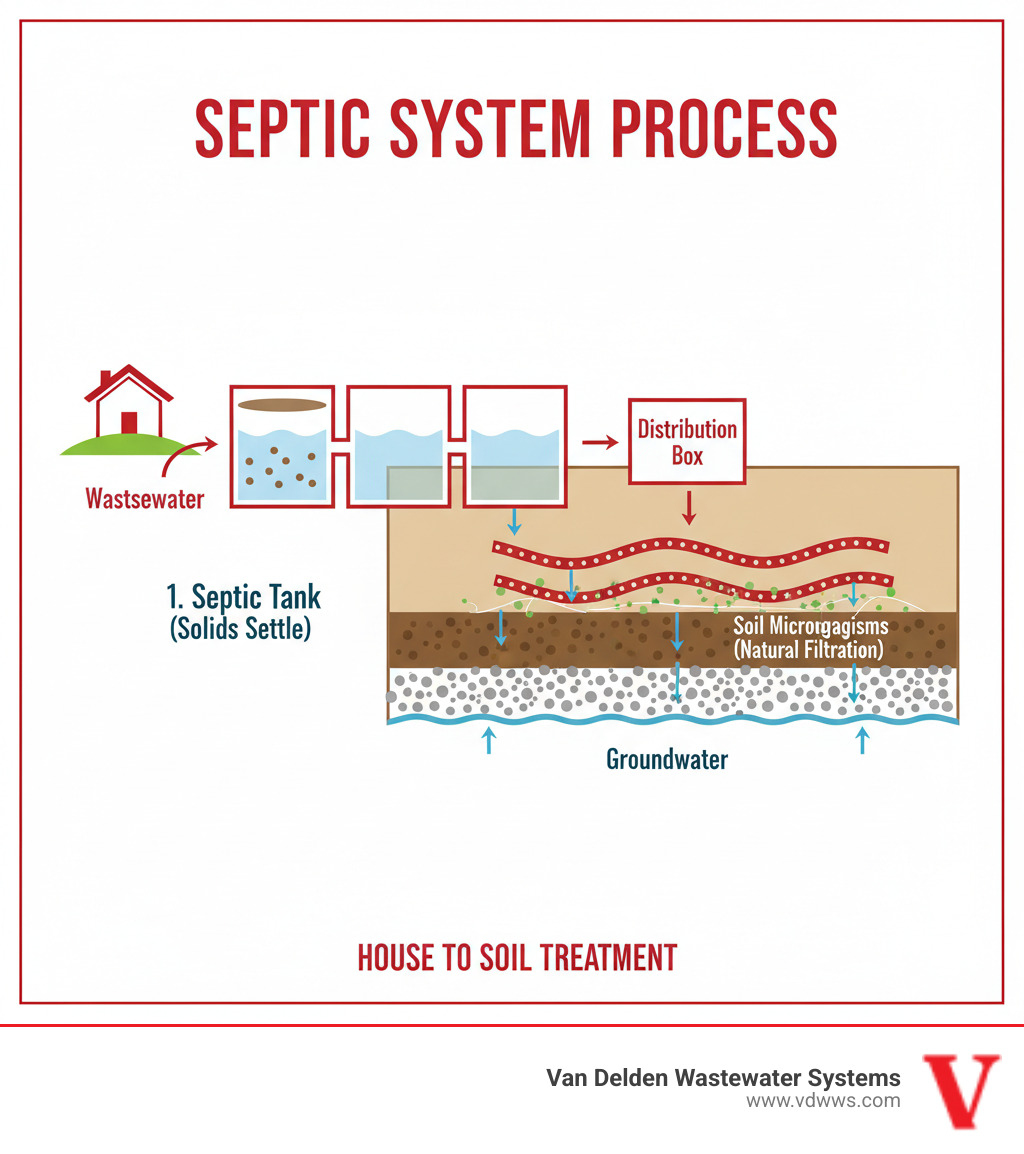
Groundwater protection is critical. Soil acts as a natural water filter, where microorganisms remove pollutants from wastewater before it reaches our groundwater system. According to Michigan State University's research on soil filtration, soil effectively filters contaminants when water passes through it properly. If your soil can't handle the job, this natural treatment fails, threatening community water quality. The drainfield is the heart of your septic system; without proper soil percolation, it can't do its job.
Your soil percolation test Spring Branch TX shows how your land will handle wastewater, ensuring your system works reliably for decades while protecting the Hill Country environment.
Legal Requirements for a Soil Percolation Test in Spring Branch, TX
When it comes to septic systems in Texas, the law is clear. A soil percolation test Spring Branch TX is required by state and local authorities to protect water quality.
The Texas Commission on Environmental Quality (TCEQ) sets the rules for all Texas septic systems to protect public health and the environment. Comal County regulations are often stricter, especially in the environmentally sensitive Hill Country.
New construction permits or major renovations involving septic systems require professional soil testing. The septic installation approval process needs detailed site evaluation results from licensed professionals who understand state and local requirements.
Cutting corners is expensive: fines for non-compliance can reach up to $10,000 per day. Installing a system without a permit can lead to serious financial penalties, court orders to remove or modify the system, and even criminal charges.
This is not a DIY project. Licensed Site Evaluators, Registered Sanitarians, or Professional Engineers must conduct your test and site evaluation. Our TCEQ-licensed technicians are certified to ensure your results meet all legal requirements.
Working with licensed professionals from the start saves headaches. Proper permits protect your property value, ensure your system works correctly, and keep you compliant. When you sell your home, proper documentation makes the process smooth. You can review the complete regulations at the TCEQ septic system regulations page to understand exactly what's required.
The Official Soil Percolation Test Spring Branch TX Process
Getting a soil percolation test Spring Branch TX isn't something you can wing or guess at. This is precise science that requires careful attention to detail, because the results will determine exactly how your septic system needs to be designed and whether it'll work properly for decades to come.
The whole process starts with what we call a thorough site evaluation. Think of it like a detective investigating a crime scene – we're not just randomly digging holes in your yard. We're studying the entire landscape, looking at how water naturally flows across your property, checking the slope, and noting any existing structures or environmental features that could impact your septic system.
Before we even think about breaking ground, we always call the utility marking services. Trust me, nobody wants to accidentally hit a gas line or electrical cable while digging test holes. We typically make this call 48 hours in advance to give everyone time to come out and mark what's underground.
Once we've got the all-clear on utilities, we start preparing the test holes. These aren't just random spots we pick – each hole is strategically placed exactly where your drainfield would eventually go. We dig them to specific dimensions and depths that mirror the actual septic system installation. The goal is to get a true picture of how your soil will handle wastewater at the exact depth where it matters most.
Here's where it gets interesting: we can't just dig a hole and immediately start testing. The soil needs to be saturated first, which means we pre-soak it with water. This step is absolutely critical because dry soil behaves completely differently than saturated soil. Since your septic system will be constantly releasing wastewater, we need to know how the soil performs when it's already holding as much water as it can handle.
After the saturation period, we start measuring how fast water drops in the test holes over specific time intervals. We're looking for consistent patterns here – not just a one-time measurement, but reliable data that shows exactly how your soil will perform day after day. This entire process, from start to finish, must be conducted by our Licensed Site Evaluators who have the training and certification to ensure everything meets TCEQ standards.

The Step-by-Step Perc Test Procedure
When we conduct a soil percolation test Spring Branch TX, we follow a methodical approach that ensures accurate, reliable results every single time.
Site selection and marking is where everything begins. Our licensed professionals walk your property to identify the best possible locations for your drainfield, keeping in mind all the required setbacks from wells, property lines, buildings, and water sources. We don't just pick one spot either – we mark several potential areas because soil can change dramatically even within a few feet. Before any digging starts, we contact the "Call Before You Dig" services to mark underground utilities, because safety always comes first.
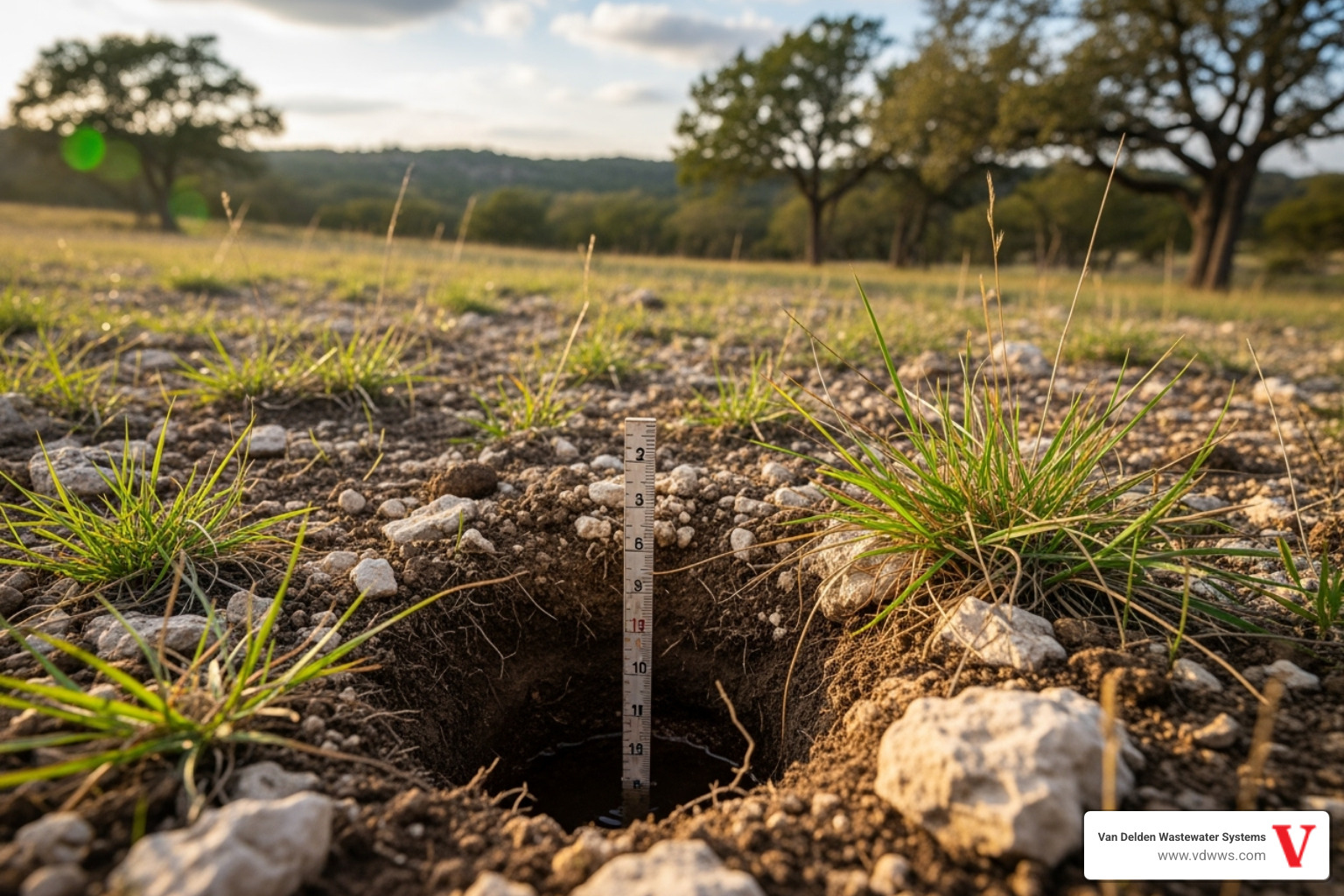
Digging multiple test holes to specific depths requires precision and experience. We excavate holes that are typically 6 to 12 inches in diameter and anywhere from 18 to 36 inches deep, depending on where your absorption field will be installed. The depth matters tremendously because soil characteristics change as you go deeper. We carefully scratch the bottom and sides of each hole to expose the natural soil surface and remove any smeared soil that could give us false readings.
Pre-soaking the soil for 24 hours is probably the most important step that people don't understand. We fill each test hole with water to at least 12 inches deep and let it completely drain out. This saturates the surrounding soil, creating the same conditions your drainfield will face every day. In clay-heavy soils like we often see in Spring Branch, this pre-soaking might need to continue for a full 24 hours or even longer, with us refilling the holes as they drain to keep that soil fully saturated.
Measuring the water level drop at timed intervals is where the real science happens. After the pre-soak period, we refill each test hole with clean water to a specific reference point – usually about 6 inches above the bottom. Then we start our precise measurements, tracking exactly how fast that water level drops over time. For sandy soils that drain quickly, we might take readings every 10 to 15 minutes. For slower clay soils, we space our readings 30 to 60 minutes apart, sometimes even longer.
Calculating the minutes per inch rate gives us the final number we need. Once we establish a consistent drainage pattern, we calculate what's called the "minutes per inch" or MPI rate. This tells us how many minutes it takes for the water level to drop exactly one inch. For example, if water drops 2 inches in 30 minutes, that's a 15 MPI rate. We take multiple readings from each hole and calculate averages to ensure accuracy. The lower the MPI number, the faster your soil drains – and that directly determines what type of septic system will work best on your property.
This systematic approach ensures that your soil percolation test Spring Branch TX provides the accurate data needed to design a septic system that will serve your family reliably for many years to come.
Understanding Your Results and Septic System Options
Once your soil percolation test Spring Branch TX is complete, we interpret the results. These results are like your property's unique fingerprint, telling us exactly what type of septic system will thrive on your land.
The percolation rate is the foundation for every design decision. Fast-draining soil requires a smaller drainfield, while slower-draining clay soils need much larger absorption areas to prevent the system from becoming overwhelmed. This relationship between soil speed and system size prevents system failures. An undersized drainfield in slow soil leads to backups, unpleasant odors, and wastewater surfacing in your yard.
Your test results determine if a conventional septic system will work or if we need to explore advanced alternatives. Modern wastewater treatment offers reliable solutions for challenging soil conditions. Our job is to match your property with the perfect system to protect your investment and the environment.

Interpreting Results from a Soil Percolation Test in Spring Branch, TX
Understanding your soil percolation test Spring Branch TX results means translating those minutes-per-inch (MPI) numbers into real-world septic solutions. Each soil type tells its own story through these measurements.
Fast percolation rates with low MPI numbers (typically under 5-10 minutes per inch) usually indicate sandy or gravelly soil. While this sounds ideal, super-fast drainage can actually be problematic. Water moves so quickly that it doesn't get properly treated before reaching groundwater. We might need to design a system that slows things down or ensures adequate depth for natural filtration.
Slow percolation rates with high MPI numbers (30-60+ minutes per inch) reveal clay-heavy soils that hold onto water like a sponge. Clay is excellent at filtering, but it can easily become waterlogged. When clay soil gets oversaturated, wastewater starts surfacing in your yard – definitely not the water feature you had in mind for your landscaping.
A failed test happens when water simply won't drain within the specified timeframe, often 36 hours or more. This doesn't mean your building dreams are over – it just means conventional systems are off the table. We'll need to get creative with advanced alternatives that work with your soil's unique personality.
Soil suitability classes help us categorize your property based on MPI rates and other characteristics like soil texture and depth to rock or other barriers. These classifications guide both the health department and our design team in selecting the most appropriate system type.
The minutes per inch (MPI) measurement is the heart of everything we do. This simple number – how long it takes water to drop one inch in the test hole – determines your entire septic system design. Lower numbers mean faster drainage and smaller drainfields. Higher numbers require larger absorption areas and possibly alternative technologies.
Septic design implications flow directly from these measurements. A soil with a 15 MPI rate needs a much smaller drainfield than soil testing at 45 MPI. Getting this sizing right prevents system overload and ensures decades of reliable performance.
When Your Property Fails: Alternative Septic Solutions
Finding that your property doesn't pass the traditional perc test might feel disappointing, but it's actually quite common in Spring Branch's diverse landscape. Here's the reality: conventional septic systems show a 19% chronic malfunction rate in East Texas, jumping to 54% in clay-heavy soils. Sometimes alternative systems are actually the better choice from the start.
Aerobic Treatment Systems (ATS) have become incredibly popular for challenging soil conditions. Unlike conventional systems that work without oxygen, these systems actively pump air into the wastewater. This creates a thriving community of aerobic bacteria that break down waste much more efficiently. The result is cleaner effluent that can be distributed through smaller drainfields or spray irrigation systems. Most Texas aerobic systems use three tanks: a trash tank for initial settling, a treatment tank where the magic happens, and a pump tank for distribution.
Sand mound systems literally build better soil where nature didn't provide it. When your natural soil is too shallow, poorly drained, or has a high water table, we construct an engineered mound using specific sand, gravel, and topsoil mixtures. Wastewater gets pumped into this artificial environment where it receives excellent treatment before slowly filtering into the native soil below.
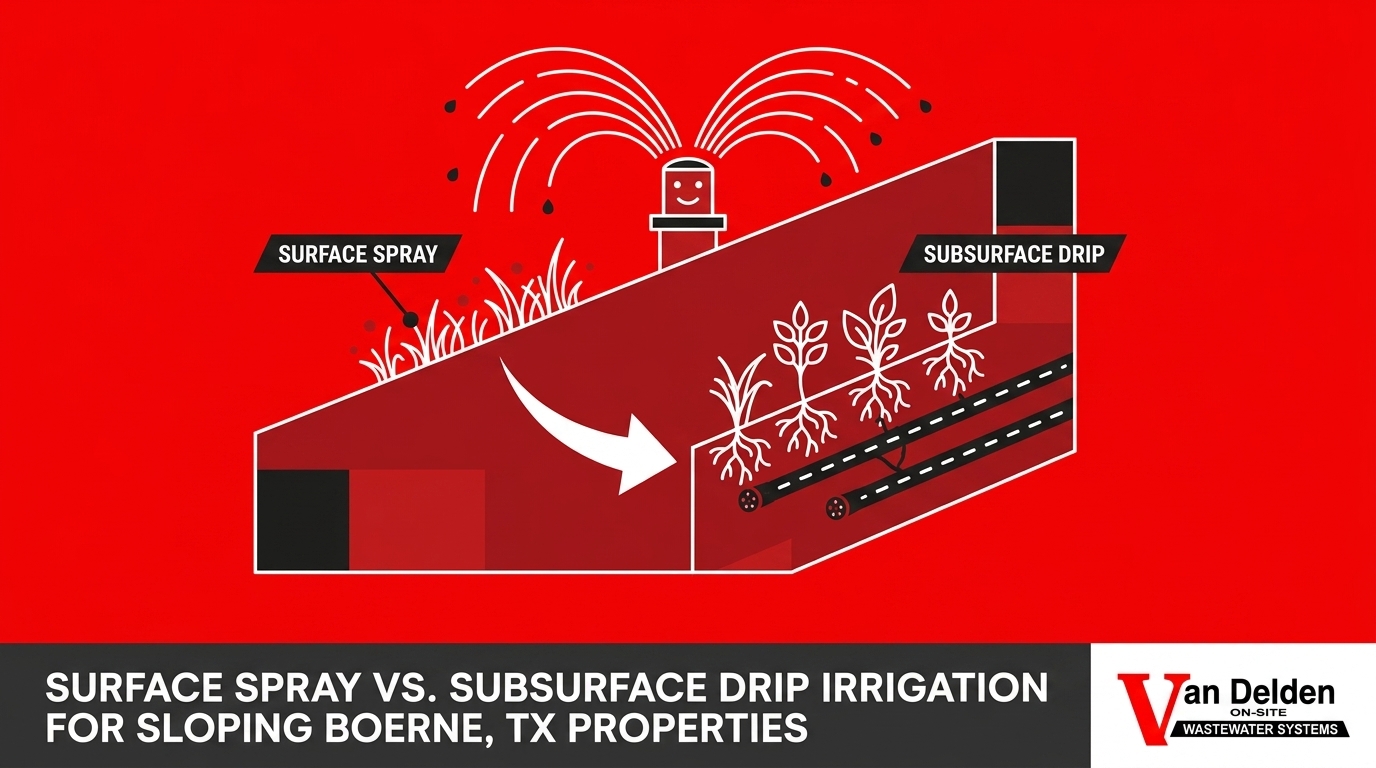
Drip irrigation systems turn wastewater disposal into landscape irrigation. Treated effluent from an aerobic unit gets distributed through a network of small tubes placed just below the surface. This creates very even distribution while nourishing your landscaping – a win-win for both wastewater treatment and water conservation.
Evapotranspiration (ET) systems work with nature's own disposal methods in our Texas climate. Wastewater goes into a lined bed where it either evaporates into the atmosphere or gets absorbed by plants and released through their leaves. These systems work especially well in our sunny, windy Hill Country environment.
The EPA's overview of septic system types provides additional technical details if you want to explore these options further. Our expertise lies in matching your specific soil percolation test Spring Branch TX results with the most appropriate long-term solution for your property.
Frequently Asked Questions about Septic Testing
Over our decades of helping Spring Branch homeowners, we've noticed the same questions come up often. Septic testing can be confusing, so let's clear up some common points.
What is the difference between a percolation test and a soil evaluation?
This is a common question, and understanding the difference can save you time and confusion.
Think of a soil evaluation as a complete physical. It's a comprehensive look at your soil profile. Our licensed professionals examine soil layers, texture (sand, silt, and clay), structure, color, and any restrictive features. These restrictive features are things like bedrock sitting too close to the surface, hardpan layers that water can't penetrate, or areas where the water table sits too high. All of these factors affect where and how we can install your septic system.
A soil percolation test Spring Branch TX, on the other hand, is a specific test that measures one important thing: how fast water moves through your saturated soil. We time how quickly water disappears from a test hole, measuring it in minutes per inch.
Here's the key point: a full site evaluation includes a perc test. You can't have one without the other for permitting purposes. The soil evaluation assesses your property's overall conditions, while the perc test provides the hard numbers we need for system design.
How long are percolation test results valid in Texas?
This is where things get a bit tricky because the answer isn't the same everywhere in Texas. Percolation test and site evaluation results are typically valid for a specific period as determined by local authorities like Comal County's health department, often requiring re-evaluation if construction doesn't commence within that timeframe.
Most commonly, you're looking at somewhere between 2 to 5 years of validity. But here's what can throw a wrench in those plans: if you don't break ground on your septic installation within that window, you'll likely need to start over with fresh testing.
Major changes to your property can also reset the clock. We're talking about significant landscaping that changes drainage patterns, new construction that affects the soil, or even deciding you want a larger septic system than originally planned. Mother Nature doesn't stand still, and neither do soil conditions.
Our advice? Once you get your soil percolation test Spring Branch TX results back, don't sit on them. Start your permitting process and get that system installed while your results are still fresh and valid. It saves you both time and the expense of retesting.
We get this question a lot, especially from handy homeowners who tackle everything from plumbing repairs to deck building. While we absolutely admire the DIY spirit, this is one area where you'll need to step back and let the professionals handle things.
No, for permitting purposes in Texas, a percolation test and site evaluation must be conducted by a licensed professional, such as a Registered Sanitarian or Professional Engineer, to ensure accuracy and compliance with TCEQ standards. This isn't just bureaucratic red tape – there are solid reasons behind this requirement.
First, conducting an accurate perc test requires specialized knowledge about soil science, proper testing procedures, and how to interpret results correctly. Get any part of the process wrong, and you could end up with a septic system that fails prematurely or doesn't meet environmental protection standards.
Second, the stakes are simply too high for guesswork. An improperly designed septic system based on inaccurate testing can contaminate groundwater, create health hazards, and lead to expensive system failures. Plus, if regulators find that your system was based on non-professional testing, you could face significant fines and be required to completely redo everything.
Our TCEQ Licensed technicians have the training, certification, and experience to get it right the first time. We follow strict protocols, use calibrated equipment, and know exactly how to interpret results for your specific Spring Branch soil conditions. Think of it as insurance for one of your property's most important systems.
Conclusion
Navigating septic systems in Spring Branch doesn't have to feel like solving a puzzle blindfolded. By now, you understand that a soil percolation test Spring Branch TX isn't just another hoop to jump through – it's the foundation that determines whether your septic system will be your faithful servant or your expensive headache for decades to come.
Protecting your investment starts with understanding your soil. When you invest in professional soil testing upfront, you're essentially buying insurance against costly failures down the road. A properly designed system based on accurate perc test results will serve your family reliably while maintaining your property's value.
The ripple effects extend far beyond your property lines. Ensuring public health means preventing contamination of our shared groundwater and protecting our neighbors from the health risks of failed septic systems. Every properly tested and installed system in Spring Branch contributes to the overall health of our community.
Your long-term property value depends heavily on having a functioning, compliant septic system. When it comes time to sell, potential buyers and their inspectors will scrutinize your wastewater management. A system built on solid perc test data and professional installation gives you confidence and peace of mind during any real estate transaction.
We can't forget our responsibility for environmental stewardship in the beautiful Texas Hill Country. Our limestone aquifers, spring-fed creeks, and diverse ecosystems depend on responsible wastewater management. When we properly test soil and design systems accordingly, we're protecting this natural heritage for our children and grandchildren.
At Van Delden Wastewater Systems, we've been helping Texas families with their septic needs since 1937. As a family-owned business, we understand that your home is more than just a property – it's where your family creates memories and builds their future. Our background-checked, non-commissioned technicians bring decades of combined experience to every job, ensuring you get honest advice and quality work.
We believe in educating our customers because informed homeowners make better decisions. That's why we provide detailed service forms and photo documentation with every job, keeping you in the loop throughout the entire process.
Don't gamble with your family's comfort and your property's future. Get professional guidance on your septic system needs and let our experienced team help you steer the soil percolation test Spring Branch TX process with confidence. Together, we'll design a wastewater solution that works perfectly with your unique piece of Texas Hill Country.