Why Understanding Your Septic System Matters for Homeowners
Regular septic system maintenance is one of the most important responsibilities for homeowners living off the municipal sewer grid. Proper care is essential to prevent system failure and protect your property.
Factors Influencing Your Septic Pumping Service
The scope of a septic pumping service depends on several key factors:
- Tank size - Larger tanks hold more waste and require more time to pump.
- Accessibility - Lids with risers are easier to access than buried ones.
- Location - Property layout and distance to disposal sites can affect the service.
- Time since last service - Longer intervals can lead to more compacted waste.
- System type - Complex systems like aerobic units may require additional steps.
If you're a homeowner with a septic system, you've probably heard the general advice to pump every three to five years. But what does that service actually entail? Understanding the factors involved helps you appreciate this essential maintenance.
Your septic system is one of the most critical—and often overlooked—components of your home. When it works properly, you don't think about it. But when it fails, the consequences are messy, disruptive, and potentially hazardous to your family's health and your property value.
Regular pumping prevents solid waste from accumulating to levels that can clog your drainfield, back up into your home, or contaminate groundwater. It's not just about avoiding emergencies—it's about protecting a complex system that is disruptive and difficult to replace.
In this guide, we'll break down what influences a pumping service, help you understand what the work entails, and explain why working with honest, experienced professionals is key to your peace of mind.
Key Factors That Influence Your Septic Pumping Service
There is no universal, one-size-fits-all septic pumping service. Every home has unique factors that influence what a proper service entails. Understanding these variables helps you know what to expect.
Let's walk through the key factors that shape your septic pumping service.
How Tank Size and Type Affect Your Septic Service
The size of your septic tank plays a major role. A larger tank holds more waste, which means more material to pump and haul away. Most residential tanks hold between 1,000 and 1,500 gallons. A smaller tank requires less time to pump than a larger one.
The material of your tank—concrete or plastic—doesn't directly affect pumping, but it can impact long-term durability and potential repair needs.
The type of septic tank system you have matters too. Basic gravity systems are the most straightforward to service. Aerobic systems, however, are more complex. They include aeration units and multiple chambers that require extra attention and may need additional maintenance beyond a standard pump-out.
Accessibility and Location Considerations
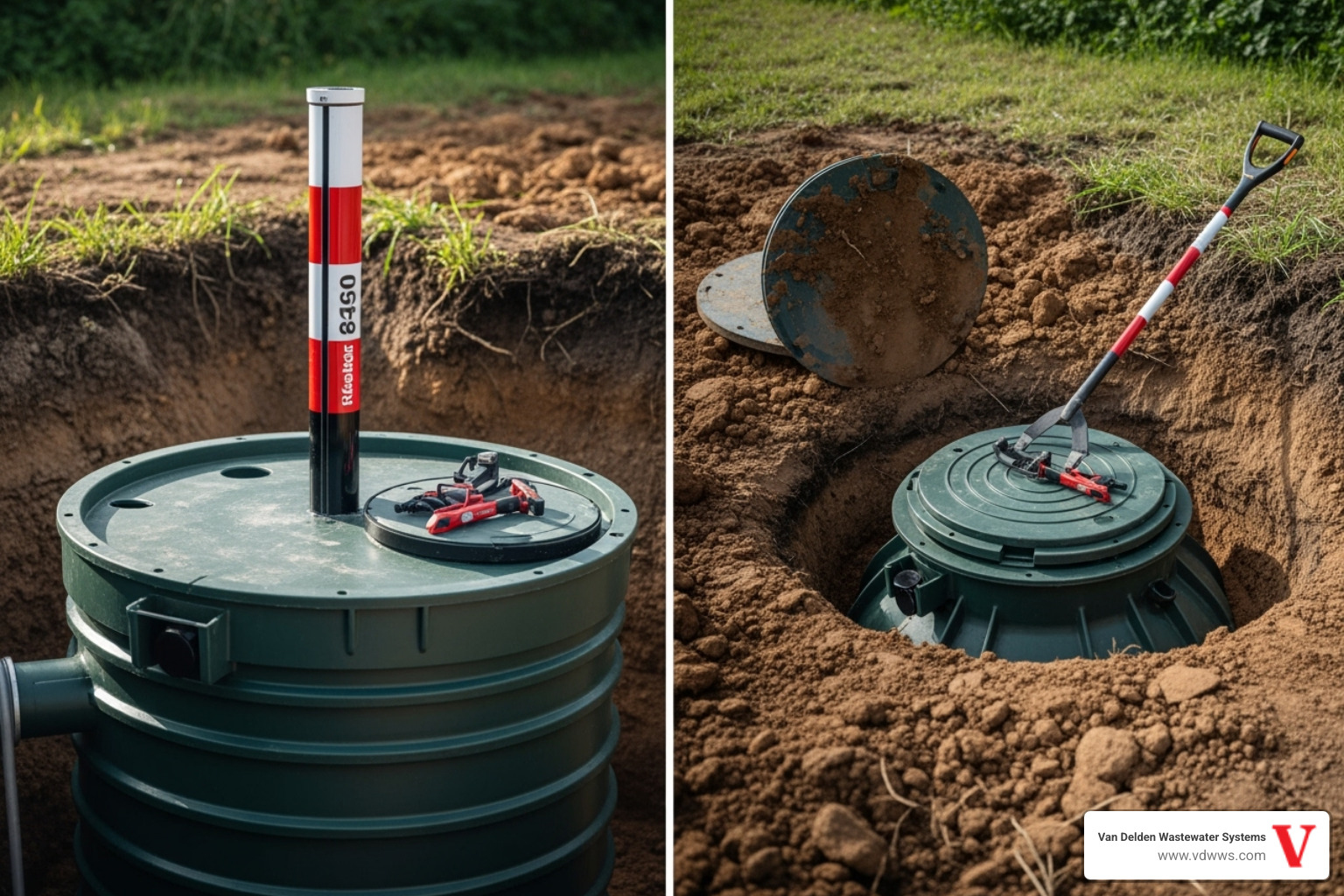
How easily we can access your tank is a significant factor. If your septic tank lids are buried, our technicians must locate and dig them out first. This excavation adds time and labor to the service.
A septic tank riser is a game-changer, bringing the access point to ground level and eliminating the need for digging. It makes every future pumping faster and easier.
The distance from your tank to where our vacuum truck can park also plays a role. A clear, short path is simpler to steer than a long, obstructed one.
Your location also matters. We serve Boerne, Bulverde, Fair Oaks Ranch, Garden Ridge, Helotes, Timberwood Park, Hollywood Park, San Antonio, Shavano Park, and Spring Branch, Texas. Each area has unique logistics, from travel time to the location of the nearest approved disposal facility. Regional disposal requirements and local regulations are all part of the service.
How Usage and Time Influence Your Septic Service Needs
Your septic tank is always working. How you use it and the time since its last pumping directly affect its condition.
Time since your last service makes a big difference. If it's been seven years instead of three, there will be significantly more compacted solid waste. This dense sludge requires more effort to break up and remove. The EPA recommends pumping before sludge and scum layers reach critical levels.
Household size is a major factor. A family of five generates far more waste than a single person. More people mean more water and solids entering the tank, requiring more frequent service.
Your water usage habits also matter. Excessive water from long showers or leaky fixtures can push solids into your drainfield prematurely, creating problems that require urgent attention.
And here's something many homeowners don't realize: garbage disposals add significant solids to your tank. Ground-up food scraps accelerate sludge buildup, which means you'll likely need more frequent or intensive service.
Pumping vs. Cleaning: Understanding Your Service Options
You might hear professionals use the terms "pumping" and "cleaning" interchangeably. While related, a cleaning is often a more intensive service than a standard pumping.
Let's clear up any confusion so you know exactly what your system needs.

What a Standard Pumping Service Includes
A standard septic pumping is a thorough waste removal service. Our technicians arrive with a powerful vacuum truck, open the access lids, and insert a large hose into the tank.
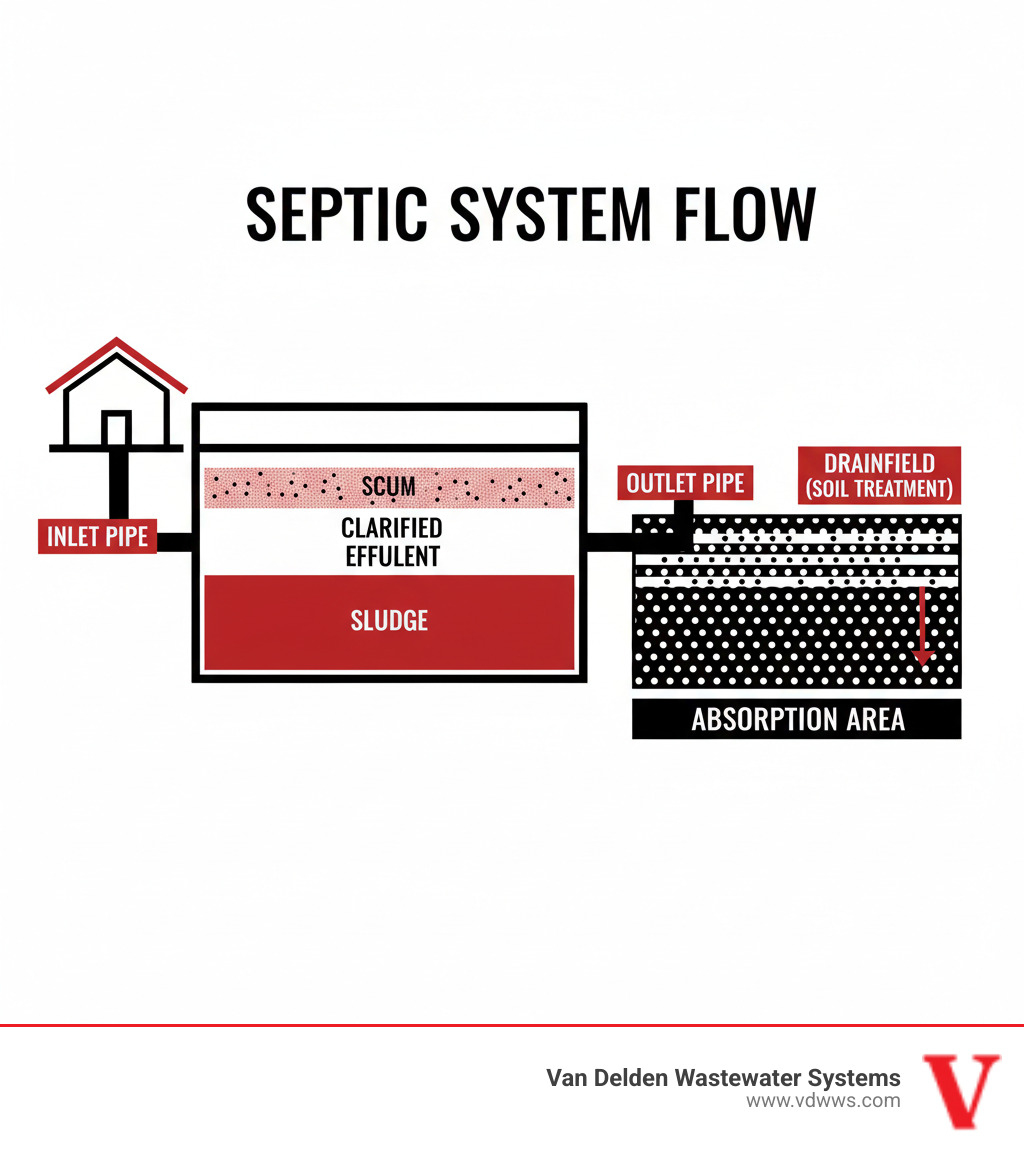
The vacuum removes the liquid effluent, the floating scum layer, and the heavy sludge layer of settled solids at the bottom. We ensure all compartments of your tank are pumped as empty as possible.
During the service, our technicians also conduct a visual inspection of your tank's interior, looking for obvious signs of damage, checking the baffles, and assessing for leaks or cracks. Once the waste is contained, we transport it to an approved, licensed disposal facility, following all environmental guidelines.
When Is a More Thorough Septic Cleaning Necessary?
Sometimes, a tank needs more than a standard pump-out. If a tank has been neglected for many years, the sludge can become thick and compacted. We may need to use backflushing techniques—spraying water back into the tank—to break up stubborn solids before removal.
Your tank's effluent filter also needs regular attention. This filter catches solids before they enter your drainfield. We clean this filter during our service visits, as a clogged filter can cause backups.
Real estate transactions often require a more detailed approach, including a complete pump-out and a thorough inspection for documentation. If your system needs repairs, such as on a baffle or distribution box, the tank must be thoroughly cleaned first to create a safe working environment.
At Van Delden Wastewater Systems, our non-commissioned technicians assess what your tank needs. Whether it's a standard pumping or a more intensive cleaning, we'll explain our process and provide detailed documentation and photos of your system's condition.
The Consequences of Neglect: Why You Shouldn't Skip Septic Pumping
Putting off septic maintenance can lead to messy, disruptive, and hazardous situations that could have been completely avoided. We've seen it time and again—homeowners who postpone pumping end up facing system failures that require extensive intervention.
Think of it like ignoring a warning light in your car. A small issue can quickly become a major system failure.

When your septic tank fills beyond its capacity, solids have nowhere to go but into your drainfield.
Your drainfield is designed for liquid, not solid waste. When solids clog the soil, the system fails. You might notice wastewater surfacing in your yard, creating soggy, smelly patches. Fixing a failed drainfield is an extensive and disruptive process.
Sewage backups into your home are a homeowner's worst nightmare. Raw sewage in your living space is a serious health hazard requiring immediate professional remediation. Clogged pipes can also lead to slow drains throughout your home and eventual blockages.
The health risks of a failing system are significant. Untreated wastewater contains harmful bacteria and pathogens, exposing your family and pets to potential illnesses. A failing system also threatens the environment by contaminating groundwater. As the EPA notes, why you should maintain your septic system is about protecting your health, your property, and the environment.
Signs Your Septic System is in Trouble
Your system usually gives warning signs before a total failure. Recognizing them allows you to act while problems are still manageable.
- Slow drains throughout your home.
- Gurgling sounds from drains or toilets.
- Foul sewage odors inside or outside your home.
- Unusually wet ground or lush grass over the tank or drainfield.
- Sewage backing up into your home (this is an emergency).
From Minor Repairs to Full System Replacement
Responding quickly to warning signs can be the difference between a simple fix and a complete overhaul. Damaged baffles or clogged pipes can often be repaired directly. In some cases, drainfield rejuvenation can restore function to a struggling system.
However, when a drainfield has completely failed or the tank has severe structural damage, a full system replacement becomes necessary. This is a major construction project that every homeowner hopes to avoid through proper preventative care.
Regular septic tank pumping is the preventative maintenance that protects you from these stressful scenarios. It's a predictable part of homeownership that is far more manageable than the emergencies that result from neglect.
Frequently Asked Questions about Septic Pumping
We've been in this business since 1937, and we encourage homeowners to ask questions. Your septic system is a significant part of your home, and you want to make informed decisions. Here are answers to some of the most common questions we hear.
How often should a septic tank be pumped?
The EPA's general guideline is every three to five years, but the right schedule for you depends on several factors.
- Household size: A large family will need more frequent pumping than a single person.
- Tank size: A smaller tank fills faster than a larger one.
- Water usage: High water use can push solids into the drainfield prematurely.
- Garbage disposal use: Food scraps add significant solids to your tank, increasing the need for pumping.
Our technicians can assess your tank and usage to recommend a schedule custom to your specific needs.
What is the difference between a clog and a full septic tank?
The symptoms can seem similar, but the scope is different.
- A simple clog is usually isolated to one drain or fixture, like a slow kitchen sink or a single problem toilet.
- A full septic tank causes widespread issues. You'll notice multiple slow drains, gurgling sounds from various fixtures, foul odors in the yard, and soggy spots over the drainfield.
If you're experiencing widespread problems, it's a sign your septic system needs professional attention.
Can I pump my own septic tank?
We admire the DIY spirit, but this is one job that must be left to professionals for several critical reasons.
- Safety: Septic tanks contain toxic and explosive gases (like methane and hydrogen sulfide) that can be lethal. Opening a tank is extremely dangerous without proper training and equipment.
- Equipment & Disposal: Pumping requires a specialized vacuum truck. The waste is classified as hazardous material and must be transported to a licensed disposal facility according to strict environmental regulations. Improper disposal leads to heavy fines and environmental damage.
- Expertise: A professional service includes a visual inspection of your tank's components. Our trained technicians can identify potential issues like damaged baffles before they cause major system failure.
Our background-checked, non-commissioned technicians are focused on educating you and providing honest recommendations, ensuring the job is done safely, completely, and in full compliance with all regulations.
Partnering with a Pro for Peace of Mind
Now that you understand the factors that influence a septic service, it's time to consider who you trust with this essential task. Choosing the right provider is about finding a partner who will protect your system with honest guidance.
At Van Delden Wastewater Systems, we've been a family-owned business since 1937. We've learned that the foundation of great service is trust.
That's why our technicians are never paid on commission. When our team arrives, their only focus is on accurately assessing your system and recommending what's truly necessary. They are background-checked, experienced professionals dedicated to honest work. We empower you with knowledge, explaining what we see and offering practical advice for maintaining your system.
Transparency is built into our process. After every service, you receive detailed forms and photo documentation of your tank's condition. These records help you track your system's health over time.
Preventative septic maintenance is a crucial part of homeownership that protects you from disruptive and damaging system failures. Proactive care with a trusted partner extends your system's lifespan, prevents emergencies, and preserves your property value.
The peace of mind that comes from knowing your septic system is properly maintained is invaluable. You should be able to trust that you're getting honest advice. Don't wait for warning signs to become emergencies.
Learn more about our septic tank cleaning services and find out how we can help you maintain a healthy, efficient septic system for decades to come. We're here when you need us—and we'll always shoot straight with you.