When That Red Light Flashes: Understanding Your Septic Emergency
A septic air pump alarm going off means your aerobic septic system has detected either high water levels or low air pressure from the pump. Both require attention, but you don't need to panic. Your alarm is an early warning system, designed to alert you to a problem before it becomes a disaster.
When you hear that high-pitched buzz, take a breath and follow these immediate steps:
- Silence the Buzzer: Press the mute button on the alarm box. The red warning light will stay on until the issue is fixed.
- Stop Using Water: Immediately stop all non-essential water use—no showers, laundry, or dishwashing.
- Check for Power: Make sure the circuit breaker for your septic system hasn't tripped.
- Inspect the Area: Look for any standing water or soggy ground around your septic tanks.
- Call for Help if Needed: If the alarm light doesn't turn off after several hours of minimal water use, it's time to call a professional.
This guide will walk you through what your alarm means, its common causes, and how to respond confidently. Whether you're in Boerne, San Antonio, or anywhere in the Texas Hill Country, knowing what to do can protect your home and your system.
For more information on how your aerobic system works, see our guide on what your alarm activation really means. If you need immediate help, contact Van Delden Wastewater Systems for expert diagnosis and repair.
Understanding Your Aerobic System and Its Alarm
Your aerobic septic system is more advanced than a conventional one. While a conventional system uses oxygen-deprived (anaerobic) bacteria to slowly break down waste, an aerobic system actively pumps oxygen into the wastewater. This encourages highly efficient aerobic bacteria to thrive, which treat waste much faster and produce a cleaner effluent that's safer for the environment.
The key component is the septic air pump (or aerator), which runs continuously to supply oxygen to the tank's aeration chamber. If this air supply is interrupted, the beneficial bacteria die off, and the system can no longer treat wastewater properly.
This is where the alarm comes in. The control panel monitors your system using float switches (for water levels) and pressure sensors (for air pressure). If it detects a problem, it alerts you before the issue escalates. Your alarm isn't a nuisance; it's an essential safety feature protecting your home and property. For a deeper dive, read our guide on what your alarm activation really means.
How an Aerobic Septic Alarm Works
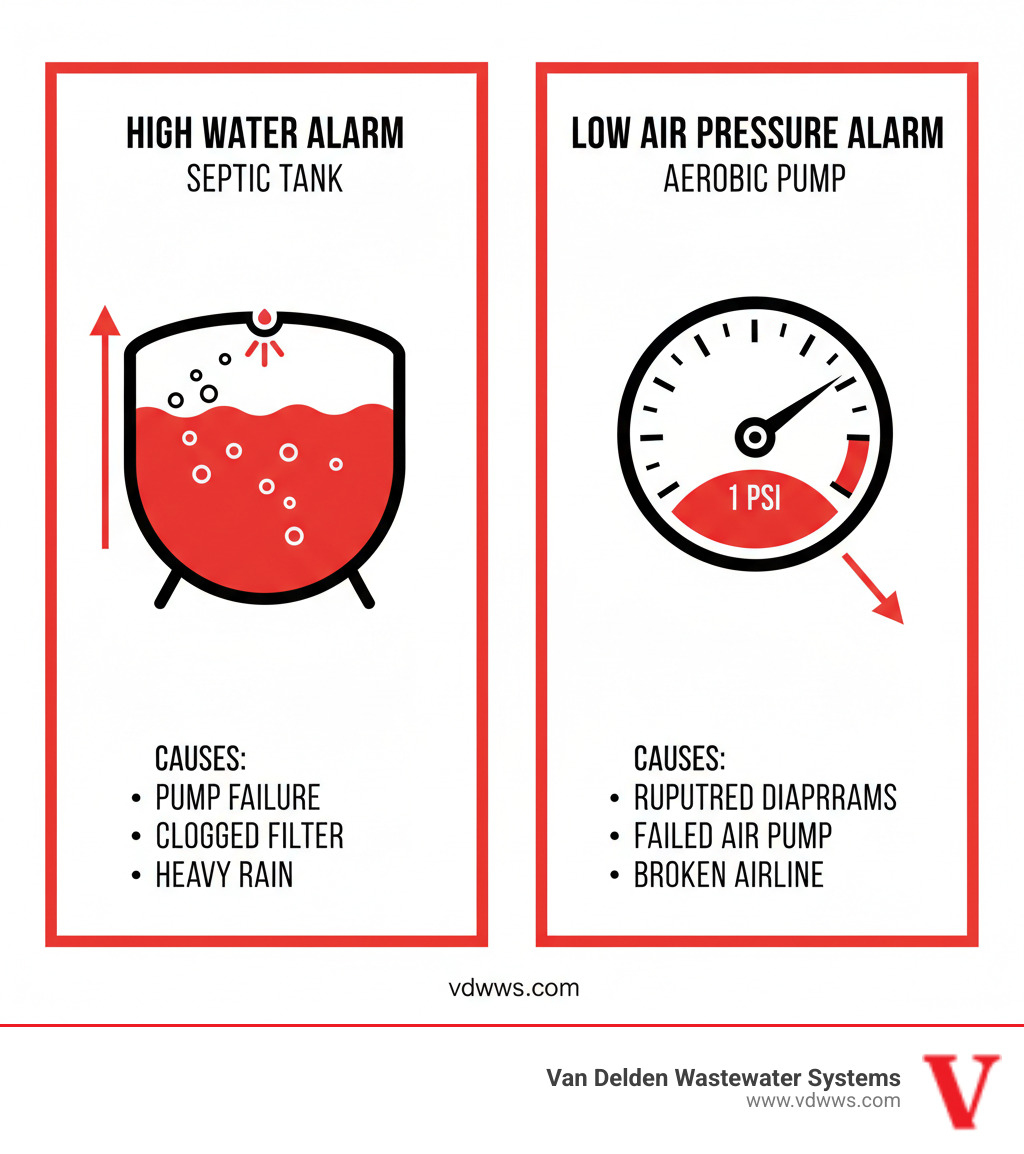
When your septic air pump alarm is going off, it's signaling one of two main problems: high water levels or low air pressure.
- High-Water Alarm: A float switch in your pump tank acts like a bobber. If water rises too high—due to heavy water use, a failed pump, or a clog—the float lifts and triggers the alarm. This indicates the system is struggling to move water out of the tank.
- Low-Pressure Alarm: A pressure sensor monitors the air from your septic air pump. If the pressure drops below a certain threshold (usually around 1 PSI), it signals that the pump has failed, an airline is broken, or another component has worn out. This means the aerobic bacteria are not getting the oxygen they need.
Both alarms use a loud buzzer and a red warning light. The green light on your panel indicates the system has power. You can silence the buzzer, but the red light will stay on until the problem is resolved, ensuring it isn't ignored. For more detailed steps, see our septic system alarm troubleshooting guide.
Conventional vs. Aerobic System Alarms
Not all septic alarms are the same. Conventional systems, if they have an alarm, typically only monitor for high water in a pump tank, caused by a failed pump or a clog. Aerobic systems are more complex and monitor both water levels and air pressure.
Your aerobic system's air pump is a critical component that must run 24/7. This adds potential alarm triggers related to aeration that conventional systems don't have. If you're curious about a related issue, our article on why aerobic system timers stop working has more information.
| Feature | Conventional Septic Systems | Aerobic Septic Systems |
|---|
| Primary Function | Settling solids, anaerobic digestion | Aerated digestion, cleaner effluent, often with disinfection |
| Key Components | Septic tank, drainfield, sometimes pump tank with float switch, effluent filter | Septic tank, aeration chamber, clarifier, pump tank, drainfield, septic air pump/aerator, float switches, pressure sensor, control panel |
| Common Alarm Triggers | Pump or float failure causing high water, clogged effluent filter, drainfield failure | Air pump failure, high water level, low air pressure, electrical issues affecting pump or control panel |
| Alarm Type | Primarily high-water alarms in pump tanks | Both high-water alarms and low-air pressure alarms |
| Troubleshooting Focus | Water flow, pump operation, drainfield condition | Air pump operation, air pressure, water levels, and electrical components |
The bottom line is that a septic air pump alarm going off points to an issue with a more complex system that requires checking both water management and oxygen delivery. At Van Delden Wastewater Systems, we have specialized in diagnosing and repairing both system types since 1937.
Why Your Septic Air Pump Alarm is Going Off: Common Culprits
Most alarm triggers are predictable. Understanding the common causes of a septic air pump alarm going off can help you diagnose the situation calmly.
Air Pump and Aeration Failures
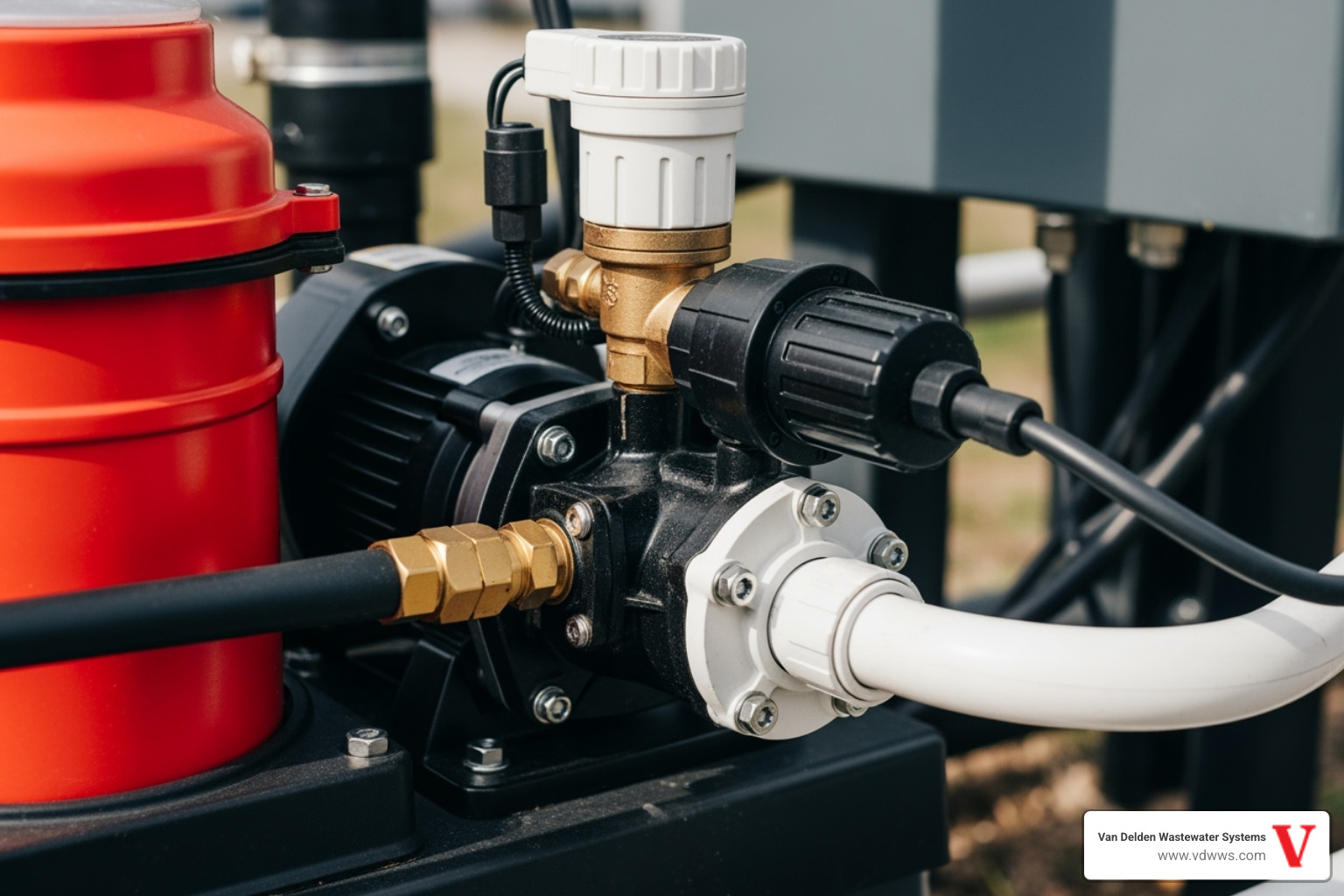
Low air pressure is a common trigger for aerobic system alarms. If the pressure drops below 1 PSI, it means the vital oxygen supply is compromised. Causes include:
- Ruptured Diaphragms: These rubber parts in the air pump wear out over time and tear, causing the pump to shut off and trigger the alarm.
- Clogged Air Filters: A dirty filter restricts airflow, forcing the pump to work harder while delivering less oxygen.
- Broken Airlines: The tube carrying air from the pump to the tank can crack or disconnect, letting oxygen escape.
- Worn Internal Parts: Small components like umbrella valves and base gaskets can fail, creating air leaks.
- Condensation in Alarm Tube: Moisture can build up in the small tube connecting the pump to the alarm panel, causing false pressure readings.
Timer failures can also cause alarms. For more on this, see our article on Why Aerobic System Timer Stops Working.
Troubleshooting a septic air pump alarm going off due to water levels
High water levels are the single most frequent cause for any septic air pump alarm going off. This happens when water enters the tank faster than it can be discharged. Common reasons include:
- Submersible Pump Failure: This is the most common issue we see. The pump that moves treated water to the drainfield can fail mechanically or electrically, causing water to back up.
- Faulty Float Switch: The switch that tells the pump to turn on can get stuck or fail, leaving the pump inactive as water levels rise.
- Clogged Effluent Filter: This filter stops solids from reaching the drainfield. If it clogs, water flow is blocked, causing a backup. We recommend cleaning it every six months.
- Drainfield Saturation: If the soil in your drainfield is oversaturated from rain or age, it can't absorb more water, causing it to back up into the tank.
Important Note: Pumping the tank is a temporary fix, not a solution. It will silence the alarm, but if the underlying cause (like a failed pump or clogged filter) isn't repaired, the alarm will return. Our Septic System Alarm Troubleshooting guide offers more diagnostic help.
External Factors Causing a septic air pump alarm going off
Sometimes, the problem is external, not mechanical.
- Heavy Rain: This is a frequent trigger in the San Antonio area. Saturated ground prevents the drainfield from absorbing water, causing it to back up. The issue often resolves once the ground dries. Learn more in our guide on Heavy Rain: What to Do When Your Aerobic System Alarm Activates.
- Power Outages: Without electricity, your system's pumps stop working. Water from your home continues to fill the tank, and an alarm may sound when power is restored.
- Excessive Water Usage: Hosting guests or doing multiple loads of laundry in one day can overwhelm your system, causing the tank to fill faster than it can drain.
When the alarm sounds, you have time to respond calmly. A septic air pump alarm going off is a warning, not an immediate catastrophe. Follow these steps to handle the situation safely.
Step 1: Silence the Buzzer and Assess the Panel
First, quiet the buzzer so you can think. Locate your septic alarm box (often near the tank or on the side of your house) and press the button or flip the switch labeled "Mute" or "Silence."
Silencing the buzzer does not fix the problem. The red warning light will remain on as a reminder that your system needs attention. Do not turn off the main power to the septic system, as this can hinder diagnosis.
This is the most critical action you can take. Stop using water in your home. This means no flushing toilets (unless absolutely necessary), no showers, no laundry, and no running the dishwasher. Every gallon you add to the system increases the risk of a sewage backup. Halting water use gives the system a chance to drain or prevents the situation from worsening while you investigate.
Next, do some safe detective work.
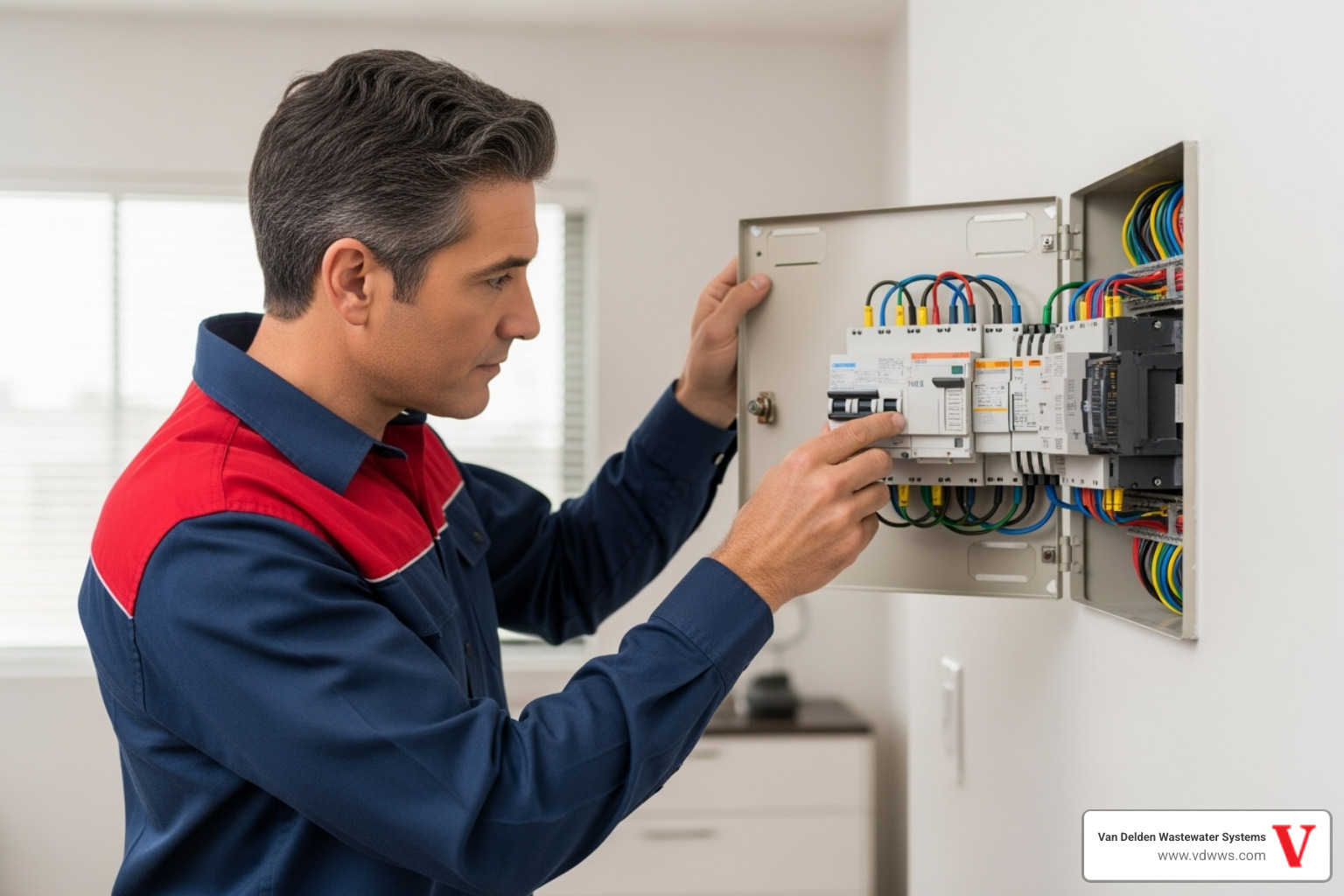
- Check the Breaker: Go to your home's circuit breaker box and find the breaker for your septic system. If it has tripped, you can try resetting it once. If it trips again immediately, there is an electrical fault that requires a professional.
- Inspect Your Yard: Carefully walk around your septic tank and drainfield area. Look for soggy ground, standing water, or strong sewage odors. These are signs that wastewater is surfacing.
If you see any surfacing sewage, keep children and pets away from the area. Untreated sewage can pose serious health risks due to harmful bacteria and parasites.
Step 4: Know When to Call a Professional
You've taken the first steps. Now, when should you call for help? Contact a professional if:
- The alarm light stays on for more than 10-15 hours despite minimal water use.
- You see sewage backing up into your home or yard.
- The septic system's circuit breaker keeps tripping.
- You are uncomfortable with any of these steps or unsure of the cause.
Ignoring a septic air pump alarm going off can lead to far more expensive consequences, including permanent drainfield damage or a full system replacement. Since 1937, Van Delden Wastewater Systems has helped homeowners diagnose and resolve these exact issues. Our non-commissioned technicians find the real problem and provide the right solution. For more guidance, read our article on What to Do If My Alarm Is On.
Prevention is Key: Maintaining a Silent and Healthy System
The best alarm is one that never sounds. Proactive care of your septic system is the best way to avoid hearing that septic air pump alarm going off. Regular maintenance protects your investment, extends your system's lifespan, and ensures your family's health.

Routine Maintenance and Inspections
Your septic system works 24/7 and requires professional attention, just like your car needs oil changes. The U.S. Environmental Protection Agency (EPA) highlights the importance of regular septic inspections for system longevity. We recommend an annual inspection to catch small issues before they become big problems. Key maintenance tasks include:
- Cleaning the effluent filter every six months to prevent clogs that can damage your drainfield.
- Verifying pump and float switch operation to ensure water is being properly discharged.
- Checking air pump pressure on aerobic systems to confirm it's delivering enough oxygen.
- Pumping the tank every three to five years to remove accumulated solids.
Protecting Your System Day-to-Day
Your daily habits have a huge impact on your system's health.
- Conserve Water: Fix leaks promptly, install low-flow fixtures, and spread out laundry loads throughout the week to avoid overwhelming the system.
- Only Flush Human Waste and Toilet Paper: Never flush grease, fats, oils, "flushable" wipes, feminine hygiene products, paper towels, or dental floss. These items cause clogs and damage pumps.
- Avoid Harsh Chemicals: Large amounts of drain cleaners, solvents, or antibacterial products can kill the beneficial bacteria your system needs to function.
- Protect Your Drainfield: The National Onsite Wastewater Recycling Association (NOWRA) emphasizes preventing drainfield saturation. Never drive or park on your drainfield, as this compacts the soil and can crush pipes. Plant trees with aggressive root systems far away from the area and direct roof gutters away from it.
Frequently Asked Questions about Septic Alarms
When an alarm sounds, questions are normal. Here are answers to the most common concerns we hear from homeowners about a septic air pump alarm going off.
Can heavy rain really cause my septic alarm to go off?
Yes, absolutely. Heavy rain is a very common trigger, especially in the Texas Hill Country. When the ground becomes saturated, your drainfield can't absorb treated wastewater effectively. This causes water to back up into your tanks, triggering the high-level alarm. In addition, groundwater can sometimes seep into the tank itself, raising the water level. Rain-related alarms often resolve on their own once the ground dries out. For more details, read our guide on Why Does the Rain Make My Aerobic System Alarm Activate?.
Does a septic alarm mean my tank needs to be pumped?
Not necessarily. This is a common misconception. An alarm is like a check engine light—it signals a functional problem, not that the tank is full. The issue could be a failed pump, a clogged filter, or a saturated drainfield. Pumping the tank will temporarily lower the water level and silence the alarm, but it doesn't fix the root cause. The alarm will likely come back on until the actual problem is repaired. Our technicians always diagnose the underlying issue to provide a permanent solution.
How do I reset my septic alarm?
There's a difference between silencing the buzzer and resetting the system. You can silence the alarm by pressing the "Mute" button on the panel. The red warning light will stay on to remind you the problem still exists. A true system reset only happens when the underlying issue is fixed. Once a faulty part is repaired or a clog is cleared, the alarm light should turn off automatically. While you can try cycling the septic system's circuit breaker after a power outage, if the alarm returns, it indicates a persistent problem that needs professional diagnosis. Repeatedly flipping the breaker can be unsafe and may mask a more serious issue.
Your Septic Alarm is an Ally, Not an Enemy
When your septic alarm sounds, remember it's not your enemy—it's your ally. This early warning system is designed to catch problems while they are still small and manageable, giving you time to act before a minor issue becomes a costly disaster. A septic air pump alarm going off means your system is doing its job by protecting your home, your investment, and the environment.
Prompt action is key. By silencing the alarm, conserving water, and calling for help when needed, you take control of the situation and prevent expensive damage or health hazards.
At Van Delden Wastewater Systems, we've been helping Texas Hill Country families with their septic systems since 1937. Our family-owned business is built on trust and expertise. Our background-checked, non-commissioned technicians are here to educate you and provide honest, high-quality repairs. When your alarm sounds, you don't have to face it alone. Learn more about our Aerobic System Alarm services and let our team help you maintain a quiet, healthy septic system for years to come.