
Translating a Septic Inspection Report for Kendall County Homebuyers
Don't let technical septic jargon derail your late-summer closing. We break down which inspection findings are routine maintenance items and which are true dealbreakers.
If my septic tank is missing the outlet baffle, you're facing a serious but fixable problem. Here's what you need to know right now:
Quick Answer:
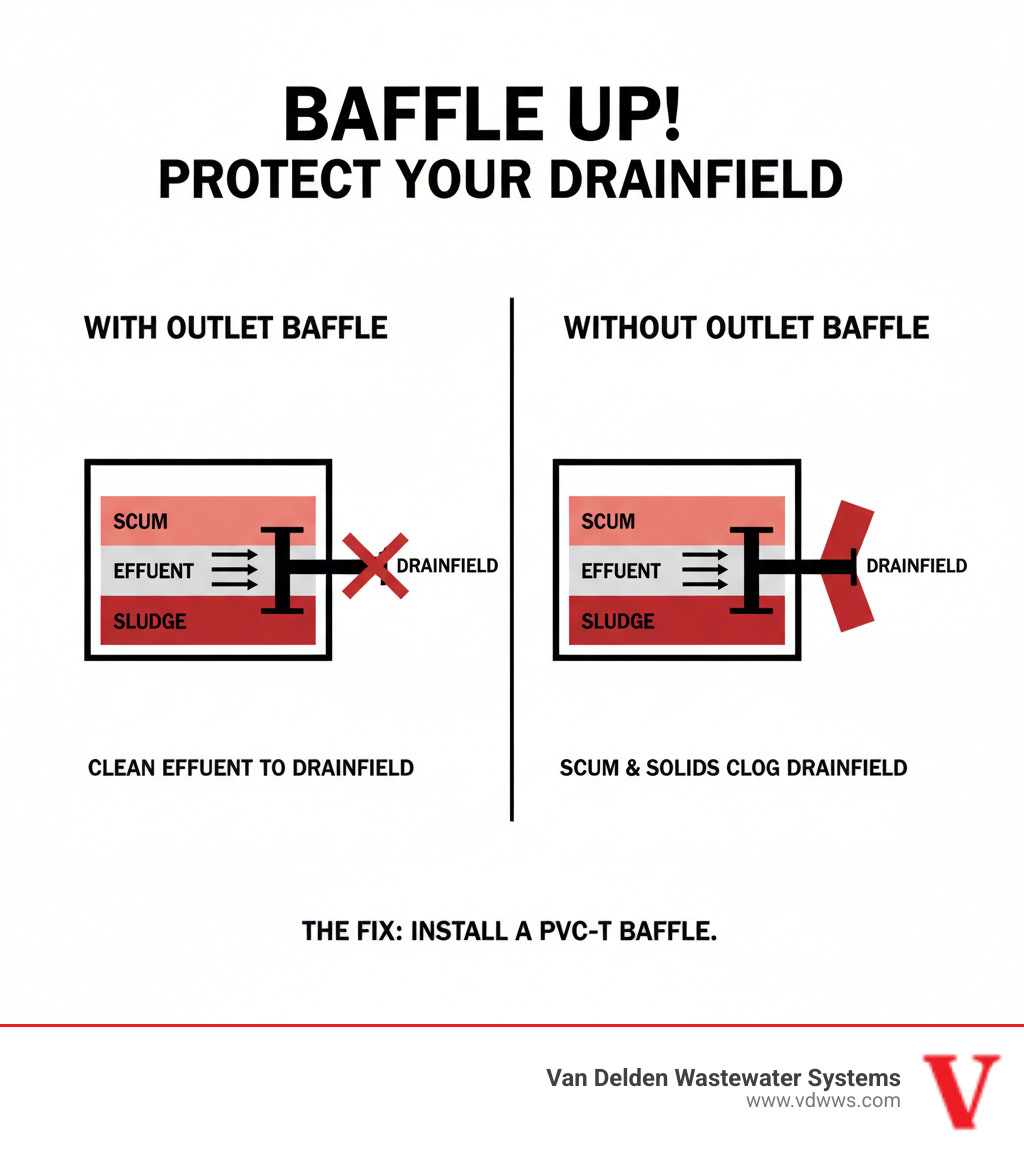
You may have just had your septic tank pumped or inspected when the technician delivered the news. It's a common find—many tanks have missing baffles that were never installed or deteriorated years ago due to corrosive gases. The outlet baffle sits at the exit point of your septic tank and acts as a gatekeeper, allowing only treated effluent to flow to your drainfield while blocking floating scum and solids.
Without this critical component, your drainfield is being bombarded with material it was never designed to handle. The result is inevitable: clogged pipes, saturated soil, sewage backups, and complete system failure.
The good news? Replacing a missing outlet baffle is a straightforward repair for a qualified septic professional. This guide explains what baffles do, why they fail, the signs your system is in trouble, and what the replacement process involves—so you can protect your investment and avoid a septic catastrophe.
When wastewater leaves your home, it enters the septic tank, which acts as a separation chamber. Inside, wastewater naturally divides into three layers. Heavy solids sink to the bottom to form the sludge layer. Lighter materials like grease, oil, and foam float to the top, creating the scum layer. In between is the clarified liquid known as effluent.
This is where baffles come in. These T-shaped pipes or walls at the tank's entrance and exit points are essential for maintaining this separation. They ensure that only the cleaner middle layer of effluent flows out to your drainfield. Without them, your septic system cannot function properly. Baffles are the unsung heroes of your septic system, silently protecting the vital drainfield component. For a closer look at how these components work together, check out our guide on Septic System Knowledge 101: Inlet and Outlet Baffles.
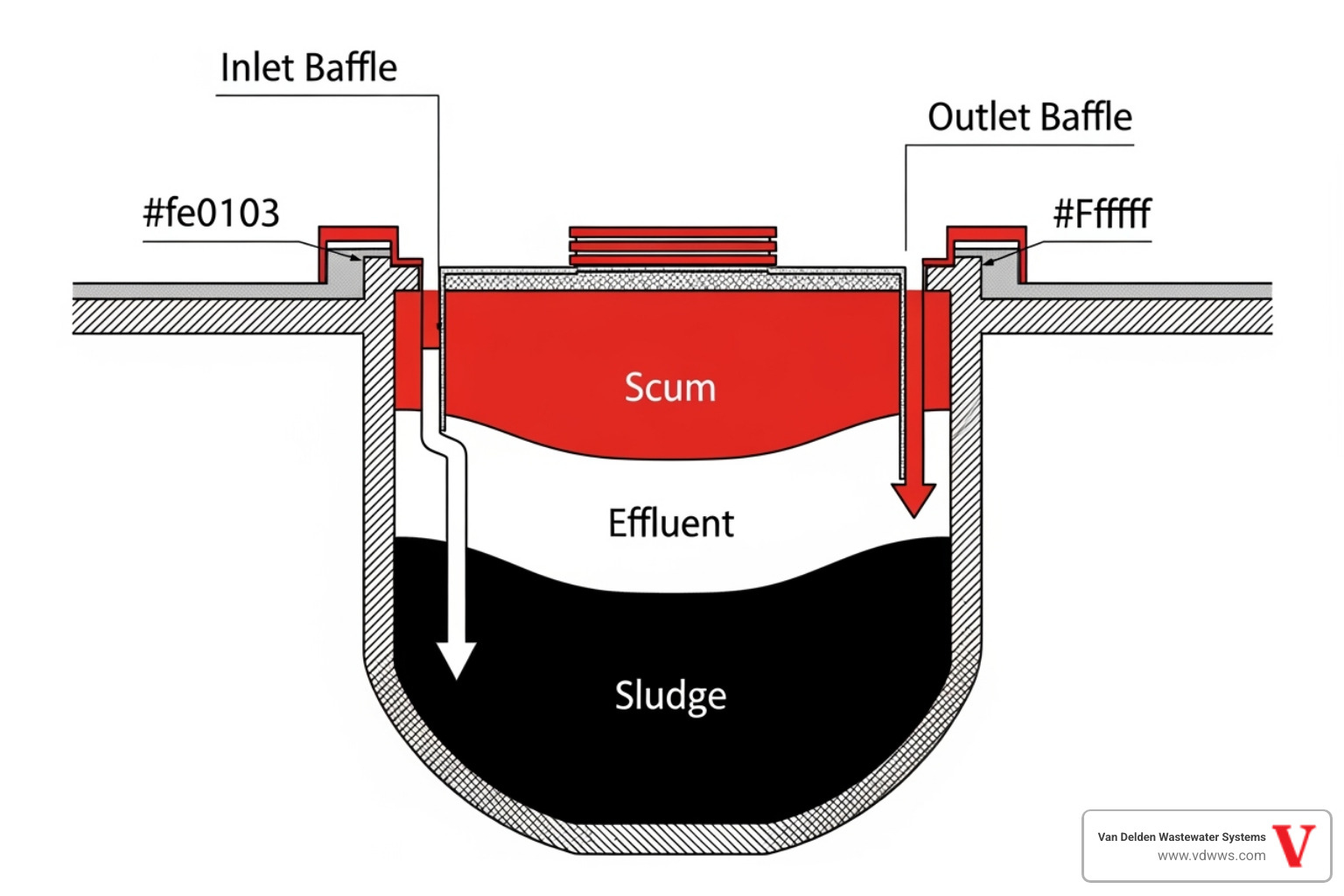
Both baffles are essential, but they have different jobs.
The inlet baffle directs incoming wastewater downward, beneath the scum layer. This prevents the tank's contents from being churned up, allowing solids to settle properly and keeping the system operating efficiently. It also helps prevent solids from backing up into your home's plumbing.
The outlet baffle is our main concern when my septic tank is missing the outlet baffle. It sits at the exit point and extends down into the middle effluent layer. Its critical mission is to block the floating scum and any unsettled solids from escaping the tank. It is your drainfield's first and most important line of defense against clogging.
Baffle material determines its lifespan. Older tanks often have concrete baffles, which are vulnerable to the corrosive hydrogen sulfide gas produced by bacteria in the tank. Over time, this gas causes concrete to crack, crumble, and eventually disintegrate. Steel baffles fare even worse, rusting away until they fail.
That's why modern septic systems use PVC-T baffles. Made from polyvinyl chloride (PVC), these plastic baffles are resistant to the harsh chemical environment inside the tank. They don't corrode or crack from gas exposure and last far longer than older materials. PVC baffles are also easier to install and work perfectly with modern effluent filters for added drainfield protection.
| Feature / Material | Concrete Baffles | PVC-T Baffles (Plastic) |
|---|---|---|
| Durability | Lower | Higher |
| Corrosion | Prone to | Resistant to |
| Degradation Rate | Faster | Slower |
| Flexibility | Rigid | More flexible |
| Installation | Often integral to tank | Retrofit/replacement friendly |
| Effluent Filter Compatibility | Limited | High |
Understanding your system's components helps you appreciate why regular inspections matter. When a technician says a baffle is missing, they're trying to save you from a much bigger problem. To learn more, visit our page on More on septic tank components.
When my septic tank is missing the outlet baffle, it's like removing the only guard protecting your drainfield. Your drainfield is a carefully engineered filtration system designed for clarified liquid only. Without a baffle, you are dumping grease, toilet paper, and solid waste directly into it.
This material quickly clogs the perforations in your drainfield pipes and coats the surrounding soil with a thick, impermeable layer called a biomat. Once this happens, water can no longer pass through, leading to drainfield failure. This is the most significant and disruptive type of septic system repair, often requiring extensive excavation of your yard to install a new absorption field. It's a major headache that is completely preventable with a functioning outlet baffle.
When the drainfield can no longer accept wastewater, the sewage has to go somewhere—often back into your home. Sewage backups through toilets and showers are unsanitary and hazardous to your family's health, as raw sewage contains harmful bacteria and pathogens.
Even before a full backup, your system will struggle. Wastewater that can't percolate through the drainfield will surface in your yard, creating soggy, smelly patches and potentially contaminating groundwater. This becomes an environmental and public health concern. A missing outlet baffle is a leading cause of premature septic system failure—a small component with massive consequences. To understand more, see our article on The #1 Cause of Septic System Failure.
Your septic system will send signals when something is wrong. If my septic tank is missing the outlet baffle, you may notice these symptoms:
If you experience these symptoms, don't wait. Early diagnosis can prevent a much larger problem. Our video on Diagnosing septic system problems can help you understand what's happening.
There are several reasons why a baffle might go missing:
Regardless of the cause, a missing baffle must be addressed. It won't fix itself, and every day without one puts your drainfield at greater risk. For more information, check out our Septic tank repair information.
When you find my septic tank is missing the outlet baffle, it's time to call a professional. This is not a DIY project due to significant safety risks and the technical expertise required.
Safety First: Septic tanks are confined spaces with toxic gases like hydrogen sulfide and dangerously low oxygen levels. Entering a tank without proper training and equipment can be fatal within seconds. Always leave internal septic tank work to trained and certified professionals who use the correct safety gear and protocols.

Here’s what to expect during a professional baffle replacement:
This process requires precision and experience. An improperly installed baffle can fail to protect your system. For more on why this work requires a pro, read our article on why septic repair is not a DIY job. For technical details, see this guide on baffle replacement.
We exclusively install PVC-T (polyvinyl chloride T-shaped) baffles because they are a significant upgrade over older designs.
Choosing a PVC-T baffle is an investment in the long-term health of your septic system. Learn more about protecting your system in our ultimate septic system maintenance guide.
When you learn my septic tank is missing the outlet baffle, it's natural to have questions. Here are the answers to some common concerns.
Baffles should be inspected during every routine septic tank pumping, which is recommended every 3 to 5 years for most households. When the tank is empty, a technician can get a clear view of both the inlet and outlet baffles to check for corrosion, cracks, or other signs of deterioration.
This simple visual check is your best early warning system. Catching a failing baffle before it disintegrates allows you to schedule a repair proactively, rather than dealing with an emergency backup. Regular inspections are especially critical for older systems with concrete baffles. For help with scheduling, visit When to schedule septic tank pumping.
Yes, absolutely. A missing outlet baffle is a leading cause of premature and catastrophic drainfield failure. Your drainfield is only designed to process treated liquid effluent. When scum and solids flow into it, they clog the pipes and soil until the drainfield can no longer absorb water.
This leads to sewage backing up into your home and surfacing in your yard. A failed drainfield often requires a complete replacement—a major and disruptive project that could have been prevented by a functioning baffle. This is why we take a missing baffle so seriously; it's a small problem that leads to a massive one if ignored.
No. Never attempt to enter a septic tank or replace a baffle yourself. This is a critical safety warning. Septic tanks are confined spaces filled with toxic gases like hydrogen sulfide and methane, which can cause unconsciousness and death in seconds due to a lack of oxygen.
Beyond the life-threatening danger, baffle replacement requires specific technical knowledge. The baffle must be installed at the correct depth and sealed properly to prevent bypass. An incorrect installation offers a false sense of security while failing to protect your drainfield.
Our licensed technicians have the training, safety equipment (including gas monitors), and experience to perform this work safely and effectively. This is one repair where professional expertise is essential. Learn more about Why septic repair is not a DIY job.

Learning that my septic tank is missing the outlet baffle means you've caught a serious problem with a clear solution. This small component stands guard between your tank and your drainfield. Without it, scum and solids flow directly into the soil, causing clogged pipes, sewage backups, and eventual drainfield failure.
By having a professional install a modern, durable PVC-T baffle, you are protecting your drainfield for years—often decades—to come. You are preventing the kind of disruptive system failure that no homeowner wants to face. This single repair is a crucial investment in your property's health.
At Van Delden Wastewater Systems, we've been protecting septic systems since 1937. We are a family-owned business serving homeowners throughout Boerne, Bulverde, Fair Oaks Ranch, Garden Ridge, Helotes, Timberwood Park, Hollywood Park, San Antonio, Shavano Park, Spring Branch, and the surrounding Texas Hill Country. Our background-checked, non-commissioned technicians educate you about your system and document every job with detailed service forms and photos.
If you've been told your baffle is missing or you see warning signs like slow drains or sewage odors, don't wait. The longer you delay, the more damage is done to your drainfield. Take action now to protect your home, family, and investment.
Contact our team of experts today to schedule an inspection and keep your system running smoothly for years to come. We'll assess your system honestly and perform the repair with the quality and care that has defined our family business for over 85 years.

Peter was personable, professional and thorough. Highly recommend Van Delden. You might be able to find a cheaper company but not better!
On time. 100% professional, knowledgeable, and courteous. Very helpful and straightforward. That is the bar all businesses should strive for.
It has been a pleasure working with your company. Not only did y’all communicate very well but your workers were always polite! Thank you!
“I thank Van Delden for such prompt service. Honest people are hard to come by these days. I will certainly recommend Van Delden to anyone! Jesse is an upstanding young man and very nice to talk to. I thank everyone at Van Delden for taking such good care of me.”
This is just a note to thank you for explaining the problem with my system. You didn’t have to be so kind and I appreciate your good business ethics and time spent. In the future you will have mine in return!